
How Does a Combi Boiler Work? Complete Guide 2026
Quick Answer: A combi boiler heats water directly from the mains on demand using two heat exchangers — a primary heat exchanger for central heating and a secondary plate heat exchanger for domestic hot water. When a hot tap is opened, the diverter valve pauses central heating and routes hot water through the secondary exchanger to deliver clean mains-temperature hot water directly to the tap. There is no hot water storage cylinder or cold water tank in the loft. Modern combi boilers achieve 92 to 98% efficiency and most are hydrogen-ready to 20% blend as standard. A combi boiler suits homes with up to two bathrooms and moderate simultaneous hot water demand.
The combi boiler is the most widely installed heating appliance in UK homes, found in approximately 15 million properties. Its dominance comes from a genuine combination of advantages — no storage tanks, instant hot water, compact installation, and excellent efficiency — that make it the practical default for the majority of UK homes. Understanding exactly how it works, where its limitations lie, and whether it is the right choice for a specific property removes the guesswork from what is one of the most significant household purchasing decisions most homeowners make. This guide explains everything. To maximize the benefits of a combi boiler, homeowners should consider the optimal heating hours in the UK to ensure energy efficiency and cost-effectiveness. By aligning heating schedules with daily routines and external temperatures, it is possible to reduce unnecessary energy consumption. Additionally, integrating smart thermostats can further enhance the management of heating hours, leading to improved comfort and savings.
What is a Combi Boiler?
A combination boiler — universally known as a combi boiler — is a single wall-mounted unit that provides both central heating and domestic hot water without requiring a separate hot water storage cylinder or a cold water feed tank in the loft. Everything the system needs to deliver both functions is contained within the boiler casing. Boiler filling loop essentials are critical for maintaining optimal pressure within the system, ensuring efficient operation. Regularly checking the filling loop can prevent potential issues, such as leaks or inadequate heating. By understanding these essentials, homeowners can keep their combi boiler functioning at peak performance. Understanding how a combi boiler operates allows homeowners to appreciate the importance of regular maintenance and timely servicing. Familiarity with its components, such as the heat exchanger and burner, can empower users to identify early signs of trouble. This knowledge ultimately leads to a more comfortable living environment and greater energy efficiency.
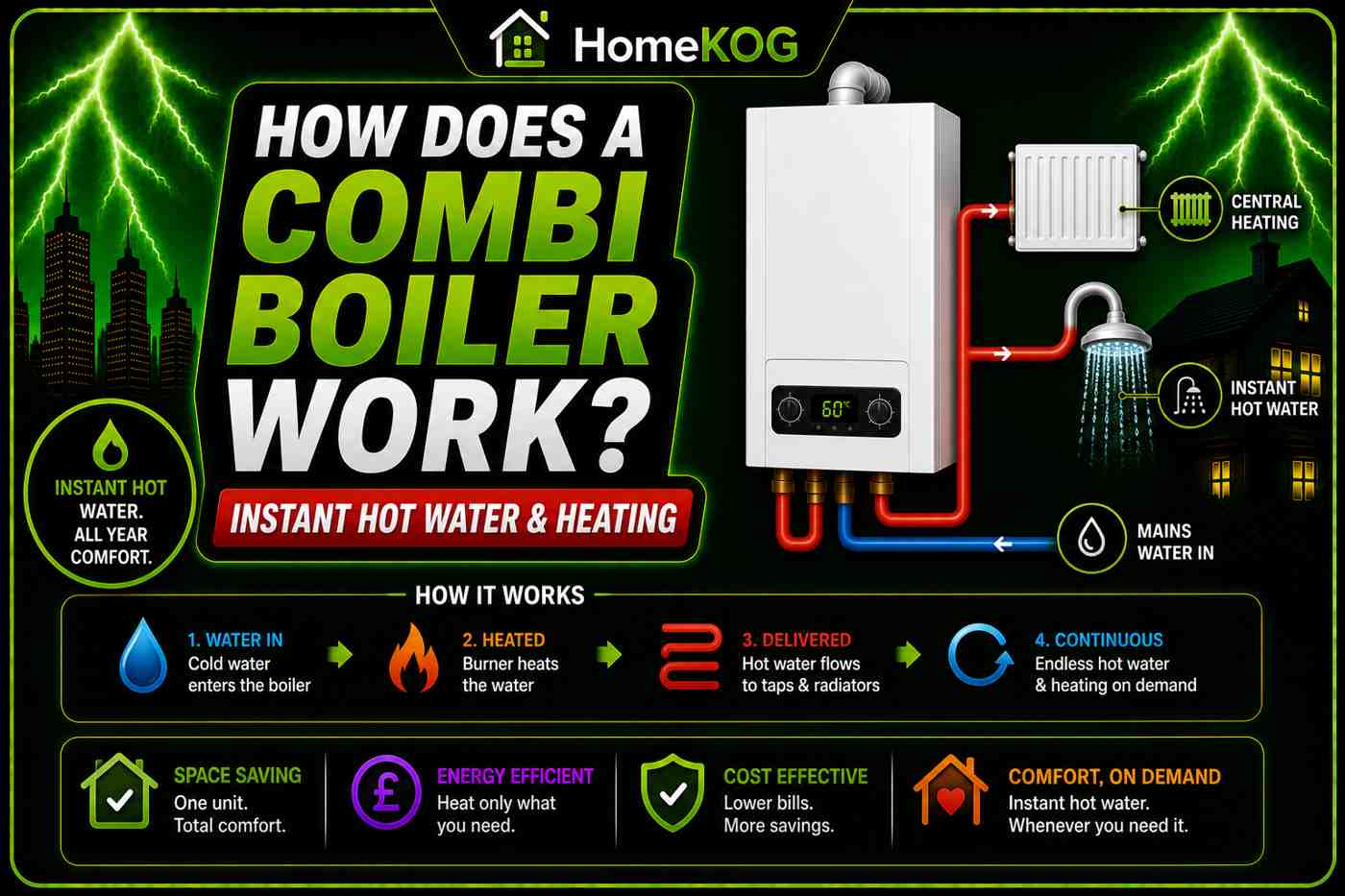
The combi boiler connects directly to the mains cold water supply and to the central heating pipework. When heating is demanded, it fires and heats the central heating circuit. When a hot tap is opened, it automatically diverts to heat mains-fresh water for direct delivery to the tap. The two functions do not run simultaneously — the diverter valve routes energy to whichever is needed at the time. In contrast, how ground source heat pumps operate involves utilizing the constant temperature of the earth. These systems circulate a fluid through buried pipes to absorb heat from the ground during winter months and transfer it back into the building. During the summer, the process can be reversed, allowing for efficient cooling by transferring heat from the indoors back into the ground.

How Does a Combi Boiler Work?
The Combustion Process
When the boiler receives a demand signal — either from the thermostat calling for central heating or from a hot tap being opened — the gas valve opens, gas enters the combustion chamber, and the electric igniter sparks to ignite the burner. The burner heats the primary heat exchanger. understanding central heating components is crucial for effective home climate control. Each element plays a significant role in ensuring efficiency and comfort. Familiarity with these parts can help homeowners diagnose issues and maintain their heating systems properly. A hybrid heating system benefits and features a combination of renewable and traditional energy sources, allowing for enhanced efficiency and reduced energy costs. By integrating technologies such as heat pumps and conventional boilers, homeowners can enjoy a more sustainable heating solution tailored to their specific needs. This approach not only supports environmental goals but also increases the versatility and reliability of home heating systems.
Modern combi boilers use an electronic modulating burner rather than a fixed-output burner, allowing the heat output to be varied continuously between the minimum and maximum rated output to match actual demand. A 30kW combi with a 1:10 modulation ratio can operate at as little as 3kW when demand is low, firing continuously at a low output rather than cycling repeatedly between full power and off. This modulation significantly improves real-world efficiency and reduces thermal stress on the heat exchanger over the boiler’s operational life.
The Primary Heat Exchanger — Central Heating
The primary heat exchanger transfers combustion heat to the sealed water that circulates through the central heating circuit — the loop of pipework that connects the boiler to all the radiators in the home and returns. This water is not the same water that comes out of the hot taps — it is a separate, closed circuit that is continuously recycled. Because it recirculates through the same pipework and radiators repeatedly, it gradually accumulates dissolved minerals and corrosion products (magnetite sludge) and would be unsuitable and unsafe to drink or bathe in. understanding boiler heat exchangers is essential for maintaining optimal efficiency in your heating system. Regular maintenance can help prevent issues related to mineral buildup and corrosion, ensuring that the heat exchanger operates effectively. Additionally, knowing how these components work together can inform better decisions regarding energy use and overall comfort in your home.
The central heating circuit water is maintained at a flow temperature typically set between 60 and 80°C for gas boilers, though modern weather-compensating controls can reduce this to 55°C or below in mild weather to improve condensing efficiency. The circulating pump moves this water from the boiler through the radiator pipework and back, completing the heating circuit. Regular servicing is essential for efficient heating, and homeowners should familiarize themselves with central heating maintenance tips for homeowners to ensure their systems operate smoothly. Checking the pressure gauge and bleeding radiators can help prevent cold spots and maintain even heat distribution. Additionally, scheduling professional inspections annually can identify potential issues before they lead to costly repairs.
The Secondary Plate Heat Exchanger — Domestic Hot Water
When a hot tap or shower is turned on, the boiler detects the flow of cold mains water and activates the diverter valve. The diverter valve pauses the central heating circuit and redirects the hot water from the primary heat exchanger to the secondary plate heat exchanger instead.
The secondary plate heat exchanger contains two separate water circuits in close thermal contact — the hot central heating water on one side and the cold mains water on the other. Heat transfers across the plate boundary from the hot circuit water to the cold mains water, heating the mains water to a usable temperature without the two water circuits ever physically mixing. The heated mains water flows directly to the tap or shower at the target temperature. The central heating circuit water remains in the boiler and is reheated when the hot water demand ends and the diverter valve returns to heating mode. Understanding how immersion heaters function is crucial for optimizing household hot water systems. These devices operate by converting electrical energy into heat, which is then transferred directly to the water in the tank. As a result, they provide a rapid and efficient way to heat water on demand, ensuring immediate access to hot water whenever it’s needed.
This design means the water from the hot tap is always fresh mains water — never the recycled central heating circuit water — which is why combi boiler hot water is safe and potable.
The Condensing Process
All modern combi boilers are condensing boilers. The combustion gases produced by the burner pass through the primary heat exchanger and then into a secondary condensing heat exchanger before exiting through the flue. In the condensing section, cool return water from the central heating circuit — typically 50 to 60°C — passes in the opposite direction to the hot flue gases. The flue gases cool below their dew point, causing water vapour in the gas to condense into liquid. This condensation releases additional latent heat that is captured and returned to the system rather than being lost through the flue.
The result is a flue gas exit temperature of approximately 50 to 55°C rather than the 250°C of an older non-condensing boiler, and an efficiency improvement from approximately 70 to 80% (non-condensing) to 92 to 98% (condensing).
What Fuels Can a Combi Boiler Use?
| Fuel Type | Description |
|---|---|
| Mains natural gas | Most common — connected to the gas grid supply |
| 20% hydrogen blend | All new hydrogen-ready combi boilers accept this without modification |
| LPG | Liquefied petroleum gas stored in tanks — for off-gas-grid properties |
| Oil | Stored in an external tank — requires OFTEC-registered installation |
| Electricity | Electric combi boilers available for properties without gas |
Mains natural gas is the standard fuel for UK combi boilers. LPG is the appropriate choice for rural properties off the gas grid where an oil boiler is not preferred. Oil combi boilers — such as the Worcester Bosch Greenstar Heatslave — are available for properties where oil storage is practical. Electric combi boilers are available but have significantly higher running costs than gas due to the price differential between electricity and gas per unit of heat.
Combi Boiler Sizing Guide
The correct output for a combi boiler depends on the property’s heating demand and hot water requirement. Proper combi boiler temperature adjustments can help optimize energy efficiency, ensuring that the system operates effectively without wasting resources. It’s also crucial to regularly monitor the settings to accommodate any changes in the household’s heating needs. By maintaining the right balance, homeowners can enjoy consistent comfort throughout the year.
| Property Size | Bedrooms | Bathrooms | Recommended Output |
|---|---|---|---|
| Small flat or house | 1–2 | 1 | 24–27kW |
| Medium house | 3–4 | 1 | 28–34kW |
| Larger house | 4 | 1–2 | 35–42kW |
The output requirement is driven primarily by hot water flow rate rather than heating demand — most properties’ actual space heating requirement is modest (4 to 8kW in the coldest weather) but the instantaneous hot water demand determines the output needed to deliver hot water at an acceptable flow rate. A 30kW combi delivers approximately 11 to 13 litres of hot water per minute — sufficient for a single bath or shower. A 35 to 40kW combi delivers 14 to 17 litres per minute.
Pros and Cons of a Combi Boiler
The combi boiler’s principal advantages are its compact size (no cylinder or loft tank), instant hot water on demand (no waiting for stored water to reheat), easy installation in a single day, high efficiency at 92 to 98%, and lower installation cost than system or regular boilers due to the absence of additional infrastructure. Understanding system boiler operation explained can help homeowners make informed decisions when selecting the right heating solution for their needs. Unlike combi boilers, system boilers require a hot water cylinder for storing heated water, which can affect space considerations and installation complexity. However, they are often favored for their ability to supply multiple outlets simultaneously without a drop in pressure, making them ideal for larger households.
The primary limitations are simultaneous hot water demand — when two outlets run at the same time, the boiler’s output is divided between them, reducing flow rate at each — and the fact that everything depends on a single unit. A combi boiler breakdown means simultaneous loss of both heating and hot water, whereas a system or regular boiler retains stored hot water in the cylinder after a boiler fault.
A combi boiler is most suitable for homes with up to two bathrooms where simultaneous high-demand use is not a frequent occurrence. Homes with three or more bathrooms and multiple regular simultaneous users are better served by a system boiler with an appropriately sized hot water cylinder.
Can a Combi Boiler Heat Water and Radiators at the Same Time?
No. The diverter valve inside the combi boiler can only direct heat to one circuit at a time — either the central heating or the domestic hot water. When a hot tap is opened, the diverter valve pauses the central heating circuit and routes all available heat to the secondary plate heat exchanger for hot water delivery. When the tap is closed, the diverter valve returns to heating mode and the central heating resumes.
This sequential rather than simultaneous operation is the fundamental characteristic of all combi boiler designs. It means a momentary pause in radiator heating occurs whenever hot water is demanded — a pause that is imperceptible in most real-world use but becomes noticeable if hot water is demanded repeatedly or for extended periods during a heating cycle.
How Much Does a Combi Boiler Cost?
| Boiler Tier | Unit Cost | Installed Cost |
|---|---|---|
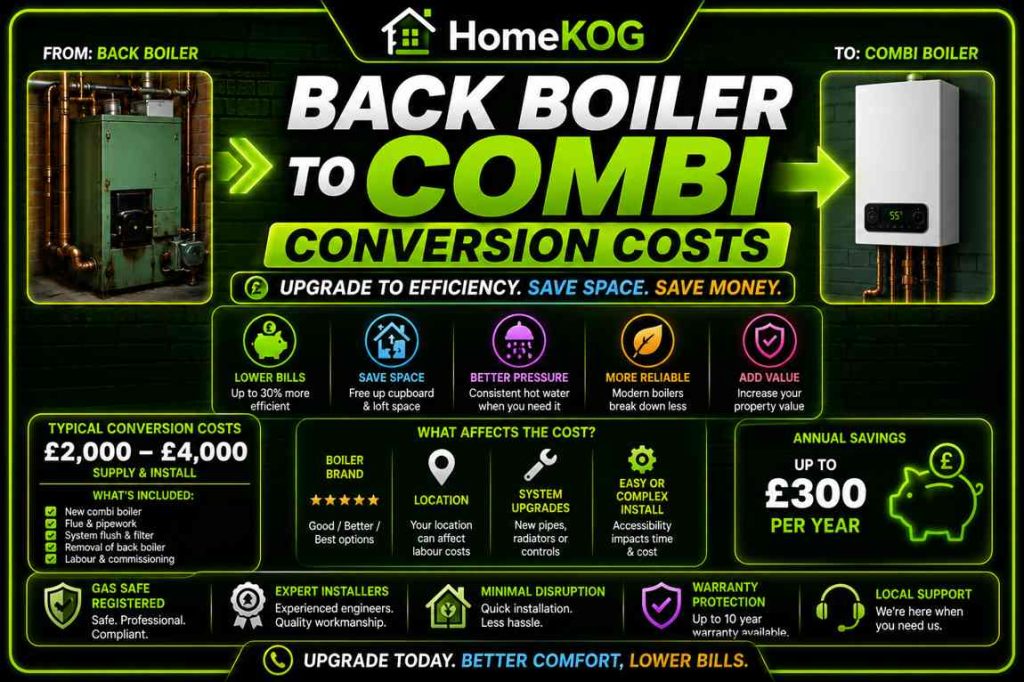
| Budget (Alpha, Ideal Logic) | £500–£1,000 | £1,500–£2,000 |
| Mid-range (Worcester 4000, Baxi 800) | £1,000–£1,400 | £2,000–£2,500 |
| Premium (Worcester 8000, Viessmann Vitodens) | £1,400–£2,000 | £2,500–£3,500 |
Installation time for a combi boiler is typically one day for a straightforward like-for-like replacement, making it the fastest of any boiler type to install. The absence of cylinder, tank, and associated pipework work keeps installation costs lower than system or regular boiler installations. Understanding boiler servicing times and expectations can also help homeowners plan for maintenance and minimize disruptions. Regular servicing is essential to ensure the efficiency and safety of a boiler, usually requiring just a couple of hours. By scheduling annual checks, homeowners can keep their systems running smoothly and avoid unexpected breakdowns.
FAQ
How long does a combi boiler last?
A modern combi boiler serviced annually in a correctly maintained system should last 10 to 15 years. Boilers in systems with magnetic filter protection and correct inhibitor dosing consistently reach the upper end of this range. The manufacturer’s warranty — typically 7 to 12 years depending on the brand and model — provides the reference benchmark for expected reliable service life.
What is the ideal temperature for a combi boiler?
For domestic hot water, 55 to 60°C is the standard recommendation — sufficient to prevent Legionella growth while avoiding scalding risk at the tap. For central heating flow temperature, 60 to 70°C is conventional, though weather-compensating controls can reduce this to 55°C in mild weather to improve condensing efficiency and reduce gas consumption. The boiler manual specifies the manufacturer’s recommended settings for the specific model. Understanding how to adjust radiator settings can also enhance comfort levels throughout your home. Properly calibrated radiators will distribute heat more evenly, ensuring that every room reaches the desired temperature efficiently. Familiarizing yourself with the thermostat and radiator valves is essential for optimizing performance during colder months.
Can I install a combi boiler myself?
No. Installing a gas combi boiler without Gas Safe registration is illegal under the Gas Safety (Installation and Use) Regulations 1998 and carries severe penalties including unlimited fines and potential imprisonment. All gas boiler installation must be carried out by a Gas Safe registered engineer. Installation by an unqualified individual also voids the manufacturer’s warranty and invalidates home insurance coverage for any heating-related damage.
How do I bleed radiators with a combi boiler?
Turn off the boiler and allow the system to cool. Insert a radiator bleed key into the bleed valve at the top of each radiator and turn anticlockwise until a hissing sound indicates air escaping. Close the valve as soon as water begins to drip. After bleeding all radiators, check the boiler pressure gauge — bleeding releases water along with air and the pressure may have dropped below 1.0 bar, requiring repressurisation through the filling loop.
Is a combi boiler the right choice for my home?
A combi boiler is the right choice for properties with up to two bathrooms, moderate simultaneous hot water demand, and a preference for a compact, simple installation without a cylinder. It is not the right choice for larger homes with three or more bathrooms where multiple occupants regularly use hot water simultaneously — a system boiler with a correctly sized hot water cylinder provides better performance in these circumstances.
Conclusion
The combi boiler’s dominance of the UK market reflects genuine practical advantages that suit the majority of UK homes — compact installation, instant hot water, high efficiency, and lower system cost than alternatives requiring cylinders and tanks. The dual heat exchanger design cleanly separates the recycled central heating water from the fresh domestic hot water supply, delivering safe potable hot water on demand without the need for storage infrastructure.
For homes with one or two bathrooms and typical UK occupancy patterns, a combi boiler remains the most cost-effective and practical choice in 2026. The wide range of available models from budget to premium, all A-rated and hydrogen-ready as standard, means the selection challenge is choosing the right model for the property’s specific demand and the homeowner’s warranty and efficiency priorities — not choosing whether a combi is appropriate in the first place. When selecting a boiler, understanding the ideal boiler service pricing breakdown can help homeowners make informed decisions. This breakdown typically includes installation costs, potential annual maintenance fees, and the expected lifespan of the equipment, providing a clear picture of the long-term investment. By comparing these factors with various models, homeowners can ensure they choose the most suitable and cost-effective option.