
Combi Boiler Explained: What It Is, How It Works & Everything You Need to Know
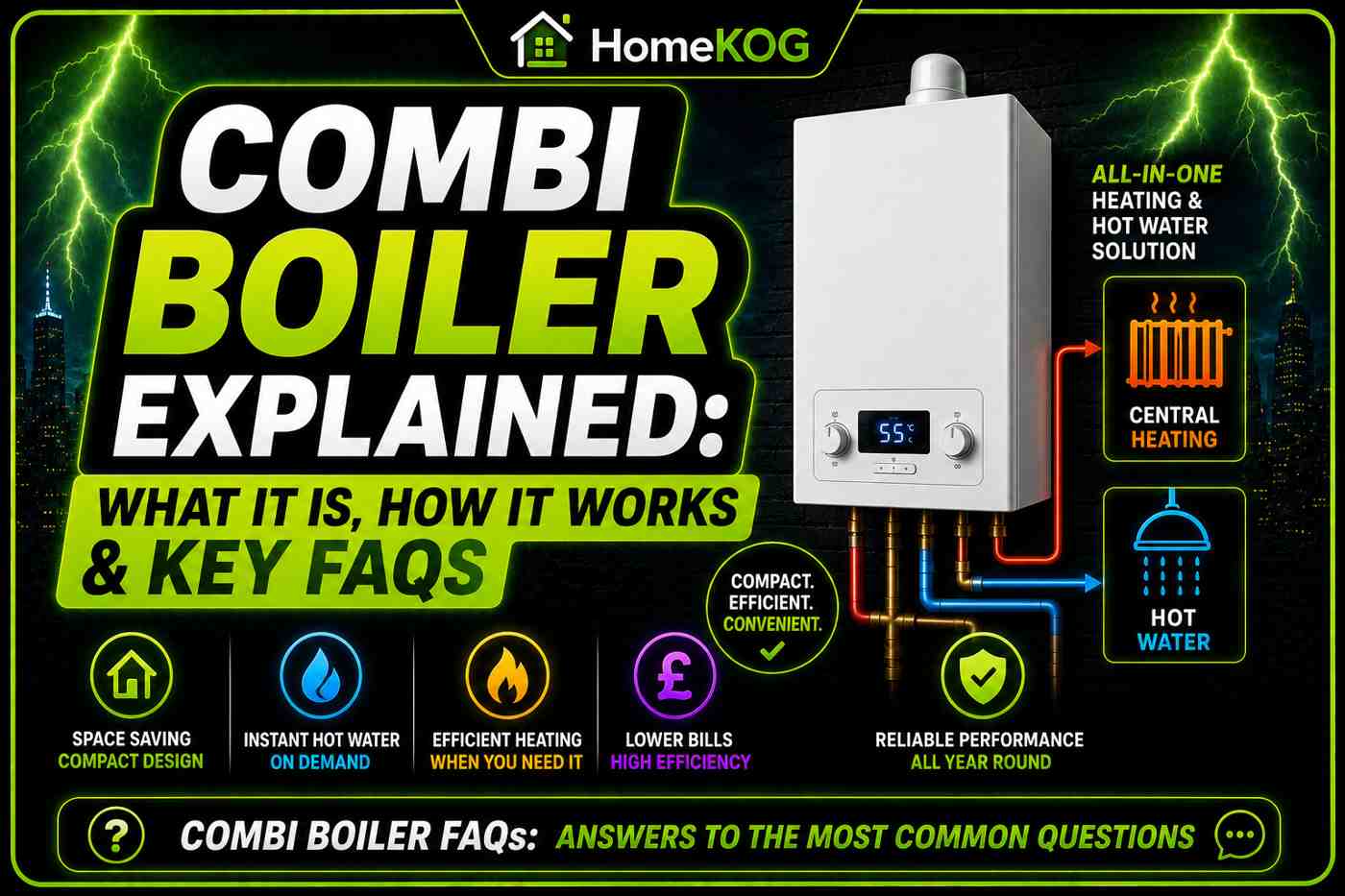
Quick Answer: A combi boiler — short for combination boiler — is a single compact unit that provides both central heating and instant hot water on demand directly from the mains, without requiring a separate hot water cylinder or cold water storage tank. It is the most popular boiler type in the UK, achieving over 92% energy efficiency, and is best suited to homes with up to 3 bedrooms and one bathroom.
Introduction
The combi boiler is the most widely installed boiler in the UK — and for good reason. It combines a water heater and a central heating boiler into one compact unit, eliminating the need for a hot water cylinder or loft tank, and delivering hot water instantly whenever a tap is opened. For small to medium-sized homes, no other boiler type matches its combination of efficiency, simplicity, and space-saving design.
A combi boiler heats water directly from the mains on demand rather than storing it, meaning it only uses energy when hot water is actually needed. This makes it both cost-effective and environmentally efficient compared to older storage-based systems. Modern combi boilers achieve A-rated efficiency of 92% or above — meaning for every £1 spent on gas, at least 92p produces useful heat.
This guide covers everything you need to know about combi boilers: how they work, the different fuel types available, condensing technology, sizing, key components, installation costs, and answers to the most frequently asked questions.

Understanding Combi Boilers: The Core Relationships
A combi boiler combines a series of components that work together to deliver instant hot water and central heating from a single unit. to ensure optimal performance, it’s essential to flush a combi boiler system efficiently at regular intervals. This process helps remove accumulated sludge and limescale, which can impede heat transfer and reduce energy efficiency. By maintaining a clean system, homeowners can extend the lifespan of their boiler and enjoy reliable heating and hot water. draining a combi boiler safely is another crucial maintenance step that should not be overlooked. It ensures that any remaining water is removed from the system, minimizing the risk of leaks and damage during servicing. Additionally, proper drainage can help in identifying any potential issues early on, allowing homeowners to address problems before they escalate.
- A combi boiler is a combination unit that integrates a water heater and a central heating boiler, providing both functions from a single wall-hung appliance without any external storage components.
- A heat exchanger is the internal component that transfers heat from the burning gas to the cold water passing through the boiler — it is the mechanism that enables instant hot water delivery in a combi system.
- A diverter valve controls whether heated water is directed to the central heating circuit or to the domestic hot water outlets, switching automatically as demand changes.
- A condensate pipe carries the acidic wastewater produced during the condensing process away from the boiler to the nearest external drain and is a component unique to condensing boilers.
- A filling loop is a temporary connection between the boiler and the cold mains water supply, used to repressurise the system when boiler pressure drops below the correct operating range.
- A condensing combi boiler uses a secondary heat exchanger to recover heat from exhaust flue gases that older non-condensing boilers would otherwise waste, raising efficiency above 92%.
- A gas combi boiler connects to the mains gas supply and is the most common fuel type for combi boilers in the UK, offering the lowest running cost of all fuel options.
- An LPG combi boiler operates identically to a gas combi but burns liquefied petroleum gas supplied from an external tank, making it suitable for properties off the mains gas grid.
- An oil combi boiler burns heating oil stored in an external tank, providing a combi configuration for rural properties without gas or LPG connections.
- An electric combi boiler heats water using an electric element rather than combustion, requiring no flue but carrying significantly higher running costs than gas alternatives.
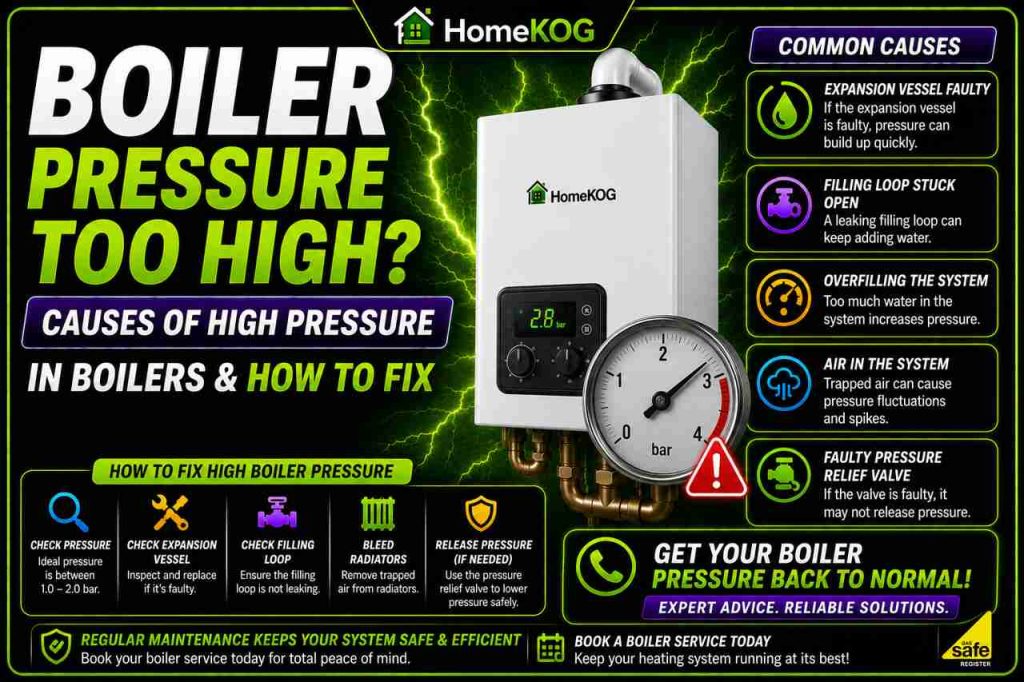
- Boiler pressure in a combi system should be maintained between 1 and 1.5 bar — below this range the boiler may shut down; above 2.5 bar indicates an overpressure fault.
- A Gas Safe registered engineer is the only professional legally qualified to install, service, or repair a gas combi boiler in the UK.
What Is a Combi Boiler?
A combi boiler is a single, self-contained heating unit that provides two functions simultaneously — it heats the water that circulates through the central heating radiator circuit, and it heats domestic hot water on demand when a tap or shower is opened. what is a combi boiler is a common question for homeowners looking to increase energy efficiency while minimizing space. These systems are particularly popular in smaller homes and apartments where traditional heating methods may take up too much room. With their dual functionality, they can significantly lower energy costs and provide immediate hot water when needed.
The key distinction between a combi boiler and other boiler types is the absence of any external storage. A system boiler stores pre-heated water in a cylinder; a conventional boiler does the same and also uses a cold water tank in the loft. A combi boiler does neither — it heats water directly from the mains supply as it is needed, using the incoming mains pressure to deliver it to the outlet.
This on-demand approach means a combi boiler never runs out of hot water, unlike a cylinder-based system during high-demand periods. It also means it consumes no energy maintaining a stored volume of hot water between uses, which contributes to its efficiency advantage over older storage-based systems.
Standby Mode
A combi boiler remains in standby mode continuously, ready to respond to a demand signal from the thermostat or a tap being opened. In standby, the boiler uses minimal energy — it is not heating water, but its electronics and sensors remain active so it can respond within seconds of a demand being registered. This is what enables the near-instant hot water delivery for which combi boilers are known.
How Does a Combi Boiler Work?
Domestic Hot Water
When a hot tap or shower is opened, the combi boiler detects the flow of cold water entering the unit from the mains. The diverter valve switches to the domestic hot water position, directing the boiler’s output to the hot water circuit rather than the central heating circuit.
The gas burner fires and heats the heat exchanger. Cold water from the mains passes through the heat exchanger, where it absorbs the heat generated by combustion and exits at the set hot water temperature — typically between 40°C and 60°C depending on the thermostat setting. This heated water is delivered directly to the tap or shower at mains pressure.
When the tap is closed, the flow of cold water stops, the gas burner shuts off, and the boiler returns to standby.
Central Heating
When the room thermostat drops below the set target temperature, it signals the boiler to fire for central heating. The diverter valve switches to the heating position. The gas burner heats the heat exchanger, which in turn heats water in the primary circuit. The pump circulates this hot water through the radiators and returns the cooled water to the boiler for reheating in a continuous cycle.
When the thermostat is satisfied — the room temperature reaches the target — the boiler shuts off the burner and returns to standby.
The Heat Exchanger
The heat exchanger is the most critical component in a combi boiler. It is a series of metal tubes or plates through which combustion gases and cold water flow in close proximity, allowing heat to transfer from the gas to the water without the two mixing. The efficiency of the heat exchanger determines how much of the gas energy is converted into useful heat — in a modern A-rated condensing combi, this conversion exceeds 92%.
Combi Boiler and Condensing Technology
All new gas combi boilers sold in the UK are condensing boilers by law. A condensing combi boiler incorporates a secondary heat exchanger that recovers heat from the hot exhaust gases, unlike older non-condensing boilers, which vented them directly to the atmosphere through the flue.
In a non-condensing boiler, exhaust gases exit the flue at temperatures of 180°C or above — taking significant usable energy with them. A condensing boiler cools these gases to below 55°C before they exit, extracting the remaining heat and using it to pre-warm the cold water returning from the radiators. This recovery process produces the visible white vapour plume you see from a modern boiler flue on cold days — water vapour in the cooled exhaust condensing as it meets cold outdoor air.
The practical result of condensing technology is an efficiency rating above 92% for all modern gas combi boilers, compared to 55% to 70% for older non-condensing models. Replacing a non-condensing boiler with a modern condensing combi saves over £300 per year on gas bills in a typical UK home.
Types of Combi Boiler by Fuel
Gas Combi Boilers
Gas combi boilers are the most common boiler type in the UK. They connect directly to the mains gas supply and are the most cost-effective domestic heating fuel option. All new gas combi boilers are A-rated condensing models, hydrogen-ready for a 20% blend, and installed by Gas Safe-registered engineers.
Leading gas combi boiler manufacturers include Worcester Bosch, Viessmann, Vaillant, Baxi, and Ideal — all of which produce models ranging from 24kW to 50kW to suit different property sizes.
LPG Combi Boilers
LPG (liquefied petroleum gas) combi boilers operate identically to mains gas combi boilers but are fuelled from an external storage tank rather than the mains supply. They are the most common alternative for properties in rural areas not connected to the gas grid. The LPG tank is installed in the garden and refilled by tanker delivery when running low.
Oil Combi Boilers
Oil combi boilers burn heating oil stored in an external tank, providing the combi configuration for off-grid properties that have space for an oil tank. They require OFTEC-registered engineers for installation and servicing rather than Gas Safe engineers. Oil prices are subject to market fluctuations, making running costs less predictable than those of gas alternatives.
Electric Combi Boilers
Electric combi boilers heat water using an electric element rather than combustion. They do not require a gas or oil supply, produce no combustion emissions, and do not require a flue — making them suitable for compact spaces and properties without fuel connections. Their significant disadvantage is running cost — electricity is approximately three to four times more expensive per unit than gas, making electric combi boilers only practical for small properties with low heating demand.
What Size Combi Boiler Do You Need?
Choosing the correct output size is essential. An undersized combi boiler cannot meet the property’s heating and hot water demand, while an oversized model wastes money on a unit that cycles inefficiently at low demand levels.
| Property Size | Bedrooms | Radiators | Recommended Output |
|---|---|---|---|
| Small flat or house | 1–2 | Up to 10 | 24kW – 28kW |
| Medium home | 3 | 10–15 | 28kW – 34kW |
| Larger home | 4–5 | 15–20 | 35kW – 42kW |
| Large home, 2 bathrooms | 5+ | 20+ | 42kW – 50kW |
A Gas Safe engineer will carry out a heat loss calculation to determine the correct output for your specific property before installation. Do not rely on a rule-of-thumb estimate alone — the correct sizing ensures the boiler operates at peak efficiency throughout its lifetime. Understanding system boiler working principles explained is crucial for homeowners looking to maximize energy efficiency. It ensures that all components work harmoniously, contributing to consistent heating and hot water supply. Familiarity with these principles can also aid in identifying any potential issues early on, reducing the risk of expensive repairs. ideal boiler service costs explained will give you a clearer understanding of the financial implications involved. It’s essential to consider various factors such as installation fees, maintenance schedules, and energy efficiency ratings when budgeting. By doing so, you can make informed decisions that ultimately enhance your home’s heating system while keeping costs manageable.
Key Combi Boiler Components Explained
Diverter Valve
The diverter valve is the component that switches the boiler’s output between the central heating and domestic hot water circuits. When a tap is opened, the diverter valve moves to the hot-water position, prioritising hot-water delivery over radiator heating. When the tap is closed, it returns to the heating position or standby. the pressure release valve functions explained help to illustrate how these mechanisms safeguard the system from excessive pressure buildup. By releasing steam or water when necessary, they prevent potential damage to the boiler and associated plumbing. Understanding these functions is crucial for ensuring the longevity and safety of your heating system.
A faulty diverter valve is one of the most common faults with combi boilers. If your radiators are warm but hot water from the tap is cold — or vice versa — a stuck or failing diverter valve is the likely cause.
Filling Loop
The filling loop is a short, flexible hose that temporarily connects the boiler to the cold mains water supply. It is used to repressurise the sealed central heating system when pressure drops below the correct operating range of 1 to 1.5 bar. Most filling loops are located beneath the boiler and have two valves: one opened to allow mains water in and the other closed once the correct pressure is restored.
Condensate Pipe
The condensate pipe carries the acidic wastewater produced during condensation from the boiler to an external drain. It is typically a white plastic pipe that exits through the wall near the boiler. In freezing weather, the external section of the condensate pipe can ice over, blocking the drain and causing the boiler to shut down. Insulating the external section prevents this common winter fault.
Preheat Function
Many modern combi boilers include a preheat function that keeps a small volume of water warm within the heat exchanger, reducing the time between opening a tap and receiving hot water at the outlet. While this improves the hot water experience, it does consume a small amount of additional gas to maintain the pre-warmed volume. Some manufacturers and engineers recommend disabling preheat if minimising gas consumption is a priority.
Combi Boiler Pros and Cons
Pros
- Instant hot water on demand — no waiting for a cylinder to heat up; hot water is available the moment a tap is opened.
- Space saving — a single compact unit eliminates the need for a cylinder in the airing cupboard and tanks in the loft.
- Energy efficient — heats only the water actually used rather than maintaining a stored volume, reducing wasted energy.
- Lower installation cost — less pipework and fewer components make a like-for-like combi swap less expensive than system or conventional boiler installations.
- Unlimited hot water — unlike a cylinder-based system, there is no stored volume to exhaust during high-demand periods.
- Easy to size — output requirements are straightforward to calculate based on property size and radiator count.
Cons
- Limited simultaneous flow — running two showers at once reduces pressure at each outlet; combi boilers are not suited to households with regular simultaneous demand.
- Mains pressure dependent — the flow rate at the tap is determined by the incoming mains pressure; properties with low mains pressure do not benefit fully from a combi boiler’s output.
- No backup hot water — if the boiler develops a fault, there is no immersion heater backup as there would be in a cylinder-based system.
- Not compatible with most solar thermal panels — solar thermal systems require a hot water cylinder to store solar-heated water; combi boilers do not have one.
Combi Boiler Installation Costs
The cost of installing a combi boiler depends on whether you are replacing an existing combi in the same location or converting from a different boiler type or moving the boiler to a new position.
| Installation Scenario | Estimated Cost |
|---|---|
| Like-for-like combi replacement (same location) | £1,800 – £3,000 |
| New combi installation in a different location | £2,200 – £3,500 |
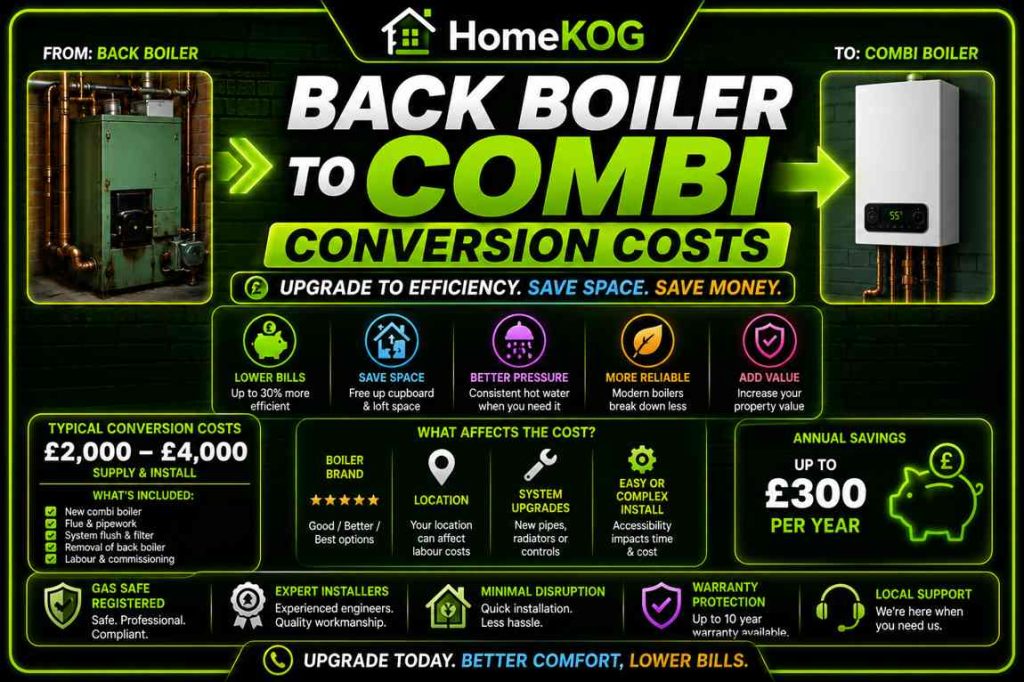
| Conversion from a system or conventional boiler to a combi | £2,500 – £4,000 |
In most installations, the majority of the cost is labour. Relocating the boiler, upgrading pipework, or removing cylinder and tank infrastructure from a previous system all increase the total. Finance options are available to spread the cost over 2 to 10 years, with interest-free terms available through specialist installers.
Frequently Asked Questions
What is a combi boiler and how does it work?
A combi boiler is a single-wall-hung unit that provides both central heating and instant hot water from the mains, without requiring a separate hot water cylinder or a cold water storage tank. When a tap is opened, the boiler fires and heats cold mains water as it passes through the internal heat exchanger, delivering it at the set temperature directly to the outlet. For central heating, the boiler heats water that circulates through the radiators via a pump, firing when the thermostat calls for heat. how combi boilers provide instant heating makes them a popular choice for many households seeking efficiency. This technology allows users to enjoy hot water on demand, eliminating the wait time associated with traditional water heating systems. Additionally, the compact design of combi boilers contributes to saving valuable space in homes, making them an ideal solution for modern living.
Can you use a combi boiler for just hot water without heating?
Yes — a combi boiler can provide hot water independently of the central heating function. Opening a hot tap activates the boiler’s domestic hot water circuit without engaging the central heating circuit. The thermostat controls the central heating independently, and the boiler switches between functions using an internal diverter valve. You do not need to have the heating on to use hot water from a combi boiler — the two functions operate independently.
What pressure should a combi boiler run at?
A combi boiler should operate with a sealed system pressure of 1-1.5 bar when cold. This is the standard operating range for most UK combi boilers and is indicated by the needle sitting in the green zone on the pressure gauge. A pressure below 0.5 bar causes most modern boilers to lock out; the system should be repressurised using the filling loop. A consistent reading above 2.5 bar indicates an overpressure fault that requires investigation by a Gas Safe engineer.
What is the preheat function on a combi boiler?
The preheat function on a combi boiler keeps a small volume of water warm within the heat exchanger so that hot water is available almost immediately when a tap is opened, without the brief delay caused by the boiler firing from cold. It uses a small amount of additional gas to continuously maintain this preheated volume. Some manufacturers and engineers recommend switching preheat off if reducing gas consumption is a priority, accepting a slightly longer wait for hot water in exchange for lower running costs.
How long does a combi boiler last?
A combi boiler that is correctly installed and annually serviced by a Gas Safe registered engineer typically lasts between 10 and 15 years. Some well-maintained units have operated reliably for up to 20 years. The heat exchanger and diverter valve are the components most likely to require replacement during the boiler’s operational life. Annual servicing identifies wear in these components early, reducing the likelihood of unexpected breakdown and extending the overall lifespan of the unit.
What size combi boiler do I need?
The correct combi boiler size depends on the number of radiators in your property and your hot water demand. A 24kW to 28kW model suits small homes with up to 10 radiators. A 28kW to 34kW model handles medium homes with 10 to 15 radiators. Larger homes with 15 to 20 radiators require a 35kW to 42kW model. Properties with two bathrooms and high simultaneous demand may need a 42kW to 50kW model. A Gas Safe engineer will carry out a heat-loss calculation to confirm the correct output for your property.
Is a combi boiler suitable for a large home?
A combi boiler is generally not recommended as the primary heating solution for large homes with more than two bathrooms and multiple simultaneous hot water demands. Its on-demand output is split across concurrent demands, reducing pressure when two or more outlets are in use at the same time. For larger homes with four or more occupants and two or more bathrooms, a system boiler paired with a hot water cylinder delivers better performance, supplying multiple outlets simultaneously without pressure loss.
What is the difference between a combi boiler and a condensing boiler?
A combi boiler and a condensing boiler are not mutually exclusive categories — a combi boiler can also be a condensing boiler, and all new gas combi boilers sold in the UK are condensing by law. A condensing boiler uses a secondary heat exchanger to recover heat from exhaust gases that older non-condensing boilers wasted through the flue, raising efficiency above 92%. The term “condensing” describes the efficiency technology; the term “combi” describes the configuration. Every new combi boiler you can buy today is a condensing combi boiler.
Conclusion: Is a Combi Boiler Right for Your Home?
A combi boiler is the right choice for the majority of UK homes — compact, efficient, easy to install, and capable of delivering instant hot water without the space demands of a cylinder-based system. For properties with up to 3 bedrooms and a single bathroom, it is almost always the optimal solution. When considering the best combi boilers for UK homes, it’s important to evaluate energy efficiency ratings and warranty offerings to ensure long-term performance. Advanced technology features can enhance comfort and control, making them even more appealing to homeowners. With numerous brands available, researching specific models can help pinpoint the ideal fit for your needs.
For larger homes with multiple bathrooms and regular simultaneous hot water demand, a system boiler is worth considering — the stored cylinder volume handles peak demand more effectively than a combi’s on-demand output. A Gas Safe engineer can assess your property and confirm which configuration best matches your household’s specific requirements.
Get a fixed price from a Gas Safe registered engineer, confirm the correct output size for your property, and explore finance options if the upfront cost needs to be spread over time. A modern A-rated combi boiler, correctly installed and annually serviced, will heat your home efficiently and reliably for 15 years or more.