
Boiler Filling Loop: What It Is, Types & How to Use It in 2026
Quick Answer: A boiler filling loop is a short hose with two valves that connects the mains water supply to the central heating system, allowing the boiler to be repressurised when the water pressure drops too low. Most combi boilers have an internal filling loop built into the unit. System boilers typically use an external loop fitted beneath the boiler. Correct pressure is between 1 and 1.5 bar when the system is cold. Understanding how a combi boiler functions is essential for proper maintenance. These boilers heat water directly from the mains supply, providing hot water on demand without the need for a separate storage tank. This means that they can be more energy-efficient and space-saving compared to traditional systems.
Boiler pressure drops over time, and when it does, the heating system becomes less efficient and the boiler may stop working altogether. The filling loop is the component that allows you to restore the pressure quickly and safely, and understanding how to use it correctly is one of the most useful practical skills any homeowner with a gas central heating system can have.
This guide explains what a boiler filling loop is, where to find it, how to use it, and what to do when it stops working. Understanding combi boiler functionality and benefits is essential for homeowners seeking efficient heating solutions. These systems not only provide heating and hot water on demand but also save space and energy compared to traditional boilers. By familiarizing yourself with the features of a combi boiler, you can make informed decisions when it comes to maintenance and troubleshooting.
Get a boiler cover plan online here >
Key Facts: Boiler Filling Loop Relationships
- A boiler filling loop is a short braided hose with two control valves that connects the mains cold water supply to the central heating circuit, enabling the system to be repressurised when pressure drops.
- A stop valve is one of the two valves on a filling loop that controls the flow of water through the hose into the central heating system, and is oriented so that when the handle is parallel to the hose the valve is open and water can flow.
- A double check valve is the second valve on a filling loop, positioned on the mains water supply side, that prevents water from the central heating circuit from flowing back into the mains supply.
- An internal filling loop is a filling loop integrated inside the boiler casing, most commonly found in combi boilers, accessed via a hatch or flap on the underside or front of the unit.
- An external filling loop is a filling loop fitted outside the boiler, typically visible as a short braided hose with two valves beneath the boiler, and is commonly associated with system boilers and some older combi installations.
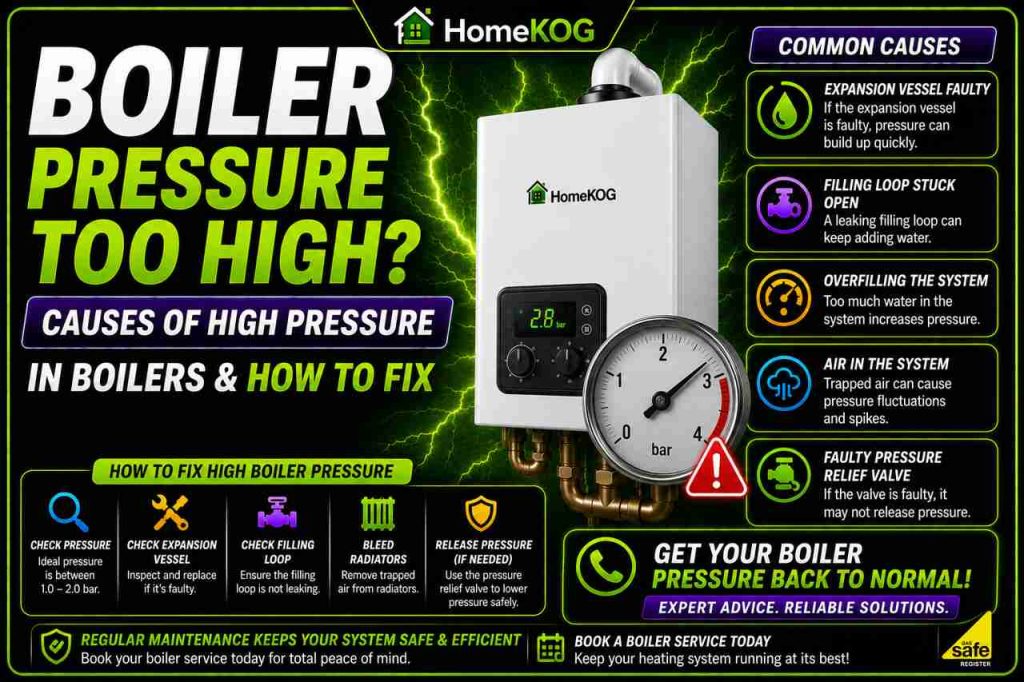
- Boiler pressure is the measure of the water pressure within the closed central heating circuit, expressed in bar, and should read between 1 and 1.5 bar when the system is cold and the heating is off.
- Low boiler pressure reduces system efficiency, can prevent the boiler from firing, and may trigger a fault code or lockout on modern boilers.
- High boiler pressure can damage boiler components and system pipework by exceeding the operating capacity of the circuit, and should be reduced by bleeding radiators before repressurising.
- A filling loop key is a specific tool required to access and operate some internal filling loops, particularly on certain combi boiler models where the hatch is key-operated.
- A pressure gauge is the dial or digital indicator on the front of the boiler that displays the current system pressure in bar, and should be monitored during repressurisation to prevent over-filling.
- A Gas Safe registered engineer must be consulted if the filling loop itself is damaged, if pressure drops repeatedly after repressurisation, or if the underlying cause of pressure loss cannot be identified by the homeowner.
- Some premium combi boilers such as the Worcester Bosch 8000 feature an automatic filling system that monitors and tops up system pressure without manual intervention.
What Is a Boiler Filling Loop?
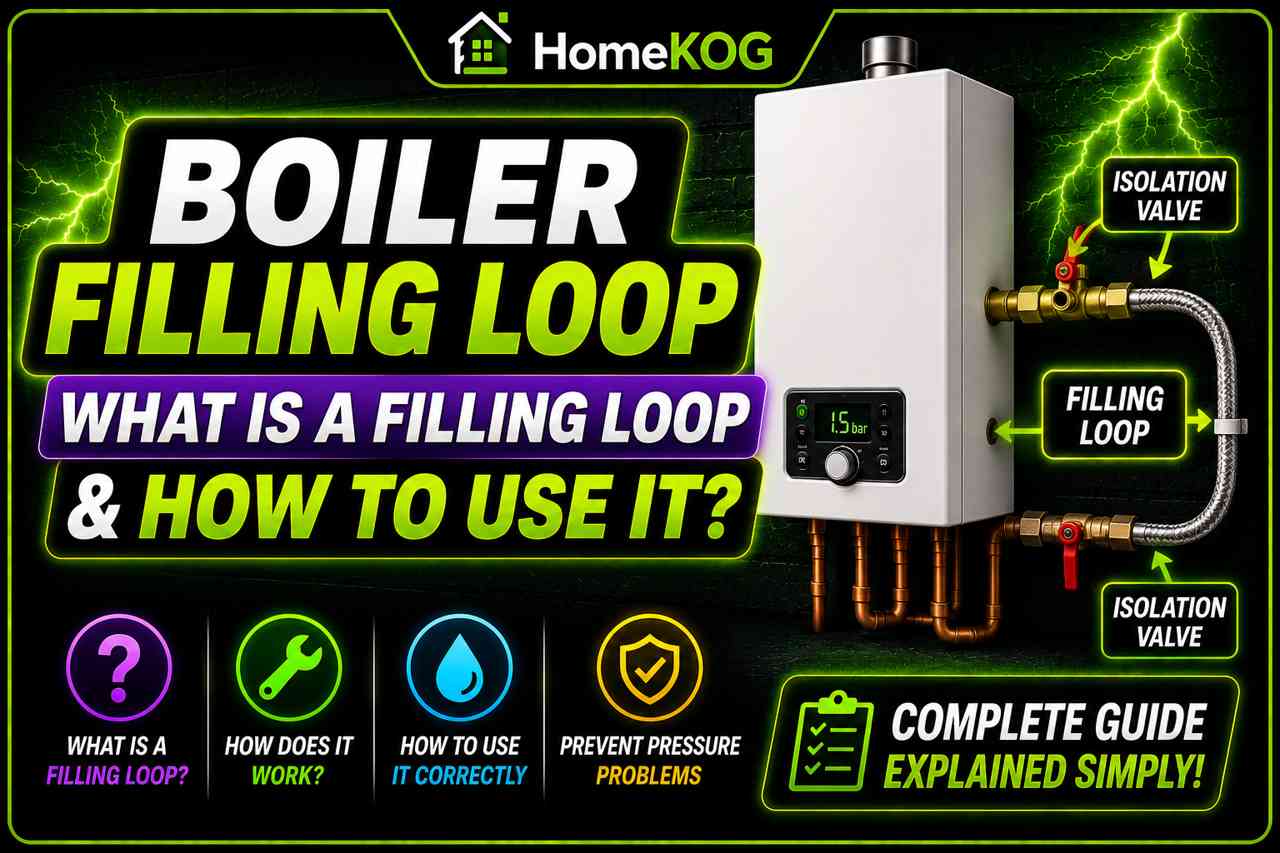
A boiler filling loop is a short braided hose that bridges the gap between the cold mains water supply and the central heating circuit. When the water pressure in the central heating system drops below its required level, opening the valves on the filling loop allows mains water to flow into the circuit and restore the pressure to the correct range. understanding boiler condensate systems is essential for maintaining efficiency and preventing potential issues. These systems play a crucial role in managing waste products generated during the heating process, ensuring they are disposed of safely and in accordance with environmental regulations. Proper knowledge of these systems can lead to more effective maintenance and a longer lifespan for your heating equipment.
The filling loop has two valves — one on each end of the hose. The stop valve controls the flow of water through the loop. The double check valve sits on the mains supply side and prevents water from the heating circuit — which contains a central heating inhibitor and may contain dissolved metals and other contaminants — from flowing backwards into the drinking water supply.
The filling loop is not something that needs to be used regularly. A small pressure drop once or twice a year is normal and can be resolved with a quick repressurisation. If pressure is dropping frequently, an underlying fault — such as a system leak, a failing pressure relief valve, or a faulty expansion vessel — is the likely cause, and a Gas Safe engineer should investigate.
Types of Boiler Filling Loop
Internal Filling Loop
An internal filling loop is built into the boiler casing and is most commonly found in combi boilers. With this type, one valve connects to the central heating circuit inside the boiler and the other connects to the cold mains supply. The loop itself is hidden inside the boiler and is accessed via a hatch or flap on the underside or front panel of the unit.
Some boiler models require a filling loop key to open the hatch and engage the loop. The key is a small tool that should be stored somewhere safe and accessible near the boiler.
External Filling Loop
An external filling loop is fitted outside the boiler casing, typically visible beneath the unit as a short braided hose with two angled valves. It serves the same function as an internal loop but is more visible and in many cases easier to access without opening the boiler casing.
External filling loops are commonly associated with system boilers and with older combi boiler installations where an internal loop was not included in the original specification. The loop connects the cold mains supply pipework to the central heating circuit pipework beneath the boiler. It is sometimes called a central heating filling loop for this reason.
How to Use a Boiler Filling Loop
Using an External Filling Loop
The first step is to turn the boiler off and allow it to cool fully before starting. Locate the filling loop beneath the boiler — it will be a short braided hose with two valve handles. Remove the cap from the isolation valve if one is fitted.
Check that both ends of the loop are securely connected before proceeding. Turn the handle on the stop valve so that it runs parallel to the hose — this opens the valve and allows water to flow from the mains into the central heating circuit. Watch the pressure gauge on the front of the boiler as the system fills.
When the gauge reaches 1 to 1.5 bar, close the stop valve by turning its handle back to perpendicular — the off position. Replace the cap on the isolation valve, switch the boiler back on, and confirm that it fires up and runs normally.
If the pressure gauge reads higher than 1.5 bar after filling, the system has been over-pressurised. Bleeding the radiators will release some water and reduce the pressure back to the correct range before restarting the boiler.
Using an Internal Filling Loop
The approach is similar but with a few differences specific to accessing the loop inside the boiler casing. Begin by turning the boiler off and switching off the electrical supply to the unit.
Open the hatch or flap on the underside of the boiler. If the loop requires a key, insert it into the designated slot. Engage the filling loop and open the valve to allow water to flow into the system, watching the pressure gauge as you do so.
When the gauge reads between 1 and 1.5 bar, close the valve, tighten it securely, remove the filling loop key if applicable, and close the hatch. Restore the electrical supply and restart the boiler. Confirm that it fires up and that the pressure reading holds at the correct level.
How to Install a Boiler Filling Loop
If the boiler does not have a filling loop — or the existing loop needs to be replaced — the installation process follows a consistent set of steps regardless of the specific boiler model.
Begin by ensuring the replacement filling loop is the correct type and size for the boiler. A standard boiler filling loop is a short braided hose with a stop valve on one end and a double check valve on the other. The stop valve connects to the central heating pipework and the double check valve connects to the cold mains supply. Fitting them the wrong way around will prevent the system from filling and may cause water contamination issues.
Use a spanner to tighten the compression fittings securely at both connection points. Loose fittings will allow water to leak when the loop is in use. Once everything is connected and tightened, test the loop by following the repressurisation steps above and checking for any leaks at the connection points.
Always consult the boiler’s manufacturer manual before carrying out any installation or replacement work, as the specific connection method and valve orientation can vary between models and brands.
What to Do When the Filling Loop Is Not Working
If operating the filling loop does not produce a rise in pressure, or if the loop appears to be stuck or damaged, there are a few likely causes.
A stuck valve is the most common issue. If either of the two valves cannot be turned, the loop cannot function. Gentle force using an appropriate tool may free a stiff valve, but care should be taken not to snap the valve body or handle. If the handle breaks, it will need to be replaced — either the handle alone or the complete filling loop assembly, depending on the extent of the damage.
If the filling loop appears to be functioning but pressure continues to drop shortly after repressurisation, the problem is not with the loop itself but with the system. A leak in the pipework, a faulty pressure relief valve, or a failing expansion vessel will all cause repeated pressure loss that cannot be resolved by refilling. A Gas Safe engineer should be called to identify and repair the source of the loss.
In cases where the boiler has sustained more significant damage, a full boiler service may be needed before the pressure issue can be fully resolved.
Where Is the Boiler Filling Loop Located?
For combi boilers, the filling loop is typically located inside the boiler casing and accessed via a hatch or flap on the underside or lower front panel of the unit. For system boilers with external filling loops, the hose and valves are usually visible beneath the boiler among the pipework connections.
The exact location varies between boiler brands and models, and the manufacturer’s installation or user manual will identify the precise position and access method for the specific boiler installed. If the manual has been lost, manufacturer websites typically offer downloadable copies by entering the boiler’s model number.
Frequently Asked Questions
What is a boiler filling loop used for?
A boiler filling loop is used to repressurise a central heating system when the water pressure drops below the recommended operating level. It connects the cold mains water supply to the central heating circuit and allows water to flow into the system when its valves are opened. Correct system pressure is between 1 and 1.5 bar when the heating is off. When pressure drops below 1 bar, the boiler may stop working efficiently or trigger a fault code. understanding condensing boiler technology is essential for ensuring optimal efficiency and performance. This type of boiler operates by extracting heat from flue gases, which would otherwise be wasted, thereby enhancing energy conservation. As homeowners look for ways to reduce their carbon footprint, learning about these systems can provide significant insights into heating solutions.
Where is the filling loop on a combi boiler?
On most combi boilers, the filling loop is built into the boiler casing and accessed via a hatch or flap on the underside or lower front panel of the unit. Some models require a filling loop key to open the hatch and engage the loop. On system boilers, the filling loop is typically an external braided hose with two valves, visible beneath the boiler among the pipework connections. The exact location varies by brand and model — the manufacturer’s user manual will confirm the specific location for the boiler installed.
What pressure should a boiler be after using the filling loop?
After repressurising using the filling loop, the pressure gauge on the front of the boiler should read between 1 and 1.5 bar with the heating off and the system cold. Do not fill beyond 1.5 bar — if the gauge exceeds this level, bleed the radiators to release some water and reduce the pressure before restarting the boiler. When the heating is running, it is normal for the pressure to rise slightly above this range to around 1.8 to 2 bar due to thermal expansion.
Why does my boiler pressure keep dropping after I repressurise it?
If boiler pressure drops again shortly after repressurisation, the filling loop is not the source of the problem. A recurring pressure drop indicates an underlying fault — most commonly a leak somewhere in the system pipework, radiators, or boiler components, a faulty pressure relief valve that is releasing water unnecessarily, or a failing expansion vessel that is not absorbing thermal expansion correctly. A Gas Safe engineer should investigate and repair the cause rather than continuing to repressurise the system as a temporary fix.
Can I install a boiler filling loop myself?
Yes, fitting an external filling loop is a task that most homeowners with basic DIY skills can carry out safely, provided the correct filling loop is purchased for the boiler and the valve orientation is correct — the stop valve connects to the heating circuit and the double check valve connects to the mains supply. Fitting them the wrong way around will prevent the system from refilling. Always consult the boiler’s user manual before carrying out any installation work. If in doubt, a Gas Safe engineer can fit or replace a filling loop as part of a service visit.
What does it mean when the filling loop valve is parallel or perpendicular to the hose?
When the handle of a filling loop valve runs parallel to the hose, the valve is open and water can flow through it. When the handle is perpendicular — at a right angle — the valve is closed and no water can pass. This orientation principle applies to both the stop valve and the double check valve on most standard filling loops. Turning the stop valve to the parallel position opens the loop and allows mains water to flow into the heating circuit during repressurisation.
Where can I buy a replacement boiler filling loop?
Replacement filling loops are widely available from plumbing and heating merchants, DIY stores such as B&Q and Screwfix, and online retailers. A standard braided filling loop with stop valve and double check valve is a relatively inexpensive component — typically costing between £5 and £25 depending on the quality of the fittings. If a specific model is required for a particular boiler brand, the manufacturer’s website or a specialist heating parts supplier is the most reliable source.
Conclusion
The boiler filling loop is a small but important component that every homeowner with a gas central heating system should know how to locate and use. A straightforward repressurisation takes only a few minutes and resolves the most common cause of boiler pressure faults without the need for a call-out.
Understanding the difference between an internal and external loop, knowing where yours is located, and recognising the correct pressure range to fill to puts you in control of one of the most common boiler maintenance tasks. If the loop is damaged, stuck, or if pressure continues to drop after repressurising, a Gas Safe engineer should always be the next step — but for routine pressure restoration, the filling loop is something most homeowners can manage with confidence.