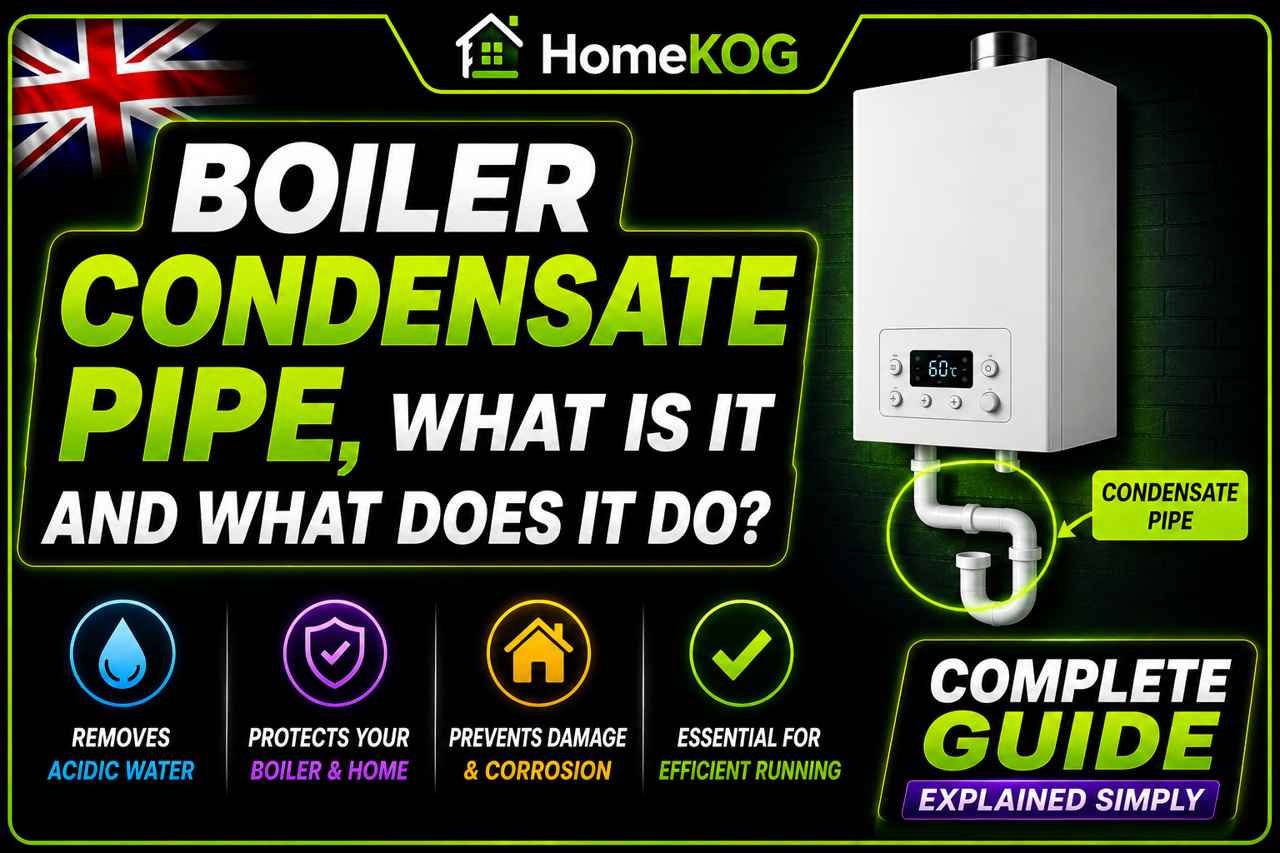

Boiler Condensate Pipe: What It Does, How to Fix It & Freezing Prevention in 2026
Quick Answer: A boiler condensate pipe is a plastic drainage pipe that carries acidic wastewater produced by a condensing boiler to an external drain or soakaway. The most common problem is freezing during cold weather, which causes the boiler to shut down. A frozen condensate pipe can often be thawed at home using warm water, but a broken or leaking pipe requires a Gas Safe registered engineer to repair or replace. Understanding boiler filling loop functionality explained is essential for maintaining your heating system. This mechanism allows you to refill the boiler with water and is crucial for ensuring it operates efficiently. Regular checks on the filling loop can prevent common issues before they arise, thus ensuring optimal performance of your boiler throughout the colder months.
When the UK experienced sub-zero temperatures in 2010 and again in 2018, boiler manufacturers received thousands of calls from homeowners with no heating or hot water. In most cases, the cause was the same: a frozen condensate pipe had caused the boiler to shut down. For many of those homeowners, it was the first time they had ever heard of a condensate pipe — and that lack of awareness made the situation harder to resolve quickly.
Understanding what a condensate pipe does, how to recognise when it has frozen, and what you can do about it is one of the most practical pieces of boiler knowledge any UK homeowner can have going into winter.

Key Facts: Boiler Condensate Pipe Relationships
- A boiler condensate pipe is a plastic drainage pipe that carries acidic wastewater produced during the condensing process away from the boiler to a drain or soakaway.
- A condensing boiler produces condensate as a by-product of recovering latent heat from exhaust gases, and cannot function correctly without a working condensate pipe to expel this wastewater.
- Condensate is a slightly acidic liquid formed when water vapour in the boiler’s exhaust gases cools and condenses back into liquid form during the heat recovery process.
- A PVC pipe is the material most commonly used for condensate pipes because its plastic construction resists the mild acidity of the wastewater that passes through it.
- The Heating and Hotwater Industry Council (HHIC) is the UK organisation that sets guidelines for condensate pipe specifications and installation standards for new boiler installations.
- An internal condensate pipe must have a minimum diameter of 22mm under current HHIC guidelines, while an external condensate pipe must be at least 32mm in diameter to reduce the risk of freezing.
- A frozen condensate pipe is the most common condensate-related fault in UK homes and typically occurs when an external section of pipe is exposed to sub-zero temperatures during cold weather.
- A condensate pump is a centrifugal pump used to move condensate wastewater when gravity alone cannot drain it to the discharge point at ground level.
- A soakaway is an underground drainage solution used when no conventional drain is available for the condensate pipe to discharge into, neutralising the acidity of the wastewater using limescale chippings before releasing it into the ground.
- A boiler lockout caused by a frozen condensate pipe is a safety shutdown that prevents the boiler from operating until the blockage in the pipe has been cleared and the boiler has been reset.
- Pipe insulation using waterproof lagging is the most effective DIY measure for preventing condensate pipe freezing in external sections of pipe.
- A Gas Safe registered engineer must be used for any condensate pipe repair, replacement, or internal rerouting that goes beyond simple thawing of a frozen external section.
What Is a Boiler Condensate Pipe?
A condensate pipe is a plastic drainage pipe fitted to every condensing boiler. Its job is to carry wastewater — produced as a by-product of the boiler’s heat recovery process — safely away from the boiler unit and into the drainage system. what is a condensing boiler is an essential question for anyone considering upgrading their heating system. These boilers are highly efficient, utilizing technology that captures and reuses heat from the exhaust gases. This innovation not only reduces energy consumption but also minimizes environmental impact, making them a popular choice among homeowners seeking to lower their utility bills. Understanding combi boiler installation techniques is crucial for achieving optimal performance and efficiency. Proper installation can enhance the lifespan of the boiler and ensure it operates safely within the home. Homeowners need to consider hiring qualified professionals who are experienced in these specific installation techniques to avoid potential issues down the line.
Modern condensing boilers achieve their high efficiency ratings by extracting latent heat from exhaust gases before they leave through the flue. As this heat is recovered, water vapour in the exhaust gases cools and condenses back into liquid form. This liquid — the condensate — contains dissolved carbon dioxide and is mildly acidic, which is why the pipe carrying it must be made from plastic rather than metal. A typical modern condensing boiler produces two to three litres of condensate wastewater for every hour of operation, released in small increments of around 300ml to reduce the risk of the pipe freezing.
The condensate pipe is usually the only plastic pipe visible among the metal pipework connected to the boiler and is typically routed through an external wall to discharge into a drain. This external routing is what makes it vulnerable to freezing during cold weather.
How to Identify Your Condensate Pipe
Identifying the condensate pipe is straightforward once you know what to look for. Among the metal pipes running to and from the boiler, the condensate pipe stands out because it is plastic — usually white or grey PVC — and is generally smaller in diameter than the main heating pipework.
It will typically exit through an external wall at a low level and terminate near a drain, soil stack, or purpose-installed soakaway. If you can see a plastic pipe exiting your property at a low point near the boiler, it is almost certainly the condensate pipe.
HHIC Condensate Pipe Guidelines for New Boiler Installations
The Heating and Hotwater Industry Council has established specific guidelines for condensate pipe installation that apply to all new boiler installations in the UK. These guidelines define the minimum pipe diameters and installation requirements that heating engineers must follow.
For internal condensate pipe runs, the minimum diameter is 22mm. For external pipe sections that are exposed to outdoor temperatures, a minimum diameter of 32mm is required. The larger diameter of the external pipe provides some additional resistance to freezing by reducing the proportion of the pipe’s internal volume that ice can fill before a blockage forms — though it does not eliminate the risk of freezing entirely.
External condensate pipe runs should be kept as short as possible and should fall continuously towards the discharge point without any horizontal sections that could trap water. The end of the pipe should be cut at a 45-degree angle pointing towards the drain to promote drainage and minimise the chance of ice forming at the outlet.
Any outside pipes also used to carry waste from sinks or washing machines must be insulated with waterproof and UV-resistant materials, which is also sound practice for dedicated condensate pipes in exposed locations.
Signs of a Frozen Condensate Pipe
A frozen condensate pipe is the most common boiler-related problem during cold spells in the UK. When the pipe freezes, condensate cannot drain and backs up into the boiler, triggering a lockout. The boiler will not restart until the blockage has been cleared.
The signs that your condensate pipe has frozen are consistent and recognisable. The boiler will stop producing heating and hot water without any other obvious cause. An error code or fault message will appear on the boiler display — on Worcester Bosch boilers this is typically the EA or D5 code, while other manufacturers use their own equivalent codes. A gurgling or bubbling sound from the boiler or pipework is another common indicator, caused by condensate backing up behind the frozen section.
If these symptoms appear during or immediately after a period of sub-zero temperatures and there is no other obvious cause, a frozen condensate pipe is the most likely explanation.
How to Fix a Frozen Condensate Pipe Yourself
Thawing a frozen condensate pipe is one of the few boiler-related problems that most homeowners can resolve without calling a Gas Safe engineer. The process is straightforward, provided the pipe has not cracked or suffered physical damage as a result of the freezing.
Locate the frozen section of the external pipe. It is most likely to be at the point where the pipe exits the building, at any bend or joint in the external run, or at the open end where discharged water is most exposed to the cold air.
Pour warm water — not boiling — directly over the frozen section. Water at around 60 to 70°C is effective for melting the ice without risking damage to the plastic pipe. Boiling water should be avoided as the sudden temperature change can crack PVC.
Repeat the application of warm water as many times as needed. Depending on how solid the blockage is, it may take several applications before the ice clears. If the outdoor temperature is at or below -2°C, warm water alone may refreeze before it can melt the blockage. In this situation, combine the warm water method with a hot water bottle applied directly to the frozen section for a sustained period. The combination of the two is considerably more effective than either approach alone at very low temperatures.
Once the pipe has thawed, reset the boiler using the reset button on the control panel. The boiler should start up normally and resume heating. Monitor it over the following period to confirm it is operating correctly. Additionally, check the egg timer function on Vaillant Boiler to ensure it is set correctly for your heating needs. If the timer is malfunctioning, it may cause inconsistencies in your heating schedule. Regularly reviewing these settings can help maintain optimal performance and efficiency.
If the boiler continues to display a fault code after the pipe has been thawed and the reset has been attempted, call a Gas Safe engineer to investigate further.
Preventing Condensate Pipe Freezing
Taking steps to prevent the pipe from freezing in the first place is always preferable to dealing with a boiler lockout in the middle of winter.
The most effective preventative measure is to insulate the external section of the condensate pipe using waterproof lagging. This is a straightforward DIY task that can be completed in a short time using materials available from any hardware store. Non-waterproof insulation materials should not be used, as they absorb moisture and can become saturated and ineffective in wet weather.
Moving the condensate pipe from an external to an internal route eliminates the freezing risk entirely, as an internal pipe will not drop to sub-zero temperatures regardless of outdoor conditions. This is a more involved installation job that requires a Gas Safe engineer or qualified heating installer and is subject to the HHIC guidelines on internal pipe diameter and routing.
Increasing the boiler flow temperature is sometimes suggested as a preventative measure, but this approach increases energy consumption and running costs and is generally not recommended as a long-term solution.
What Is a Condensate Pump?
A condensate pump is a centrifugal pump used when the natural fall of gravity cannot move condensate wastewater from the boiler to the discharge point at ground level. This situation arises in some boiler installations where the drainage point is above the level of the boiler or where a long horizontal pipe run is unavoidable. An important component in these systems is the definition of an expansion vessel, which helps accommodate fluctuations in system pressure and volume. By absorbing excess pressure, the expansion vessel prevents the risk of damage to the boiler and connected piping. This ensures the overall efficiency and safety of the heating system, particularly in complex installations where precision is crucial.
The pump operates intermittently rather than continuously. Condensate collects in a small tank, and when the liquid level reaches a set point, a float switch activates the pump to expel the collected water. Once emptied, the tank returns to the collection phase and the cycle repeats.
More sophisticated condensate pumps include a second float switch at a higher level. If the first switch activates the pump but the water level continues to rise — indicating that the pump cannot discharge the water, perhaps because the outlet pipe is frozen — the second switch triggers an alarm or shuts the system down before an overflow can occur. This dual-switch design makes it easier to identify a developing blockage before it causes wider problems.
What Is a Condensate Soakaway?
A soakaway is an underground drainage solution used when no conventional drain is available for the condensate pipe to discharge into. Rather than connecting the pipe to the main drainage system, the wastewater is directed into a buried chamber or pit filled with limescale chippings.
The limescale chippings neutralise the mild acidity of the condensate before it disperses into the surrounding soil. This two-stage process — neutralisation followed by gradual ground absorption — allows the wastewater to be safely managed without a direct connection to the sewer network. The benefits of limescale reducers in plumbing cannot be overlooked, especially in areas prone to hard water. By minimizing mineral buildup, these reducers enhance the efficiency and longevity of plumbing systems. Moreover, they contribute to better water flow and reduce the frequency of maintenance required, leading to overall cost savings.
Benefits of a Soakaway
A soakaway reduces the volume of wastewater entering the main drainage system, which is beneficial in areas where drainage infrastructure is under pressure. It is relatively inexpensive and straightforward to install, and once in place it requires minimal maintenance. Some water companies offer a rebate against surface drainage charges for properties that use a soakaway to manage some of their wastewater, which can partially offset the installation cost.
The neutralisation of acidic condensate within the soakaway also reduces the risk of corrosive residue accumulating within the system, which can extend the working life of downstream components.
Limitations of a Soakaway
A soakaway is not suitable for all locations. It should not be installed in soil with poor drainage, as the ground will not absorb water effectively and the soakaway chamber will overflow. Leaves, dirt, and debris can block the inlet to the soakaway over time, so a silt filter should be installed to screen out solid material before it can cause a blockage.
The soakaway must also be positioned at a sufficient distance from the house to ensure that any localised drainage issues do not affect the structural foundations of the building.
Frequently Asked Questions
What does a boiler condensate pipe do?
A boiler condensate pipe carries the acidic wastewater produced by a condensing boiler’s heat recovery process away from the unit and into a drain, soil stack, or soakaway. Every condensing boiler produces condensate as a by-product of extracting latent heat from exhaust gases. This liquid is mildly acidic and must be routed through a plastic pipe — typically PVC — rather than metal pipework. Without a functioning condensate pipe, the boiler cannot operate correctly and will shut down. understanding low loss headers is essential for optimizing the overall efficiency of the boiler system. By minimizing heat loss during operation, low loss headers can significantly improve energy performance and reduce operational costs. This awareness also aids in proper installation and maintenance, ensuring the longevity and reliability of the heating system.
How do I know if my condensate pipe is frozen?
The most common signs of a frozen condensate pipe are a boiler that has stopped producing heating and hot water, a fault code or error message on the boiler display, and a gurgling or bubbling noise from the boiler or nearby pipework. These symptoms typically appear during or immediately after a period of sub-zero temperatures. If your boiler stops working in cold weather for no other obvious reason, a frozen condensate pipe is the most likely cause and should be the first thing you check.
Can I fix a frozen condensate pipe myself?
Yes, in most cases. If the pipe has simply frozen and has not cracked or suffered physical damage, you can thaw it at home by pouring warm water — at around 60 to 70°C — over the frozen section. Repeat the application until the ice clears, then reset the boiler using the reset button on the control panel. In very cold temperatures at or below -2°C, combine the warm water method with a hot water bottle applied to the frozen section for a more sustained effect. If the boiler does not restart normally after the pipe has thawed, call a Gas Safe engineer.
How can I prevent my condensate pipe from freezing?
The most effective preventative measure is to insulate the external section of the condensate pipe using waterproof pipe lagging, which is available from hardware stores and is straightforward to fit as a DIY job. Moving the pipe to an internal route eliminates the freezing risk entirely but requires a Gas Safe engineer to complete the rerouting. External condensate pipes should also be kept as short as possible and should fall continuously towards the drainage point, with the end cut at a 45-degree angle to promote drainage and reduce ice build-up at the outlet.
What size should a condensate pipe be?
Under current HHIC guidelines, internal condensate pipes must have a minimum diameter of 22mm and external pipes must have a minimum diameter of 32mm. The larger external diameter provides some additional resistance to freezing compared to a smaller pipe, as it takes longer for ice to fully block the wider internal bore. The guidelines also specify that external pipes should be kept as short as possible and should connect directly to the drainage system with a continuous downward fall.
How much condensate does a boiler produce?
A modern condensing boiler produces approximately two to three litres of condensate wastewater per hour of operation. This water is not released all at once but in increments of around 300ml, which reduces the risk of flooding the pipe and helps to prevent freezing by limiting the volume of water sitting in the pipe at any one time. The exact volume of condensate produced depends on the efficiency of the boiler and the conditions under which it is operating.
What is a condensate pump and when is one needed?
A condensate pump is used when the natural fall of gravity is insufficient to drain condensate water from the boiler to the discharge point. This situation arises in installations where the drainage point is at the same level as or above the boiler outlet, or where the pipe run is too long and shallow for gravity drainage to work effectively. The pump activates automatically when the collected condensate reaches a set level and expels it to the discharge point. Dual-switch models provide an additional safety feature by triggering an alarm if the pump cannot clear the water — for example, because the outlet pipe is frozen. understanding pressure release valves is crucial for maintaining system safety and efficiency. These valves ensure that excess pressure is released safely, preventing potential damage to equipment. Proper installation and regular maintenance of pressure release valves can significantly enhance the longevity of your condensate pump system.
What is a condensate soakaway and do I need one?
A condensate soakaway is an underground drainage solution used when no conventional drain is available for the condensate pipe to discharge into. It consists of a buried chamber filled with limescale chippings that neutralise the mild acidity of the condensate before it disperses into the surrounding soil. A soakaway is a practical and affordable alternative to connecting the condensate pipe to the main drainage system, but it is not suitable for locations with poor soil drainage and must be positioned well away from the building’s foundations.
Conclusion
The boiler condensate pipe is a small but essential component of every condensing boiler installation in the UK. When it functions correctly it requires no attention, but when it freezes or fails it brings the entire heating system to a halt — often at the worst possible time.
Knowing where your condensate pipe is, what the early warning signs of a problem look like, and how to thaw a frozen pipe yourself puts you in a much stronger position when cold weather arrives. Insulating the external section of the pipe before winter is the single most effective preventative step and costs very little in time or materials.
For anything beyond thawing a frozen pipe — including a cracked or leaking pipe, rerouting to an internal run, or installing a condensate pump or soakaway — a Gas Safe registered engineer should always be consulted to ensure the work is carried out safely and in line with current HHIC guidelines. understanding gas supply pipe systems is crucial for maintaining the safety and efficiency of heating systems. It is important for homeowners to recognize the signs of possible issues, such as unusual noises or smells, which can indicate underlying problems. Regular inspections and maintenance by qualified professionals can help prevent more serious complications and ensure compliance with safety standards.