
What Is a Low Loss Header and How Does It Work?
Quick Answer: A low loss header is a large water container or tube fitted with flow and return connections that hydraulically separates the primary boiler circuit from the secondary heating circuit. It regulates water flow and pressure across multiple boilers or heating zones, improves system efficiency, and helps remove sludge and debris from the central heating system. It is most commonly used in large residential properties, commercial buildings, and multi-boiler installations.
Most homeowners with a standard domestic boiler will never need to think about a low loss header. But for larger properties, commercial premises, and buildings where multiple boilers work together to meet high heating demands, the low loss header is an essential piece of equipment that keeps the whole system running efficiently and reliably.
This guide explains what a low loss header is, how it works, when you need one, and what the key benefits are in 2026.

Key Facts: Low Loss Header Relationships
- A low loss header is a hydraulic separation device installed between the primary boiler circuit and the secondary heating circuit to regulate water flow and pressure across a central heating system.
- A primary circuit is the part of a heating system that includes the boiler and its pump, responsible for generating and circulating heated water to the low loss header.
- A secondary circuit is the part of a heating system that distributes heat from the low loss header to the heat emitters, which may include radiators, underfloor heating, or fan coil units.
- Hydraulic separation is the function performed by the low loss header that prevents the variable flow rate of the secondary circuit from interfering with the constant flow rate of the primary boiler circuit.
- A primary pump is fitted between the boiler and the low loss header to circulate heated water from the boiler into the header at the correct rate.
- A secondary pump is fitted between the low loss header and the heating circuit to distribute water from the header to the radiators or underfloor heating at the flow rate required by that zone.
- Sludge is a build-up of corrosion debris and particulate matter that circulates within a central heating system and settles to the bottom of a low loss header where it can be drained away.
- A drain valve is fitted at the base of a low loss header to allow accumulated sludge and debris to be removed periodically, maintaining the efficiency of the wider heating system.
- An automatic air vent is a device fitted to the top of a vertically installed low loss header that releases trapped air from the system as water velocity slows inside the header.
- A boiler with low water content is a type of modern condensing boiler that requires a low loss header to buffer flow rate variations and protect the heat exchanger from thermal stress.
- A dirt and air separator is a device that can be integrated into or installed alongside a low loss header to provide dedicated removal of both particulate debris and trapped air from the heating system.
- Flow rate is the volume of water passing through the heating circuit per unit of time, and the low loss header allows the primary and secondary circuits to operate at different flow rates without affecting each other.
What Is a Low Loss Header?
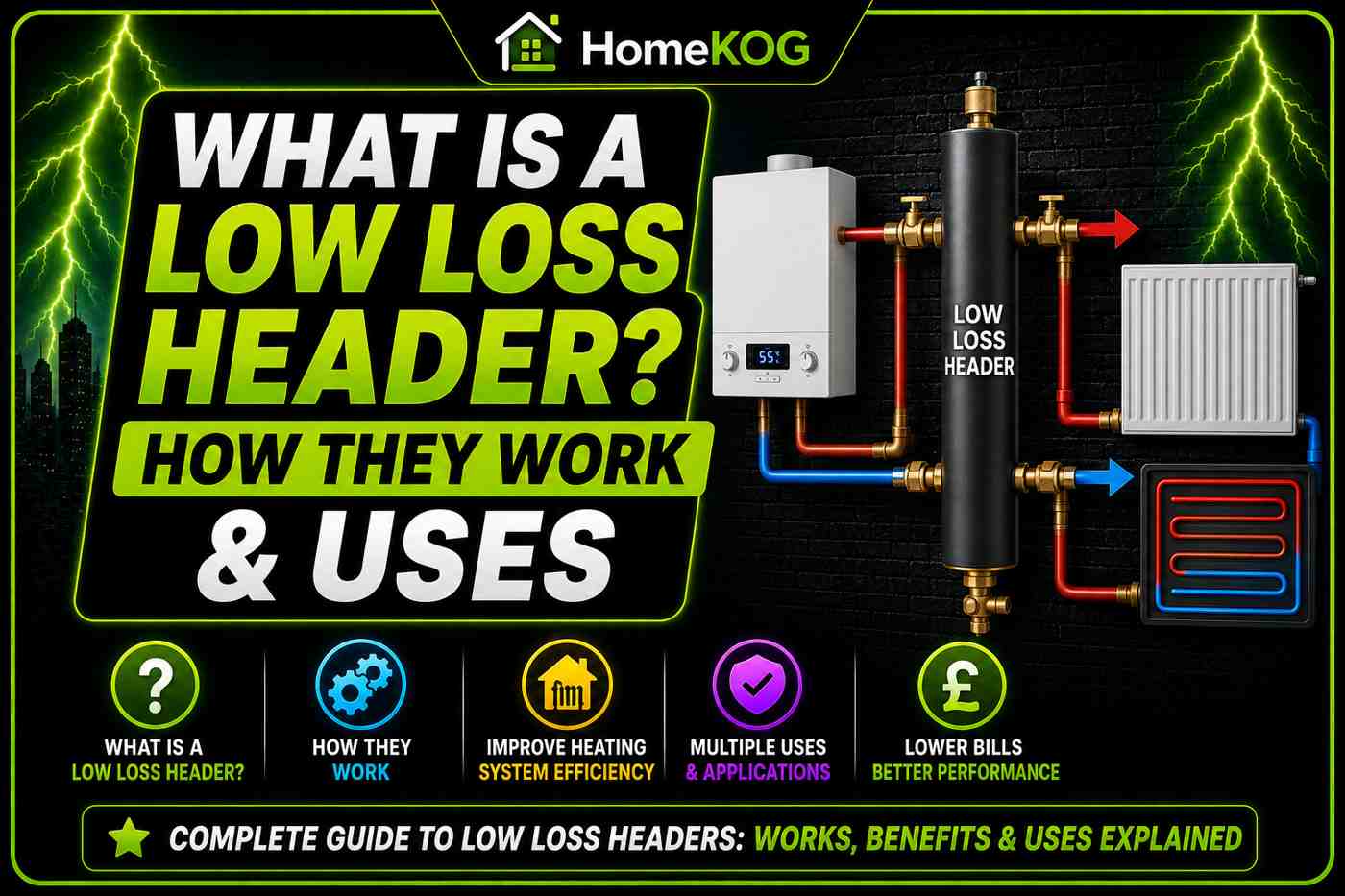
A low loss header is, at its most fundamental level, a large container of water — typically a vertical tube or box — fitted with flow and return connections on both the primary boiler side and the secondary heating circuit side. Water from the boiler enters the header on the primary side, and water for the heating circuit is drawn off on the secondary side.
The name refers to the low pressure drop that occurs across the device. Because the header is oversized relative to the pipes feeding into it, water slows significantly as it passes through, creating a low-velocity zone that allows hydraulic separation to occur between the two circuits.
This separation is the defining function of the low loss header. Without it, the variable flow demands of the secondary circuit — created by thermostats opening and closing zone valves throughout the day — would directly affect the flow rate through the primary boiler circuit, causing the boiler to operate outside its optimal parameters and reducing both its efficiency and its working life. Understanding the ideal f1 fault code explanation is crucial for troubleshooting issues within the system. Technicians can often pinpoint problems more swiftly when they are familiar with the common fault codes associated with various components. This knowledge not only aids in quick repairs but also helps in optimizing the overall performance of the heating system.
How Does a Low-Loss Header Work?
The heating system in any large property is divided into two distinct circuits. The primary circuit contains the boiler and its dedicated pump. This circuit’s job is to heat water and deliver it to the low loss header at a consistent flow rate and temperature.
The secondary circuit draws heated water from the low loss header and distributes it to the heat emitters — radiators, underfloor heating loops, or fan coil units — throughout the building. This circuit has its own pump and operates at a flow rate that changes continuously depending on how many zones are calling for heat at any given moment.
The low loss header sits between these two circuits and allows them to operate independently. Hot water from the primary circuit flows into the header, where it mingles with water returning from the secondary circuit. The secondary pump then draws the blended water out at the temperature and flow rate required by the heating zones currently in demand.
Because the header decouples the two circuits hydraulically, the boiler can continue to operate at its ideal constant flow rate even when the secondary circuit’s demand fluctuates. This protects the heat exchanger from the thermal shock that would otherwise result from sudden changes in water flow and temperature.
The Role of the Pump
A correctly sized pump is essential for the low loss header to function as intended. Two separate pumps are required — one on the primary circuit between the boiler and the header, and one on the secondary circuit between the header and the heating system.
If the primary pump is undersized, the hot water generated by the boiler cannot reach all parts of the secondary circuit at the required temperature. If the pump is oversized, it will push water through the system too rapidly, reducing the time available for heat transfer and wasting energy. Getting the pump sizing right for each circuit is a critical part of the design process and should always be carried out by a qualified heating engineer.
When Do You Need a Low Loss Header?
A low loss header is not necessary for a standard domestic property with a single boiler and a straightforward central heating circuit. In this scenario, the boiler’s output is matched directly to the heating demand of the home and no hydraulic separation is needed.
The device becomes necessary in a number of more complex scenarios. Large residential properties with high heating loads and multiple heating zones are one common application. Commercial buildings including offices, care homes, and hospitals — where simultaneous heating demand across many zones must be met consistently — are another.
Properties where multiple boilers are connected to serve a single large heating circuit benefit significantly from a low loss header, as it allows each boiler to operate at its own optimal flow rate while collectively supplying the secondary circuit. Modern condensing boilers with low water content — a feature of most high-efficiency units — are particularly well served by a low loss header because their compact heat exchangers are more sensitive to flow rate fluctuations than older, larger-capacity models. Understanding the boiler condensate pipe function explained is crucial for maintaining system efficiency. This piping not only carries away excess water produced during the heating process but also plays a role in the overall efficiency of condensing boilers. Properly managing condensate can prevent issues such as blockages and ensure optimal performance across the entire heating system.
The size of the header must be correctly matched to the water flow rate of the building it serves. An undersized header will not provide effective hydraulic separation, while an oversized one may result in unnecessary heat loss. A qualified heating engineer will calculate the appropriate specification during the system design phase.
The Benefits of Installing a Low Loss Header
Constant Primary Flow Rate
By separating the primary and secondary circuits, the low loss header allows the boiler or boilers to operate at a constant, consistent flow rate regardless of what is happening on the secondary side. This protects the boiler from the irregular flow patterns that occur as zone valves open and close throughout the heating day, and prevents the kind of thermal stress that shortens component life in the heat exchanger and pump.
Extended Boiler Lifespan
A boiler that operates within its designed flow rate parameters consistently will last longer than one that is subject to frequent fluctuations. The low loss header creates the stable hydraulic environment in which the boiler can perform at its best, reducing the likelihood of premature component failure and extending the overall working life of the installation. Annual boiler servicing further supports this by catching developing faults before they cause damage. Understanding the ideal f2 fault code causes can be crucial in maintaining the efficiency of the system. By identifying these fault codes early, technicians can address issues proactively, preventing costly repairs down the line. Regular monitoring ensures that any deviations from optimal performance are swiftly rectified.
Sludge and Debris Removal
One of the more practical benefits of the low loss header is its ability to collect sludge and debris from the central heating system. As water flows through the header at low velocity and low pressure, particulate matter — including corrosion debris, rust, and magnetite — loses its momentum and settles to the bottom of the header.
A drain valve at the base of the header can be opened periodically to flush this settled debris out of the system before it has the opportunity to travel to the boiler or heat emitters and cause damage. This is a simple maintenance task that makes a meaningful difference to the long-term cleanliness and performance of the system.
For systems with a significant debris burden, a dedicated dirt and air separator — either integrated into the low loss header or installed separately — provides an additional layer of filtration and keeps the system cleaner between maintenance visits.
Air Removal
When the low loss header is installed vertically, the low water velocity inside the header allows trapped air to rise naturally to the top of the unit, where it can be expelled through an automatic air vent. Trapped air in a central heating system is a common cause of noise, reduced heat output from radiators, and pump cavitation — all of which reduce system efficiency and comfort. The air venting function of a vertical low loss header addresses this continuously and automatically without the need for manual bleeding.
Key Considerations Before Installing a Low Loss Header
Installing a low loss header into an existing heating system involves more than simply fitting the device itself. The system design as a whole needs to be assessed to ensure the header will function correctly in context.
Pump sizing on both the primary and secondary circuits must be calculated accurately. The existing pipework must be capable of accommodating the additional connections the header requires, and the space available for the header itself needs to be assessed — in some installations, the pipework configuration makes installation more challenging and may require modification.
The cost of a low loss header installation varies depending on the complexity of the existing system, the size of the header required, and the extent of any pipework changes needed. For a straightforward commercial installation in a new building, the cost is lower than for a retrofit into an existing system with established pipework routes. A heating engineer experienced in commercial and multi-boiler systems should be consulted to provide an accurate assessment and quotation before any work begins.
Frequently Asked Questions
What is a low loss header used for?
A low loss header is used to hydraulically separate the primary boiler circuit from the secondary heating circuit in a central heating system. This separation allows the boiler to operate at a constant, optimal flow rate while the secondary circuit adjusts its flow in response to the changing demands of heating zones throughout the building. It is most commonly used in large residential properties, commercial buildings, and systems where multiple boilers supply a single heating circuit. Understanding what is a condensing boiler can further enhance the efficiency of a central heating system. These boilers capture and reuse heat that would otherwise be lost, leading to reduced energy consumption and lower utility bills. As a result, they are a popular choice in modern heating solutions for both residential and commercial applications.
Do I need a low loss header for a domestic boiler?
Most standard domestic properties with a single boiler and a straightforward central heating circuit do not need a low loss header. The device becomes necessary when the property has multiple heating zones with independent controls, when a boiler with low water content is installed in a large system, or when multiple boilers are connected to serve a single heating circuit. A heating engineer will advise whether a low loss header is required based on the specific layout and demands of your system.
How does a low loss header remove sludge from a heating system?
As water flows through a low loss header, its velocity and pressure drop significantly compared to the rest of the system. This reduction in speed causes particulate matter — including sludge, magnetite, and corrosion debris — to lose momentum and settle to the bottom of the header. A drain valve at the base of the header can then be opened to flush this accumulated debris out of the system, preventing it from reaching the boiler or heat emitters and causing damage. Regular draining of the header is a simple but effective maintenance task.
How many pumps does a low loss header system need?
A low loss header system requires two pumps. The first pump is installed on the primary circuit between the boiler and the header, circulating heated water from the boiler into the header at the correct rate. The second pump is installed on the secondary circuit between the header and the heating system, drawing water from the header and distributing it to the radiators, underfloor heating, or other heat emitters. Both pumps must be correctly sized for their respective circuits to ensure the header provides effective hydraulic separation without energy waste.
What are the advantages of installing a low loss header?
The main advantages of a low loss header are consistent boiler performance through stable flow rates, extended boiler lifespan through protection from thermal shock and irregular flows, passive sludge and debris removal via the low-velocity zone and drain valve, and automatic air removal when the header is installed vertically. Together these benefits improve the efficiency, reliability, and longevity of the central heating system as a whole, making the low loss header a worthwhile investment for any large or complex heating installation.
Can a low loss header be used with underfloor heating?
Yes. Underfloor heating is one of the secondary circuit applications most commonly served by a low loss header. Underfloor heating circuits typically operate at lower flow temperatures than radiator circuits, and the low loss header allows the secondary circuit to be supplied at the correct temperature independently of the primary boiler circuit temperature. This makes the combination of a low loss header and underfloor heating particularly effective in larger properties where both radiators and underfloor heating may be operating simultaneously at different temperature requirements.
How big does a low loss header need to be?
The correct size of a low loss header is determined by the water flow rate of the system it serves. A header that is too small will not provide effective hydraulic separation, while one that is too large may result in unnecessary heat loss as water sits within the header for longer than necessary. The calculation takes into account the combined maximum output of all boilers in the primary circuit, the flow rates required by the secondary circuit zones, and the physical dimensions and layout of the pipework. This sizing calculation should always be carried out by a qualified heating engineer during the system design phase.
Does a low loss header need maintenance?
Yes. The main maintenance task for a low loss header is periodic draining of the sludge and debris that accumulates at its base. How frequently this needs to be done depends on the age and condition of the heating system and the degree of corrosion present in the pipework. In systems with a significant sludge burden, more frequent draining may be needed in the early stages after installation. A qualified heating engineer will be able to advise on the appropriate maintenance schedule and can also check the automatic air vent and drain valve for correct operation during an annual boiler service visit.
Conclusion
A low loss header is a straightforward device that solves a genuinely complex problem — allowing multiple boilers or heating zones to coexist within a single system without interfering with each other’s performance. By hydraulically separating the primary and secondary circuits, it gives the boiler the stable flow conditions it needs to operate efficiently, protects key components from thermal stress, and provides a practical mechanism for removing sludge and air from the system on an ongoing basis.
For large residential properties, commercial buildings, and any installation where multiple boilers serve a single heating circuit, a correctly specified and installed low loss header is an essential component of a well-designed system. Getting the pump sizing, header sizing, and system design right from the outset — with input from a qualified heating engineer — ensures the device delivers the full range of benefits it is capable of providing throughout the life of the installation.