
What is a Gas Supply Pipe? Types, Problems and Complete Guide 2026
Quick Answer: A gas supply pipe is the pipe that connects a property to the gas main on the street, running from the street main to the gas meter on the property’s external wall. From the meter, internal gas pipes carry gas to individual appliances including the boiler, cooker, and fires. The supply pipe is owned and maintained by the Gas Network Operator (such as Cadent, SGN, or Northern Gas Networks depending on region). All connections, modifications, and repairs to gas pipework must be carried out by a Gas Safe registered engineer — it is illegal for anyone without Gas Safe registration to work on gas pipes or connections.
Most homeowners interact with gas pipes only when something goes wrong — a leak, a boiler fault, or a property being connected to the gas network for the first time. Understanding what the gas supply pipe is, what types of material are used, what problems can develop, and how the connection process works helps any homeowner or landlord make informed decisions about gas infrastructure on their property.
What is a Mains Gas Supply Pipe?
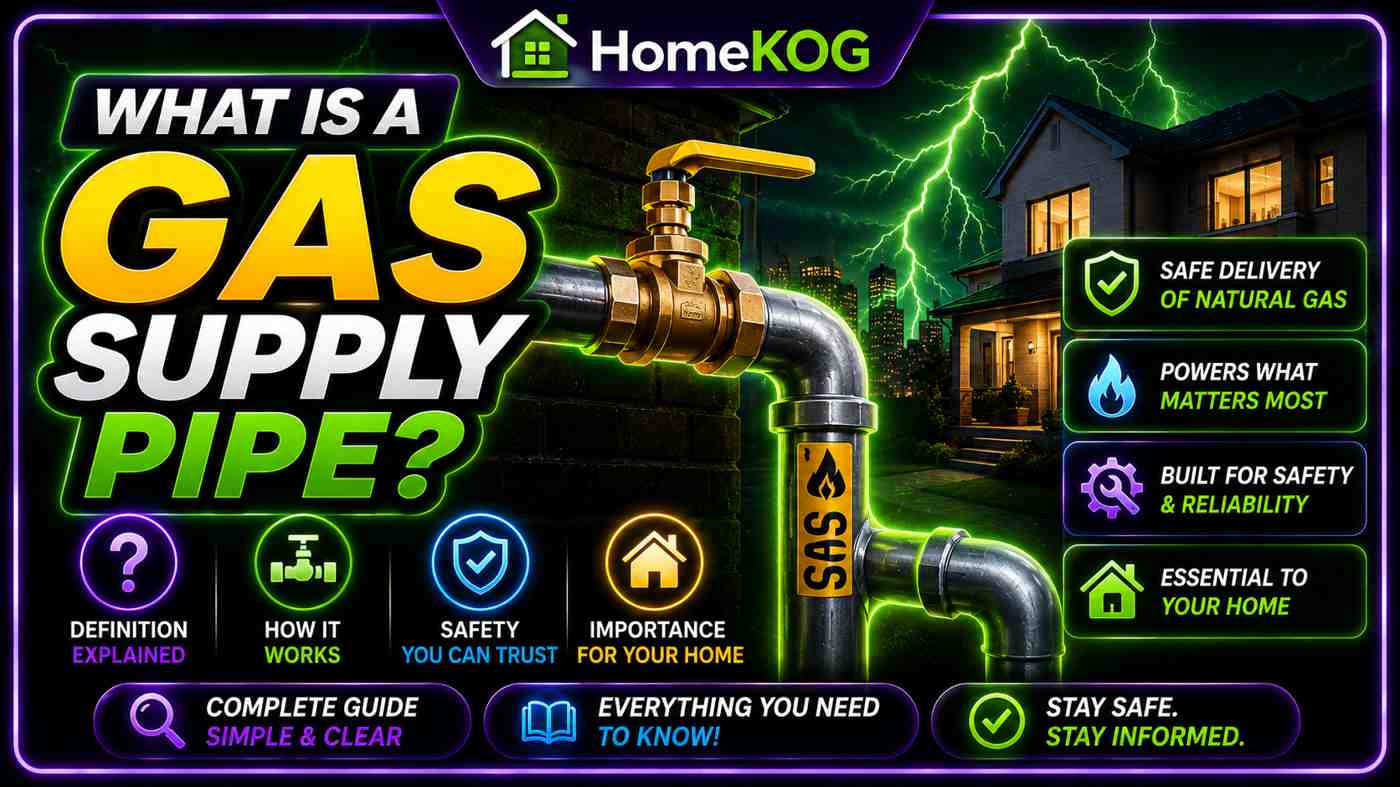
The mains gas supply pipe is the pipe that runs from the gas main beneath the street to the property’s gas meter. This section of pipework is external to the building and is distinct from the internal gas pipework that distributes gas from the meter to individual appliances within the property.
The gas meter is the interface between the National Grid’s distribution network and the property’s internal gas supply. It serves two functions — measuring gas consumption for billing purposes, and regulating gas pressure to ensure all appliances on the property receive gas at the correct operating pressure for safe and efficient combustion.
The size of the supply pipe that connects a property to the gas main is determined by the approximate gas demand of the property — a larger property with more gas appliances needs a wider pipe to maintain adequate flow and pressure. When a new boiler or additional gas appliances are installed, the existing supply pipe should be assessed to confirm it remains adequately sized for the increased demand.

Types of Gas Supply Pipe
Gas supply pipes are manufactured from several materials, each with specific properties that make them suitable for different applications — internal versus external, above ground versus buried underground.
PVC (Polyvinyl Chloride)
PVC is one of the most commonly used materials for underground external gas supply lines. It is resistant to corrosion, durable in buried applications, and cost-effective relative to metal alternatives. PVC is most appropriate for low-pressure gas distribution applications — the gas main distribution network that runs under residential streets is often composed of PVC or similar plastic pipe materials.
The limitation of PVC is its vulnerability to mechanical damage during installation, particularly in ground conditions with dense tree roots, rocks, or other physical hazards that can crack or deform plastic pipe. Careful installation by experienced professionals is required to avoid damage.
Black Steel (Iron)
Black steel or iron pipe is a traditional gas pipe material used in both interior and exterior applications. It forms airtight connections through threaded or welded joints and handles heat exposure well — making it suitable for installations close to boilers and other heat-generating appliances. Black steel has been used extensively in older UK gas installations and is still encountered in many properties built before the 1970s.
The primary limitation is corrosion — black steel will eventually corrode, and the threaded joint seals deteriorate over time. Properties with older black steel internal gas pipework should have it inspected by a Gas Safe engineer to assess condition, particularly if the boiler or any appliances are being replaced.
Corrugated Stainless Steel Tubing (CSST)
CSST is a flexible stainless steel pipe material that can be routed through confined spaces and around obstacles without the need for numerous fittings. Its flexibility makes it particularly useful for internal gas pipework in properties where the routing is complex. CSST is resistant to corrosion and is not subject to the joint deterioration that affects black steel.
The limitation of CSST is that it is primarily suitable for internal gas piping — it is not the appropriate choice for underground external applications where PVC or HDPE would be used instead.
Other Materials
Copper pipe has historically been used for internal gas pipework in the UK but is subject to strict installation code requirements and is less commonly specified for new gas pipe installations. Galvanised steel and HDPE (high-density polyethylene) are also used in specific applications. HDPE is increasingly used for main gas distribution pipework underground due to its durability, flexibility, and long service life.
Connecting a Property to the Gas Mains
Properties that are not currently connected to the gas network — rural properties, new-build developments in areas without existing gas infrastructure, or properties that have never had gas — can apply for a new gas connection subject to proximity to the existing gas main.
The property must typically be within approximately 23 metres of the existing gas main for a standard connection to be feasible. Properties beyond this distance may require a more complex and expensive connection or may not be economically viable to connect to the gas network.
The process begins by contacting the local Gas Network Operator for the region — Cadent Gas covers the largest area of England, Wales, and the West Midlands; SGN covers Scotland and the South of England; Northern Gas Networks covers the North of England; and Wales and West Utilities covers Wales and the South West. These are the regulated distribution network operators responsible for the gas mains infrastructure.
The Gas Network Operator will require details of the property’s approximate gas demand and a plan of the property to quote for the connection work. The quote covers the cost of excavating the connection from the gas main to the property boundary, laying the supply pipe, installing the meter, and restoring the excavation.
Once the connection is made and the meter installed, a gas supplier must be chosen to provide the gas supply — the network operator delivers gas through the infrastructure but the commercial supply relationship is with a retail gas supplier. Comparison websites can be used to find competitive gas supply tariffs.
Connecting Gas Appliances
After the supply pipe and meter are in place, individual gas appliances — boiler, cooker, fire — must be connected to the internal gas pipework. This work must be carried out by a Gas Safe registered engineer. Connecting any gas appliance without Gas Safe registration is illegal under the Gas Safety (Installation and Use) Regulations 1998, regardless of the apparent simplicity of the connection. The risk of an incorrectly made gas connection — gas leak, carbon monoxide production, fire or explosion — is sufficient to make this a non-negotiable legal requirement.
Gas Pipe Problems to Watch For
Several signs indicate a developing problem with the gas supply pipe or internal gas pipework. Any of these should prompt immediate contact with a Gas Safe engineer for inspection and repair — or with the National Gas Emergency Service on 0800 111 999 if a gas leak is suspected.
The smell of gas — the distinctive rotten egg or sulphurous smell of mercaptan — is the most important warning sign. It indicates gas is escaping from a pipe or connection somewhere on the property. This is a gas emergency requiring immediate evacuation and a call to 0800 111 999.
A hissing sound from pipework or appliances may indicate a pressurised gas escape through a small hole or loose connection — treat this as a potential gas emergency and act accordingly. In addition to addressing gas escapes, it is crucial to understand the various plumbing systems in your home, including how boiler condensate pipe functions explained can help maintain efficiency. Regular maintenance and inspections can prevent costly repairs and ensure that your heating system operates safely. Be proactive in monitoring these pipes to avoid potential leaks and damage to your property. understanding condensing boiler efficiency is essential for optimizing energy use and reducing utility bills. By regularly checking and adjusting your boiler’s settings, you can enhance performance and prolong its lifespan. Investing time in learning about different efficiency metrics can lead to more informed choices when selecting equipment or scheduling maintenance.
Rusting on visible sections of black steel gas pipe indicates the pipe surface is corroding. While surface rust on exterior pipe is common and not immediately dangerous, it should be inspected by a Gas Safe engineer to assess whether the pipe wall has been compromised.
Higher than expected energy bills without a change in usage patterns can indicate a gas meter fault or, in some cases, gas loss from a slow leak in the distribution system — though this is more commonly caused by boiler efficiency reduction.
Gas-powered appliances that are performing poorly — boiler faults, cooker flames that burn yellow rather than blue, gas fires with irregular combustion — can indicate inadequate gas pressure from a supply pipe that is undersized, partially blocked, or deteriorated.
Boiler Replacement and Gas Supply Pipe
When replacing a boiler — particularly when upgrading from a lower-output model to a higher-output replacement, or when converting from a regular to a combi boiler — the existing internal gas supply pipe should be assessed by the installation engineer to confirm it is adequately sized for the new appliance’s gas demand. A supply pipe that is undersized for the boiler’s maximum gas flow rate will restrict the boiler’s performance and may cause operational faults.
Most boiler installation companies include any necessary gas pipe modifications as part of the installation scope — confirm what is included in the quote to avoid unexpected additional costs.
FAQ
What is the difference between the gas supply pipe and the internal gas pipe?
The gas supply pipe runs from the gas main beneath the street to the property’s gas meter — it is external to the building and is maintained by the Gas Network Operator. Internal gas pipes run from the meter to individual gas appliances within the property — the boiler, cooker, fires — and are the responsibility of the property owner to maintain.
Who is responsible for maintaining the gas supply pipe?
The gas supply pipe from the street main to the property’s meter boundary is the responsibility of the Gas Network Operator. The section from the meter into the property and all internal gas pipework is the property owner’s or landlord’s responsibility. Any concerns about the external supply pipe should be reported to the Gas Network Operator for the region.
Can I connect a gas appliance myself?
No. Connecting any gas appliance in the UK without Gas Safe registration is illegal under the Gas Safety (Installation and Use) Regulations 1998. Only Gas Safe registered engineers are legally permitted to work on gas pipework and appliances. Verify an engineer’s registration at gassaferegister.co.uk before allowing any work to begin.
How do I know if I have a gas supply to my property?
The presence of a gas meter on the external wall — typically a box-shaped enclosure near the front of the property — confirms that the property is connected to the gas supply. If no meter is present, the property is not currently connected to the gas network and would require a new connection through the Gas Network Operator.
What should I do if I smell gas?
Treat any gas smell as an emergency. Do not operate any electrical switches, do not use any naked flame, and do not use a mobile phone inside the property. Open windows and doors as you leave. Call the National Gas Emergency Service on 0800 111 999 from outside the building and do not re-enter until the emergency service has attended and confirmed it is safe.
Conclusion
The gas supply pipe is the infrastructure that connects a property to the national gas distribution network — a straightforward concept but one with significant safety, legal, and practical implications for any homeowner or landlord. All work on gas pipes and appliances must be carried out by a Gas Safe registered engineer — this is a legal requirement, not a recommendation — and any signs of gas pipe problems, from the smell of gas through to corroded visible pipework, should be investigated promptly rather than left unattended.
For properties considering connection to the gas network, contacting the regional Gas Network Operator is the starting point — they will assess feasibility, provide a connection quote, and manage the excavation and meter installation work that brings the gas supply to the property boundary, after which a Gas Safe engineer can connect the internal appliances and commission the system.