
Hybrid Heating Systems: What Are They and How Do They Work? 2026
Quick Answer: A hybrid heating system combines a traditional gas or oil boiler with a renewable heat source — most commonly an air source heat pump, ground source heat pump, or solar thermal panels. The heat pump or solar panels handle the majority of the home’s heating demand when conditions allow, with the gas boiler automatically taking over during cold weather when the renewable source cannot meet full demand. Hybrid systems reduce annual energy bills by 30 to 50%, dramatically cut carbon emissions, and are eligible for the £7,500 Boiler Upgrade Scheme grant. They represent the most practical transition route for homeowners who want to reduce gas consumption without fully committing to heat pump-only heating.
Most UK homeowners face a practical tension when it comes to home heating in 2026 — gas boilers remain the most reliable and familiar way to heat a home, but the environmental and financial case for reducing gas consumption is increasingly compelling. A hybrid heating system resolves this tension by combining both technologies, using the renewable component for the majority of heating demand and retaining the gas boiler as an efficient, reliable backup for the coldest periods. This guide explains what hybrid systems are, how they work, which types are available, and whether a hybrid installation is the right choice for the specific property. the first step in exploring a hybrid system is knowing how to identify your boiler type, which can influence the transition process. Understanding the specific model and its capabilities will help in determining compatibility with a hybrid setup. Once identified, homeowners can assess their options for optimizing heating efficiency while minimizing environmental impact.
What is a Hybrid Heating System?
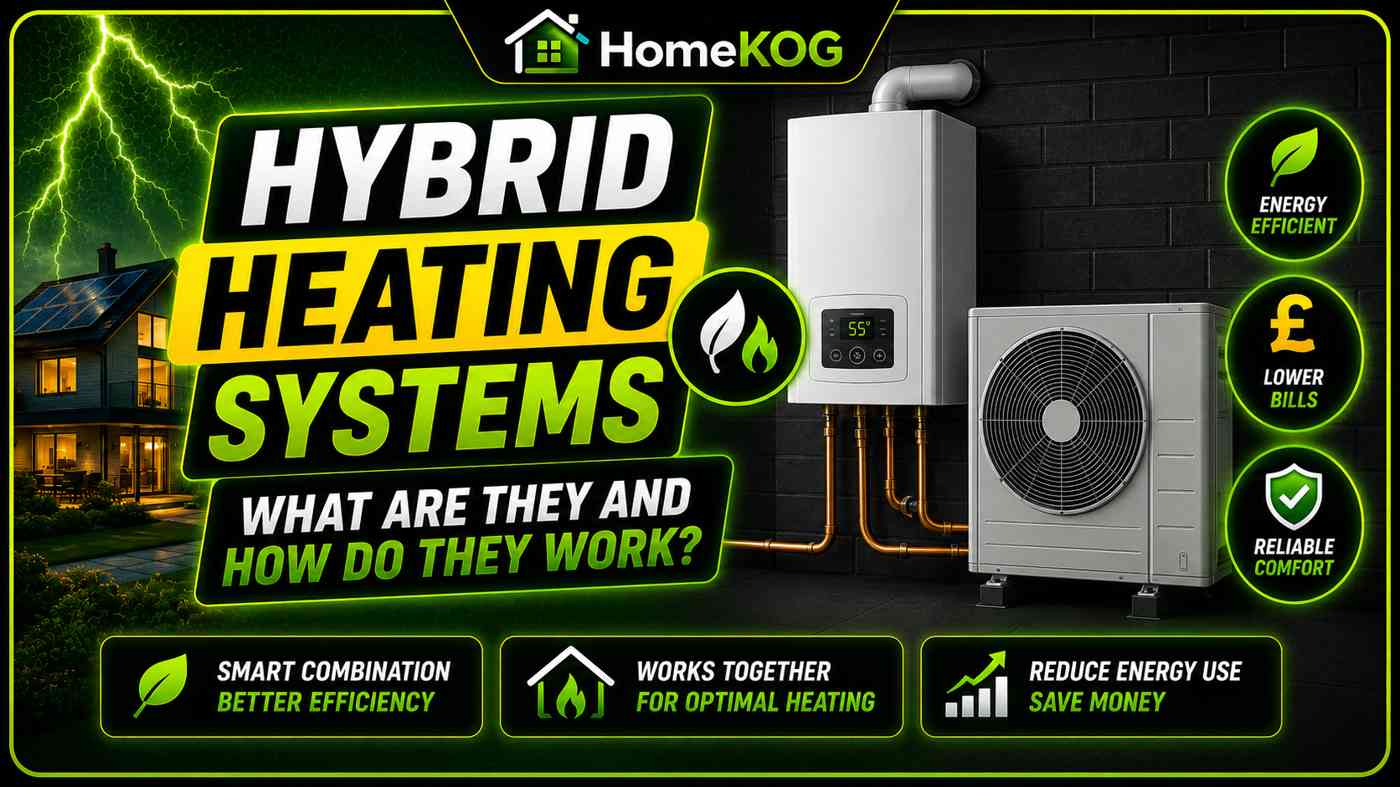
A hybrid heating system combines a conventional gas or oil boiler with at least one renewable heat source — most commonly an air source heat pump, a ground source heat pump, or solar thermal panels. The two systems operate in tandem, with an intelligent control system determining which source is more efficient for the current conditions and automatically switching between them. The central heating system benefits from this hybrid approach, offering increased energy efficiency and reduced carbon emissions. As a result, homeowners can enjoy greater comfort and lower utility bills while contributing to environmental sustainability. This innovative blend illustrates how modern technology is transforming traditional heating methods into smarter, more eco-friendly solutions.
During the majority of the heating year — the mild autumn, spring, and even many winter days when outdoor temperatures remain above approximately 0°C — the heat pump or solar panels can meet the home’s heating demand more efficiently than the gas boiler. As outdoor temperatures fall, the heat pump’s efficiency decreases and the gas boiler takes over progressively, maintaining comfortable temperatures even in the coldest conditions.
The key characteristic of a hybrid system is that the homeowner does not need to manually manage the switching between systems. The control unit handles this automatically based on outdoor temperature, system demand, and the comparative efficiency of each heat source at the prevailing conditions. The result is a heating system that minimises gas consumption year-round without ever compromising the home’s warmth.

How Does a Hybrid Heating System Work?
A heat pump — the most common hybrid partner — extracts heat from outdoor air or the ground and upgrades it through a refrigerant compression cycle to a temperature suitable for the home’s heating circuit. A typical air source heat pump operates most efficiently at outdoor temperatures above 5 to 7°C, achieving a Coefficient of Performance (COP) of 3 to 4 in these conditions — meaning 3 to 4 units of heat for every unit of electricity consumed.
As outdoor temperature falls below this range, the heat pump’s COP decreases — it still produces heat, but at higher electricity cost per unit of output. The hybrid control system continuously monitors the comparative cost-effectiveness of the heat pump versus the gas boiler at the current conditions. When the gas boiler becomes more cost-effective — typically in the coldest winter weather — the control system increases the boiler’s contribution and reduces or pauses the heat pump’s operation.
This intelligent switching means the heat pump handles the majority of heating demand during the roughly 70 to 80% of the heating year when it operates efficiently, while the gas boiler covers the 20 to 30% of demand that occurs in the coldest conditions when it is more appropriate. The result is a substantial reduction in gas consumption compared to a gas-only system, with the reliable performance of the gas boiler preserved for the conditions where it is genuinely needed. The energy efficiency of this hybrid system is enhanced by understanding combi boiler functionality, as it allows homeowners to optimize their energy use. By recognizing how these systems interact, users can make informed decisions about maintenance and operation, further contributing to reduced energy costs. Ultimately, this knowledge empowers consumers to achieve a balance between comfort and sustainability in their heating solutions.
A typical air source heat pump operates at a flow temperature of approximately 40°C — lower than the 65 to 70°C flow temperature of a gas boiler. This lower flow temperature suits underfloor heating and larger radiators particularly well. Where existing radiators were sized for the higher flow temperatures of a gas-only system, a hybrid installation may need to be managed at slightly higher heat pump flow temperatures or combined with radiator upgrades to maintain comfort throughout the property.
Types of Hybrid Heating System
Air Source Heat Pump and Gas Boiler
The most common hybrid configuration and the most practical for the widest range of UK properties. An air source heat pump is installed on the outside of the property — mounted on a wall or ground-level plinth — and connected to the existing gas boiler and central heating circuit. The heat pump handles heating demand when outdoor conditions allow, with the gas boiler automatically taking over in cold weather.
Air source hybrid systems require no excavation and can be installed in two to three days. The external fan unit requires adequate clearance for airflow — typically 0.5 to 1 metre — but needs no garden trenching or borehole drilling. This makes air source hybrids viable for urban and suburban properties with limited outdoor space that would rule out a ground source system.
The £7,500 Boiler Upgrade Scheme grant is available for the air source heat pump component of a hybrid installation, making the net installation cost significantly lower than the gross figure.
Installation cost: £6,000 to £8,000 for the air source heat pump, plus the gas boiler cost if a simultaneous boiler replacement is planned.
Ground Source Heat Pump and Gas Boiler
A ground source heat pump and gas boiler hybrid delivers the highest efficiency of any hybrid configuration because ground temperature remains stable at approximately 10°C year-round, providing a consistent heat source regardless of outdoor air temperature. The heat pump’s COP is more consistent through the seasons than an air source equivalent, and the boiler’s intervention during cold weather is less frequent.
The limitation is the installation requirement — horizontal ground loop systems require substantial garden area for trenching, while vertical borehole systems need specialist drilling equipment. Both are more disruptive and expensive to install than an air source system. The higher installation cost is the primary reason most homeowners choosing a hybrid system opt for air source rather than ground source.
Installation cost: £10,000 to £18,000 for the ground source heat pump depending on loop type and system size.
Solar Thermal Panels and Gas Boiler
A solar thermal hybrid uses roof-mounted panels to capture solar energy and heat water in a storage cylinder, reducing the gas boiler’s hot water heating demand throughout the year. Solar thermal is most productive from spring through autumn, providing 40 to 70% of annual domestic hot water requirements from solar energy rather than gas.
Solar thermal is a domestic hot water supplement rather than a whole-house space heating system — it reduces boiler run time for hot water but does not contribute to space heating. It is the lowest-cost and least disruptive hybrid option, with no outdoor ground work required beyond roof access for panel installation.
Solar thermal panels can collect useful heat even on overcast days — the diffuse solar radiation on a cloudy UK day still produces meaningful output. They do not produce heat at night, so the gas boiler provides hot water during overnight and early morning periods when the cylinder temperature has dropped.
Installation cost: £3,000 to £6,000 fully installed including panels, cylinder, pipework, and controls.
Hybrid System Costs and Financial Case
| System Type | Installation Cost | Boiler Upgrade Scheme Grant | Net Cost After Grant |
|---|---|---|---|
| Air source heat pump hybrid | £6,000–£8,000 (pump only) | £7,500 | £0–£500 (pump component) |
| Ground source heat pump hybrid | £10,000–£18,000 (pump only) | £7,500 | £2,500–£10,500 |
| Solar thermal hybrid | £3,000–£6,000 | Not applicable | £3,000–£6,000 |
The £7,500 Boiler Upgrade Scheme grant dramatically improves the financial case for heat pump hybrid installations. For an air source hybrid at the lower end of the cost range, the net cost of the heat pump component after the grant can be minimal — making the hybrid approach cost-competitive with a straightforward gas boiler replacement while delivering substantially lower running costs and carbon emissions.
Annual energy bill reductions of 30 to 50% are consistently reported for hybrid installations — reflecting the heat pump’s contribution during the majority of the heating year at significantly lower per-unit heat cost than the gas boiler. The payback period on the additional investment over a gas-only system is estimated at three to five years for most hybrid installations, after which the ongoing savings are effectively a return on the original investment.
Installation Process and Timeline
Hybrid system installation involves two distinct elements — the heat pump installation and the integration with the existing gas boiler and heating controls. MCS-certified installation is required for the heat pump component to qualify for the Boiler Upgrade Scheme grant. A Gas Safe registered engineer must handle all gas boiler work as part of the same installation.
An air source heat pump hybrid installation takes two to three days for a straightforward property. Ground source horizontal loop systems take three to five days including trenching and reinstatement. Vertical borehole systems take four to six days depending on depth and ground conditions. Solar thermal installations typically take one to two days.
The metering requirement for heat pump systems applies to hybrid installations — performance metering is mandatory for all new heat pump installations as standard. This does not affect the system’s operation but is a regulatory requirement that the MCS-certified installer should handle as part of the commissioning process.
Maintenance Requirements
The gas boiler component of a hybrid system requires annual servicing by a Gas Safe engineer — exactly as a standard gas boiler installation does. Heat pump components require less frequent servicing — typically every three to five years — making the overall maintenance burden of a hybrid system comparable to a gas-only system over a five-year period.
The combined effect of the heat pump handling the majority of heating demand means the gas boiler accumulates lower annual operating hours than in a gas-only system, which tends to extend the boiler’s operational lifespan. A hybrid installation including a hydrogen-ready boiler provides the dual benefit of lower gas consumption through the heat pump, and future compatibility with hydrogen fuel if the gas grid transitions.
Is a Hybrid Heating System Right for Your Home?
Hybrid systems are most appropriate for homeowners who want to reduce gas consumption and carbon emissions progressively rather than in a single complete switch, and who value retaining the gas boiler’s reliable high-output heating as a backup for cold weather. Properties with existing gas boilers approaching end of life — where the boiler would need replacement regardless — represent a natural opportunity to upgrade to a hybrid at the same time, spreading the total cost across both components. Understanding the principles of combi boiler functionality explained can help homeowners make informed decisions when considering a hybrid system. These boilers provide efficient heating and hot water on demand, reducing energy waste. Additionally, their compact design offers space-saving benefits, making them an ideal choice for properties looking to optimize utility and comfort.
Properties with good insulation and existing underfloor heating or larger radiators are better positioned to benefit from the heat pump’s lower flow temperature operation. Properties with very limited outdoor space — small urban gardens or terraced houses with no accessible external wall — may find the space requirements of even an air source unit restrictive.
The straightforward financial case: if the property’s gas boiler would cost £2,000 to £2,500 to replace, and the air source heat pump component adds a net zero to £500 after the Boiler Upgrade Scheme grant, the additional cost of a hybrid over a gas-only replacement is minimal — while the long-term running cost saving and carbon emission reduction are substantial.
FAQ
Are hybrid heating systems worth it?
For most properties where the heat pump component qualifies for the Boiler Upgrade Scheme grant, yes. The net additional cost over a straightforward gas boiler replacement is modest, the annual bill reduction of 30 to 50% represents a genuine financial return, and the carbon emission reduction is meaningful. The three to five-year payback period is shorter than a pure heat pump installation and the retained gas boiler backup ensures heating reliability is never compromised.
Can a hybrid heating system replace a gas boiler entirely?
No — a hybrid system retains the gas boiler as an integral component rather than replacing it. The hybrid approach is specifically designed for homeowners who want the environmental and financial benefits of heat pump operation without fully depending on a heat pump for 100% of heating demand in all conditions. Homeowners wanting to eliminate gas entirely should consider a full heat pump installation rather than a hybrid approach.
How efficient is a hybrid heating system?
A hybrid system’s overall efficiency depends on the proportion of annual demand met by the heat pump versus the gas boiler. A well-designed hybrid in a suitably insulated property might see the heat pump meet 60 to 80% of annual heating demand — delivering that portion at a COP of 3 to 4 compared to the gas boiler’s effective efficiency of 0.94. The combined system efficiency across the full year is typically substantially higher than a gas-only system.
Can a hybrid heating system be used all year round?
Yes. The heat pump component operates effectively for the majority of the year, with the gas boiler automatically taking over in cold weather. The transition between the two systems is managed automatically by the control unit — the homeowner does not need to manually switch between systems. In summer, the gas boiler contribution for space heating may be zero for extended periods, with only hot water demand from the boiler.
What boiler should I pair with a heat pump for a hybrid system?
A hydrogen-ready condensing boiler is the most future-proof gas boiler for a hybrid installation — providing 94 to 98% efficiency today while retaining compatibility with potential hydrogen fuel introduction in the future. The Viessmann Vitodens range, Worcester Bosch Greenstar 4000 and 8000, Ideal Logic Max, and Vaillant ecoTEC Plus are all strong choices as the gas boiler component of a hybrid system.
Conclusion
Hybrid heating systems represent the most practical evolutionary path for UK homeowners navigating the transition between gas-dominated heating and the lower-carbon future that government policy and environmental necessity both point toward. By combining the efficiency and environmental benefits of heat pump operation with the reliability and familiar performance of the gas boiler, hybrid systems deliver meaningful reductions in gas consumption and carbon emissions without requiring the complete infrastructure changes that a full heat pump conversion involves.
The economics in 2026 are compelling, particularly for air source hybrid installations where the Boiler Upgrade Scheme grant can reduce the net heat pump installation cost to near zero — making the choice between a gas-only boiler replacement and a hybrid installation a straightforward financial decision in favour of the hybrid. The 30 to 50% annual bill reduction, three to five-year payback period, and substantially lower carbon footprint make hybrid heating one of the most balanced and accessible home heating upgrades available to UK homeowners today.