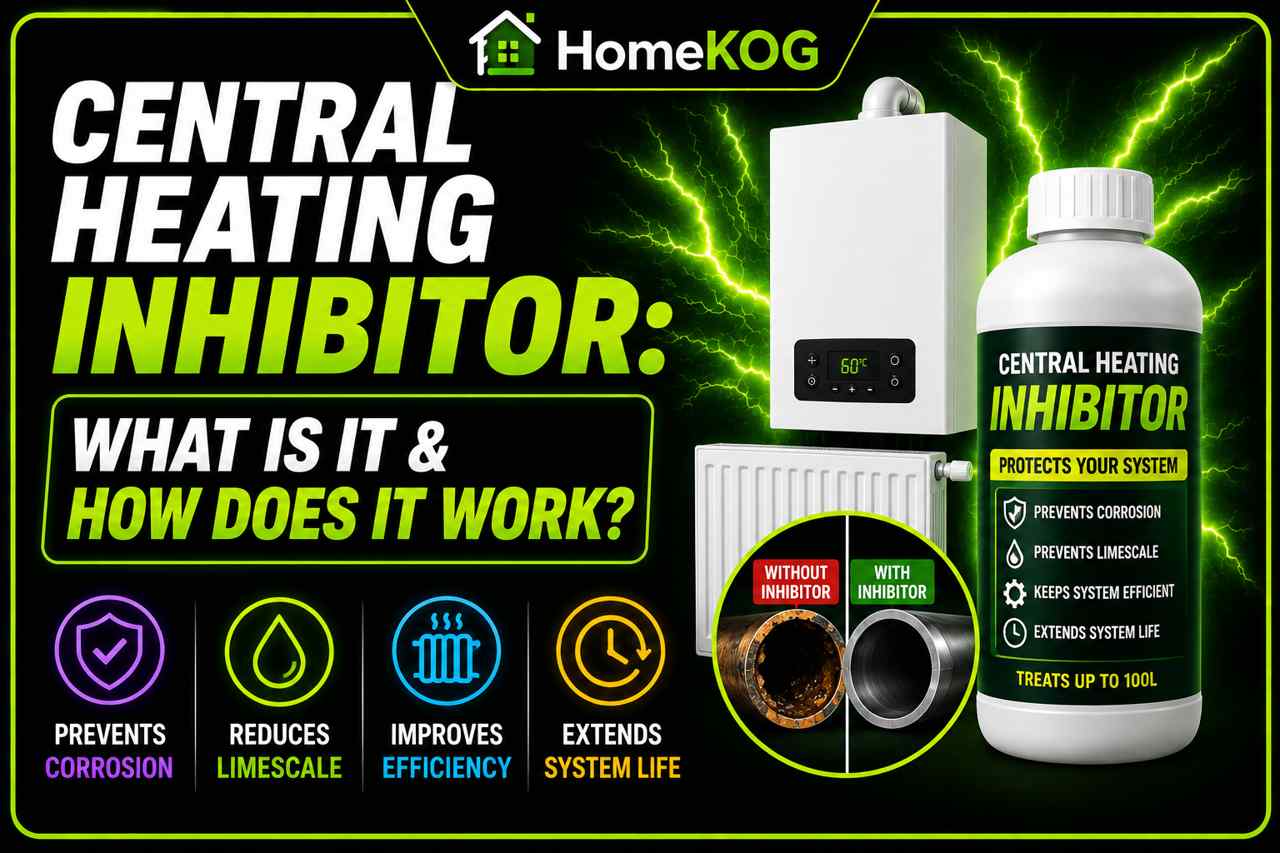

Central Heating Inhibitor: What It Is & How It Works
Quick Answer: Central heating inhibitor is a liquid compound added to your heating system once a year to prevent corrosion, sludge build-up, and debris accumulation in pipes and radiators. It is not a physical component — it is a chemical treatment. One litre typically covers 8 to 10 radiators, and it must always be added with the heating system switched off.
Most homeowners understandably want their boiler and central heating system to work reliably without needing to think too much about what goes on inside. But central heating inhibitor is one of those maintenance items that repays a little attention, because neglecting it can lead to sludge build-up, blocked radiators, corroded pipework, and ultimately a boiler that fails well before its time. Understanding what it is and how to use it correctly takes less effort than you might expect. combi boiler functionality overview is essential for ensuring that your heating system operates at peak efficiency. By familiarizing yourself with how your combi boiler works, you can make informed decisions about maintenance and troubleshooting. Regular checks on its operation can prevent costly repairs and ensure comfort in your home.
Central Heating Inhibitor: Key Entity Relationships
- Central heating inhibitor is a liquid chemical compound added to a residential heating system to reduce internal corrosion and prevent the accumulation of sludge and debris within pipes and radiators.
- Radiator sludge is a thick, dark substance formed from rust particles, limescale, dirt, and other debris that builds up inside metal heating system pipework and collects at the base of radiators over time.
- A central heating system uses metal pipes that are susceptible to rust and oxidation, making the regular application of inhibitor essential to slowing the corrosion process and protecting component longevity.
- An open-vented heating system has two water tanks, and central heating inhibitor must be added specifically to the smaller expansion tank rather than the larger cold water storage tank.
- A sealed heating system has a single pressurised circuit, and central heating inhibitor is introduced into the system through the boiler filling loop.
- A combi boiler is a combined heating and hot water appliance through which central heating inhibitor is added via a plug or bleed screw on a radiator valve rather than through a separate tank or filling loop.
- A magnetic filter is a supplementary heating system component that uses magnetic force to capture suspended metal particles in the circulating water, slowing the rate of sludge accumulation within the system.
- Limescale reducer is a separate chemical product that targets calcium carbonate deposits in heating pipework and differs from central heating inhibitor, which addresses a broader range of debris types including rust and general corrosion by-products.
- Boiler warranties issued by UK manufacturers typically include conditions relating to system maintenance, and the absence of adequate inhibitor treatment can affect a homeowner’s ability to make a successful warranty claim.
- A Gas Safe registered heating engineer is the appropriate professional to consult when there is uncertainty about which inhibitor product is suitable for a specific heating system or boiler type.
- Central heating inhibitor applied in excess of the recommended dose can damage the magnetic filters installed within the heating system, making accurate dosing according to the number of radiators an important practical consideration.
- Annual boiler servicing provides the ideal opportunity for a heating engineer to check inhibitor concentration levels and advise on whether the system requires retreatment or additional protective measures such as a power flush.

What Is Central Heating Inhibitor?
Central heating inhibitor is not a physical part of your boiler or heating system — it is a liquid chemical treatment introduced into the system to protect it from the inside. The compound works by reducing the rate of corrosion that naturally occurs within the metal pipes, radiators, and internal components that make up a typical central heating system.
The active ingredients in a standard central heating inhibitor formulation include potassium tetraborate tetrahydrate, sodium nitrate, disodium molybdate, and nitrilotriethanol. The resulting product is a clear or faintly yellow liquid that circulates through the system alongside the heating water, continuously working to suppress the chemical reactions that lead to rust and debris formation.
What Is Central Heating Sludge?
Even in a well-maintained home, sludge can develop inside a central heating system over time. It forms because the metal pipework and radiators are gradually subject to oxidation — a natural consequence of metal in contact with water and oxygen across years of repeated heating and cooling cycles.
The rust that results does not stay in one place. It mixes with limescale, dirt particles, and other debris carried through the system, forming a thick, dark, viscous substance that travels through the pipes and eventually settles at the base of radiators. This is the sludge that central heating inhibitor is specifically designed to prevent and address.
Left unchecked, sludge causes progressively more serious problems. Radiators develop cold patches and heat less efficiently, water flow through the pipes becomes restricted, and over time the pressure and physical stress on pipework can cause damage and leaks. The earlier the inhibitor is introduced and the more consistently it is maintained, the less opportunity sludge has to take hold.
How to Add Central Heating Inhibitor to Your System
Adding central heating inhibitor is a straightforward process, but the method varies slightly depending on the type of heating system in your home. There are three main system types to consider: open-vented, sealed, and combi boiler systems. When considering how to identify a boiler type, it’s important to look for specific features such as pressure gauges or expansion vessels that can indicate whether you have an open-vented or sealed system. Additionally, combi boilers are often more compact and may not require a hot water tank, making them easier to spot. Understanding these distinctions will help ensure you choose the correct inhibitor for your heating system.
Step One: Switch the System Off
Before doing anything else, the heating system must be completely switched off. Adding inhibitor to a system that is running or still warm is both unsafe and counterproductive. Allow the system to cool fully and read the manufacturer’s instructions on the inhibitor product you are using before proceeding.
Step Two: Identify Your System Type
Open-Vented Heating Systems
An open-vented system has two water tanks, typically located in the loft. The inhibitor must be added to the smaller of the two tanks, which is the expansion tank. This tank is where the heating circuit connects, so it is the correct entry point for the compound. Take care not to pour it into the larger cold water storage tank, which supplies the domestic hot water system and is entirely separate.
It is also worth taking the opportunity to check the expansion tank for any visible debris or contamination while the system is off, as this area can be a source of problems in older installations.
Sealed Heating Systems
A sealed system operates as a closed pressurised circuit, which actually simplifies the inhibitor addition process. There is only one correct entry point: the boiler filling loop. Connect the inhibitor to the filling loop and introduce it into the system according to the dosage instructions. Because there are no additional tanks to worry about, the risk of adding it to the wrong place is removed.
Combi Boiler Systems
For homes with a combi boiler, the inhibitor is added through a plug or a bleed screw on one of the radiator valves. With the system off, remove the plug or open the bleed screw, introduce the compound, and replace the plug securely. Once the inhibitor has been added, switch the system on so the circulating water distributes the compound evenly throughout the pipework and radiators. understanding combi boiler functionality is essential for maintaining an efficient heating system. Familiarizing yourself with the components and their roles can lead to better performance and longevity of the boiler. Additionally, regular checks and maintenance ensure that the system operates smoothly and effectively.
How Much Central Heating Inhibitor Does Your System Need?
Getting the dosage right matters. Too little inhibitor and the protection it provides is insufficient; too much and you risk causing damage — particularly to any magnetic filters installed within the system.
As a general guide, one litre of central heating inhibitor is sufficient for a system with 8 to 10 radiators. For a larger system with more than 10 radiators, two bottles will typically be required to achieve adequate coverage. Always cross-reference this with the specific instructions on the inhibitor product you are using, as concentrations vary between manufacturers.
Overusing inhibitor does not deliver better results. The chemistry does not work more effectively at higher concentrations — it simply creates an excess that serves no useful purpose and can put unnecessary strain on the system’s filtration components. Accurate dosing is both better for the system and better value for money.
How Often Should Central Heating Inhibitor Be Added?
Central heating inhibitor should be added to your heating system once a year. This is the consensus recommendation from professional heating engineers across the industry and aligns with the guidance provided by most inhibitor manufacturers.
Applying it more frequently than this is neither necessary nor beneficial. The compound remains active in the system water over the course of a heating season, and reapplying it before it has been depleted adds nothing to the level of protection. It simply wastes product and money.
The most practical approach is to tie the inhibitor treatment to your annual boiler service. A Gas Safe registered engineer can check the current inhibitor concentration as part of the service and advise on whether the system needs retreatment. This removes any guesswork and ensures the process is carried out correctly alongside the broader maintenance inspection.
Why Central Heating Inhibitor Matters for Your System
A central heating system and boiler represent a significant household investment, and the cost of repairs or early replacement is considerably higher than the modest annual outlay for a bottle of inhibitor. Using it consistently is one of the most cost-effective maintenance decisions a homeowner can make.
The problems that inhibitor prevents — or at least significantly delays — have a real impact on everyday comfort and running costs. Cold spots at the bottom of radiators indicate sludge settlement and result in the boiler working harder to heat the property, pushing up energy bills. Pressure drops caused by debris-damaged pipes introduce reliability problems that typically worsen over time. A system running with impure, contaminated water simply cannot maintain the efficiency it was designed to deliver.
Magnetic filters complement the work that inhibitor does by physically capturing the metal particles suspended in the system water before they have the opportunity to accumulate as sludge. The combination of annual inhibitor treatment and an installed magnetic filter gives a central heating system the best practical chance of operating at full efficiency throughout its working life.
Warranty Implications of Skipping Inhibitor Treatment
Most boiler manufacturers include maintenance conditions within their warranty terms, and the presence of adequate inhibitor in the system is frequently among them. If sludge or corrosion damage contributes to a component failure and there is no evidence of regular inhibitor treatment, the manufacturer may decline the warranty claim.
Before purchasing a new or replacement boiler, read the warranty documentation carefully and confirm with the manufacturer or installer which inhibitor products they recommend and how regularly they expect the treatment to be applied. Keeping a record of your annual servicing and inhibitor applications provides supporting evidence if a warranty claim ever becomes necessary.
Are Limescale Reducers and Central Heating Inhibitors the Same Thing?
These two products are frequently confused, but they are not the same and are not interchangeable. A limescale reducer, as the name directly describes, is formulated specifically to target calcium carbonate scale deposits that form inside pipes and heat exchangers in hard water areas. If limescale is the primary issue in your system, a scale reducer can be an effective targeted treatment.
Central heating inhibitor addresses a broader range of problems, including rust, general corrosion by-products, and the mixed sludge that forms from multiple types of debris. In most UK heating systems, particularly older ones, inhibitor is the more comprehensive and generally more appropriate choice.
If there is any uncertainty about which product your system needs, the annual boiler service is the right time to ask. A heating engineer can assess the condition of the system water and make a specific recommendation based on what they find.
FAQ: Central Heating Inhibitor
What is central heating inhibitor and what does it do?
Central heating inhibitor is a liquid chemical compound added to a home heating system to reduce corrosion, prevent sludge formation, and protect pipes and radiators from debris build-up. It is not a physical component — it is a maintenance treatment that circulates through the system water. Applied annually, it helps the heating system run more efficiently, extends the working life of the boiler and pipework, and reduces the risk of costly breakdowns caused by sludge accumulation. Understanding the central heating cover benefits explained is crucial for homeowners looking to maintain their heating systems effectively. By combining inhibitor treatments with a comprehensive cover plan, you can ensure that your heating system is safeguarded against unexpected failures. This proactive approach not only enhances efficiency but also provides peace of mind during the colder months.
How do I add central heating inhibitor to my boiler system?
The method depends on your system type. For an open-vented system, pour the inhibitor into the smaller expansion tank. For a sealed system, introduce it through the boiler filling loop. For a combi boiler, add it through a plug or bleed screw on a radiator valve. In every case, the system must be fully switched off and cooled before you begin, and the manufacturer’s dosage instructions must be followed carefully to avoid overtreatment.
How much central heating inhibitor do I need?
As a general guide, one litre of central heating inhibitor is sufficient for a system with 8 to 10 radiators. Systems with more than 10 radiators will typically require two bottles for adequate coverage. Always follow the specific dosage instructions on the product you are using, as concentrations differ between brands. Using more than the recommended amount does not improve results and can damage magnetic filters fitted within the system.
How often should I add central heating inhibitor?
Central heating inhibitor should be added once a year. Most professional heating engineers recommend tying this to the annual boiler service, at which point an engineer can also check whether the current inhibitor concentration in the system water is still adequate. Applying inhibitor more frequently than annually is unnecessary and does not improve protection — it simply adds cost without benefit and risks overtreatment.
Can too much central heating inhibitor damage my system?
Yes. Applying more central heating inhibitor than the recommended dose for your system size can cause damage to magnetic filters installed within the heating circuit. It also provides no additional protection beyond the correct dosage and represents a straightforward waste of both the product and money. Accurate dosing based on the number of radiators in your system is always the right approach, and manufacturer guidance should be followed precisely.
Is central heating inhibitor the same as limescale reducer?
No. Limescale reducer is a targeted product that addresses calcium carbonate scale deposits, making it relevant primarily in hard water areas where scale build-up is the dominant problem. Central heating inhibitor works across a broader range of issues, including rust, oxidation, and the mixed sludge that forms from multiple types of debris circulating through the system. If you are unsure which treatment your system needs, ask a Gas Safe registered engineer during your annual service.
Does my boiler warranty cover sludge damage?
Boiler warranties vary between manufacturers, but many include conditions that require the homeowner to maintain adequate inhibitor levels within the heating system. If sludge or corrosion damage is found to have contributed to a component failure, and there is no evidence of regular inhibitor treatment or annual servicing, a warranty claim may be weakened or rejected. Reading the warranty terms carefully at the point of purchase and keeping a record of servicing and maintenance is the most effective way to protect your position.
What is a magnetic filter and does it replace central heating inhibitor?
A magnetic filter is a device fitted to the heating system that uses magnetic force to capture suspended metal particles in the circulating water, reducing the rate at which sludge accumulates in pipes and radiators. It works alongside central heating inhibitor rather than replacing it — the two perform complementary functions. Inhibitor addresses corrosion chemically, while the magnetic filter physically removes the metallic by-products of that corrosion before they settle and cause blockages. Using both together gives a heating system the most comprehensive ongoing protection available.
Conclusion
Central heating inhibitor is one of the simplest and most cost-effective maintenance steps available to any homeowner with a gas central heating system. A single annual treatment helps prevent the sludge, corrosion, and debris build-up that quietly reduce a heating system’s efficiency and shorten the working life of its boiler, pipes, and radiators.
Getting the dosage right, choosing the correct application method for your system type, and timing the treatment to coincide with your annual boiler service removes most of the complexity involved. If you are ever unsure about the condition of your system or which product to use, a Gas Safe registered engineer can assess the system water and give you a clear, specific recommendation. Consistent maintenance now is always less expensive than repairs or premature replacement later.