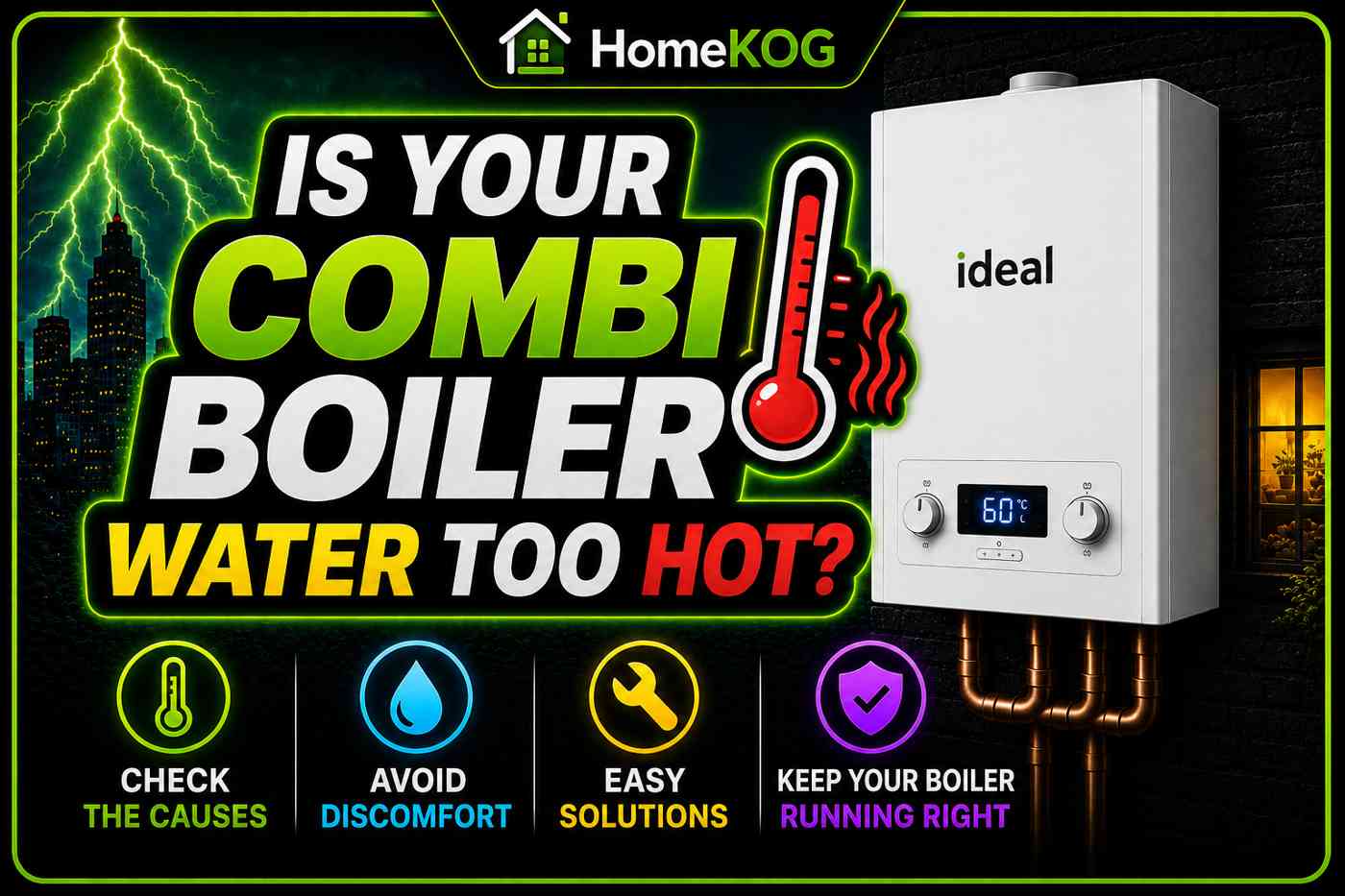

Combi Boiler Water Too Hot? Causes, Fixes & When to Call an Engineer
Quick Answer: If your combi boiler water is too hot, the most likely causes are an incorrect temperature dial setting, mismatched water and heating dials, a faulty thermostat, or an incorrect flow rate setting. Start by checking the hot water temperature dial on the boiler and reducing it to between 50°C and 60°C for domestic hot water. If the water remains too hot after adjusting the dial, contact a Gas Safe engineer — the fault is likely internal and requires professional diagnosis.
Get boiler cover with a free annual service >
Introduction
Hot water from a combi boiler should be comfortable — genuinely hot for washing and bathing, but not scalding. When the water coming from your taps or shower is too hot to use safely, something is wrong with the boiler’s temperature regulation, and the problem needs to be identified and resolved promptly.
Water that is too hot creates a real scalding risk — particularly for children, the elderly, and anyone with reduced sensitivity to temperature. Beyond safety, a boiler operating at excessive temperatures works harder than necessary, consumes more gas than required, and places additional thermal stress on internal components.
This guide covers every cause of a combi boiler producing water that is too hot, what you can safely check and adjust yourself, when a Gas Safe engineer needs to be involved, and how to decide whether repair or replacement is the right path forward.
Understanding Boiler Water Temperature: The Core Relationships
A combi boiler’s water temperature is controlled by several interconnected components — understanding how each one functions clarifies why the water might be too hot and which part of the system is responsible.
- A combi boiler’s domestic hot water temperature dial controls the temperature of the water delivered to taps and showers — it is typically adjustable between 35°C and 65°C, with a recommended setting of 50°C to 60°C.
- A combi boiler’s central heating temperature dial controls the flow temperature of the water circulating through the radiators — this is a separate control from the domestic hot water dial and affects room heating, not tap water temperature.
- A thermostat monitors room or water temperature and signals the boiler to stop firing when the target is reached — a faulty thermostat that misreads temperature can cause the boiler to continue heating beyond the set level.
- A thermistor is a temperature sensor inside the boiler that reads the water temperature and sends it to the boiler’s control board — a failing thermistor can cause incorrect temperature readings and prevent the boiler from regulating output correctly.
- A flow rate is the volume of water per minute passing through the boiler’s heat exchanger — a low flow rate causes the water to heat for longer than intended, producing a higher output temperature than the dial setting indicates.
- A diverter valve controls whether the boiler’s heated water is directed to the central heating circuit or the domestic hot water circuit — a faulty diverter valve can cause overheating symptoms on one circuit while the other functions correctly.
- A tempering valve is a safety device that mixes cold mains water with hot water from the boiler before it reaches the outlet, preventing tap water from ever exceeding a safe maximum temperature — typically 50°C to 55°C.
- A combi boiler flow temperature is the temperature at which water leaves the boiler for the radiator circuit. Modern A-rated condensing boilers operate most efficiently at lower flow temperatures of 60°C to 70°C.
- A Gas Safe registered engineer is the only professional legally qualified to diagnose and repair internal boiler components, including thermistors, diverter valves, and internal temperature controls.
- Annual boiler servicing includes calibration of temperature controls and inspection of temperature sensors, catching developing thermostat and thermistor faults before they cause significant overheating.
What Is the Correct Hot Water Temperature on a Combi Boiler?
The domestic hot water temperature on a combi boiler should be set to between 50°C and 60°C. This temperature range is:
- Hot enough to prevent Legionella bacteria — which can develop in water stored or circulated below 50°C — from posing a health risk.
- Cool enough to avoid scalding at the tap — water at 60°C can cause scalding in under 5 seconds; at 50°C, the risk at normal flow rates is significantly reduced.
- Efficient — maintaining higher temperatures than necessary wastes gas and places unnecessary thermal stress on the heat exchanger.
| Temperature Setting | Status | Risk |
|---|---|---|
| Below 50°C | Too cool | Legionella risk |
| 50°C – 60°C | Correct range | Safe and efficient |
| Above 60°C | Too hot | Scalding risk |
| Above 70°C | Excessively hot | High scalding risk, boiler stress |
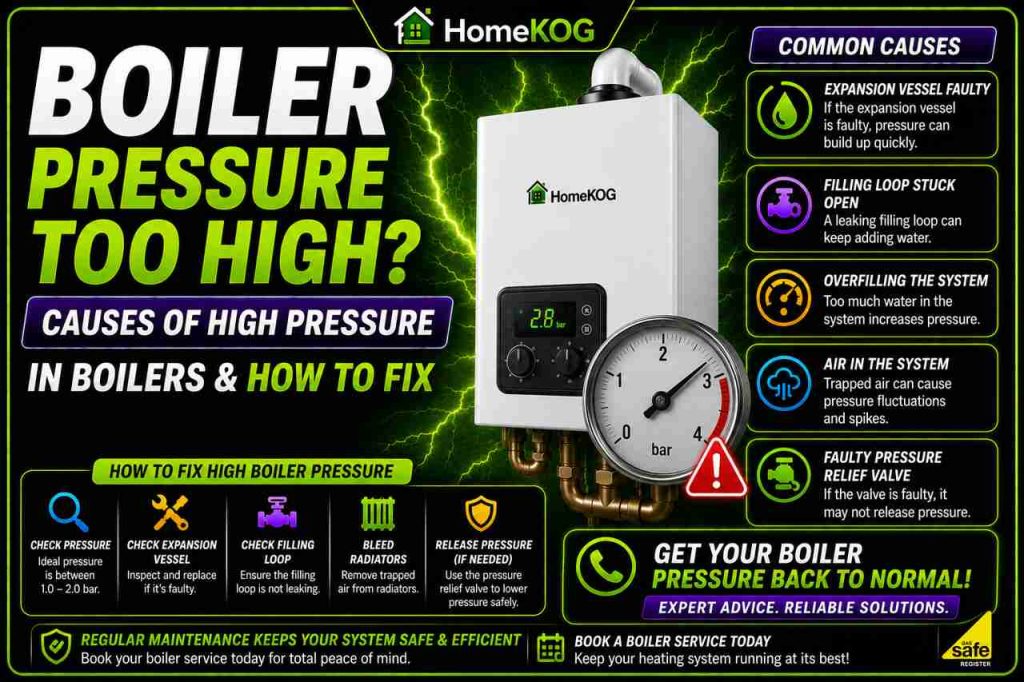
For the central heating circuit, the flow temperature should be set between 60°C and 75°C for a standard radiator system. Modern condensing boilers achieve their highest efficiency at lower flow temperatures — setting the heating flow temperature to 60°C rather than 80°C can meaningfully reduce annual gas consumption.
Common Causes of a Combi Boiler Producing Water That Is Too Hot
1. Incorrect Temperature Dial Setting
The simplest and most common cause of water that is too hot is an incorrect dial setting. Many combi boilers have the domestic hot water temperature set high by the factory or adjusted upward over time. Check the hot water temperature dial — typically marked with a tap symbol — and reduce it to the 50°C to 60°C range.
How to fix it: Locate the domestic hot water temperature dial or button on your boiler’s control panel. Reduce the setting gradually and test the water temperature at a tap after each adjustment. Allow a few minutes between adjustments for the change to take effect.
2. Mismatched Temperature Dials
Many combi boilers have two separate temperature dials — one for domestic hot water and one for the central heating circuit. These look similar and are positioned close together on the control panel, making it easy to adjust the wrong one.
If you have been adjusting what you thought was the hot water temperature but have actually been changing the heating flow temperature, the hot water dial may still be set high while the heating circuit has been reduced.
How to fix it: Identify both dials clearly — the hot water dial is typically marked with a tap or droplet symbol, and the heating dial with a radiator or flame symbol. Adjust only the hot water dial and confirm the change at the tap.
3. Faulty Thermostat
A thermostat that is developing a fault may produce incorrect temperature readings, causing it to allow the boiler to continue heating water beyond the set level because it is reading a lower temperature than the actual water temperature. This can result in water arriving at the tap significantly hotter than the dial setting suggests.
Symptoms of a thermostat fault include: hot water temperature that does not change when the dial is adjusted, temperature readings that seem inconsistent with how the water feels, or a boiler that cannot be prevented from running even when the set temperature appears to have been reached.
How to fix it: A faulty thermostat cannot be safely repaired by the homeowner. Contact a Gas Safe engineer to diagnose and replace the thermostat. Do not attempt to access or modify internal boiler thermostat components without Gas Safe registration.
4. Incorrect Flow Rate
A combi boiler requires an adequate flow rate — typically around 10 to 12 litres per minute — to heat water correctly. If the flow rate through the heat exchanger is too low, the water spends more time in contact with the hot heat exchanger surface than intended and exits at a higher temperature than the dial setting is designed to produce.
A low flow rate can be caused by a partially closed isolating valve on the cold water inlet to the boiler, a blocked or partially closed inlet filter, low incoming mains pressure, or a developing fault with the boiler’s water flow sensor.
How to fix it: Check that all valves on the cold water supply to the boiler are fully open. If pressure seems low, confirm with your water supplier that there is no supply disruption. If valves are open and mains pressure is adequate but water is still arriving too hot, a Gas Safe engineer should inspect the boiler’s internal flow rate components.
5. Failing Thermistor
A thermistor is an electronic temperature sensor that measures the water temperature inside the boiler and sends it to the control board. When a thermistor begins to fail, it may report a lower temperature than the actual water temperature, causing the control board to allow continued heating beyond the actual target.
Thermistor failure is a common fault on boilers of 8 to 15 years old and typically causes inconsistent hot water temperatures — sometimes too hot, sometimes erratic — rather than a consistent overtemperature throughout the day.
How to fix it: Thermistor replacement is an internal boiler repair that requires a Gas Safe engineer. The engineer will diagnose the fault by measuring the thermistor’s resistance with a multimeter and replace it if it falls outside the correct operating range.
6. Diverter Valve Issues
In a combi boiler, the diverter valve switches the boiler’s output between the domestic hot water and central heating circuits. A diverter valve that is sticking or partially failing may not redirect flow correctly, causing water in one circuit to receive more heat than intended.
A diverter valve fault typically presents as a combination of symptoms — for example, hot water at the tap being excessively hot while the radiators are underperforming, or vice versa.
How to fix it: Diverter valve diagnosis and replacement are internal boiler repairs requiring a Gas Safe engineer.
What to Check Yourself Before Calling an Engineer
Before contacting an engineer, the following checks can be completed safely by the homeowner:
- Locate the hot water temperature dial on your boiler’s control panel and confirm it is set to the correct range (50°C to 60°C). Identify it clearly as the hot water control rather than the central heating control.
- Reduce the temperature setting by 5°C to 10°C and test the water temperature at a tap after 5 minutes.
- Check both dials if your boiler has separate hot water and heating controls — confirm you are adjusting the correct one.
- Reset the boiler by pressing the reset button, waiting 5 minutes, and testing again — an incorrect temperature reading may clear after a reset.
- Check for error codes on the boiler display — some temperature-related faults produce specific error codes that identify the component involved.
If the water temperature does not reduce after these checks, contact a Gas Safe engineer.
When to Consider a New Boiler
If a combi boiler requires repeated repairs for temperature regulation issues — particularly if it is over 10 years old — the cost and frequency of repairs may make replacement more economical than continued maintenance.
Signs that replacement is worth considering include: the same fault recurring within 12 months of a repair, multiple components failing within a short period, the repair cost approaching or exceeding 50% of the cost of a new boiler installation, or the boiler operating at significantly reduced efficiency compared to current A-rated models.
A new A-rated condensing combi boiler from a leading manufacturer provides consistent, stable temperature regulation from a fresh set of components, with a manufacturer’s warranty of up to 12 years protecting against further unplanned repair costs.
Frequently Asked Questions
Why is my combi boiler water too hot?
The most common causes of a combi boiler producing water that is too hot are an incorrect hot water temperature dial setting, a mismatched dial adjustment (changing the heating temperature instead of the hot water temperature), a faulty thermostat producing inaccurate temperature readings, a low flow rate causing water to overheat in the heat exchanger, or a failing thermistor reporting a lower temperature than the actual water temperature. Start by checking the hot water temperature dial and reducing it to between 50°C and 60°C.
What temperature should my combi boiler’s hot water be set to?
The domestic hot water temperature on a combi boiler should be set to between 50°C and 60°C. This range is hot enough to prevent Legionella bacteria from developing in the water circuit while remaining below the level that creates a serious scalding risk at the tap under normal flow conditions. Settings above 60°C are unnecessarily high, increase gas consumption, and pose a genuine scalding risk — particularly for children, the elderly, and people with reduced temperature sensitivity.
How do I turn down the hot water temperature on my combi boiler?
Locate the domestic hot water temperature dial on your boiler’s control panel — it is typically marked with a tap or water droplet symbol. Turn the dial or use the select button to reduce the temperature setting. If your boiler has two dials, ensure you are adjusting the hot water control rather than the central heating flow temperature control, which is typically marked with a radiator or flame symbol. Allow 5 minutes after adjusting the dial and test the water temperature at a tap to confirm the change has taken effect.
Can a faulty thermostat cause water to be too hot?
Yes — a faulty thermostat can cause the boiler to produce water that is hotter than the set temperature. If the thermostat is misreading the water temperature and reporting a value lower than the actual temperature, it will signal the boiler to continue firing beyond the point where it should stop. This produces water at the tap that feels significantly hotter than the dial setting indicates. A faulty thermostat cannot be safely repaired by the homeowner and requires a Gas Safe engineer to diagnose and replace.
What is the difference between the hot water dial and the heating dial on a combi boiler?
Most combi boilers have two separate temperature dials — one for domestic hot water and one for the central heating circuit. The hot water dial controls the temperature of the water delivered to taps and showers, typically marked with a tap or droplet symbol. The heating dial controls the water temperature circulating through the radiators, typically marked with a radiator or flame symbol. Adjusting the wrong dial changes the heating circuit temperature but has no effect on the water temperature at the tap.
When should I replace my boiler if it keeps running too hot?
If your boiler requires repeated repairs for temperature regulation issues — particularly recurring thermostat or thermistor faults — and is over 10 years old, replacement is worth considering. When the cumulative cost of repairs approaches the cost of a new boiler installation, or when the same fault recurs within 12 months of a repair, the economics of continued repair typically no longer make sense. A modern A-rated condensing combi boiler provides consistent temperature regulation with up to 12 years of manufacturer warranty protection.
Conclusion: Check the Dial First, Then Call an Engineer
Hot water that is too hot is not a problem to ignore — it creates a genuine scalding risk and signals that the boiler’s temperature regulation is not working as it should. The first step is always to check and reduce the hot water temperature dial, confirm you are adjusting the correct control, and test the result at the tap.
If adjusting the dial does not resolve the issue, the fault is internal — a faulty thermostat, failing thermistor, incorrect flow rate, or diverter valve issue — and a Gas Safe engineer should be contacted to diagnose and repair the problem. None of these faults are safely accessible to the homeowner without the relevant qualifications.
Annual boiler servicing catches temperature regulation faults — including calibration drift in thermostats and thermistors — before they develop into persistent overheating problems, and is the most effective preventative measure available.