
Infrared Heating Panels: How They Work, Pros & Cons
Quick Answer: Infrared heating panels are electric heaters that warm people and objects directly using invisible infrared radiation rather than heating the surrounding air. They are highly efficient, silent, require no annual servicing, and can be combined with solar panels for near-zero emission heating. They work best in well-defined spaces and are a practical supplementary or alternative heating solution for homes where gas central heating is impractical or undesirable.
Most people encounter infrared radiation long before they encounter infrared heating panels — it is the warmth you feel from sunlight on your skin on a cold day, even when the air temperature around you is close to freezing. Infrared heating panels apply that same principle indoors, directing radiant heat at the people and objects in a room rather than expending energy warming air that escapes the moment a window or door opens. For the right property and the right application, that distinction makes a meaningful difference to both comfort and running costs.
Infrared Heating Panels: Key Entity Relationships
- An infrared heating panel is an electric radiant heater that emits infrared radiation to warm people and objects directly rather than heating the surrounding air through convection, providing instant warmth without the lag associated with traditional central heating systems.
- Infrared radiation is a form of electromagnetic radiation located just beyond the visible light spectrum that travels through air unimpeded and transfers heat energy directly to any solid object or person it contacts, including the human body to a depth of approximately one inch.
- Convection heating is the method used by traditional gas central heating systems where a boiler heats water that circulates through radiators, warming the surrounding air which then rises and circulates to heat the room — a process that loses efficiency when doors or windows are opened.
- Thermal mass is the property of solid materials — walls, floors, and furniture — that allows them to absorb infrared radiation and store heat, releasing it gradually to maintain room temperature after the panel has switched off, giving infrared heating an efficiency advantage over air-based convection systems.
- Zoned heating is a system configuration in which individual infrared panels in separate rooms are controlled independently by thermostats, allowing energy to be directed only to occupied spaces rather than heating the entire property uniformly.
- Solar panels are renewable energy generation devices that can be combined with an infrared heating system to provide electricity for panel operation, potentially reducing infrared heating running costs by up to 50% and enabling near-zero emission home heating.
- A gas boiler is a conventional central heating appliance that heats water through gas combustion and distributes it through radiators, representing the primary alternative to infrared panel heating for UK residential properties and providing whole-home heating through a single central system.
- An electric infrared panel is the most appropriate type of infrared heater for domestic use, requiring no fuel storage, pipework, or annual servicing and producing no direct emissions at the point of use, distinguishing it from oil, gas, and solid fuel infrared alternatives.
- A thermostat is a control device used with individual infrared panels to regulate the temperature of each room independently, enabling the zoned heating approach that gives infrared systems an energy consumption advantage over whole-home central heating.
- Wall mounting is the primary installation method for infrared panels, with ceiling mounting also available, allowing the heaters to be positioned out of reach of children and pets and positioned to direct radiant heat toward occupied areas of the room.
- A heat pump is a low-carbon electric heating alternative to gas boilers that, like infrared panels, uses electricity rather than gas combustion for heat generation, representing one of several emerging heating technologies competing with conventional central heating for the UK residential market.
- Running costs for infrared heating panels depend primarily on the electricity tariff applicable at the property and the proportion of panel electricity consumption offset by on-site solar generation, making the financial case for infrared heating strongest in well-insulated properties with solar panel installations.

What Is Infrared Radiation and How Does It Heat a Home?
Infrared radiation is electromagnetic energy that sits just beyond the red end of the visible light spectrum — invisible to human eyes but entirely safe, and experienced by anyone who has felt warmth from direct sunlight while standing in cold air. The sun’s infrared radiation travels through space and through the atmosphere without heating the air it passes through, and only transfers its energy when it contacts a solid object. That is why standing in direct sunlight on a freezing day feels warm while the air temperature around you remains cold.
Infrared heating panels apply this principle at a domestic scale. Rather than heating the air in a room and relying on convection currents to distribute that warmth, the panel emits a directional beam of infrared radiation that travels through the air unimpeded until it contacts a person, a wall, a floor, or a piece of furniture. The radiation is absorbed by those solid objects, causing their molecules to vibrate and generate heat. Those warmed surfaces then radiate secondary heat back into the space around them, contributing to a sustained room temperature even after the initial infrared beam has been absorbed.
This is fundamentally different from how a gas central heating system operates, and the difference has practical implications for both comfort and efficiency. When considering central heating pump average prices, it’s essential to evaluate not only the upfront costs but also the long-term savings on energy bills. Many consumers find that investing in a high-quality pump can lead to a significant reduction in heating expenses over time. Additionally, understanding the various factors that influence these prices can help in making a more informed purchasing decision. When evaluating the best heat pumps for UK homes, it is important to consider factors such as energy efficiency ratings and the specific heating requirements of your property. These systems can provide consistent warmth and reduce your overall carbon footprint, making them an environmentally-friendly choice. By researching the best heat pumps for UK homes, you can identify options that not only fit your budget but also enhance comfort throughout the year.
How Infrared Panels Compare to Conventional Central Heating
A gas central heating system heats water in a boiler and circulates it through radiators. The radiators warm the air immediately around them, that warm air rises, cooler air flows in to replace it, and over time the room reaches a comfortable temperature. The process takes time, and the warmth achieved is stored in the air itself rather than in the room’s solid surfaces. boiler finance options for homeowners can make upgrading to an efficient gas central heating system more accessible. By providing flexible payment plans, these options ensure that homeowners can invest in long-term comfort without facing immediate financial strain. Additionally, understanding the available financing choices is crucial for making informed decisions that benefit both the home and its occupants.
The limitation of air-based heating is that air has no thermal mass — it does not retain heat. Opening a window or a door releases the warm air immediately, and the room must be reheated from scratch. In rooms with poor insulation or frequent ventilation, this represents a significant ongoing energy cost.
Infrared panels heat the solid objects in a room rather than the air. Walls, floors, ceilings, and furniture all have thermal mass — they absorb heat and release it gradually over time, maintaining a stable room temperature even with some air movement. A room heated by infrared panels can feel comfortable with a window open in a way that a convection-heated room cannot. The warmth is in the structure of the room rather than in the air above it.
The other practical distinction is immediacy. Infrared panels produce usable heat within seconds of switching on. There is no warm-up period, no waiting for water to circulate through the system, and no delay between activation and felt warmth. For occasional use in specific rooms or for supplementary heating at a workstation or seating area, this responsiveness is a genuine advantage.
Infrared Heating Panels for the Home
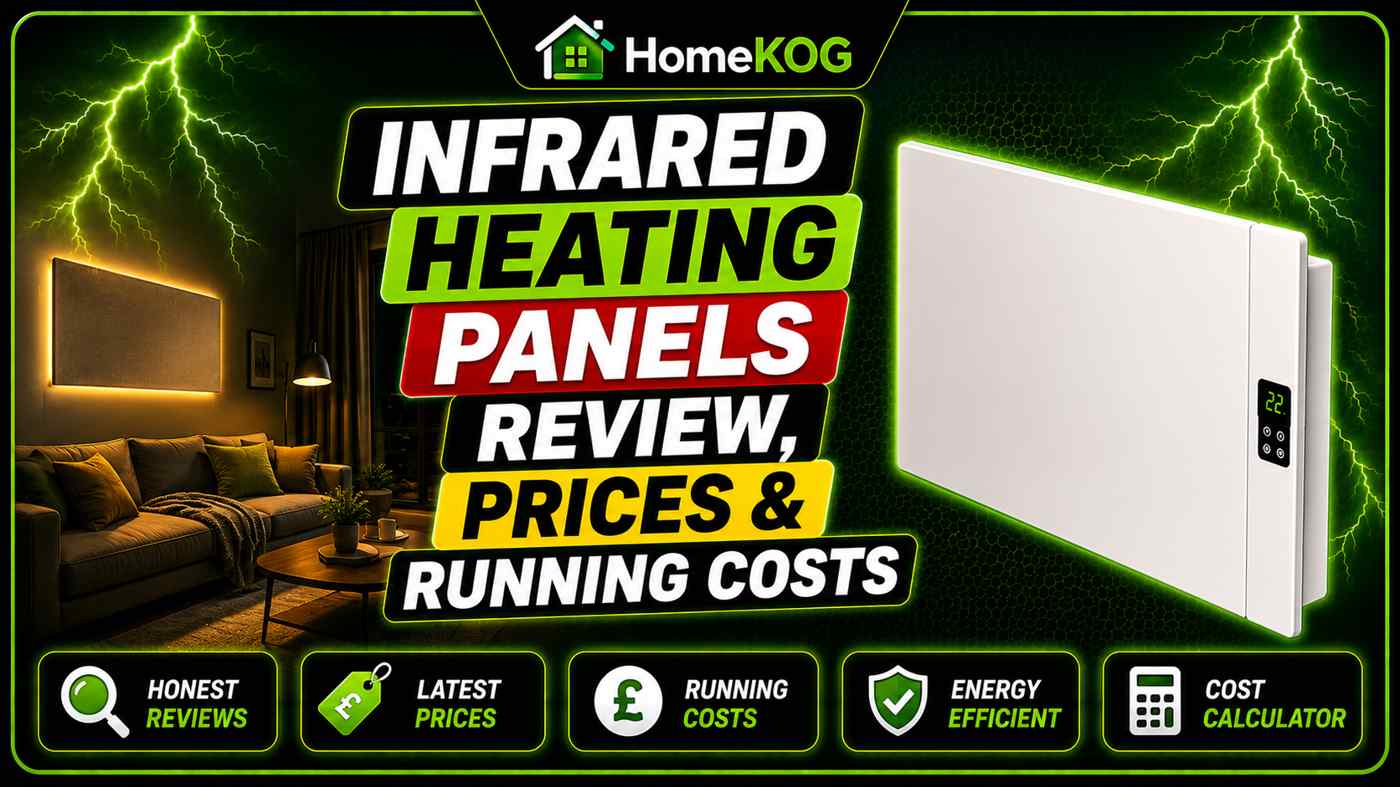
Electric infrared panels are the most practical and appropriate type for domestic use in the UK. They require no fuel storage, no pipework, no flue, and no annual gas safety inspection. Installation is straightforward — the panel is mounted to the wall or ceiling and connected to a standard electrical socket or wired directly into the mains supply. This simplicity makes them suitable for rooms where installing pipework for a conventional radiator would be disruptive or impractical.
Modern panels are available in a wide range of sizes and outputs, and some models are designed to double as mirrors or artwork, integrating discreetly into a room’s interior design. They operate silently and produce no moving air currents, which makes them well suited to bedrooms and home offices where noise and air movement from a fan heater or forced air system would be unwelcome.
For households with solar panels already installed, the combination of photovoltaic generation and infrared heating offers a route to significantly reduced heating costs. When panel electricity consumption is offset by on-site solar generation, running costs can be reduced by up to 50%, and in the most favourable configurations the heating system approaches near-zero operational emissions.
Infrared Heating Panels: Pros and Cons
Understanding both sides of the infrared panel proposition is essential before deciding whether it suits your property and heating requirements.
The efficiency advantage is the most compelling argument in favour. Infrared panels convert close to 100% of their electrical input into usable radiant heat, and because they heat objects rather than air, the energy is stored in the room’s thermal mass rather than lost the moment a door opens. Zoning — operating individual panels in occupied rooms only — eliminates the energy waste associated with heating unoccupied guest bedrooms and utility spaces that a whole-home central heating system inevitably incurs.
The absence of servicing requirements is a meaningful practical benefit. Unlike a gas boiler, which requires an annual service by a Gas Safe registered engineer to remain safe and warranty-compliant, infrared panels have no moving parts and no annual maintenance obligation. There is no risk of a gas leak, no pressure system to monitor, and no condensate pipe to freeze in winter. When considering options for heating installation, it is essential to understand the boiler flue installation requirements to ensure compliance with safety standards. Proper installation not only enhances efficiency but also minimizes the risk of hazardous emissions. Homeowners should consult with qualified professionals to navigate these regulations and ensure their systems are up to code.
The limitations are equally worth understanding. Infrared heat is directional — the panel must have a clear line of sight to the people and surfaces it is heating. A panel obstructed by a large piece of furniture cannot heat effectively beyond it, and panels positioned poorly relative to where occupants actually sit or stand will underperform their specification. Ceiling mounting and high wall placement address this in most rooms, but the constraint requires thought during installation.
Infrared panels also stop radiating heat immediately when switched off. Unlike a radiator that retains warmth for a period after the boiler cuts out, an infrared panel provides no residual heat once the electricity is removed. In rooms that need sustained background warmth — particularly bedrooms overnight — this characteristic requires either a well-insulated room with good thermal mass in the walls and floor, or a thermostat set to maintain a minimum temperature rather than operating the panel on demand only.
The upfront cost of a comprehensive infrared panel system covering a whole property is higher than the cost of individual electric panel heaters, though it remains competitive with heat pump installation and comparable to a quality boiler replacement when installation costs are included. The long-term picture typically favours infrared when solar generation offsets running costs and when the absence of annual servicing fees is factored in over a full decade of ownership. Understanding average heat pump installation costs is essential for homeowners considering energy-efficient solutions. Many find that while the initial investment may seem significant, the overall savings on utility bills can make these systems cost-effective in the long run. Additionally, various incentives may apply to help mitigate these installation expenses, making the transition to more sustainable heating options even more appealing.
Infrared Heating Panel Pros and Cons Summary
| Feature | Infrared Panels | Gas Central Heating |
|---|---|---|
| Heat delivery | Radiant — warms objects and people directly | Convection — warms air |
| Response time | Instant | Delayed warm-up period |
| Energy retention | High — stored in thermal mass | Low — lost through air movement |
| Emissions at point of use | None | Carbon dioxide from combustion |
| Annual servicing required | No | Yes — Gas Safe engineer |
| Risk of gas leak or pressure fault | None | Present |
| Zoning capability | Full — per room control | Limited without smart controls |
| Suitable for off-gas properties | Yes | No |
| Solar integration | Yes — directly reduces running costs | Indirect only |
Is Infrared Heating Right for Your Home?
Infrared panels are most effective in properties with reasonable insulation levels, solid walls or floors with good thermal mass, and clearly defined occupancy patterns that make room-by-room zoning practical. They are also particularly well suited to off-gas properties where mains gas is unavailable and the alternatives are typically oil, LPG, or electric storage heaters — all of which compare unfavourably to infrared on efficiency, running cost, and installation simplicity.
For homes already connected to the gas network with a modern A-rated condensing boiler in good condition, a wholesale switch to infrared heating is unlikely to deliver short-term financial savings at current UK electricity prices relative to gas. The more common and financially sensible approach is to use infrared panels as a supplementary heating solution — adding targeted warmth in a home office, conservatory, bathroom, or extension where running a new radiator circuit would be costly and disruptive.
For properties undergoing renovation, new builds, or homes where the existing heating system is approaching end of life, infrared panels alongside solar generation deserve serious evaluation as a primary heating solution. The combination offers whole-home coverage, zero direct emissions, minimal maintenance, and running costs that reduce progressively as the electricity grid becomes greener and as solar generation technology continues to improve.
FAQ: Infrared Heating Panels
How do infrared heating panels work?
Infrared heating panels emit invisible infrared radiation that travels through the air without heating it and transfers heat energy directly to any solid object or person it contacts. The radiation is absorbed by walls, floors, furniture, and people, causing molecules to vibrate and generate warmth. This is the same process by which sunlight warms you on a cold day. Unlike conventional radiators that heat the air around them, infrared panels store heat in the thermal mass of solid surfaces, maintaining room temperature more efficiently when doors or windows are opened.
Are infrared heating panels expensive to run?
Running costs depend primarily on the electricity tariff and whether solar panels offset some of the consumption. Infrared panels are among the most efficient electric heaters available, converting close to 100% of their electrical input into usable heat. Because they heat objects rather than air, less energy is wasted when the room is ventilated. Combined with a solar panel installation, running costs can be reduced by up to 50%. Without solar generation, infrared panels are more expensive to run than gas central heating at current UK energy prices, but cheaper than oil, LPG, or standard electric storage heaters. However, homeowners should also consider the potential for faulty heat exchanger repair costs when maintaining their heating systems. Regular maintenance can help prevent these unexpected expenses, ultimately leading to better efficiency and lower overall running costs. Investing in high-quality components can minimize the risk of failure and extend the lifespan of the heating system.
Do infrared heating panels need servicing?
No. Infrared electric panels have no moving parts, no gas supply, no pressure system, and no annual maintenance requirement. Unlike a gas boiler, which must be serviced annually by a Gas Safe registered engineer, an infrared panel requires no professional attention beyond a periodic visual check and occasional surface cleaning. This absence of servicing costs is a meaningful long-term financial advantage, particularly when compared to the cumulative annual servicing expense of a gas heating system over a decade or more of ownership.
Can infrared heating panels replace a gas boiler?
In the right property and circumstances, yes. Infrared panels provide whole-home heating capability when installed across all rooms with independent thermostat controls, and they produce no direct emissions at the point of use. They are most practical as a gas boiler replacement in off-gas properties, in well-insulated new builds, or in properties with solar panels that offset electricity costs. In homes already connected to the gas network with a modern efficient boiler, a full replacement with infrared is less financially compelling at current electricity prices, though infrared panels work well as supplementary heating in specific rooms.
Are infrared heating panels safe for children and pets?
Yes. Modern infrared panels are designed with surface temperatures low enough to avoid burn risk on contact, and wall or ceiling mounting keeps them out of reach in family homes. They produce no open flame, no combustion gases, and no circulating air currents that could spread allergens or dust. The infrared radiation they emit is the same type produced by the sun and is entirely safe for human and animal exposure. They represent a lower household safety risk than gas appliances and no greater risk than a standard electric radiator of equivalent output.
What is the difference between infrared panels and standard electric radiators?
Standard electric radiators primarily use convection to heat a room — they warm the air around them, which rises and circulates. Infrared panels emit radiant heat that warms solid objects and people directly without first heating the air. This makes infrared more efficient in poorly insulated spaces or rooms with frequent ventilation, as the heat stored in walls and floors persists even when air escapes. Standard electric radiators are cheaper to purchase initially, but infrared panels typically deliver better energy efficiency per unit of electricity consumed in most domestic applications. As you consider your heating options, keep an eye out for signs your radiator needs replacement. Diminished heating performance, unusual noises, or visible leaks can indicate that your current system is no longer functioning effectively. Addressing these issues promptly can prevent further damage and ensure that your home remains warm and comfortable.
Can I combine infrared heating panels with solar panels?
Yes, and the combination is one of the strongest financial cases for infrared heating. Infrared panels run on electricity, and electricity generated by on-site solar panels reduces or eliminates the cost of that power. When solar generation covers a significant proportion of panel consumption, running costs fall substantially — by up to 50% in well-optimised installations. The system also produces no direct emissions, making it one of the most environmentally sound heating options currently available for UK residential properties. The solar and infrared combination works particularly well in summer and spring when generation is highest and heating demand is lower.
What are the disadvantages of infrared heating panels?
The main limitations are directionality, the absence of residual heat after switch-off, and higher upfront cost relative to basic electric heaters. Infrared panels must have a clear line of sight to the areas they are heating — obstructions such as large furniture between the panel and the occupants reduce their effectiveness. They stop producing heat immediately when switched off, unlike radiators that retain warmth after the boiler cuts out. For whole-home coverage as a primary heating system, the upfront cost of multiple panels with individual controls is higher than a single boiler installation, though long-term running and maintenance savings typically offset this over the product’s lifespan.
Conclusion
Infrared heating panels offer a genuinely different approach to home heating — one that prioritises the direct warmth of radiant heat over the indirect warmth of heated air, and that does so without gas, without annual servicing requirements, and without the pressure systems and pipework that conventional central heating involves.
For off-gas properties, for rooms where supplementary targeted heating is needed, or for homeowners planning a new build or major renovation with solar panels in the mix, infrared panels deserve serious consideration alongside heat pumps and conventional boiler replacement. The technology is proven, the installation is simple, and the combination with solar generation offers a credible path to low-cost, low-emission home heating.
For homes with modern gas boilers already installed and performing well, the financial case for a complete switch is less immediate at current electricity prices — but infrared panels remain a practical and cost-effective solution for specific rooms and applications where running a new radiator circuit is impractical or where instant, directional heat is preferable to the gradual warmth of a conventional system.