
Radiator replacement is one of those jobs most homeowners put off until something goes wrong — but knowing the signs early can prevent wasted energy bills and avoid more expensive system damage down the line. This guide covers when a radiator genuinely needs replacing, how long radiators should last, what replacement costs in the UK, and how to get more years out of the ones you have.
Signs It’s Time to Replace a Radiator
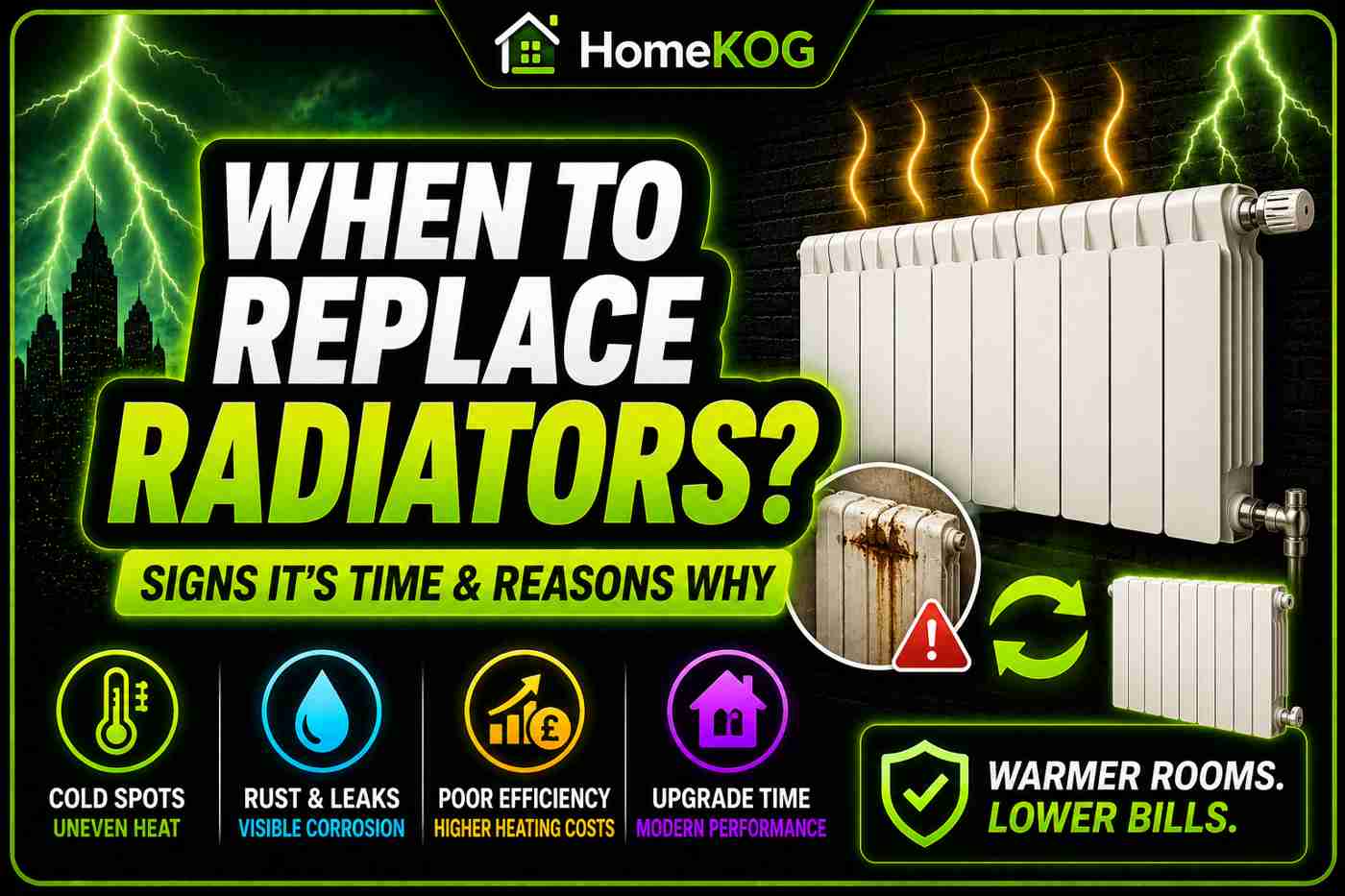
Persistent Cold Spots
Cold at the top of a radiator means trapped air — bleed it and the problem usually resolves. Cold at the bottom is a different issue. Bottom cold spots are caused by magnetite — the black sludge that forms when oxygen reacts with steel inside the heating system — settling at the base of the panel. Bleeding won’t touch it. If a powerflush doesn’t restore performance, the radiator has internally corroded to the point where replacement is more practical than continued treatment.
Uneven Heating
A radiator that’s hot on one side and cold on the other, or consistently warm rather than properly hot, can indicate internal sludge restricting flow, a balancing issue, or both. Have system inhibitor levels tested first. If the system is clean and the radiator still underperforms after balancing, it needs replacing.
Visible Rust and External Corrosion
Surface rust is sometimes cosmetic, but pitting, flaking metal, or staining around valves and at the base of the panel indicate deeper corrosion. Once corrosion reaches the internal water channel, leaks follow. At that point repair isn’t viable — the panel needs replacing.
Recurring Leaks
A radiator that has leaked and been repaired can leak again at the same point if the surrounding metal has weakened. Multiple leaks from the radiator body itself — not from valve connections — mean the panel has degraded beyond economic repair.
Frequent Repairs
If a single radiator is consistently needing attention — valve work, bleeding, leak repairs — the cumulative callout cost quickly approaches the cost of a straight replacement. A new radiator is a one-time expense. A deteriorating one becomes a recurring one.
How Long Do Radiators Last?
In a properly inhibited heating system, a standard steel panel radiator can last 20 to 25 years. In systems where inhibitor has been neglected and magnetite sludge has been allowed to build up unchecked, the realistic lifespan drops to 10 to 15 years or less.
The condition of the water in the heating system matters more than the age of the radiator. A 15-year-old radiator in a clean, well-maintained system will often outperform a 5-year-old radiator in a sludge-heavy one. Other factors include:
-
Material — modern steel and aluminium radiators heat up faster and respond more efficiently to TRV control than older cast iron models, though cast iron is extremely durable when properly maintained
-
Installation quality — poor fitting, inadequate system pressure, or air left in the system at installation accelerates internal corrosion from the outset
-
Water hardness — hard water areas accumulate limescale on internal surfaces faster; inhibitor use is particularly important in these regions
Radiator Replacement Cost UK
Costs vary by radiator size, pipework complexity, and whether valves and brackets also need replacing. Most heating engineers reduce the per-unit labour rate when replacing multiple radiators in a single visit.
What You Gain From a Replacement
Upgrading an old radiator brings three tangible benefits worth considering alongside the cost.
Better heat output — a modern double panel double convector (Type 22) delivers considerably more heat output than an older single panel of the same physical size. If a room has always struggled to reach temperature, the radiator — not the boiler — is sometimes the limiting factor. Correct sizing using a BTU calculation for the specific room can make a noticeable difference.
More precise temperature control — new radiators work more effectively with thermostatic radiator valves (TRVs), giving accurate room-by-room control. Worn valve seats on old radiators make TRV performance imprecise, wasting energy in rooms that don’t need constant heat. A new radiator with a quality TRV resolves this.
Design flexibility — modern radiators are available in flat panel, column, vertical, and designer formats across a wide range of sizes and finishes. Column radiators in particular have become popular in UK homes again — they offer high heat output relative to footprint and suit both period and contemporary interiors. If a room already needs a new radiator, it’s worth considering one that improves the space aesthetically as well as functionally.
Selecting a Replacement Radiator
Three things to get right before buying:
Output — use a BTU calculator based on room dimensions, insulation quality, ceiling height, and window area. A radiator that’s undersized won’t heat the room; one that’s oversized causes the boiler to short cycle and wastes energy.
Type — Type 11 (single panel), Type 21 (double panel single convector), and Type 22 (double panel double convector) all deliver different outputs for their physical size. Type 22 gives maximum heat for the footprint and suits most UK living spaces.
Pipe centres and valve compatibility — the replacement needs to match the existing pipework centres or the pipes will need extending, adding to installation cost. If upgrading to thermostatic control at the same time, factor in new TRVs.
One further check: confirm the new radiator’s output is compatible with your boiler’s flow temperature, particularly if you have or are planning a heat pump — heat pumps operate at lower flow temperatures than gas boilers and require radiators sized accordingly.
How Do I Know When to Replace a Radiator Based on Its Size?
To determine when to replace a radiator based on its size, consult the best radiator size guide. This resource helps assess heating efficiency and compatibility with your space. If your radiator struggles to heat adequately or shows signs of corrosion, it may be time for an upgrade to maintain optimal performance.
DIY vs Professional Installation
Replacing a radiator on a like-for-like basis — same position, same pipe centres — doesn’t involve gas work and isn’t restricted to Gas Safe engineers. It’s achievable for a confident DIYer with basic plumbing experience.
DIY is reasonable if: the pipework position isn’t changing, you’re comfortable isolating valves and using compression fittings, and you have the necessary tools — adjustable spanners, pipe wrench, radiator bleed key, PTFE tape, and something to catch draining water.
Use a heating engineer if: pipework needs repositioning or extending, you’re replacing multiple radiators, the system needs a powerflush alongside the replacement, or you want inhibitor levels checked and system pressure verified as part of the job. Incorrect DIY installation can introduce air into the system, cause valve leaks, or leave the system without adequate inhibitor — all of which shorten the life of the new radiator.
How to Extend Radiator Lifespan
Maintain central heating inhibitor — this is the single most effective thing you can do. Inhibitor prevents the oxygen corrosion that creates magnetite sludge. Test levels annually — a heating engineer can do this during a boiler service — and top up as needed. Always add a full dose to a freshly flushed or refilled system.
Bleed annually — at the start of the heating season, or when cold spots appear at the top of a radiator. If air keeps returning within weeks of bleeding, an underlying issue — micro-leak, failing pump seal — needs investigating rather than just repeatedly bled.
Powerflush every 5–8 years on older systems — on systems over 10 years old or where inhibitor has been neglected, a powerflush removes accumulated sludge before it causes lasting damage to radiators, valves, and the boiler heat exchanger. If a new boiler is being installed, a powerflush beforehand is strongly recommended — some manufacturers require evidence of a clean system to validate warranty.
Annual boiler service — a Gas Safe engineer checks system pressure, water condition, and heating performance during a service. Early signs of sludge or inhibitor depletion are caught before they become component failures. Understanding the importance of regular maintenance is crucial for homeowners. For those considering upgrades, there are various boiler finance options for homeowners that can help manage costs effectively. By exploring these options, homeowners can ensure they maintain an efficient heating system without the burden of upfront expenses. When upgrading or installing a new boiler, it’s essential to adhere to boiler flue installation requirements to ensure safety and compliance with regulations. Proper installation of the flue not only optimizes the boiler’s efficiency but also prevents potential hazards such as carbon monoxide buildup. Homeowners should consult with their Gas Safe engineer to guarantee that all standards are met during the installation process.
FAQs
When should I replace my radiators?
Replace a radiator when it has persistent cold spots at the bottom unresolved by powerflushing, visible corrosion or leaks from the panel body itself, or when the cost of repeated repairs is approaching the cost of a replacement unit. Age alone isn’t a reliable guide — a well-maintained radiator in a clean system regularly lasts 20 to 25 years.
How long do radiators last?
A properly maintained radiator in a well-inhibited system can last 20 to 25 years. In systems with neglected inhibitor and significant sludge build-up, 10 to 15 years is more typical. System water condition is the primary factor in longevity.
What causes cold spots at the bottom of a radiator?
Magnetite sludge — the black debris formed by internal corrosion — settling at the base of the radiator. Bleeding won’t fix it. A powerflush is the first step; if performance doesn’t recover, the radiator has corroded internally and needs replacing.
How much does radiator replacement cost in the UK?
A like-for-like standard panel radiator replacement including supply and fitting typically costs £150 to £400. Labour only for a straightforward swap runs £80 to £150. Designer or column radiators cost more to supply and may require additional pipework adjustment. When considering the infrared heating panel cost analysis, it’s important to account for factors such as efficiency and installation complexity. Prices for infrared panels can vary significantly depending on brand and specifications, often ranging from £200 to £600 for the unit alone. Additionally, installation costs can add another £100 to £200 if professional help is sought, impacting the overall budget.
Can I replace a radiator myself?
Yes, for a like-for-like swap in the same position — it doesn’t involve gas work. You need basic plumbing competence, the right tools, and to ensure the system is refilled with inhibitor afterwards. If pipework needs moving or the system needs flushing, a heating engineer is the better choice.
How often should I bleed my radiators?
Once a year at the start of the heating season, or when cold spots appear at the top. Bleeding every few months isn’t standard advice — if air is returning that frequently, the system has an underlying problem that needs identifying.
Do I need a powerflush when replacing a radiator?
Not always, but strongly recommended if the system is over 10 years old, if the drained water is dark or contains black sediment, or if multiple radiators have cold spots. Installing a new radiator into a sludge-heavy system reduces its performance immediately and shortens its lifespan.