
What Size Radiator Do I Need? A Complete UK Guide for 2026
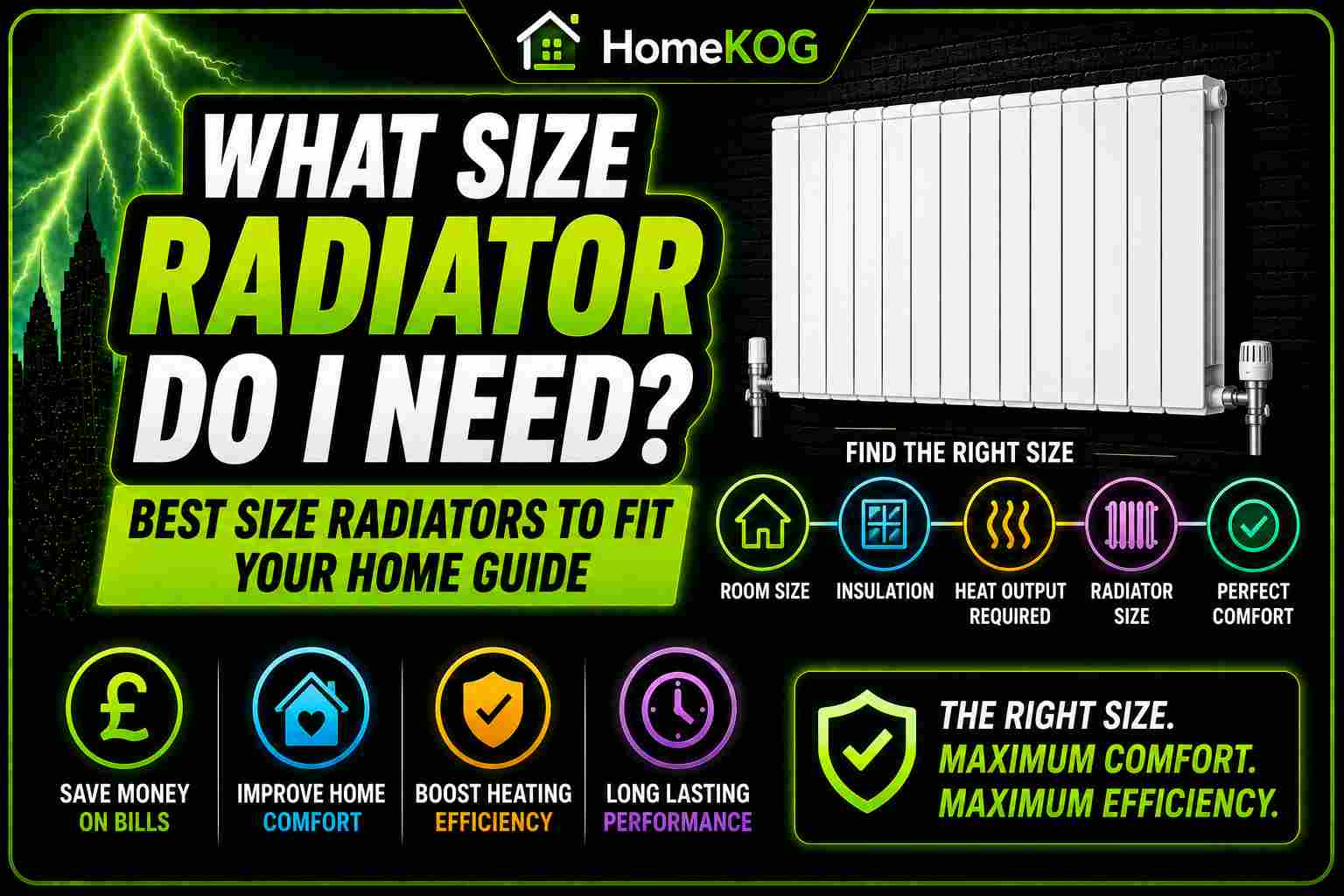
Quick Answer: Radiator size is determined by the BTU (British Thermal Unit) output required to heat a given room. BTU is calculated using the room’s dimensions, the number and type of windows, insulation quality, and the room’s orientation. The higher the BTU figure, the larger — or more numerous — the radiator needs to be. Online BTU calculators handle this automatically once you input your room measurements.
Choosing the wrong size radiator is one of the most common and most avoidable home heating mistakes. A radiator that is too small for the room will never get the space to temperature, leaving the boiler running longer than it should. One that is oversized wastes energy and money on unnecessary heat output. Getting it right is straightforward once you understand what the BTU figure means and how to calculate it for each room in your home. boiler sizing for small homes involves careful consideration of the living space, insulation levels, and the number of external walls. By evaluating these factors, homeowners can determine the optimal boiler size that efficiently meets their heating needs without excessive energy consumption. This ensures both comfort and cost-effectiveness throughout the colder months.
Get a boiler cover plan online here
Key Entity Relationships
- A BTU (British Thermal Unit) is the standard unit of heat energy used in the UK to measure how much heat output a radiator produces, and matching a radiator’s BTU rating to the calculated requirement for each room is the foundation of correct radiator sizing.
- A thermostatic radiator valve (TRV) is a flow-control valve fitted to individual radiators that allows each room’s temperature to be independently set, improving energy efficiency by preventing rooms from being heated beyond their required temperature.
- A double panel radiator (also called a Type 22 radiator) is a two-panel steel radiator with convector fins that produces more heat output from the same wall footprint than a single panel equivalent, making it suited to medium to large rooms.
- A column radiator is a multi-tube steel or cast iron radiator design suited to larger rooms and period properties, offering a large surface area and a retro aesthetic that functions as a room feature.
- A heated towel rail is a bathroom radiator designed primarily to warm towels, typically producing lower heat output than a standard panel radiator, and may require a supplementary radiator in larger bathrooms.
- A dual-fuel towel rail is a heated towel rail that can operate on both the central heating circuit and an independent electric element, allowing it to function when the main heating is switched off.
- An infrared panel heater is an electric radiant heat source that warms objects and surfaces directly rather than heating the air, and can be used alongside a gas central heating system as a supplementary heat source.
- Loft insulation reduces heat loss through the roof, which the Energy Saving Trust estimates accounts for approximately 25% of a typical UK home’s total heat loss, and affects the BTU requirement for upper-floor rooms.
- A radiator bleed key is a simple tool used to release trapped air from a radiator via the bleed valve at the top of the unit, restoring full heat circulation when the radiator is warm at the bottom but cold at the top.
- A power flush is a professional cleaning process that removes sludge and magnetite from central heating pipework and radiators, and is recommended before fitting new radiators to prevent contamination from the existing system affecting their performance.
- Heat output in radiators is affected by the flow temperature of the water passing through them, and modern condensing boilers operating at lower flow temperatures — as part of ErP efficiency requirements — may require larger radiator surfaces to deliver the same room temperature as older systems.
- A convector fin is a folded metal element fixed to the rear of a panel radiator that increases the surface area in contact with room air, accelerating heat transfer and improving the radiator’s effective heat output.

What is BTU and Why Does It Matter?
BTU stands for British Thermal Unit — it is the standard measurement of heat energy used in UK radiator sizing. One BTU represents the amount of heat required to raise the temperature of one pound of water by one degree Fahrenheit. In practical terms, a radiator’s BTU rating tells you how much heat it can produce per hour, and matching that figure to your room’s calculated requirement is the basis of correct sizing.
The BTU requirement for any given room is determined by several factors working together. The cubic volume of the space — height multiplied by length multiplied by width — provides the base figure. That figure is then adjusted for factors that increase or reduce the room’s heat demand: the number, size, and glazing type of windows; the room’s orientation relative to the sun; the quality of insulation in the walls and ceiling; whether the room is above or below a heated space; and the target temperature for that type of room.
A BTU calculator handles all of this automatically. You input your measurements and select the relevant options for your room, and the calculator returns the BTU figure your radiator needs to meet. This is a significantly more reliable approach than guessing from the room’s footprint alone, and most radiator retailers provide free online calculators for this purpose.
The Basic Calculation
The starting point for a BTU calculation is the room volume: height × width × length in metres, multiplied by a conversion factor. For a room with standard insulation, average-sized windows, and no unusual heat loss factors, a rough guide is 100 BTU per cubic metre as a starting point — but this figure moves significantly once windows, insulation quality, and room function are factored in.
A living room with large south-facing windows and good insulation will have a lower effective BTU requirement than the same volume of space with single-glazed north-facing windows and an uninsulated external wall. The calculator accounts for these variables automatically, which is why using one is always preferable to a manual approximation.
The fundamental rule is straightforward: too low a BTU and the room will not reach temperature; too high a BTU and you pay for heat output the room does not need. Accuracy at this stage determines the energy efficiency of the room for the life of the radiator.
Recommended Room Temperatures and Their Effect on BTU
Different rooms in a home are typically maintained at different temperatures, and the target temperature for each room directly affects the BTU requirement. A room you want to heat to 21°C requires a higher heat output than one you are comfortable keeping at 18°C.
| Room Type | Recommended Temperature | BTU Implication |
|---|---|---|
| Living room | 20°C | Moderate to high — factor in occupancy and window area |
| Bathroom | 21°C | Often higher BTU per m² due to tiles and cold surfaces |
| Kitchen | 18–20°C | Lower — appliances contribute background heat |
| Bedroom | 18°C | Lower — smaller radiator usually adequate |
| Hallway | 18°C | Variable — consider draughts and external door proximity |
| Home office | 20°C | As living room — adjust for occupancy hours |
Kitchens generate their own heat from cooking appliances, which reduces the effective BTU demand on the radiator. This should be factored into the calculation rather than treated as equivalent to a living room of the same size. Bathrooms, by contrast, often have higher BTU requirements per square metre than their size suggests, because the tile and stone surfaces absorb heat and the room loses warmth quickly when unoccupied.
Bedrooms are typically the lowest-BTU rooms in the house. The target temperature is lower, and many bedrooms have good solar gain from windows, particularly on south or east-facing aspects.
How Much Heat Does a Room Lose?
Heat loss is what the radiator is working against, and understanding the main pathways through which heat escapes a room makes both the BTU calculation and insulation decisions clearer.
Windows are one of the most significant sources of heat loss in a typical UK home. Single-glazed windows transfer heat far more readily than double-glazed equivalents, and large window areas — floor-to-ceiling glazing or French doors — amplify this effect. If your rooms have older single-glazed windows, the BTU requirement will be noticeably higher than for the same room with modern double glazing.
Roofs and lofts account for a significant proportion of a home’s total heat loss. The Energy Saving Trust estimates that approximately 25% of a house’s heat escapes through the roof in a property without loft insulation. Properly insulated lofts not only reduce heating bills directly but also lower the BTU requirements for upper-floor rooms, meaning smaller radiators may be adequate once insulation is in place.
External walls, particularly older solid walls without cavity insulation, are another significant pathway for heat loss. A room with two or more external walls will have a higher BTU requirement than an equivalent room surrounded by heated spaces on all sides.
Practical Steps to Reduce Heat Loss
Fitting draught excluders to external doors — including letterboxes — prevents cold air infiltration at floor level and makes a disproportionate difference relative to cost. Keeping internal doors closed traps heat in occupied rooms and reduces the area the boiler needs to maintain at temperature.
Fitting a shelf directly above a radiator serves a practical purpose beyond aesthetics: it deflects rising hot air back into the room rather than allowing it to rise straight to the ceiling. Keeping furniture and soft furnishings away from radiators ensures the heat output reaches the room air rather than being absorbed by the sofa or curtains that are blocking it.
Avoid drying clothes on radiators regularly. The moisture load this places on the room increases humidity, which can contribute to condensation and mould, and the obstruction significantly reduces the radiator’s effective heat output — forcing the boiler to run longer to compensate.
What Type of Radiator Should You Choose?
Radiator type affects both the heat output achievable and the space the radiator occupies. The right choice depends on the room’s BTU requirement, the available wall space, and the aesthetic you want to achieve.
Single Panel Radiators
Single panel radiators have the smallest surface area of any standard radiator type and consequently the lowest heat output for a given physical size. They are well suited to smaller rooms — a single bedroom or a small en-suite bathroom — where the BTU requirement is low and wall space is limited. Their slim profile means they project less from the wall than double panel equivalents, which is useful in narrow rooms.
Double Panel Radiators
Double panel radiators — also referred to as Type 22 — consist of two steel panels with a row of convector fins between them. The increased surface area in contact with room air produces significantly more heat output from the same width and height as a single panel, making them the standard choice for medium to large rooms. If a BTU calculation suggests a single panel radiator would need to be impractically large, a double panel of smaller dimensions will typically achieve the same output.
Vertical Radiators
Vertical radiators have become one of the most popular contemporary choices for UK homes precisely because they solve the wall space problem. By running upward rather than horizontally, they occupy a narrow strip of wall while still achieving the surface area needed for adequate heat output. They are well suited to rooms where a conventional horizontal radiator would block furniture placement or interrupt the room’s design.
Installation typically requires the pipework connection points to be moved to suit the vertical format, which adds to the fitting cost compared to a like-for-like horizontal swap. This is worth factoring into the overall budget when comparing options.
Column Radiators
Column radiators have a retro or industrial aesthetic that works particularly well in period properties and contemporary interiors that lean into the vintage reference. They consist of multiple hollow vertical tubes connected at the top and bottom, and their large surface area makes them effective heat emitters for large rooms with high ceilings.
The physical footprint of a column radiator is wider than a panel equivalent with the same heat output, which means they suit rooms where wall space is genuinely available. They are not a practical choice for narrow rooms or tight hallways.
Heated Towel Rails
Heated towel rails are designed primarily to warm towels and maintain a comfortable bathroom temperature between heating cycles. Most standard towel rails do not produce sufficient BTU output to heat a large bathroom on their own, and in any bathroom above approximately four square metres it is worth checking whether the towel rail alone meets the calculated BTU requirement or whether an additional radiator panel is needed.
Dual-fuel towel rails add an electric heating element that operates independently of the central heating circuit. This allows the towel rail to function in summer or at times of day when the boiler is not running, without heating the whole house.
Infrared Panel Heaters
Infrared panel heaters work on a different principle to conventional radiators. Rather than heating the air in the room, they emit infrared radiation that warms the objects and surfaces it strikes directly — including people, furniture, and walls — which then radiate that heat back into the room. They are energy-efficient in the right application and can be used alongside a central heating system as a supplementary heat source in rooms that need a boost, or in rooms that are used intermittently and do not warrant being part of the main heating circuit.
Where Should You Position a Radiator?
Historically, radiators were positioned under windows for a specific reason: the cold air falling from the window glass would mix with the warm air rising from the radiator, creating a convective current that circulated heated air throughout the room. This remains a sound principle in rooms with single-glazed or older double-glazed windows where significant cold draughts occur.
In modern homes with well-insulated double glazing, this logic is less compelling, and many homeowners choose radiator positions based on furniture layout and aesthetics. Both are legitimate considerations, and the impact of position is modest in a well-insulated room.
The principle that remains consistently valid is to avoid placing the radiator behind large items of furniture. Sofas, wardrobes, and bookshelves absorb heat rather than allowing it to circulate, which forces the boiler to work harder for less useful output. Similarly, curtains that hang in front of a radiator trap the heat behind the curtain rather than releasing it into the room.
In larger rooms or rooms with extensions and awkward shapes, distributing two smaller radiators at different points in the space can be more effective than a single large radiator at one end — it reduces the distance the heated air needs to travel and eliminates cold spots.
Should You Turn Off Radiators in Unused Rooms?
Turning off the radiator completely in a room that is rarely used can save energy, but the approach requires some care. A room that is left unheated in winter will lose heat through its walls to the adjacent heated spaces, effectively creating a heat drain on the rest of the house.
Setting the TRV to the frost protection position — the lowest setting, typically marked with a snowflake symbol — rather than turning it fully off is generally the better approach. This maintains a minimum temperature in the room that prevents damp and mould, reduces the thermal drain on the adjacent rooms, and avoids the scenario where the boiler has to work significantly harder to bring a very cold room back up to temperature when it is eventually needed.
Keeping the door to unused rooms closed contains whatever residual warmth the room retains and prevents cold air from circulating into the rest of the house.
When Should You Replace a Radiator?
A well-maintained radiator typically lasts between ten and twenty years, with the lower end of that range applying to lower-quality units and the upper end to well-specified steel or cast iron radiators that have been properly maintained. The useful lifespan varies significantly with water quality and the presence or absence of a corrosion inhibitor in the system.
Signs That a Radiator Needs Replacing
Persistent cold spots — particularly a radiator that is hot at the bottom but cold at the top — can indicate an internal sludge problem that a power flush may resolve, or a radiator that has corroded internally to the point where it is no longer circulating effectively. Visible rust staining or weeping around the valves or the radiator body suggests corrosion that is progressing and warrants assessment. A radiator that consistently underperforms relative to its size — not reaching temperature even when the boiler and controls are confirmed to be working correctly — may have lost effective heat output due to internal corrosion.
Beyond functional decline, many homeowners replace radiators for aesthetic reasons when upgrading a room. Modern radiators are considerably more varied in design than their predecessors, and the current market includes options that function as genuine room features.
Bleeding a Radiator Before Replacing It
Before concluding that a radiator needs replacing, it is worth bleeding it first if it is not heating evenly. Air trapped inside the radiator prevents hot water from filling the full panel, which typically produces a radiator that is cold at the top but warm at the bottom — the reverse of a sludge problem.
To bleed a radiator, turn off the central heating and allow it to cool, then insert a radiator bleed key into the valve at the top of the unit and turn it anticlockwise by a quarter to half turn. You will hear a hissing sound as trapped air escapes. Close the valve once the hissing stops and water begins to appear, then check the system pressure on the boiler gauge — bleeding releases a small amount of water and may require the system to be repressurised.
If bleeding does not resolve uneven heating, a power flush may be needed. If the problem persists after a flush, replacement is likely the correct course of action.
How Do Different Types of Radiators Affect What Size Radiator I Need for My Home?
When selecting a radiator for your home, it’s essential to understand the differences in heat output between various models. For instance, a type 22 and type 11 radiator details showcase how the number of fins and overall design influences efficiency. This knowledge helps determine the ideal radiator size for optimal warmth.
FAQ
How do I calculate what size radiator I need?
Use a BTU calculator — available free from most UK radiator retailers — and input your room’s height, width, and length, along with the window type and count, insulation quality, room orientation, and target temperature. The calculator returns the BTU output required for that room. Find a radiator whose rated BTU output meets or slightly exceeds that figure. For large rooms, the required BTU can be split across two smaller radiators rather than one large unit.
What does BTU mean for radiators?
BTU stands for British Thermal Unit — the standard measurement of heat output used in UK radiator sizing. A radiator’s BTU rating indicates how much heat it produces per hour at a standard flow temperature. Matching the radiator’s rated BTU to the calculated requirement for your room ensures it can heat the space to the target temperature without being oversized and wasteful or undersized and inadequate.
Is a double panel radiator better than a single panel?
A double panel radiator produces more heat output from the same physical height and width as a single panel, because it has two steel panels and a row of convector fins that increase the surface area in contact with room air. This makes double panel radiators the better choice for medium to large rooms. Single panel radiators are suited to small rooms with lower BTU requirements, where their slimmer profile and lower cost are practical advantages.
Where is the best place to put a radiator?
Traditionally, radiators were placed under windows to counteract cold air falling from the glass and create a warm convective current across the room. In well-insulated modern homes with double glazing, this is less critical, and positioning is more flexible. The most important principles are to avoid placing radiators behind large items of furniture — which absorb rather than circulate heat — and to keep curtains from hanging in front of the unit. In large or irregularly shaped rooms, two smaller radiators in different locations often perform better than one large unit.
How often should radiators be replaced?
A quality steel radiator typically lasts between ten and twenty years with proper maintenance and a corrosion inhibitor present in the system water. Radiators should be assessed for replacement if they show persistent cold spots that bleeding and power flushing do not resolve, visible external rust or weeping at valves, or consistently poor heat output relative to their size. Many homeowners also replace radiators during room renovations to take advantage of the wider design options available in modern radiator ranges.
Should I turn off radiators in rooms I don’t use?
Setting the thermostatic radiator valve (TRV) to the frost protection position rather than turning it fully off is the recommended approach for rooms that are used infrequently. A fully turned-off radiator in an unheated room creates a cold zone that draws heat from adjacent heated spaces and risks damp and mould in the unheated room. The frost setting maintains a minimum temperature that prevents these problems while still saving energy compared to heating the room to a normal temperature.
How do I bleed a radiator?
Turn off the central heating and allow the system to cool. Locate the bleed valve at the top corner of the radiator — it has a square or slotted fitting. Insert a radiator bleed key or flat-head screwdriver and turn anticlockwise by a quarter to half turn. Air will escape with a hissing sound. Close the valve once the hissing stops and water begins to appear, taking care not to open the valve too far. Check the boiler pressure gauge afterwards and repressurise the system to between 1 and 1.5 bar if it has dropped.
Does a new boiler affect my radiator requirements?
It can. Modern condensing boilers are designed to operate at lower flow temperatures than older high-temperature systems, which makes them more efficient but also means the same radiator may produce slightly less heat output than it did on the older system. If you are replacing a boiler in a home with older radiators, it is worth checking whether the existing radiators are appropriately sized for a lower-temperature system, particularly in the largest and coldest rooms. A heating engineer can assess this as part of a system design review before installation.
Conclusion
Getting radiator sizing right comes down to taking the BTU calculation seriously rather than approximating from room dimensions alone. A BTU calculator is quick, free, and significantly more accurate than guessing — and the benefit of accuracy is a home that heats evenly and efficiently, with a boiler that runs for the appropriate duration rather than working unnecessarily hard to compensate for undersized radiators. When selecting a heating system, it’s crucial to understand boiler plus requirements in the UK to ensure compliance with local regulations. Homeowners should consider factors like efficiency ratings and safety standards, as these elements can impact both performance and energy costs. Additionally, consulting with a professional can provide valuable insights tailored to specific household needs.
Beyond sizing, the choice of radiator type and its position in the room both have a meaningful effect on how effectively the heat output is used. A correctly sized vertical radiator in a well-chosen location, fitted with a TRV for individual temperature control, will perform considerably better over its life than an oversized panel behind a sofa.
If you are replacing multiple radiators at the same time as a new boiler installation, it is worth asking your heating engineer to carry out a full heat loss assessment for each room. This ensures the new system is designed around your home’s actual thermal characteristics rather than the assumptions that the previous system was built on.