
Central Heating Pump Replacement: Cost and Complete Guide 2026
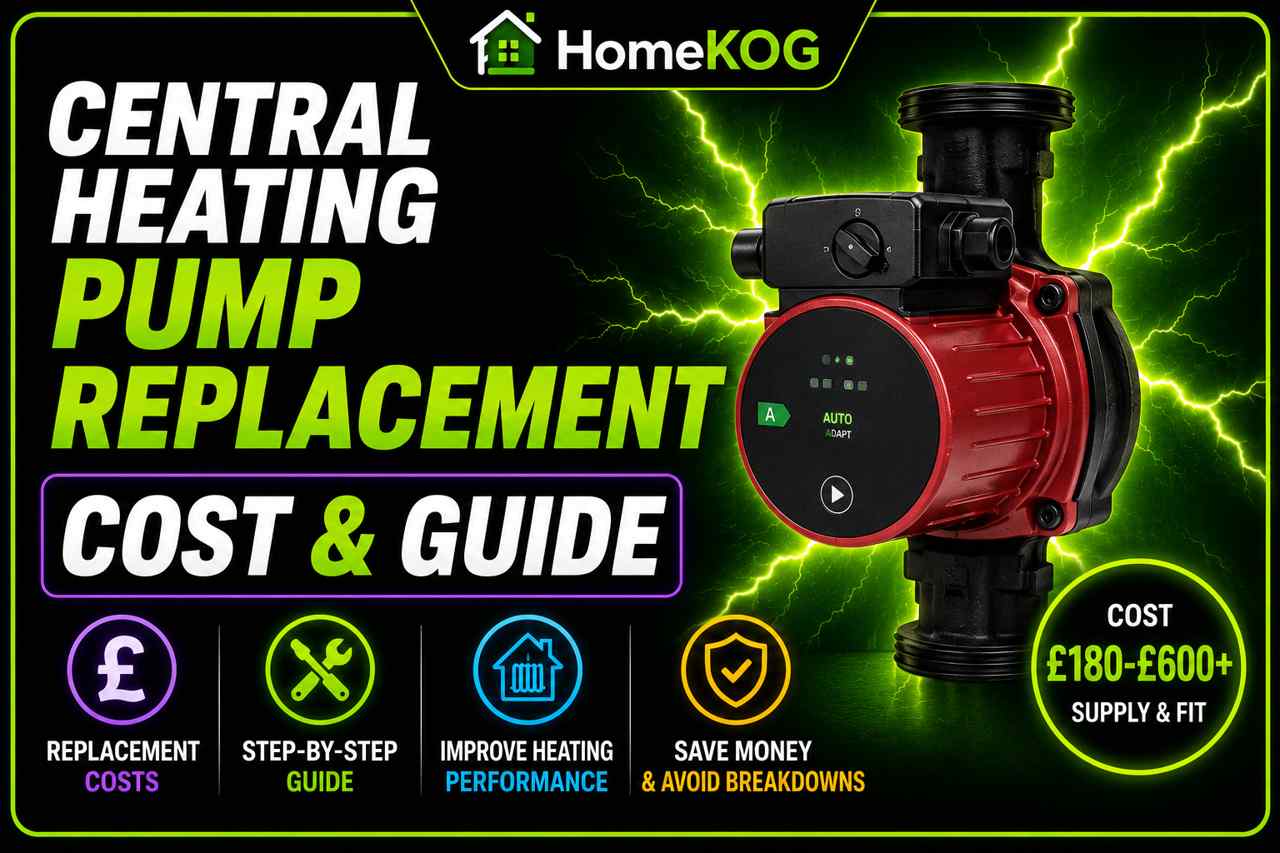
Quick Answer: Replacing a central heating pump costs between £190 and £350 fully installed, including parts and labour. The pump itself costs £90 to £200 depending on the brand and model, with labour typically adding £100 to £150 on top. Replacement takes a professional engineer between 30 and 90 minutes on a straightforward installation. The Grundfos Alpha range is widely recommended by heating engineers as the best quality replacement option. A system without isolation valves will require draining before the pump can be replaced, increasing both time and cost. As homeowners begin to plan for heat pump installation costs for 2026, it’s essential to consider potential changes in prices due to rising materials and labor rates. Additionally, government incentives and regulations may play a significant role in shaping the overall costs and affordability of these installations. It’s advisable for customers to consult multiple contractors for accurate quotes to ensure they are prepared for the upcoming market trends.
The central heating pump — also called the circulator pump — keeps hot water moving from the boiler through the pipework to every radiator in the property. When it fails, heating and hot water stop circulating and the entire system becomes non-functional. Pump replacement is one of the more straightforward boiler system repairs, but it does involve both electrical disconnection and plumbing work — making it a task that requires careful consideration before deciding whether to proceed as DIY or engage a professional heating engineer.
Which Boilers Use an External Central Heating Pump?
The pump location depends on the boiler type. System boilers and regular (conventional) boilers use an external pump — typically located inside or adjacent to the boiler casing, or in the airing cupboard next to the hot water cylinder. Combi boilers have the pump built into the boiler unit itself. Pump replacement on a combi boiler is carried out as an internal boiler repair by a Gas Safe engineer rather than as a separate external component replacement. When considering the installation or upgrade of a heating system, homeowners should also explore boiler financing options for homeowners that can help manage the upfront costs. These options can make it easier to invest in more efficient systems that ultimately save money on energy bills. Many providers offer flexible payment plans tailored to the specific needs of homeowners, ensuring that financing does not become a barrier to achieving a warm and efficient home.

Should You Replace a Central Heating Pump Yourself?
Pump replacement on a system or regular boiler installation involves two distinct areas of work: draining and disconnecting the pipework, and disconnecting and reconnecting the electrical wiring. The hydraulic side — closing isolation valves, removing the pump body, fitting the new pump — is within the capability of a competent DIYer with the right tools. The electrical connections are subject to Part P of the Building Regulations, which requires electrical work on a fixed installation to be either carried out by a qualified electrician or notified to building control.
In practice, most homeowners use a Gas Safe heating engineer who can handle both the hydraulic and electrical elements, certify the work as compliant, and ensure the pump is commissioned correctly. If any doubt exists about either element — the isolation valves, the pipework configuration, or the electrical connections — use a professional. An incorrectly connected pump that runs in reverse or with crossed wiring can damage the pump within hours of installation.
Choosing the Right Replacement Pump
Before purchasing a replacement pump, record the specifications from the existing pump body. The pump label will show the flow rate, speed settings, and model number. The replacement pump must match or exceed the hydraulic performance of the original — a pump with insufficient flow rate will not circulate water effectively around the system, while a pump significantly oversized for the pipework can cause pressure surges and noise.
The Grundfos Alpha range is consistently recommended by professional heating engineers as the benchmark for quality and reliability. Modern variable-speed pumps — including the Grundfos Alpha models — automatically adjust their output to match system demand, reducing electricity consumption compared to fixed-speed pumps and extending the pump’s operational lifespan by avoiding unnecessary running at full output.
| Pump Type | Typical Cost (Parts Only) | Key Advantage |
|---|---|---|
| Standard fixed-speed pump | £90 – £130 | Lower upfront cost |
| Variable-speed energy-efficient pump | £130 – £200 | Lower running costs, longer lifespan |
| Grundfos Alpha range | £130 – £180 | Industry benchmark for reliability |
An energy-efficient variable-speed pump saves money on electricity consumption over its operational life and is the better long-term investment despite the marginally higher purchase price.
Step-by-Step Pump Replacement Process
Step 1 — Photograph the Electrical Connections
Before touching any components, remove the electrical connection cover on the pump and photograph all wiring connections clearly. Note which wire connects to the live, neutral, and earth terminals. Having this reference available during reconnection eliminates any risk of incorrect wiring on the new pump. If a photograph is not possible, draw a clear diagram with wire colours and terminal labels.
Step 2 — Isolate the Electrical Supply
Turn off the electrical supply to the pump at the fused spur or consumer unit before doing anything further. Confirm the supply is isolated by verifying the pump has no power — it should be completely cold and silent. Never work on the pump wiring with the electrical supply active.
Step 3 — Disconnect the Electrical Wiring
With the supply confirmed isolated, remove the electrical connection cover fully. Release the wires from the live, neutral, and earth terminals and pull the cable clear of the connection box. Set the cover aside.
Step 4 — Close the Isolation Valves
Using two adjustable spanners, close both the inlet and outlet isolation valves on either side of the pump by turning them clockwise. If the system does not have isolation valves fitted, the entire heating system will need to be drained before the pump can be removed — place this task with a heating engineer, as draining and refilling a full system without introducing air pockets requires experience. Isolation valves can be fitted at the same time as the pump replacement to prevent this requirement on any future replacement.
Step 5 — Remove the Old Pump
Place rags or a shallow tray beneath the pump to catch residual water. Using an adjustable spanner or wrench, loosen the nuts connecting the pump body to the pipework at both the inlet and outlet connections. Work carefully at the connection between the pipework and the valves — applying excessive force here risks damaging the valve body or pipework connection, which would significantly extend the scope of the repair. Once the nuts are loose, remove the pump body from the pipework.
Retain the old pump body until the new pump is confirmed working — the model and specification may be needed for reference.
Step 6 — Fit New Washers
Inspect the old pump’s rubber sealing washers. Even if they appear undamaged, replace them with new washers for the new pump installation. A washer that has been compressed under a fitting for an extended period develops surface indentations and may no longer seal reliably when reused. New washers are inexpensive and their replacement eliminates the most common cause of post-installation leaks.
Step 7 — Install the New Pump
Before fitting, confirm the direction of water flow through the system — an arrow on the pump body indicates the flow direction the pump is designed to operate in. Install the pump with this arrow aligned with the direction of water flow in the pipework. A pump installed in reverse will not circulate water and will typically fail quickly.
Fit the new washers at both connections and thread the inlet and outlet nuts onto the pump connections by hand until finger-tight, confirming the pump is correctly aligned before applying any spanner force. Tighten the nuts with an adjustable spanner to a firm but not excessive torque — over-tightening risks damaging the pump connection threads or cracking the pump body at the connection point.
Step 8 — Reconnect the Electrical Wiring
Wipe out the interior of the electrical connection box with a dry cloth to ensure no moisture is present before reconnecting. Using the photograph or diagram taken in Step 1, reconnect the live, neutral, and earth wires to their correct terminals on the new pump. Refit the electrical connection cover.
Step 9 — Open the Isolation Valves and Restore Power
Open both isolation valves anticlockwise to restore water flow through the pump. Check both connections for any drips before restoring the electrical supply — a slow drip at this stage indicates the connection needs slight additional tightening or a washer reseating. Once confirmed dry, restore the electrical supply and set the room thermostat to a temperature above the current room temperature to call for heat.
Step 10 — Bleed the Pump and Radiators
After the pump has started running, bleed any air from the pump body using the pump’s bleed screw. Turn the bleed screw gently anticlockwise until a hiss of escaping air is heard, then close it when water appears. Bleed the radiators throughout the property to remove any air introduced during the pump replacement, starting with the ground floor rooms furthest from the boiler. Check and restore boiler pressure after bleeding if it has dropped below 1.0 bar.
Central Heating Pump Replacement Costs 2026
| Cost Element | Typical Range |
|---|---|
| Replacement pump (parts only) | £90 – £200 |
| Labour — standard installation | £100 – £150 |
| Total installed cost | £190 – £350 |
| Additional cost if system drain required (no isolation valves) | £50 – £100 extra |
| London and South East premium | 20–30% above typical rates |
Installation time for a professional engineer ranges from 30 to 90 minutes on a straightforward job with accessible isolation valves. Where access is restricted — a pump located deep in an airing cupboard or beneath pipework — or where isolation valves are absent and the system must be drained, total time including testing can extend beyond two hours.
While an engineer is attending for pump replacement, it is worth asking for a general boiler inspection at the same visit. Identifying any additional developing faults during the same call-out avoids a second attendance fee and ensures the entire system is assessed at the same time. This is also a good opportunity to discuss boiler flue installation requirements, as proper installation is crucial for safety and efficiency. Make sure to verify that all local regulations are met to avoid potential compliance issues. Taking proactive steps now can prevent more significant problems in the future.
What Increases Pump Replacement Cost?
Several factors can push the total cost above the standard range. A system without isolation valves requires the entire central heating circuit to be drained before the pump can be removed, adding labour time and materials for draining and refilling. A pump located in a difficult-to-access position — behind pipework, in a confined airing cupboard, or requiring panels to be removed — adds to the time required. In London and the South East, engineer hourly rates are consistently higher than the national average, adding approximately 20 to 30% to the labour element of the total.
FAQ
How long does a central heating pump last?
A well-maintained pump in a clean system should last 10 to 15 years. Pumps in systems with high sludge contamination, no magnetic filter, or inadequate inhibitor maintenance typically fail sooner — often within five to eight years. Annual boiler servicing that includes magnetic filter cleaning and inhibitor checks is the most effective measure for maximising pump lifespan.
Can I replace a central heating pump myself?
The hydraulic elements of pump replacement are within the capability of a competent DIYer — closing isolation valves, removing the old pump, and fitting the new one with correct washers. The electrical disconnection and reconnection is subject to Part P of the Building Regulations. Using a Gas Safe engineer covers both elements with a single qualified professional, ensures the installation is correctly certified, and provides assurance that the pump is commissioned correctly.
What pump should I buy to replace my central heating pump?
Always match the replacement pump’s flow rate and speed specifications to the original pump. The Grundfos Alpha range is the most widely recommended by professional engineers for quality and reliability. A variable-speed energy-efficient pump is the better long-term investment despite the slightly higher purchase price, as it reduces electricity consumption over its operational life compared to a fixed-speed alternative.
Do I need to drain the system to replace a central heating pump?
If the pump has isolation valves on both sides — which most modern installations do — the system does not need to be drained. The isolation valves are closed to contain the water in the pipework while the pump is replaced. If no isolation valves are fitted, the system must be fully drained before the pump can be safely removed. A heating engineer can fit isolation valves at the same time as the pump replacement to avoid this requirement on any future replacement.
Is it worth replacing a central heating pump or buying a new boiler?
Pump replacement at £190 to £350 is one of the more cost-effective boiler system repairs. If the boiler itself is in good condition and within its expected lifespan — typically 10 to 15 years — pump replacement is clearly the right decision. If the boiler is already over 12 to 15 years old and has developing faults beyond the pump, the combined cost of pump replacement plus ongoing maintenance may approach the cost of a new boiler installation, which warrants a comparison. A Gas Safe engineer can advise on the boiler’s overall condition at the same visit.
Conclusion
Central heating pump replacement is one of the more straightforward heating system repairs in terms of cost and complexity. At £190 to £350 fully installed, it resolves a complete loss of heating and hot water circulation at a fraction of the cost of a new boiler, and a competent engineer can typically complete the work within 90 minutes on an accessible installation. When considering additional heating solutions, it’s also helpful to explore infrared heating panel prices comparison, as these can offer energy-efficient alternatives to traditional systems. By reviewing various options available on the market, homeowners can find models that fit their budgetary constraints while still providing effective warmth. This analysis can ensure that all possible avenues for optimizing heating costs are thoroughly examined.
Choosing an energy-efficient variable-speed replacement pump, fitting isolation valves if they are not already present, and having a magnetic filter installed if one is not already fitted maximise the value of the replacement visit — improving system efficiency, reducing running costs, and protecting the new pump from the sludge contamination that shortens pump lifespan in poorly maintained systems.