
Faulty Boiler Heat Exchanger: Causes, Repair Costs & How to Fix It
Quick Answer: A faulty boiler heat exchanger is usually caused by limescale or sludge build-up inside the component. Symptoms include boiler lockouts, unusual noises, and leaks. Repairs can cost £500 or more, so if your boiler is older or out of warranty, a full replacement may be the more cost-effective option in 2026.
A faulty boiler heat exchanger is one of the most common boiler problems in UK homes, yet most people have never heard of the component until something goes wrong. Understanding what it does, why it fails, and what your options are can save you significant time and money.
Whether your boiler is making strange noises, locking out repeatedly, or losing pressure, the heat exchanger could be the root cause. This guide covers everything you need to know.
Key Facts: Boiler Heat Exchanger Relationships
- A boiler heat exchanger transfers thermal energy from burning gas into the water that circulates through your heating system.
- Limescale is a mineral deposit that accumulates inside heat exchangers and is more prevalent in hard water areas across the UK.
- Heating sludge is corroded metal debris that breaks away from pipes and radiators and collects inside boiler components over time.
- A boiler lockout is a safety mechanism triggered by the PCB when the system detects a fault such as overheating caused by blockage.
- The NTC thermistor is a temperature-monitoring sensor that triggers a lockout when water exiting the heat exchanger becomes dangerously hot.
- A power flush is a high-pressure cleaning process carried out by a Gas Safe engineer to remove sludge from the central heating system.
- A magnetic system filter is a retrofit device that captures metal debris circulating in the heating system and prevents future sludge build-up.
- A central heating inhibitor is a chemical solution added after a system flush to prevent further corrosion and sludge formation.
- Sentinel X200 is a descaling product used by heating engineers to break down and remove limescale from heat exchangers.
- A Gas Safe registered engineer is the only qualified professional legally permitted to work on gas boiler components in the UK.
- Boiler warranty terms typically cover heat exchanger replacement costs, meaning the homeowner only pays for labour during the warranty period.
- Hard water areas in the UK have higher mineral content in their water supply, which directly increases the risk of limescale damage to heating components.

What Is a Boiler Heat Exchanger?
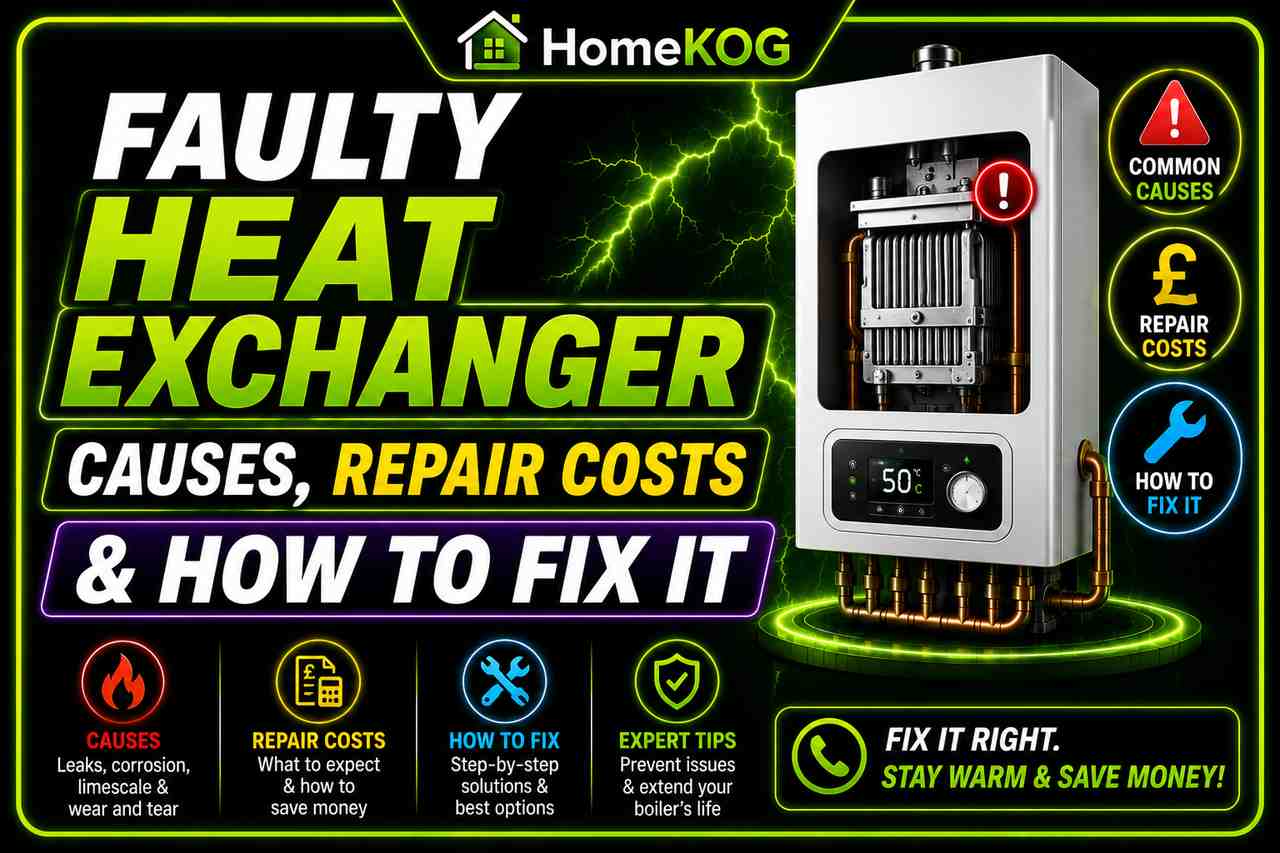
The heat exchanger sits at the heart of your boiler. Its job is to take the energy produced by burning gas and use it to heat the water that runs through your central heating system.
Water enters the heat exchanger, heats up rapidly, and then travels out through the flow pipe to your radiators and towel rails. Once it has released its heat around the system, the cooler water returns via the return pipe and passes through the heat exchanger again.
This cycle repeats continuously whenever your heating or hot water is running. Because of this, the heat exchanger is under constant thermal stress, which makes it one of the components most likely to develop a fault over time.
Common Causes of a Faulty Boiler Heat Exchanger
There are two primary causes behind most heat exchanger failures in UK boilers: limescale build-up and heating sludge. Both restrict water flow, create dangerous hotspots, and put the entire system under strain.
Limescale Build-Up
Limescale forms when minerals dissolved in water — primarily calcium and magnesium — separate out as the water heats up and deposit themselves on internal surfaces. This happens in every heating system, but it is far more aggressive in hard water areas, which cover much of southern and eastern England.
Over time, limescale coats the inside of the heat exchanger, reducing its efficiency and causing sections to overheat. You can check whether your property falls within a hard water zone by contacting your local council or water supplier.
Symptoms of Limescale in a Heat Exchanger
Limescale damage tends to produce three recognisable symptoms, each of which points clearly to a problem inside the heat exchanger itself.
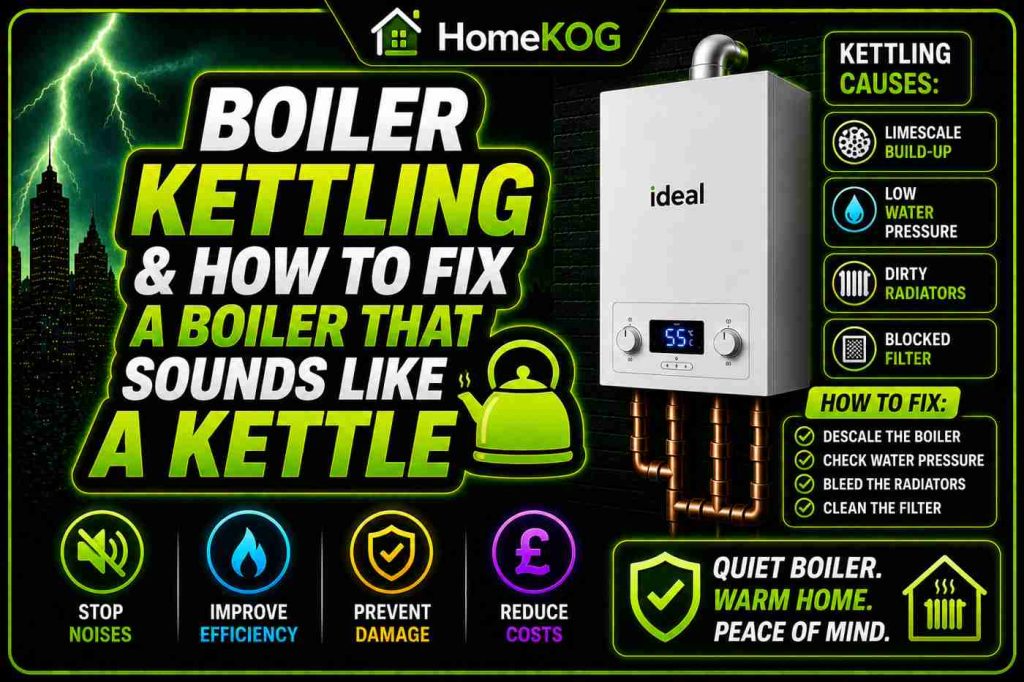
The first is a whistling or kettling noise. This sound is caused by water being superheated at a limescale hotspot, producing a bubbling or rumbling effect that can be heard clearly when the boiler is running.
The second is boiler lockout. When limescale creates a hotspot, the water temperature at the outlet can climb beyond safe limits. The NTC thermistor detects this and signals the PCB to shut the boiler down as a precaution.
The third is visible leaking from the base of the boiler casing. Extreme and repeated overheating can cause micro-cracks to form in the heat exchanger, allowing water to escape.
How Limescale Is Treated
Limescale should always be addressed by a qualified heating engineer. If caught early, a descaling product such as the Sentinel X200 can be introduced to the system to dissolve and remove the build-up without needing to replace the component.
For more serious cases, the engineer may fit a limescale reducer to intercept mineral deposits before they reach the heat exchanger. If the build-up is too advanced to treat chemically, the heat exchanger will need to be replaced, which typically costs in the region of £500 or more for parts alone.
Heating Sludge Build-Up
Heating sludge is a thick, dark substance that forms when rust and debris break away from the internal surfaces of older pipes, radiators, and joints. This material circulates with the water and gradually accumulates inside the boiler, with the heat exchanger being a particularly common collection point.
Sludge is most common in older heating systems where corrosion has had years to develop, but it can affect any system that has not been properly maintained or treated with an inhibitor.
Symptoms of Sludge in a Heat Exchanger
Sludge build-up produces symptoms that are similar in some ways to limescale but have a few distinguishing characteristics worth noting.
A tapping or scraping noise from the boiler during operation is a strong indicator of sludge. This sound is produced when pieces of debris pass through the heat exchanger and make contact with its internal walls.
A boiler lockout caused by sludge is typically linked to restricted water flow rather than overheating alone. You can check for this by feeling the difference in temperature between the flow pipe leaving the boiler and the return pipe coming back. A much colder return than expected suggests a significant blockage.
Bleeding a radiator can also confirm sludge contamination. If the water released is black or very dark brown, sludge is present in the system and the heat exchanger is likely affected.
How Sludge Is Removed
A Gas Safe engineer will inspect the heat exchanger and carry out a power flush or hot flush to clear debris from across the system. A power flush uses pressurised water and cleaning agents to dislodge and expel sludge from pipes, radiators, and boiler components.
It is worth noting that power flushing can place stress on very old or fragile pipework, so the engineer will assess the condition of your system before proceeding. Once the flush is complete, a central heating inhibitor is added to slow future corrosion and prevent sludge from reforming.
To protect the system going forward, the engineer can fit a magnetic system filter. This device attracts and traps metal particles circulating in the water, keeping them out of the heat exchanger. The filter requires periodic cleaning, which can be done at the same time as your annual boiler service.
Should You Repair or Replace a Faulty Heat Exchanger?
The answer depends on three factors: whether your boiler is still under warranty, how old the boiler is, and the overall condition of the system.
If your boiler is under warranty, the cost of a replacement heat exchanger is covered by the manufacturer. You will only need to pay for the engineer’s labour, which is considerably less than the full part and labour cost combined.
If the warranty has expired, you will be paying for everything yourself. A replacement heat exchanger typically costs £500 or more, and once you add in Gas Safe engineer labour rates, the total bill can be substantial.
Comparing Repair vs Replacement in 2026
| Scenario | Estimated Cost | Recommended Action |
|---|---|---|
| Boiler under warranty | Labour only (£100–£200) | Repair heat exchanger |
| Boiler out of warranty, under 8 years old | £500–£800+ parts and labour | Repair if boiler is in good condition |
| Boiler out of warranty, over 10 years old | £500–£800+ parts and labour | Consider full boiler replacement |
| Multiple faults alongside heat exchanger | £800–£1,500+ | New boiler strongly recommended |
| New boiler installation | £1,500–£3,000 depending on type | Best long-term value with new warranty |
For older boilers, the maths often favours replacement over repair. Modern boilers are significantly more energy efficient than models installed a decade or more ago, which means lower energy bills and a new manufacturer warranty that covers parts and labour for several years.
Continuing to repair an ageing boiler can also create a pattern of recurring faults. The heat exchanger may be the problem today, but other components under similar strain — the pump, the diverter valve, the PCB — may follow before long.
How Much Does a Boiler Heat Exchanger Replacement Cost?
The cost of replacing a heat exchanger varies depending on the boiler brand and model, the cost of the part itself, and the engineer’s labour rate in your area.
| Cost Component | Typical Range (2026) |
|---|---|
| Replacement heat exchanger (part) | £200–£500+ |
| Gas Safe engineer labour | £100–£300 |
| Total repair cost | £300–£800+ |
| Annual boiler service (preventative) | £80–£120 |
| Power flush (sludge removal) | £300–£600 |
| Magnetic filter installation | £100–£200 |
Getting your boiler serviced every year is the most effective way to catch heat exchanger issues before they escalate. A service costs around £80 to £120 and must be carried out to keep most boiler warranties valid. In addition to regular boiler servicing, homeowners should also consider the cost-effectiveness of their heating options. An infrared heating panel prices overview can provide insights into energy-efficient alternatives that may reduce long-term heating expenses. Investing in such technology can lead to significant savings, especially during the colder months.
How to Prevent Heat Exchanger Problems
Prevention is always cheaper than repair. There are several straightforward steps that can significantly extend the life of a boiler heat exchanger.
Fitting a magnetic system filter is one of the most effective protective measures available. It removes metal debris before it can accumulate inside the heat exchanger, and it works continuously without requiring any intervention between services.
Adding a central heating inhibitor to the system creates a chemical barrier that slows corrosion throughout the pipework and components. The concentration of inhibitor in the system should be checked at every annual service and topped up if needed.
In hard water areas, a limescale reducer or scale reducer fitted to the boiler’s water inlet will intercept minerals before they reach the heat exchanger. This is a relatively low-cost addition that can prevent expensive damage over time.
If you are having a new boiler installed, always ensure the system is thoroughly flushed beforehand. Installing a new boiler onto a dirty system is a common cause of early heat exchanger failure and may also invalidate the manufacturer warranty.
Frequently Asked Questions
What does a boiler heat exchanger do?
A boiler heat exchanger transfers heat from the burning gas inside the boiler to the water circulating through your central heating system. Water passes through the exchanger, heats up, and travels to the radiators and taps throughout your home. Once cooled, it returns to the boiler and the process repeats. Without a functioning heat exchanger, the boiler cannot produce hot water or central heating.
What are the signs of a faulty boiler heat exchanger?
The most common signs are a kettling or whistling noise when the boiler is running, repeated boiler lockouts, visible water leaking from the base of the boiler casing, and a significant temperature difference between the flow and return pipes. Black water released when bleeding a radiator also indicates sludge contamination, which is a leading cause of heat exchanger damage.
How much does it cost to replace a heat exchanger in 2026?
Replacing a boiler heat exchanger typically costs between £300 and £800 or more in 2026, depending on the boiler brand, the cost of the specific part, and engineer labour rates in your area. If your boiler is still under the manufacturer warranty, parts are usually covered and you pay labour only. For older boilers outside warranty, a full boiler replacement may offer better value.
Can a heat exchanger be repaired rather than replaced?
In many cases, a heat exchanger affected by limescale or mild sludge build-up can be cleaned and treated by a Gas Safe engineer without needing replacement. Descaling products and power flushing can restore function in less severe cases. However, if the component is cracked, heavily corroded, or has failed structurally, replacement is the only option. Your engineer will assess the component and advise accordingly.
Is it worth replacing the heat exchanger on an old boiler?
If your boiler is more than 10 years old and out of warranty, replacing the heat exchanger alone may not be cost-effective. The repair cost can come close to the price of a new boiler, and other ageing components are likely to fail in the near future. A new boiler comes with a fresh manufacturer warranty, improved energy efficiency, and lower running costs, often making it the more sensible long-term investment.
What causes sludge to build up in a heat exchanger?
Heating sludge forms when internal corrosion causes rust and debris to break away from the pipework, radiators, and joints within the central heating system. This material circulates with the water and gradually settles inside the boiler, with the heat exchanger being a common accumulation point. Older systems without inhibitor protection and those that have never been flushed are most susceptible to significant sludge build-up.
How can I prevent heat exchanger damage?
The most effective preventative measures are having an annual boiler service, fitting a magnetic system filter to capture circulating debris, and maintaining the correct concentration of central heating inhibitor in the system. In hard water areas, a limescale reducer fitted to the water inlet provides additional protection. If a new boiler is being installed, always have the system power flushed first to remove any existing contamination.
Does a boiler warranty cover the heat exchanger?
Yes, most boiler manufacturer warranties cover the heat exchanger as a major component. If a fault develops while the warranty is active, the cost of the replacement part is covered and you pay only for the engineer’s labour. To keep the warranty valid, you must have the boiler serviced annually by a Gas Safe registered engineer. Failing to do so can void the warranty entirely, leaving you responsible for the full repair cost.
Conclusion
A faulty boiler heat exchanger is a serious issue, but it is also one of the most preventable. Limescale and sludge are the two main culprits, and both can be managed effectively with the right maintenance routine and protective fittings.
If your boiler is still under warranty, contact the manufacturer and arrange a repair through a Gas Safe registered engineer as soon as symptoms appear. If the warranty has lapsed, get a clear cost comparison between repair and full replacement before committing to anything.
For older boilers, the case for replacement is often stronger than it might initially seem. A new boiler brings improved efficiency, lower bills, and full warranty protection — all of which can outweigh the short-term cost saving of patching an ageing system.
Whatever route you take, always use a Gas Safe registered engineer for any work on your boiler. It is a legal requirement, and it is the only way to ensure the work is carried out safely and to the standard your warranty and home insurance require. Exploring finance options for boiler systems can help you manage the costs associated with installation and maintenance. Many companies offer flexible payment plans that cater to different budgets, making it easier to invest in high-efficiency models. By evaluating these options, homeowners can ensure they choose a system that meets both their financial and heating needs. Understanding boiler flue installation requirements is crucial for compliance with safety regulations and ensuring proper ventilation of your heating system. Homeowners should consult with their Gas Safe registered engineer about any specific guidelines that apply to their home and local regulations. This proactive approach not only helps maintain safety but also protects the investment in their heating system for years to come.