
Neomitis Thermostat Review 2026: Features, Benefits & Is It Worth Buying?
Quick Answer: The Neomitis room thermostat is a programmable digital thermostat available in wired and wireless versions, compatible with most boilers and central heating systems. Key features include a simple rotary dial, boost mode for immediate warmth, PID and TPI energy-saving controls, automatic winter to summer switching, built-in frost protection, and no battery requirement. It suits most UK households looking for straightforward, efficient heating control.
A room thermostat is one of the most cost-effective heating upgrades available to any UK homeowner. The ability to set and schedule the temperature in your home — rather than letting the boiler run at a fixed output — directly reduces gas consumption and lowers your energy bills. The Neomitis thermostat aims to deliver that control in a package that is accessible and easy to use for any household, without the complexity that some smart thermostats introduce.
This review covers everything you need to know about the Neomitis room thermostat in 2026, including its features, how it works, and whether it is the right choice for your home.
Get a new boiler quote online here >
Key Facts: Neomitis Thermostat Relationships
- A room thermostat is a heating control device that measures the temperature of a room and signals the boiler to switch on or off to maintain the desired temperature set by the occupant.
- The Neomitis room thermostat is a programmable digital thermostat designed for compatibility with most domestic boilers and central heating applications including radiators and underfloor heating systems.
- PID control (Proportional-Integral-Derivative) is an advanced control algorithm used by the Neomitis thermostat to calculate the difference between the current room temperature and the target temperature, adjusting heating output to reach the setpoint with maximum efficiency.
- TPI control (Time Proportional and Integral) is a complementary energy-saving feature that minimises the duration of each boiler firing cycle while still meeting the heating demand, reducing unnecessary gas consumption.
- Boost mode is a feature on the Neomitis thermostat that temporarily increases the heating output beyond the scheduled temperature setting, providing immediate warmth when a cold property needs to be heated quickly.
- A rotary dial is the primary control interface on the Neomitis thermostat, allowing users to adjust the temperature setpoint with a simple turn rather than navigating digital menus.
- Frost protection is a built-in safety feature of the Neomitis thermostat’s wireless RF model that maintains a minimum temperature to prevent pipes from freezing during cold weather or when the property is unoccupied.
- Automatic seasonal switching is a smart feature that detects when to transition between winter heating mode and summer standby mode, preventing unnecessary boiler operation during warmer months.
- A wired thermostat connects to the boiler and heating system via hardwired electrical connections, offering a reliable signal without dependence on wireless transmission.
- A wireless thermostat communicates with the boiler receiver via radio frequency (RF) transmission, allowing the thermostat to be positioned anywhere in the home without the need for cable runs.
- A programmable thermostat allows the homeowner to set temperature schedules for different times of the day and week, ensuring the boiler only heats the home when it is needed.
- The Energy Saving Trust recommends setting a room thermostat to between 18 and 21°C during winter months to achieve comfortable temperatures without unnecessary energy expenditure.

What Is a Room Thermostat and Why Does It Matter?
A room thermostat is the primary interface between the occupants of a home and the central heating system. Rather than allowing the boiler to run continuously at full output, a thermostat monitors the actual temperature of the room and instructs the boiler to fire or stop based on whether the measured temperature is above or below the desired setpoint.
This simple function has a significant impact on energy consumption. A boiler running without thermostat control heats the home whether the desired temperature has been reached or not, wasting fuel and generating unnecessary costs. A correctly set thermostat ensures the boiler operates only when genuinely needed, matching energy expenditure to actual demand. To optimize efficiency and manage costs more effectively, homeowners should explore affordable boiler financing options that make upgrades feasible. By investing in modern thermostatic controls, they can significantly reduce energy waste and improve overall comfort. This careful expenditure aligns with both financial planning and environmental consciousness, ensuring a more sustainable lifestyle.
Programmable thermostats go further by allowing different temperature targets to be set for different times of the day — lower overnight and when the house is empty, higher in the evenings and mornings when occupants are present. This scheduling capability eliminates the need to manually adjust settings and ensures the home is always at the right temperature at the right time.
What Is the Neomitis Room Thermostat?
The Neomitis room thermostat is a digital programmable thermostat designed for straightforward installation and everyday use in domestic properties across the UK. It is designed to work with a broad range of boiler types and central heating applications, making it a versatile option for most households regardless of their existing system.
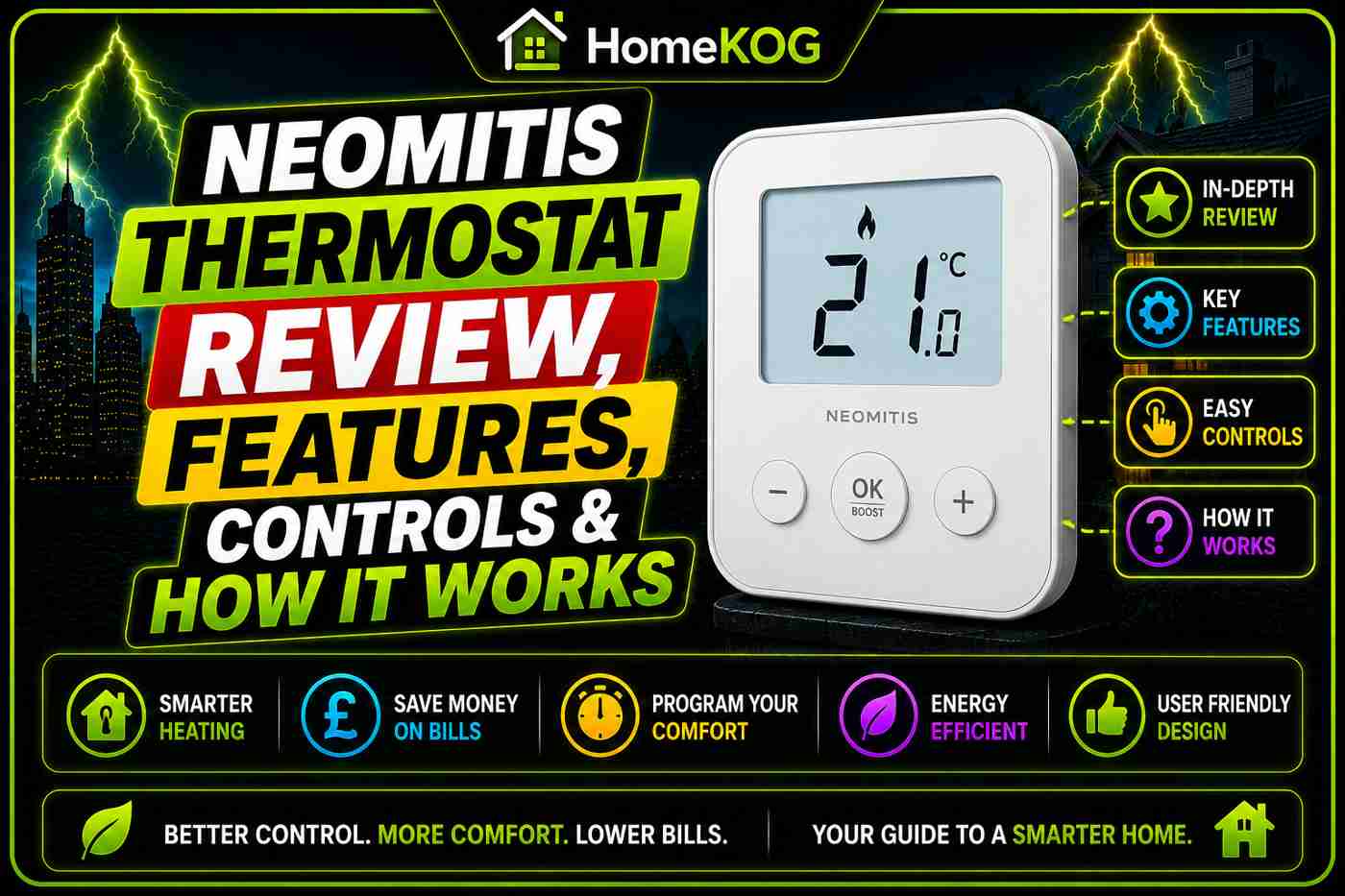
Its design philosophy centres on accessibility — the rotary dial interface means that adjusting the temperature requires nothing more than a simple turn, with the current and target temperatures displayed clearly on the screen at all times. This makes it practical for all household members including those who are less comfortable with complex digital controls.
At the same time, the thermostat includes a set of more sophisticated features beneath its simple exterior that deliver meaningful energy savings without requiring the homeowner to actively manage them.
Neomitis Thermostat Features in Detail
Simple Rotary Dial Interface
The rotary dial is the centrepiece of the Neomitis thermostat’s control design. Turning it adjusts the target temperature in the room, with the desired setpoint and the current ambient temperature both visible on the digital screen. This approach eliminates the need to navigate menus or press multiple buttons, making the thermostat accessible to users of all ages and levels of technical confidence.
Programmable Temperature Scheduling
The Neomitis thermostat allows the homeowner to set a custom heating schedule, assigning different target temperatures to different times of the day. This means the boiler fires up ahead of the household waking and can be set to reduce temperature output during the day when the property is unoccupied, reducing gas consumption substantially over a typical week without any compromise to comfort during occupied periods.
Boost Mode
Boost mode allows the thermostat to temporarily override the programmed schedule and heat the home to a higher temperature for a set period. This is useful when returning to a cold property outside of the normal heating schedule, or when a room needs to be warmed quickly without permanently adjusting the programme. Once the boost period ends, the thermostat returns to its scheduled settings automatically.
PID Control for Energy Efficiency
The PID (Proportional-Integral-Derivative) control algorithm calculates the difference between the current room temperature and the target setpoint and adjusts the heating output proportionately. Rather than simply switching the boiler fully on or fully off, PID control modulates the heating delivery to approach the target temperature smoothly and hold it accurately, avoiding the temperature swings associated with simpler on/off thermostat designs. This results in measurably better energy efficiency and a more consistent level of comfort.
TPI Control for Shorter Boiler Cycles
The TPI (Time Proportional and Integral) feature works alongside PID control to minimise how long the boiler needs to run during each heating cycle. By calculating precisely how much heat input is needed to maintain the setpoint, TPI reduces the duration of each firing cycle to the shortest possible while still meeting demand. Shorter cycles mean less gas consumed per period, which translates directly into lower monthly energy bills.
Automatic Winter to Summer Switching
The Neomitis thermostat includes a smart feature that automatically detects when the ambient temperature is consistently high enough that heating is no longer required and switches the system to summer standby mode. When temperatures drop in autumn and the heating is needed again, the thermostat transitions back to winter mode without any manual adjustment. This prevents the boiler from being activated unnecessarily during warmer months through accidental schedule engagement.
Built-In Frost Protection
The wireless version of the Neomitis thermostat includes a built-in temperature watchdog that maintains a minimum temperature in the property to prevent pipework from freezing when the property is unoccupied during cold weather. This protection activates automatically and provides an important safeguard during winter periods when the heating is otherwise switched off.
Wired and Wireless Versions
The Neomitis thermostat is available in both wired and wireless configurations, allowing the homeowner to choose the installation method that best suits their property and preferences. The wired version connects directly to the boiler receiver via cable and offers a highly reliable signal that is not affected by wireless interference. The wireless version communicates via RF transmission, which allows it to be positioned in the most representative location in the home without the need for cable runs, and includes the additional frost protection feature described above.
No Batteries Required
The Neomitis thermostat does not require batteries to operate, removing the need to monitor battery levels or deal with the thermostat going offline when batteries run low — a common frustration with some wireless thermostat models.
Is the Neomitis Thermostat Right for Your Home?
The Neomitis room thermostat suits households that want reliable, programmable temperature control with energy-saving functionality, presented in a format that is genuinely easy to use for every member of the household.
Its rotary dial design makes it particularly well suited to households where some members are less comfortable with touchscreen or app-based controls. The PID and TPI features deliver efficiency benefits without requiring the homeowner to actively engage with them — the savings happen automatically as part of the thermostat’s normal operation.
For households that want remote control via a smartphone app or integration with a wider smart home ecosystem — including voice control and geofencing — a dedicated smart thermostat such as Hive or Nest may offer a more feature-rich experience. The Neomitis is not positioned as a smart thermostat in that sense, but for straightforward programmable control with solid energy-saving credentials, it represents a practical and cost-effective choice.
What Temperature Should You Set a Thermostat To?
The Energy Saving Trust and the World Health Organisation both recommend maintaining indoor temperatures of between 18 and 21°C during winter months. This range provides comfortable warmth for most households without consuming energy beyond what is necessary. Setting the thermostat to 18°C overnight when occupants are sleeping is sufficient for thermal comfort while reducing boiler demand during those hours.
During warmer months, the thermostat temperature can be reduced significantly or the heating switched off entirely, particularly when outdoor temperatures are consistently above the point at which any internal heating is needed. The Neomitis thermostat’s automatic seasonal switching takes care of this transition without requiring any manual intervention.
Frequently Asked Questions
What does the Neomitis thermostat do?
The Neomitis room thermostat monitors the temperature of the room it is installed in and signals the boiler to fire or stop based on whether the measured temperature is above or below the target setpoint. It is programmable, allowing different temperatures to be set for different times of the day and week. It also includes PID and TPI energy-saving controls that minimise boiler run time while maintaining comfortable temperatures, a boost mode for immediate warmth, and automatic seasonal switching between winter and summer modes.
What is PID control on a thermostat?
PID control (Proportional-Integral-Derivative) is an advanced algorithm that calculates the difference between the current room temperature and the desired target and adjusts the heating delivery proportionately to approach and maintain the setpoint accurately. Rather than simply switching the boiler on and off in a basic cycle, PID control modulates the heating input to reach the target temperature smoothly and hold it with minimal overshoot or undershoot. This results in a more consistent room temperature and measurably better energy efficiency compared to simpler thermostat control methods.
What is TPI control and how does it save energy?
TPI (Time Proportional and Integral) control calculates precisely how much heat input is needed to maintain the target room temperature and minimises the duration of each boiler firing cycle accordingly. By ensuring the boiler runs for the shortest time necessary to meet demand rather than running in fixed-duration cycles, TPI reduces overall gas consumption and lowers energy bills. The feature works automatically alongside the thermostat’s other controls without requiring any adjustment from the homeowner.
Is the Neomitis thermostat available in wireless?
Yes. The Neomitis thermostat is available in both wired and wireless versions. The wireless version communicates with the boiler receiver via RF transmission and can be positioned in the most appropriate location in the home without the need for electrical cable runs. The wireless version also includes built-in frost protection that monitors the property temperature and prevents pipes from freezing when the heating is switched off during cold weather.
What temperature should I set my room thermostat to in winter?
The Energy Saving Trust recommends setting a room thermostat to between 18 and 21°C during winter months to maintain comfortable warmth without unnecessary energy expenditure. Setting the thermostat to 18°C overnight or when the property is unoccupied reduces boiler demand during those periods while still protecting the property from excessive cold. Turning the thermostat down by just one degree can reduce heating bills by around 10% over a full heating season.
Where can I buy a Neomitis thermostat?
Neomitis thermostats are available from online retailers including heating and plumbing specialist websites, as well as from hardware and DIY stores that stock heating controls. Searching for the specific model online is the most straightforward approach and typically offers the widest range of options across wired and wireless versions. Delivery times will vary depending on the retailer and the buyer’s location within the UK.
Does the Neomitis thermostat work with all boiler types?
The Neomitis room thermostat is designed for compatibility with most domestic heating applications including combi boilers, system boilers, and conventional boilers, as well as radiator systems and underfloor heating. If there is any uncertainty about compatibility with a specific boiler model or heating configuration, it is worth checking the thermostat’s technical specification or consulting with a Gas Safe registered engineer before purchasing.
Conclusion
The Neomitis room thermostat is a well-designed and practically focused programmable thermostat that delivers genuine energy savings through its PID and TPI control features, while keeping the day-to-day interface as simple as possible for all household members.
Its combination of programmable scheduling, boost mode, automatic seasonal switching, frost protection, and no-battery operation makes it a well-rounded heating control option for most UK homes in 2026. It is not the most feature-rich option on the market for households that prioritise app-based control or smart home integration, but for those who want reliable, efficient, and easy-to-use programmable control, it represents a sound and cost-effective investment. Understanding how an splan heating system operates is essential for maximizing its benefits. By utilizing its programmable settings, users can tailor their heating preferences to align with their daily schedules, ensuring comfort without unnecessary energy expenditure. This adaptability is particularly beneficial during the changing seasons, allowing for seamless transitions and optimal energy efficiency.
Pairing the Neomitis thermostat with thermostatic radiator valves and a correctly set boiler flow temperature delivers the most comprehensive efficiency improvement available without replacing the boiler itself — a combination that is worth considering for any household looking to reduce energy bills in the current climate. In addition to maximizing heating efficiency within the home, exploring swimming pool heating solutions can further enhance your outdoor experience while keeping energy costs manageable. With various technologies available, from solar panels to heat pumps, homeowners can select options that not only maintain a comfortable swimming temperature but also align with their sustainability goals. Investing in these solutions can lead to long-term savings and a more enjoyable swimming season.