
LPG Boiler Service: What’s Included, Costs & Why It Matters in 2026
Quick Answer: An LPG boiler must be serviced annually by a Gas Safe registered engineer to stay safe, efficient, and under warranty. A typical LPG boiler service takes around an hour and covers combustion checks, burner cleaning, ignition inspection, safety device testing, and LPG pressure verification. Annual servicing reduces the risk of carbon monoxide leaks, prevents costly breakdowns, and is a legal requirement for rental properties.
LPG boilers are the primary heating solution for a significant number of rural and off-grid UK homes. Because LPG is stored on-site in tanks or bottles rather than delivered through a mains network, the boiler and its associated components face slightly different maintenance considerations than a standard gas boiler. Annual servicing by a qualified Gas Safe engineer is not just advisable — it is essential.
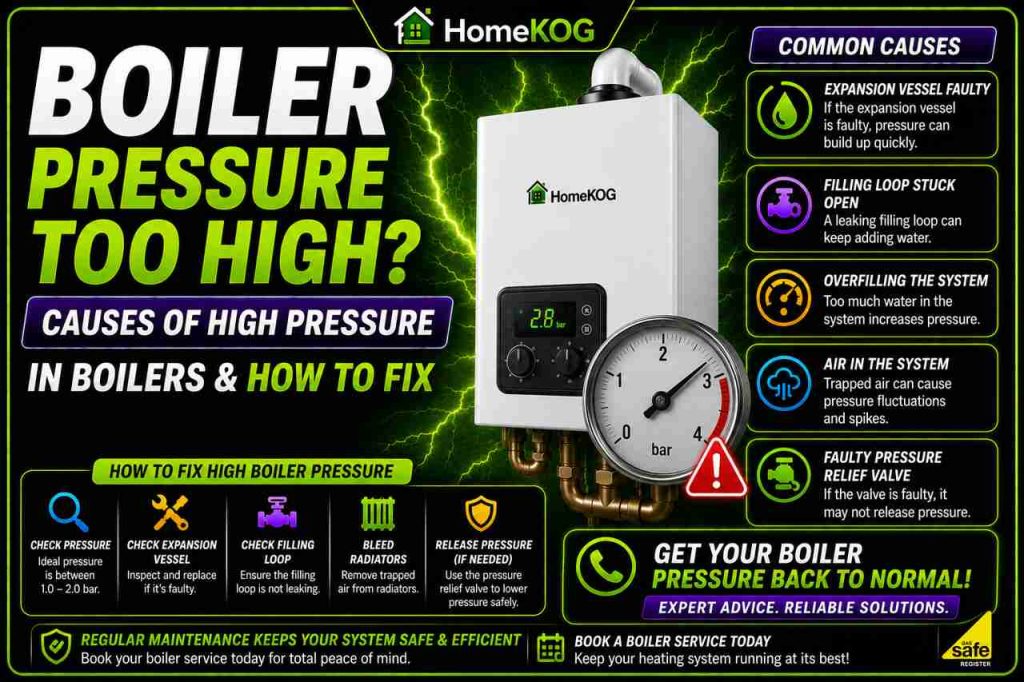
This guide explains what an LPG boiler service involves, why it matters, and what the legal and warranty obligations are for homeowners and landlords in 2026. To ensure you are getting a fair deal, it’s important to understand the ideal boiler service price breakdown. Familiarizing yourself with the typical costs associated with each component of the service can help you budget effectively. Additionally, comparing prices from different service providers will allow you to make an informed choice about which service best meets your needs. When considering options for heating, homeowners should also be aware of factors like oil boiler prices in New York. It’s essential to research the market thoroughly to avoid overpaying and to find energy-efficient models that could save you money in the long run. Understanding regional pricing variances can further aid in making a well-informed decision tailored to your specific needs.

Key Facts: LPG Boiler Service Relationships
- An LPG boiler is a central heating boiler that burns liquefied petroleum gas — either propane or butane — as its fuel source, and is widely used in rural properties not connected to the mains gas network.
- LPG (liquefied petroleum gas) is a colourless, low-carbon hydrocarbon fuel available in propane (C3H8) and butane (C4H10) forms, stored in tanks or bottles outside the property.
- A Gas Safe registered engineer is the only qualified professional legally permitted to service, repair, or inspect an LPG boiler in the UK, as LPG is classed as a gas fuel under UK legislation.
- Annual LPG boiler servicing is the minimum frequency recommended by industry bodies and required by most boiler manufacturers to maintain the validity of the boiler warranty.
- Carbon monoxide is an odourless, colourless gas produced by incomplete combustion in an LPG boiler, and regular servicing including flue inspection and combustion checks is the primary safety measure against CO risk.
- An LPG storage tank evaluation is a standard part of an LPG boiler service that checks the tank condition, connections, and supply pipework for any signs of leakage or deterioration.
- A combustion fan is an internal boiler component checked during every LPG boiler service to confirm it is operating correctly and expelling flue gases safely.
- LPG heat input and pressure verification is a specific check carried out during an LPG service that confirms the correct volume and pressure of gas is reaching the burner.
- A gas safety certificate must be issued every 12 months for all commercial properties and rental properties in the UK with gas or LPG appliances, and the record must be retained for a minimum of two years.
- Boiler warranty validity for LPG boilers requires annual servicing by a Gas Safe registered engineer, and failure to service annually can void the manufacturer warranty regardless of the age of the boiler.
- Propane has a lower boiling point than butane, making it better suited to outdoor storage in the UK climate where temperatures can drop significantly.
- LPG produces lower carbon emissions than heating oil, making it a more environmentally friendly option for off-grid properties considering a fuel switch.
What Is an LPG Boiler?
An LPG boiler operates on the same principles as a natural gas boiler — it burns fuel to heat water that is then circulated through the central heating system and to the property’s taps and showers. The key difference is the fuel source. Instead of drawing natural gas from the mains pipeline, an LPG boiler uses liquefied petroleum gas stored in a tank or cylinder at the property.
LPG is available in two main forms. Propane has a lower boiling point of -42°C, making it well suited to outdoor storage tanks in the UK climate where winter temperatures can fall significantly. Butane has a higher boiling point of -2°C and is more commonly used in smaller portable cylinders for indoor applications. For whole-home heating systems, propane stored in a fixed outdoor tank is the standard configuration.
LPG burns more cleanly than heating oil and produces lower carbon emissions, which makes it a practical and relatively environmentally responsible choice for off-grid properties that are considering moving away from oil heating.
Why Does an LPG Boiler Need Annual Servicing?
The most important reason to service an LPG boiler annually is safety. A boiler that is not combusting correctly can produce carbon monoxide — a colourless, odourless gas that can be fatal at high concentrations and causes serious harm at lower levels. Carbon monoxide risk is present with any gas or LPG appliance that is not regularly maintained, and it cannot be detected without a dedicated CO alarm or professional measurement equipment.
A Gas Safe engineer uses combustion analysis equipment during every LPG service to confirm that the fuel is burning at the correct air-to-fuel ratio and that CO levels in the flue gases are within safe limits. This check, alongside a visual inspection of the flue for blockages and damage, is the primary safety assurance the service provides.
Beyond safety, regular servicing maintains efficiency. An LPG boiler that is not serviced will gradually accumulate combustion deposits on the burner and heat exchanger surfaces. These deposits reduce heat transfer efficiency and force the boiler to consume more LPG to produce the same output — directly increasing the cost of heating the home. Annual servicing removes these deposits and restores the boiler to efficient operation.
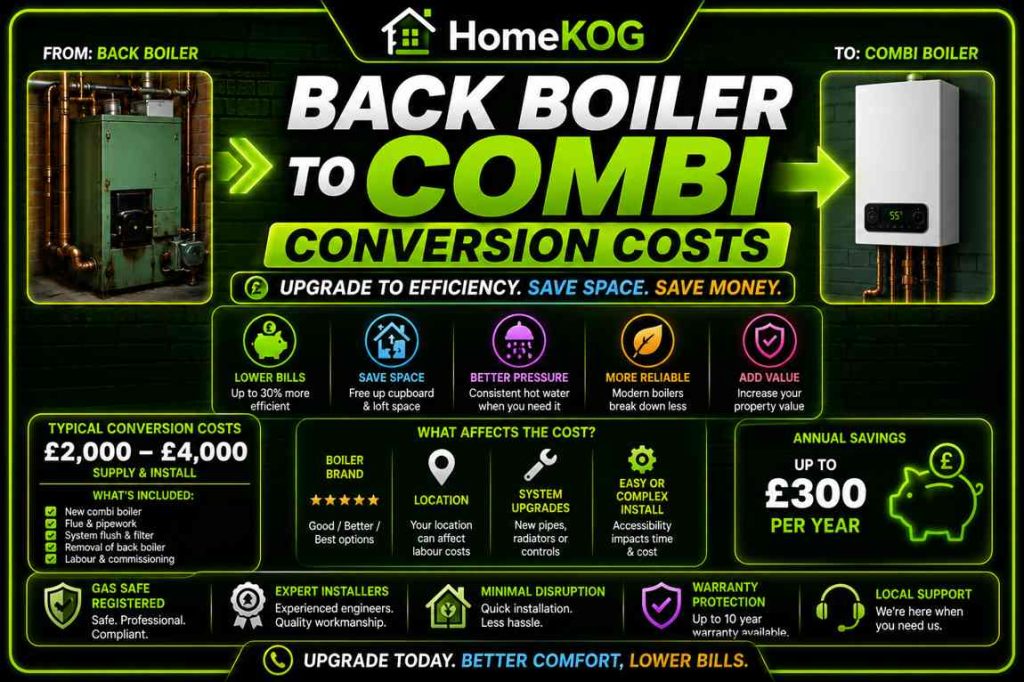
Early fault detection is another significant benefit. Many boiler component failures are progressive — a fan bearing that is beginning to wear, a seal that is starting to degrade, an ignition electrode that is developing carbon deposits. A service identifies these developing issues before they cause a breakdown, allowing them to be resolved at the cost of a part rather than an emergency call-out plus parts plus the disruption of going without heating. Understanding back boiler systems is crucial for homeowners to ensure efficient operation. Regular maintenance checks can help prevent common issues and extend the lifespan of the heating system. By staying proactive, you can enjoy consistent warmth and minimize unexpected repair costs.
What Is Included in an LPG Boiler Service?
A standard LPG boiler service takes approximately one hour and covers a comprehensive set of safety and efficiency checks specific to LPG systems. The engineer will typically work through the following tasks during the visit.
The service begins with a discussion of any problems, unusual behaviour, or concerns the homeowner has noticed since the last service. This context helps the engineer focus attention on any areas of potential concern before beginning the technical inspection.
A visual inspection covers the boiler casing, all visible pipework, the terminals, and the LPG supply line from the storage tank to the boiler. The LPG storage tank itself is evaluated for condition, secure connections, and any signs of leakage.
The engineer verifies LPG heat input and pressure to confirm that the correct volume of gas is reaching the boiler at the appropriate pressure. If the operating pressure has drifted from its set point it will be reset during the service. The combustion fan is scanned and checked to confirm it is operating correctly and providing the airflow needed to support safe combustion and flue gas expulsion.
All LPG and water seals are checked for integrity. The burners are inspected and cleaned to remove any combustion residue that has accumulated since the last service. The ignition system is inspected and tested to confirm reliable spark production. All safety devices — thermostats, pressure relief valves, and other protective systems — are tested to confirm they activate at the correct points.
The controls are reviewed and the engineer will provide guidance on heating controls if any improvements or adjustments would benefit the system’s efficiency or usability. Finally, the boiler is fired up and run at the end of the visit to confirm it is operating correctly before the engineer leaves.
Legal Requirements for LPG Boiler Servicing
For landlords managing rental properties with LPG heating, annual servicing is not just advisable — it is a legal obligation. Gas safety certificates must be issued every 12 months for all gas and LPG appliances in commercial properties and rental accommodation. The Gas Safety Records generated by these inspections must be retained for a minimum of two years and made readily available to tenants and authorities on request.
Failure to comply with gas safety legislation can result in significant penalties. Landlords who cannot demonstrate that annual gas safety checks have been carried out on LPG appliances are in breach of their legal duties under the Gas Safety (Installation and Use) Regulations.
For owner-occupiers, annual LPG boiler servicing is not a statutory legal requirement but is strongly recommended by industry bodies and is almost universally required by boiler manufacturers as a condition of the warranty.
LPG Boiler Servicing and Warranty Validity
Most LPG boiler manufacturers include a condition in their warranty terms requiring the boiler to be serviced annually by a Gas Safe registered engineer. Failing to service the boiler — or having it serviced by an unregistered engineer — can void the warranty, leaving the homeowner responsible for the full cost of any repair regardless of whether the fault is a manufacturing defect.
Service records should be retained throughout the life of the boiler. In the event of a warranty claim, the manufacturer will typically ask for evidence that annual servicing has been maintained. Without service records, the claim may be declined even if the fault clearly relates to a manufacturing issue.
When to Book an LPG Boiler Service
Booking the service before the cold season arrives is strongly recommended. LPG boiler engineers, like their gas counterparts, are significantly busier during autumn and winter when demand for heating servicing peaks. Booking in summer or early autumn gives more flexibility on appointment timing, may offer better value on pricing, and ensures the boiler is confirmed in good working order before it is needed most.
From a practical standpoint, discovering a fault during a summer service means the repair can be arranged without urgency. Discovering the same fault in December — when engineers are booked up and the household needs heating immediately — is a more stressful and potentially more expensive experience.
Advantages of Annual LPG Boiler Servicing at a Glance
| Benefit | Detail |
|---|---|
| Safety | Combustion analysis checks for CO risk and confirms safe flue gas expulsion |
| Efficiency | Burner and heat exchanger cleaning restores fuel efficiency and reduces LPG consumption |
| Breakdown prevention | Early fault detection avoids emergency call-outs and major component failures |
| Warranty validity | Annual servicing by a Gas Safe engineer is required to keep most manufacturer warranties active |
| Legal compliance | Mandatory annual gas safety certificate for rental properties |
| Comfort assurance | Confirms the boiler is ready for the heating season before cold weather arrives |
Frequently Asked Questions
Does an LPG boiler need to be serviced every year?
Yes. Annual servicing is recommended by industry bodies including Gas Safe Register and is required by most LPG boiler manufacturers as a condition of the warranty. For rental properties, annual gas safety checks are a legal requirement. Even for owner-occupiers not bound by warranty terms, annual servicing is the most cost-effective way to maintain safety, efficiency, and reliability throughout the boiler’s working life.
Who can service an LPG boiler?
Only a Gas Safe registered engineer is legally permitted to service an LPG boiler in the UK. LPG is classified as a gas fuel under UK legislation, which means the same Gas Safe registration requirements apply as for natural gas work. Always verify that the engineer is currently Gas Safe registered and qualified for LPG work before booking a service.
What is included in an LPG boiler service?
A standard LPG boiler service covers a visual inspection of the boiler and pipework, verification of LPG heat input and pressure, resetting of operating pressure if needed, combustion fan checks, inspection and cleaning of burners, testing of the ignition system, checking of all LPG and water seals, evaluation of the LPG storage tank, testing of all safety devices including thermostats and pressure relief valves, review of controls, and a final operational test of the boiler. The service takes approximately one hour.
Is an LPG boiler service different from a gas boiler service?
The structure is similar, but there are LPG-specific checks that do not apply to natural gas systems. These include the evaluation of the LPG storage tank, the LPG supply line inspection, and the verification of LPG heat input and pressure — all of which are unique to properties using stored LPG rather than mains gas. The combustion analysis and safety device testing are common to both.
What happens if I don’t service my LPG boiler?
Skipping a service increases the risk of a carbon monoxide leak, reduces boiler efficiency and therefore increases LPG consumption, voids most manufacturer warranties, and increases the likelihood of a breakdown — particularly during the winter months when the boiler is under greatest demand. For landlords, failing to carry out annual gas safety checks is a legal offence.
How much does an LPG boiler service cost in 2026?
LPG boiler service costs are broadly comparable to gas boiler service costs, typically ranging from around £80 to £150 depending on location, the engineer, and the specific boiler model. Engineers in London and the south of England generally charge more than those in other parts of the UK. The cost is modest relative to the value of the boiler, the potential repair bills it prevents, and the fuel savings that maintained efficiency delivers over the course of a heating season. boiler service costs in the UK can also be affected by seasonal demand, with prices potentially rising during peak winter months. Some homeowners may find that opting for a service plan can help distribute these costs throughout the year, ensuring they are prepared for unexpected issues. Additionally, investing in regular maintenance can significantly extend the lifespan of the boiler, making it a worthwhile expense in the long run.
Is LPG better than oil for off-grid heating?
LPG produces lower carbon emissions than heating oil and burns more cleanly, making it the more environmentally responsible option between the two for off-grid properties. It is also stored in sealed tanks that are less prone to contamination than oil tanks. Running costs depend on current LPG and oil prices, which fluctuate, so comparing supplier quotes regularly is important for any household relying on either fuel.
Conclusion
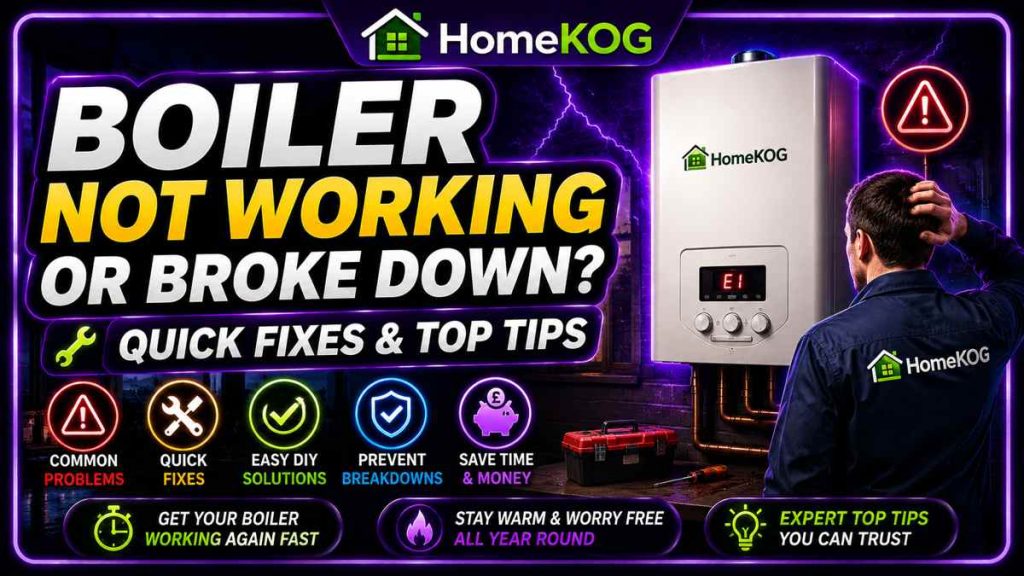
An annual LPG boiler service is one of the most important maintenance commitments a homeowner with off-grid heating can make. It covers every aspect of safety, efficiency, and reliability in a single visit — from combustion analysis that guards against carbon monoxide risk to early fault detection that prevents winter breakdowns. By prioritizing routine care, homeowners can extend the lifespan of their systems and ensure they operate at peak performance. To enhance this effort, here are some boiler maintenance tips for homeowners that can easily be implemented throughout the year. Simple actions like checking the pressure gauge and bleeding radiators can lead to significant improvements in efficiency and comfort.
The legal, warranty, and practical case for servicing every year is clear. Booking a Gas Safe registered engineer before the cold season arrives is the simplest and most cost-effective way to ensure the boiler is ready for the months when it matters most. baxi service booking made easy means that homeowners can schedule their annual inspections with just a few clicks. This streamlined process reduces the stress of last-minute arrangements and helps ensure that your heating system is fully operational when winter arrives. Additionally, early booking often comes with discounts, making it a savvy financial choice for anyone looking to avoid unexpected repair costs later.
For rental properties with LPG heating, annual servicing and gas safety certification are non-negotiable legal requirements. For owner-occupiers, they are the most reliable investment in the safety and longevity of a heating system that many households depend on entirely.