

Low Boiler Pressure and Boiler Losing Pressure Every Day: Causes and Fixes 2026
Quick Answer: Low boiler pressure — a gauge reading below 1.0 bar — is most commonly caused by a system leak, a faulty pressure relief valve, a failing expansion vessel, or an open filling loop. A one-off pressure drop is normal and is resolved by repressurising through the filling loop to 1.5 bar. Boiler pressure that drops back to low within hours or days of repressurising indicates a leak somewhere in the system that requires a Gas Safe engineer to locate and repair. Never ignore pressure that drops daily — the underlying cause will worsen if left unaddressed. In addition to addressing pressure issues, it’s important to pay attention to the boiler pilot light troubleshooting steps. If the pilot light goes out unexpectedly, check for blockages in the gas supply or inspect the thermocouple for faults. Regular maintenance can prevent these issues and ensure your boiler operates efficiently.
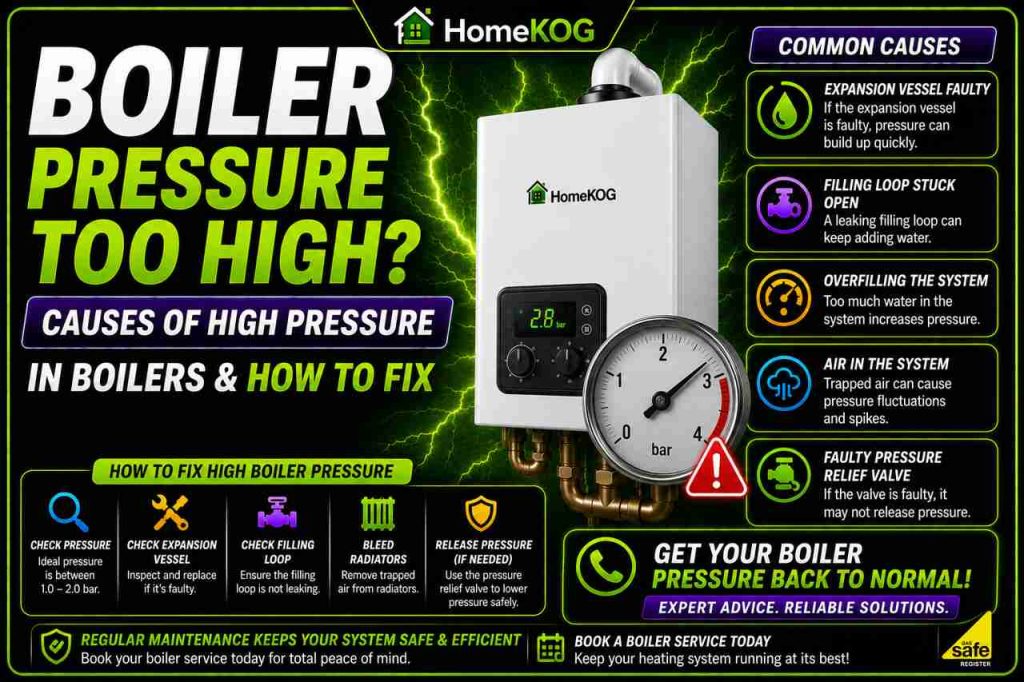
Low boiler pressure is one of the most reported domestic heating problems in the UK, and one of the most frequently misunderstood. For many homeowners, the instinct is to repressurise and move on — which works perfectly well for a gradual, occasional pressure drop. The problem arises when pressure drops rapidly and repeatedly, which is always a sign of something that repressurising alone will not fix. This guide explains every cause of low boiler pressure, how to diagnose which applies, and exactly what to do about it. high boiler pressure can be equally concerning and may indicate underlying issues that require immediate attention. Understanding the common causes of high boiler pressure can help homeowners prevent potential damage and maintain system efficiency. Whether it’s a faulty pressure relief valve or a malfunctioning expansion vessel, diagnosing the problem early is crucial for ensuring safe operation.
What is the Correct Boiler Pressure?
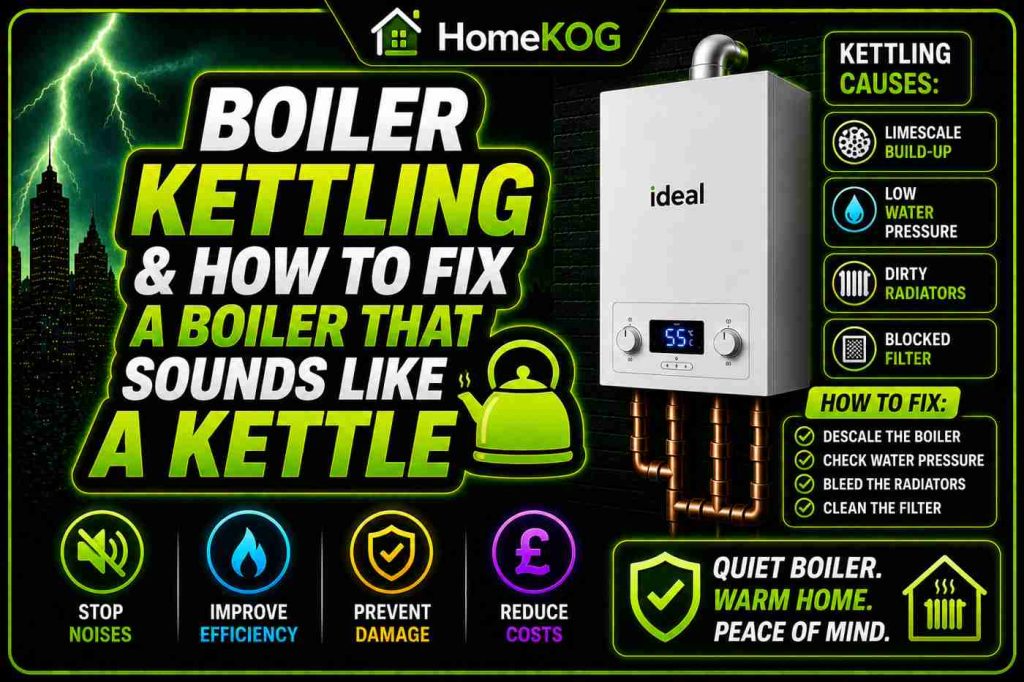
The pressure gauge on the boiler front panel — either an analogue dial or digital display — shows the current system pressure in bar. The correct range for most boilers is 1.0 to 1.5 bar with the heating off and cold, rising to 1.5 to 2.0 bar when the heating is running due to thermal expansion of the heated water. Below 1.0 bar is too low. Above 2.5 bar is too high. The green zone on an analogue gauge corresponds to the correct operating range — red zones indicate pressure outside acceptable limits in either direction. Maintaining the proper pressure is crucial for the efficiency and safety of your system, and addressing boiler kettle noise solutions can significantly improve the overall operation. Noisy boilers are often a sign of pressure problems or air trapped in the system, which can lead to further complications if not resolved. It’s important to regularly check and maintain the system to ensure it operates within the recommended pressure range and minimizes any disruptive sounds.

Signs That Boiler Pressure is Too Low
Radiators that are slow to heat up or fail to reach full temperature are a common early sign of low pressure, as insufficient water pressure reduces the pump’s ability to circulate hot water effectively around the system. The boiler may lock out and display a low pressure fault code — most modern boilers shut down automatically when pressure drops below approximately 0.5 bar to prevent pump damage from running dry. Cold water from hot taps despite the boiler appearing to fire is another indicator. On analogue gauges, the needle sitting in the red zone below 1.0 bar confirms low pressure directly.
What Causes Low Boiler Pressure?
System Leak
A leak somewhere in the heating system is the most common cause of persistent or recurring pressure loss. The leak allows water to escape the sealed circuit, reducing the total water volume and therefore the system pressure. Leaks can occur at radiator valve connections, compression fittings in the pipework, the pump seal, pipe joints under floorboards or behind walls, or within the boiler itself at internal connections.
Some leaks are immediately visible as pooling water or damp staining. Others — particularly slow pinhole leaks in concealed pipework — are not visible and are identified only through the pattern of pressure loss they cause. A system that requires repressurising more than once every few weeks almost certainly has a leak, even if no water is visibly escaping. A Gas Safe engineer can pressure-test the system to locate concealed leak points.
Faulty Pressure Relief Valve
The pressure relief valve (PRV) is a safety device that opens automatically to discharge water when system pressure rises above the safe limit — typically around 3 bar. It is normally located on the boiler and connects to a discharge pipe that exits to an external drain. A PRV that has become faulty can open at pressures below its rated threshold, releasing water from the system and causing pressure to drop without any visible leak at the boiler itself.
A discharging PRV can be identified by a copper or plastic pipe dripping or flowing water externally from the property — typically at low level near an external wall. A PRV that discharges intermittently or continuously requires replacement by a Gas Safe engineer. The PRV cannot be adjusted or repaired — it is a replace-only component when faulty.
Failing Expansion Vessel
The expansion vessel is a sealed chamber containing a pressurised air charge separated from the system water by a flexible rubber diaphragm. Its function is to absorb the increased water volume as the heating system heats up — without the expansion vessel, pressure would spike dramatically every time the boiler fired. When the diaphragm inside the expansion vessel fails — either splitting or losing its air charge — the vessel can no longer absorb expansion correctly, causing pressure to fluctuate and in some failure modes to drop progressively.
A failing expansion vessel may cause pressure to read correctly when cold but spike excessively when the heating runs, triggering the PRV to discharge and causing subsequent low pressure when the system cools. A Gas Safe engineer can test the expansion vessel’s air charge pressure and either recharge it through the Schrader valve or recommend replacement if the diaphragm has failed.
Open or Leaking Filling Loop
The filling loop connects the boiler to the mains cold water supply and is used to add water to the system when repressurising. It should be fully closed when not in active use. A filling loop valve that has been left partially open — particularly after a recent repressurisation — continues to admit mains water into the system, which eventually causes pressure to rise, the PRV to discharge, and pressure to subsequently drop. Confirming that both filling loop valves are fully closed is always the first check when unexplained pressure loss occurs after a recent repressurisation.
A filling loop valve with an internal seal that has deteriorated may allow a slow flow past the valve seat even when the handle is in the closed position. This causes gradual pressure creep that triggers PRV discharge and subsequent pressure loss. A leaking filling loop valve requires replacement. overflow pipe leak causes explained can also stem from issues such as faulty connections or corrosion in older pipes. These factors can lead to significant water loss and potential damage to surrounding areas if not addressed promptly. Regular inspection and maintenance are essential to prevent these issues from escalating into more serious problems.
Air in the System
Air trapped in the heating system can escape through bleed valves, micro-leaks, or automatic air vents, reducing the total water volume in the sealed circuit and dropping system pressure. Bleeding radiators to remove trapped air releases both air and a small amount of water, which will cause the pressure gauge to drop. After bleeding radiators, checking and restoring pressure via the filling loop is a normal maintenance step — this is not a fault but an expected consequence of the bleeding process.
Frozen Condensate Pipe
In cold weather, a frozen condensate pipe — the plastic pipe that drains acidic wastewater from the boiler to an external drain — can cause the boiler to lock out and in some cases display a pressure-related fault code as part of the lockout state. The low pressure reading in this scenario is a symptom of the lockout rather than an independent pressure fault. Thawing the condensate pipe and resetting the boiler resolves the lockout, after which the pressure should return to the normal operating range. If pressure remains low after resolving a frozen condensate pipe, a separate pressure issue exists and should be investigated.
How to Repressurise a Boiler: Step-by-Step Guide
Repressurising a boiler through the filling loop is safe and straightforward. The filling loop is typically located beneath the boiler — a braided flexible hose or pair of valves on adjacent pipework. On some installations a key fitting is used and the key is attached to the nearby pipework.
- Switch the boiler off and allow it to cool completely before starting. Adding cold mains water to a hot pressurised system risks thermal shock to components.
- Locate the filling loop beneath or adjacent to the boiler. Identify both valves — on a two-valve loop, both must be opened; on a single keyway loop, insert the key and turn to the open position.
- Open the filling loop valve or valves slowly. You should hear water entering the system.
- Watch the pressure gauge continuously as pressure rises. Do not leave the filling loop unattended.
- Close the filling loop valve or valves firmly when the gauge reads 1.5 bar. Do not overfill — the system pressure will rise further once the heating fires and water expands.
- Switch the boiler back on. Press the reset button if the boiler locked out on low pressure. The boiler should start within approximately 60 seconds.
- Check the pressure after the first heating cycle — it should read between 1.5 and 2.0 bar while running.
- Inspect visible pipework and radiator connections for any drips. Monitor the pressure gauge over the following days.
If pressure drops back to below 1.0 bar within a few days of repressurising, a system leak is present and a Gas Safe engineer should be called to locate it.
When to Call a Gas Safe Engineer
Repressurising resolves a one-off pressure drop. It does not resolve the underlying cause of recurring pressure loss. Call a Gas Safe engineer if: pressure drops back to a low level within hours or a day or two of repressurising; pressure drops consistently every day regardless of how frequently the system is topped up; no filling loop is accessible without removing a panel with tools — never open the boiler casing without Gas Safe registration; water is visibly escaping from a pipe that cannot be reached safely; or the pressure relief valve is discharging externally.
Does Low Boiler Pressure Mean I Need a New Boiler?
Not in the vast majority of cases. Low pressure is a symptom — its cause determines whether a repair or replacement is the appropriate response. A system leak at a radiator valve or pipe joint costs £100 to £250 to repair. A PRV replacement costs £100 to £200. An expansion vessel recharge or replacement costs £150 to £300. None of these repairs justifies replacing the boiler. The scenario in which low pressure contributes to a new boiler decision is where the boiler is already over 10 to 12 years old, the pressure loss is caused by an internal boiler component failure, and the combined cost of repair approaches the cost of a new installation. When considering the best boilers for threebedroom homes, it’s essential to evaluate the energy efficiency and output capabilities of various models. Many homeowners find that a good balance between cost and performance can significantly reduce heating bills and enhance overall comfort. Additionally, investing in a reliable system can prevent the frequent need for repairs, particularly in properties with older installations.
Signs that indicate a new boiler may be necessary — independent of the pressure issue — include radiators consistently slow to heat despite correct pressure, a yellow rather than blue boiler flame (which is a safety emergency requiring immediate engineer attendance), unusual smells from the boiler, or energy bills rising without any change in usage patterns. Homeowners facing such issues should explore boiler finance options for homeowners to manage the costs of a replacement. Many financing plans can help make an upgrade more affordable while ensuring your home remains comfortable and efficient. It’s essential to consider these options to avoid further complications and increased expenses down the line.
FAQ
Why does my boiler keep losing pressure every day?
Daily pressure loss is almost always caused by a system leak. The leak may be visible — water pooling at a valve, joint, or under the boiler — or concealed within pipework under floors or behind walls. A Gas Safe engineer should locate and repair the leak. Continuing to repressurise daily without finding the leak allows it to worsen progressively and risks water damage to the surrounding structure.
Is low boiler pressure dangerous?
Low boiler pressure is not an immediate safety hazard in the way that a gas leak or carbon monoxide production is. Modern boilers shut down automatically before pressure reaches a level that could cause damage. The risks of persistent low pressure are heating and hot water failure, pump damage from running dry at very low pressure, and the progressive worsening of the underlying leak that is causing the pressure loss. Address recurring low pressure promptly but without panic — it is a maintenance issue, not an emergency.
Can I fix low boiler pressure myself?
Repressurising through the filling loop is a safe DIY task that resolves a one-off pressure drop. Checking that the filling loop valves are closed after repressurisation is also straightforward. Bleeding radiators to remove trapped air is a DIY task. Anything involving opening the boiler casing, replacing the PRV, recharging the expansion vessel, or locating a concealed system leak requires a Gas Safe engineer.
What pressure should I fill my boiler to?
Fill to 1.5 bar with the heating off and cold. Do not fill above 1.5 bar during repressurisation — the pressure will rise further once the heating fires due to thermal expansion, and pressure above 2.0 to 2.5 bar risks triggering the PRV to discharge. The target operating range when the heating is running is 1.5 to 2.0 bar.
How often should boiler pressure drop?
A well-maintained sealed system in good condition should hold pressure for months between top-ups, requiring repressurisation perhaps once or twice a year at most. More frequent pressure drops — monthly, weekly, or daily — indicate a developing fault. Monthly or occasional repressurisation requirements are common in older systems with minor seepage at aging fittings. Weekly or daily pressure loss requires engineer investigation.
Conclusion
Low boiler pressure is one of the most manageable of all central heating problems when the cause is correctly identified and addressed. A single repressurisation through the filling loop resolves the most common scenario — a gradual, occasional pressure drop from a well-maintained system. The discipline of monitoring the pressure gauge after repressurising is what distinguishes a normal maintenance top-up from a developing fault — a system that holds its new pressure reading for weeks is fine; one that drops back within days has a leak that needs finding. In cases where low pressure persists despite repressurisation, you may need to employ boiler circuit board troubleshooting techniques to identify any underlying faults. Common issues can include electrical failures or improper connections that might disrupt the system’s operation. By systematically testing each component, you can often pinpoint the source of the problem and make the necessary repairs.
Annual boiler servicing that includes pressure testing, expansion vessel charge checking, and PRV inspection is the most effective preventative measure against the component failures that cause persistent pressure loss. Combined with magnetic filter installation and correct inhibitor dosing — which prevent the sludge and corrosion that cause pinhole leaks and valve deterioration — it keeps the sealed system intact and pressure stable for the full operational lifespan of the boiler.