
Boiler Pilot Light Gone Out: Causes, How to Relight It & When to Call an Engineer
Quick Answer: A boiler pilot light most commonly goes out due to a dirty pilot orifice, a faulty thermocouple, strong draughts near the flue, or a malfunctioning gas regulator. A manual pilot light can often be relit yourself following the correct steps. If the light will not stay lit after relighting, or if you can smell gas, turn off the gas supply immediately and call a Gas Safe registered engineer.
Most boilers operate quietly in the background for years without requiring attention, so it can be unsettling when something as fundamental as the pilot light stops working. Understanding why it has gone out and how to respond correctly is the difference between a quick fix and an unnecessary call-out — or, in a worst-case scenario, a dangerous delay.
This guide covers everything you need to know about a boiler pilot light in 2026: what it does, how to identify if it has gone out, why it keeps failing, and how to relight it safely.
Get a boiler cover plan here >
Key Facts: Boiler Pilot Light Relationships
- A boiler pilot light is a small continuously burning flame inside older boilers that ignites the main gas burner when heating or hot water is called for, and must remain lit for the boiler to function.
- A thermocouple is a copper rod safety device that makes direct contact with the pilot flame and automatically closes the gas valve if the flame goes out, preventing unburned gas from accumulating inside the home.
- A manual pilot light is identified by a gas control knob with three settings — pilot, on, and off — and can be relit by the homeowner following the correct safety procedure.
- An automatic pilot light is identified by a gas control knob with only two settings — on and off — and must never be relit manually, as it uses an electric ignition system to establish the flame.
- A dirty pilot orifice is a blocked or partially obstructed burner opening that produces a weak, yellow flame rather than a strong blue one, preventing the thermocouple from being fully heated.
- A blue pilot flame indicates that the pilot light is operating correctly and that combustion is complete and clean.
- A yellow or orange pilot flame indicates incomplete combustion, most commonly caused by a dirty orifice or a gas supply issue, and should be investigated promptly.
- A faulty gas regulator is a malfunctioning component on the gas meter that fails to supply gas at the correct pressure, affecting all gas appliances in the property simultaneously.
- Carbon monoxide poisoning is the potentially fatal risk associated with an unlit pilot light where the gas valve has not closed correctly, allowing unburned gas to leak into the living space.
- A Gas Safe registered engineer is the only qualified professional legally permitted to inspect, repair, or replace thermocouple and gas valve components on a domestic boiler in the UK.
- Strong draughts near the boiler flue can extinguish a pilot flame, particularly in windy weather, and may indicate that the boiler’s installation configuration needs to be assessed by an engineer.
- Note that pilot lights are a feature of older boilers — most modern condensing boilers use electronic ignition and do not have a standing pilot light.

What Is a Boiler Pilot Light and Why Does It Matter?
The pilot light is a small, continuously burning flame found in older boiler designs. Its role is to provide the ignition source for the main gas burner — when the boiler is called upon to produce heat or hot water, the main burner fires up using the pilot flame as its ignition point.
Because the pilot light’s job is to ignite gas, it is critical that it remains burning at all times when the boiler is in operation. If it goes out while the gas valve is open, unburned gas can accumulate inside the boiler and potentially leak into the home, creating a risk of carbon monoxide poisoning or explosion.
It is worth noting that the vast majority of modern condensing boilers — installed since the mid-2000s — do not use a standing pilot light at all. They use electronic ignition to light the main burner directly on demand. If your boiler is relatively new and you are looking for information about ignition failure, the fault code and ignition electrode guides in our boiler fault section are more relevant. The information in this guide applies primarily to older boilers that use a conventional pilot light system.
How to Tell If Your Pilot Light Has Gone Out
Before assuming the pilot light is the cause of a boiler problem, a quick visual check will confirm whether it is actually out. Follow these steps: If the boiler is still not functioning properly, it may be due to issues such as low water levels or kettling from sediment buildup. Understanding boiler kettling causes and solutions is essential for maintaining an efficient heating system. Regular maintenance can help prevent these problems and ensure optimal performance throughout the colder months.
Open the cover panel on the front of the boiler carefully. You should be able to see a small flame burning inside. If the flame is present and burning blue, the pilot light is lit and functioning correctly.
If there is no flame visible at all, the pilot light has gone out.
If there is a flame but it is burning yellow or orange rather than blue, the pilot light has not gone out but is not functioning correctly. A yellow flame indicates incomplete combustion and most commonly points to a dirty pilot orifice or a gas supply issue.
If at any point you can smell gas, do not proceed with any checks or relighting attempts. Turn off the gas supply at the meter immediately, open windows and doors to ventilate the property, avoid operating any electrical switches, leave the property, and call the National Gas Emergency line on 0800 111 999.
The Main Reasons a Pilot Light Keeps Going Out
Dirty Pilot Orifice
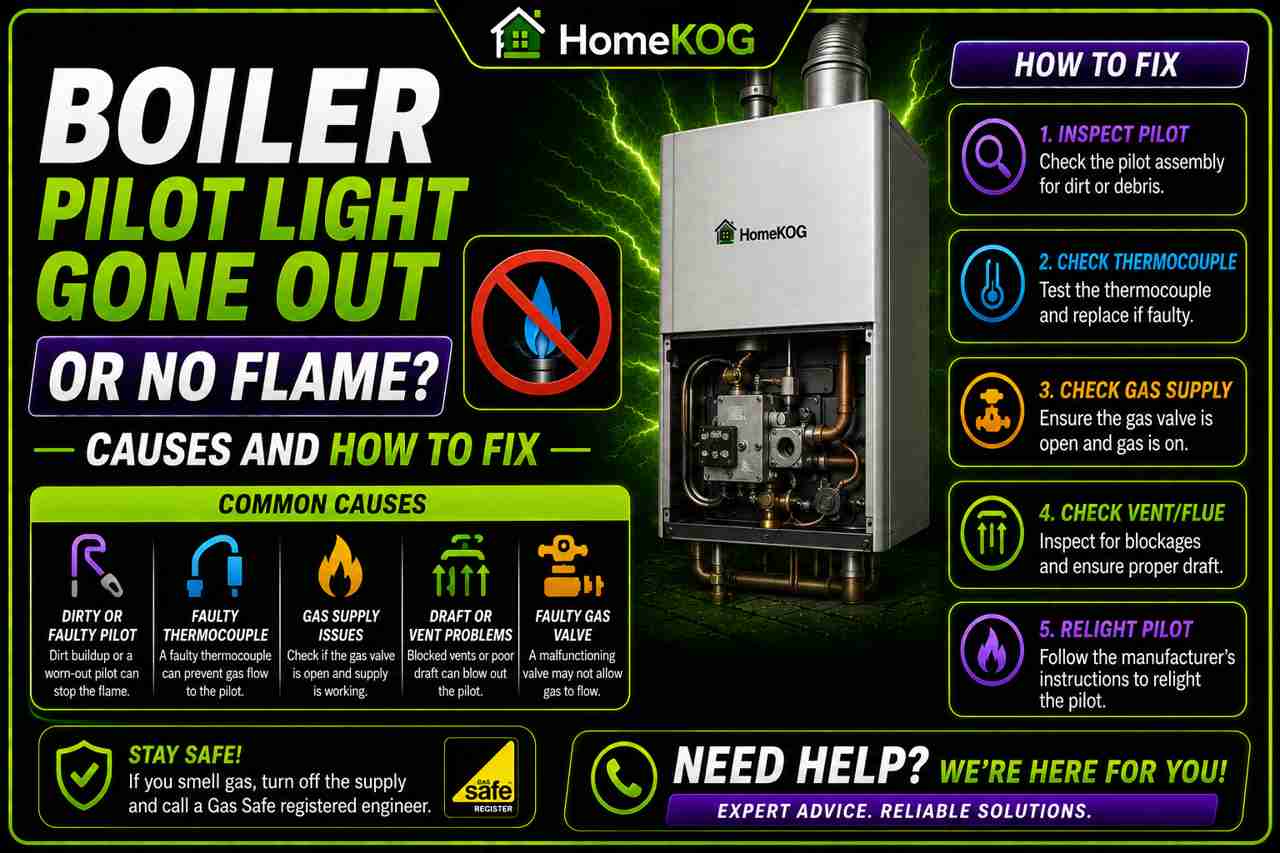
The pilot orifice is the small opening through which gas flows to maintain the pilot flame. Over time, dust, debris, and carbon deposits can partially block this orifice, restricting the gas flow and producing a weak, yellow flame rather than the strong blue one needed to properly heat the thermocouple.
When the thermocouple is not sufficiently heated, it interprets this as the pilot light having gone out and closes the gas valve — extinguishing the flame in the process. This creates a cycle where the pilot light repeatedly goes out even though it has been relit.
Cleaning the orifice is one of the few pilot light-related tasks that can be carried out by a careful homeowner. Using a small wire brush or a straightened paper clip, clear any visible debris from around the orifice opening. Blow away any remaining soot or loose particles using compressed air or a can of compressed air spray.
If the flame remains yellow or weak after cleaning, do not attempt further work yourself. A persistent yellow flame after cleaning can indicate a gas leak, and a Gas Safe engineer must be called.
Faulty or Broken Thermocouple
A faulty thermocouple is one of the most common causes of a pilot light that repeatedly goes out for no obvious reason. The thermocouple is a safety device — a copper rod that sits directly in the pilot flame and measures its heat. When the flame is burning correctly, the thermocouple generates a small electrical signal that holds the gas valve open. If the flame goes out, the signal stops and the valve closes automatically.
When a thermocouple begins to fail, it can generate intermittent or incorrect signals even when the pilot flame is burning normally, causing it to close the gas valve and extinguish the flame without any external cause. A faulty thermocouple cannot be repaired and must be replaced.
This is not a task for the homeowner. A Gas Safe registered engineer must inspect the thermocouple, confirm it is the source of the fault, and carry out the replacement using the correct component for the specific boiler model.
Strong Draughts
If the pilot light appears to go out most frequently during windy weather, or if it can be relit quickly and easily only to go out again shortly afterwards, strong draughts are a likely cause. The pilot flame is small and relatively vulnerable to sudden air movement, particularly if the boiler’s flue is positioned in a location exposed to prevailing winds or if there is a gap or fault in the boiler casing allowing air to reach the pilot chamber.
This is not something the homeowner can resolve independently. A Gas Safe engineer will assess the boiler’s installation, flue configuration, and casing integrity to identify where the draught is entering and determine the appropriate remedy. In addition to addressing the immediate issues, homeowners may want to explore boiler finance options for homeowners to manage the costs associated with repairs or replacements. Various financial solutions can help ease the burden, allowing for an investment in a more efficient system that ultimately reduces energy bills. It’s essential to compare different financing plans to find the one that best fits individual budgets and needs.
Faulty Gas Regulator
The gas regulator on the meter controls the pressure of gas supplied to all appliances in the property. If the regulator is malfunctioning, the gas pressure reaching the boiler may be insufficient to maintain the pilot flame — causing it to go out repeatedly even when everything else is functioning correctly. When experiencing issues with the boiler, it’s essential to consider low boiler pressure troubleshooting tips. Begin by checking for any leaks in the gas supply lines, as these can significantly impact pressure levels. Additionally, ensure that the water levels in the boiler are adequate, as low water levels can also lead to pressure drops.
A malfunctioning gas regulator affects every gas appliance in the property, not just the boiler. If the pilot light is going out alongside problems with a gas hob, gas fire, or any other appliance, the regulator is the likely common cause.
A suspected regulator fault should be reported to your gas supplier, who will arrange an inspection of the meter. Do not attempt to inspect or adjust the gas meter or regulator yourself.
How to Relight a Boiler Pilot Light
Identifying Your Pilot Light Type
Before attempting to relight the pilot light, you must identify whether it is a manual or automatic type, as the relighting procedure differs significantly between the two.
A manual pilot light has a gas control knob with three settings: pilot, on, and off. If your boiler’s knob has these three positions, the pilot light is manual and can be relit following the steps below.
An automatic pilot light has a gas control knob with only two settings: on and off. There may also be a label on the front of the boiler indicating that it has automatic ignition. An automatic pilot light must never be relit manually — it uses an electrical ignition system and must be allowed to ignite itself when the electrical supply is restored.
Relighting a Manual Pilot Light
Turn the gas control knob to the off position and switch off any other gas appliances in the home.
Set the thermostat to its lowest setting so the boiler will not attempt to fire during the relighting process.
Once the boiler is off, wait for 10 to 15 minutes to allow any residual gas fumes to fully dissipate before proceeding. Do not rush this step.
Locate and remove the access panel on the front of the boiler to expose the pilot light area.
Turn the gas control knob from off to the pilot position and press it down firmly. This opens the gas supply to the pilot light hole. While holding the knob pressed down, bring a lighter or a lit match close to the pilot light opening and apply the flame. Hold the gas control knob down continuously until the pilot flame ignites and burns with a steady blue flame — this typically takes around one minute of sustained pressure on the knob.
Once the blue flame is established, slowly release the gas control knob. If the pilot light stays lit, the relighting has been successful. Turn the knob from pilot to on and replace the access panel.
If the pilot light goes out again when the knob is released, the thermocouple may not have had enough time to heat up. Wait a few minutes and repeat the process, holding the knob down for a full minute after ignition before releasing.
If the pilot light continues to go out after two or three attempts, turn the gas control knob to off, close the access panel, and contact a Gas Safe engineer. Do not continue to attempt relighting.
Relighting an Automatic Pilot Light
Turn the boiler off using its dedicated electrical isolator switch. If the isolator switch cannot be located, turn off the relevant circuit at the consumer unit.
Remove the boiler access panel.
Ensure the gas control knob is in the off position.
Wait 10 to 15 minutes for gas fumes to dissipate.
Turn the gas control knob back to the on position.
Switch the electrical supply back on at the isolator switch or consumer unit. The automatic ignition system will activate and you should hear a series of clicking sounds as the igniter fires. The pilot flame should establish within a few seconds of the clicking starting.
If the clicking continues without the pilot flame establishing, or if the pilot light ignites briefly and then goes out, turn the gas control knob back to off and switch off the electrical supply. Contact a Gas Safe registered engineer to investigate the fault.
When to Call a Gas Safe Engineer
Some pilot light faults cannot and should not be addressed by the homeowner. A Gas Safe engineer must always be called in the following situations.
If you can smell gas at any point, stop immediately, turn off the gas at the meter, ventilate the property, and call the National Gas Emergency line on 0800 111 999 before contacting an engineer.
If the pilot light fails to stay lit after two or three attempts at relighting — regardless of whether the boiler is manual or automatic — an underlying fault is preventing it from maintaining the flame and professional diagnosis is needed.
If the pilot flame is yellow or orange rather than blue after cleaning the orifice, a gas supply issue or leak may be responsible.
If the thermocouple is suspected to be faulty — shown by the pilot light going out for no external reason — the thermocouple must be tested and replaced by an engineer using the correct part for the specific boiler.
If other gas appliances in the home are also affected, a faulty gas regulator at the meter is the likely cause and must be reported to the gas supplier.
Frequently Asked Questions
Is it dangerous if the boiler pilot light goes out?
Yes, potentially. If the pilot light goes out and the thermocouple fails to close the gas valve correctly, unburned gas can leak into the home. This creates a risk of carbon monoxide poisoning and, in a worst case, explosion. This is why the thermocouple is designed to close the gas valve automatically when the pilot flame is extinguished. If you suspect the gas valve has not closed after the pilot light went out, turn off the gas supply at the meter immediately and contact a Gas Safe registered engineer.
Why does my pilot light keep going out?
The most common reasons are a dirty pilot orifice producing a weak yellow flame that cannot sustain the thermocouple’s heat signal, a faulty thermocouple intermittently cutting the gas supply, strong draughts reaching the pilot chamber, or a malfunctioning gas regulator reducing the gas pressure below the level needed to maintain the flame. If the pilot light consistently goes out shortly after relighting, a Gas Safe engineer should be asked to diagnose the specific cause.
Can I relight the pilot light myself?
If your boiler has a manual pilot light — identified by a gas control knob with three settings — yes, you can follow the relighting procedure described in this guide. If your boiler has an automatic pilot light — with only two settings on the gas control knob — you must never attempt to relight it manually. Allow the automatic ignition system to re-establish the flame by restoring the electrical supply after waiting for gas fumes to dissipate. If the automatic ignition does not successfully relight the pilot within two attempts, call a Gas Safe engineer.
What does a yellow pilot light flame mean?
A yellow or orange pilot flame indicates incomplete combustion. The pilot light has not gone out but is not burning correctly. This is most commonly caused by a dirty or partially blocked pilot orifice that is restricting the gas flow. Cleaning the orifice may resolve it, but if the flame remains yellow after cleaning, a gas leak or gas supply issue may be responsible and a Gas Safe engineer must be contacted promptly.
How do I know if I have a manual or automatic pilot light?
Check the gas control knob on the boiler. If it has three settings — pilot, on, and off — the pilot light is manual. If it has only two settings — on and off — the pilot light is automatic. Some boilers also carry a label on the front panel indicating which type of ignition system they use. If you are unsure, do not attempt to relight the pilot light manually and call a Gas Safe engineer to advise.
How much gas does a pilot light use?
A standing pilot light burns approximately 600 BTUs of gas per hour, which equates to around 14,400 BTUs per day and approximately 4.3 therms of gas per month. This continuous gas consumption, even when the boiler is not actively heating, is one of the reasons modern boilers have moved to electronic ignition systems that only activate when heating is called for. If you have an older boiler with a standing pilot light and energy efficiency is a concern, the overall running cost difference compared to a modern electronic ignition boiler is worth factoring into a replacement decision.
Can I clean the pilot orifice myself?
Yes, carefully. Use a small wire brush or a straightened paper clip to clear any visible debris from around the pilot orifice opening. Blow away any remaining soot or loose particles using compressed air. Always ensure the gas is turned off and the boiler has been off long enough for any residual fumes to clear before working near the pilot area. If the flame is still weak or yellow after cleaning, do not proceed further and call a Gas Safe engineer.
Should I replace my boiler if the pilot light keeps going out?
If the boiler is older and the pilot light is going out repeatedly due to a worn thermocouple or an ageing gas valve, the cost of ongoing repairs may not represent good value — particularly if the boiler is also inefficient by modern standards. A modern condensing boiler with electronic ignition eliminates the pilot light entirely, operates at significantly higher efficiency, and will carry a full manufacturer warranty covering parts and labour. For boilers approaching or beyond ten years of age with recurring pilot light problems, a replacement is worth comparing against the cost of continuing to repair.
Conclusion
A boiler pilot light that has gone out is one of the more straightforward boiler faults to identify and, in the case of a manual pilot light, often straightforward to resolve at home following the correct safety steps. The most important rules are simple: always wait for gas fumes to dissipate before attempting a relight, never attempt to manually relight an automatic pilot light, and call a Gas Safe engineer if the flame will not stay lit after two attempts.
A yellow flame, a repeatedly extinguishing pilot light, or the smell of gas are all signals to stop, turn off the gas, and get a professional involved. Safety is always the priority when dealing with any gas appliance, and the expertise of a Gas Safe registered engineer is both the safest and the most reliable route to a lasting fix.
If your boiler is older and recurring pilot light problems are becoming a pattern, it may also be the right moment to explore whether a modern, energy-efficient replacement with electronic ignition would offer better long-term value than continuing to maintain an ageing system.