
Overflow Pipe Leaking: Causes and How to Fix It 2026
Quick Answer: An overflow pipe leaking outside the property is most commonly caused by a faulty or stuck float valve, a worn washer, excessive water pressure, or a failed expansion vessel. The source depends on which pipe is dripping — a pipe at roof or loft level indicates a cold water or central heating feed tank issue; a pipe at ground or first floor level typically indicates a toilet cistern issue; a copper pipe from the boiler area indicates the boiler pressure relief valve. Worn washers and stuck float valves can be DIY fixes. A boiler pressure relief valve discharge, broken cylinder coil, or persistent high water pressure always requires a Gas Safe engineer or qualified plumber.
An overflow pipe leaking is one of those plumbing signs that is easy to notice — water dripping or flowing from a pipe on the outside of the property — but can be confusing to diagnose because the same symptom can have several completely different causes depending on which overflow pipe is involved. This guide works through every type of overflow pipe, what causes each to leak, and what the correct fix is for each scenario.
What is an Overflow Pipe?
An overflow pipe is a safety pipe connected to a water storage vessel — a cistern, tank, cylinder, or boiler — that carries excess water to the outside of the property when the water level in the vessel rises above its safe maximum. Its purpose is to prevent flooding inside the property when water fails to shut off correctly.
Different overflow pipes serve different parts of the plumbing and heating system. The large cold water storage tank in the loft, the smaller central heating feed and expansion tank, the toilet cistern, and the boiler pressure relief valve all have overflow or discharge pipes that exit the property’s external wall. Identifying which pipe is dripping is the essential first diagnostic step.

How to Identify Which Pipe is Leaking
The height at which the pipe exits the external wall provides the most reliable clue to its source. A pipe exiting at roof or eaves level comes from a loft tank — either the cold water storage tank or the central heating feed and expansion tank. A pipe exiting at first floor level or behind a ground-floor toilet wall comes from a toilet cistern. A copper pipe exiting at low level near the boiler is the pressure relief valve discharge.
If the source is still unclear, check the water level in each cistern — the one with water at or above the overflow level is the source of the leak.
Common Causes of Overflow Pipe Leaking
Worn or Damaged Washer
The washer inside the float valve assembly provides the seal that stops water flowing into the cistern when it is full. A worn, split, or degraded washer allows water to pass the valve seat continuously — the cistern fills beyond its normal level and the overflow pipe discharges the excess. Washer replacement is one of the most straightforward plumbing DIY tasks and resolves the majority of overflow pipe leaks in toilets and loft tanks.
Stuck or Faulty Float Valve
The float valve uses a buoyant ball that rises with the water level to shut off the water feed when the cistern is full. A float valve that has become stuck in the open position — due to a physical obstruction, mineral scaling, or a ball that has developed a hole and filled with water — fails to shut off and allows continuous water flow into the cistern. Checking whether the ball rises freely and whether it is intact is the first diagnostic step for any cistern overflow.
High Water Pressure
Water supply pressure above the float valve’s rated pressure can overwhelm the valve’s shutoff mechanism, allowing water to trickle past the closed valve and gradually overfill the cistern. This is more common in properties where the incoming mains pressure has increased or where the valve is aged and its seating has deteriorated. An isolation valve partially restricting the water feed to the cistern can reduce pressure sufficiently to stop the overflow.
Failed Boiler Expansion Vessel
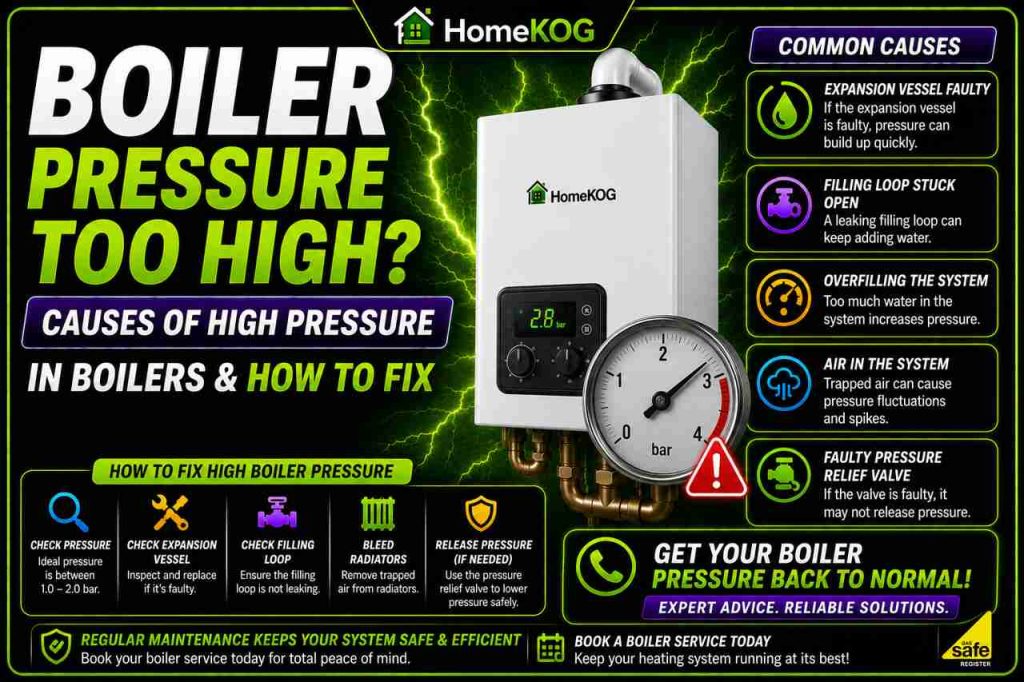
The expansion vessel in a combi or system boiler absorbs the increased water volume as the central heating water heats up. When the expansion vessel fails — either losing its air charge through a split diaphragm or a faulty Schrader valve — it can no longer absorb expansion, causing system pressure to spike and the pressure relief valve to open and discharge water through the PRV overflow pipe.
Broken Hot Water Cylinder Coil
In systems with a copper hot water cylinder, the boiler heats water through an internal coil inside the cylinder. If the coil becomes perforated, hot water from the boiler circuit leaks into the cold water section of the cylinder. This creates pressure equalisation between the two circuits — since the central heating feed tank sits lower than the cold water tank, the central heating tank overflows continuously. To address issues like this, homeowners often seek boiler kettling noise solutions to prevent further damage. Regular maintenance and checks can help identify problems before they escalate, ensuring the system runs efficiently. Additionally, installing a water treatment system may help reduce scaling and improve overall performance.
Fixing Leaks by Source
Cold Water Storage Tank Overflow
The large cold water tank in the loft supplies water to baths, sinks, and in some systems the hot water cylinder. Its overflow pipe typically exits through the eaves at roof level.
A leaking cold water tank overflow is almost always caused by a faulty float valve — either a stuck valve, a punctured float ball, or a worn washer. To fix it, turn off the incoming water supply at the mains stopcock and run bathroom taps to drain the tank. Inspect the float ball for holes — a punctured ball filled with water cannot rise to shut off the valve. Replace the ball or the complete float valve assembly if damaged. If the ball is intact but the valve does not shut off, replace the washer inside the valve body.
If the overflow only occurs when a mixer shower or tap is running, water is being pushed back up through the outlet pipes rather than coming from the fill valve — this requires a professional plumber to assess the pipework configuration.
Central Heating Feed and Expansion Tank Overflow
The smaller tank in the loft — typically 25 to 50 litres — supplies water to the central heating circuit. Its overflow pipe runs to the outside through the eaves similarly to the cold water tank.
A persistent overflow from this tank has two main causes. If the float valve is not shutting off, the same diagnostic and fix process applies as for the cold water tank. If the float valve is functioning correctly but the tank is still overflowing, the likely cause is water being pushed into the tank from the heating circuit through a failed hot water cylinder coil — the coil is allowing high-pressure boiler circuit water to enter the cold section of the cylinder and push water back up into the expansion tank. This requires a plumber or Gas Safe engineer to assess and replace the cylinder coil.
Toilet Cistern Overflow
The toilet cistern overflow pipe typically exits through the toilet wall at first floor or ground level, or in some modern installations discharges into the toilet pan rather than externally.
The most common causes and fixes are as follows. A high float ball position — adjust the arm’s height by bending the metal arm downward or adjusting the plastic adjustment screw — lowers the shutoff point and prevents overfilling. A punctured float ball — replace the ball with a new one of the same size. A worn washer — replace the washer in the float valve body. A float valve tangled in the flush chain — untangle the chain to allow the float to move freely. High incoming water pressure — use the isolation valve on the supply pipe to the cistern to partially restrict flow.
Boiler Overflow Pipe (Pressure Relief Valve Discharge)
The boiler pressure relief valve is a safety device — a copper pipe running from the boiler body to an external discharge point at low level. It discharges when system pressure exceeds approximately 3 bar, releasing water to prevent overpressure damage. Homeowners should also consider various boiler finance options for homeowners to help manage the costs associated with a new installation or replacement. Understanding these financing solutions can make it easier to invest in a more efficient heating system while ensuring compliance with safety standards. By choosing the right financial plan, homeowners can achieve optimal comfort without straining their budgets. Low boiler pressure causes and solutions are important considerations for maintaining an efficient heating system. Regularly checking the pressure levels can help identify issues early, preventing costly repairs down the line. Additionally, addressing low pressure not only enhances the boiler’s performance but also contributes to improved energy efficiency and comfort in the home.
A PRV that is discharging regularly indicates one of three issues: the system is being overfilled through the filling loop (reduce pressure and ensure the filling loop is closed), the expansion vessel has failed and cannot absorb thermal expansion (requires expansion vessel recharge or replacement by a Gas Safe engineer), or the PRV itself has become faulty and opens below its rated pressure (requires PRV replacement by a Gas Safe engineer).
The boiler PRV must not be confused with the condensate pipe. The condensate pipe is plastic and drips acidic water during normal boiler operation — this is normal. The PRV discharge pipe is copper and should not discharge at all during normal operation. Any regular or continuous discharge from the copper PRV pipe requires a Gas Safe engineer.
Copper Cylinder Overflow
The hot water cylinder’s overflow pipe connects to the cold water expansion tank above. A continuous overflow from this point — particularly when the boiler is running — indicates either a failed cylinder thermostat allowing the water to overheat and expand excessively, or a failed coil allowing pressure transfer between the boiler and cylinder circuits.
Reducing the cylinder thermostat setting is a DIY adjustment that resolves temperature-related overflow. A failed coil requires cylinder replacement by a qualified plumber or Gas Safe engineer.
Quick Reference: Overflow Pipe by Location
| Pipe Location | Source | Most Common Cause | DIY or Engineer? |
|---|---|---|---|
| High on external wall / eaves | Cold water or central heating loft tank | Faulty float valve, worn washer | DIY for valve/washer |
| Behind toilet wall | Toilet cistern | Float valve, high ball, worn washer | DIY |
| Low level — copper pipe near boiler | Boiler pressure relief valve | Failed expansion vessel, overfilling | Gas Safe engineer required |
| From copper cylinder | Hot water cylinder | Overheating, failed coil | Engineer for coil; DIY for thermostat |
FAQ
Why is my overflow pipe dripping continuously?
A continuously dripping overflow pipe means a cistern or vessel is being constantly overfilled because the water feed is not shutting off correctly. The most likely causes are a worn washer in the float valve, a float ball that is stuck in the open position or has a hole in it, or water pressure that is too high for the valve to hold against. Most cases in loft tanks and toilet cisterns are DIY-fixable by replacing the washer or float ball.
Is an overflow pipe dripping an emergency?
Not usually — the overflow pipe is doing its job by discharging excess water outside rather than flooding the property. However, the underlying cause should be investigated and resolved promptly. Continuous overflow from the boiler’s pressure relief valve discharge pipe is a more urgent concern and should be assessed by a Gas Safe engineer, as it indicates a system pressure issue that will worsen if not addressed.
Can I fix an overflowing toilet cistern myself?
Yes in most cases. The most common causes — a high float position, a punctured float ball, a worn washer, or a tangled float valve chain — are all straightforward DIY repairs requiring only basic tools and inexpensive parts available from any plumbers’ merchant or DIY store. Turn off the water supply to the cistern using the isolation valve before starting any repair.
How do I tell the difference between a boiler condensate pipe and the pressure relief valve?
The condensate pipe is plastic — white, grey, or black — and drips small amounts of acidic water during normal boiler operation. This dripping is normal and expected from a condensing boiler. The pressure relief valve discharge pipe is copper and should not discharge during normal operation. If the copper pipe near the boiler is dripping or flowing water, it indicates a system pressure problem requiring engineer attention.
Conclusion
An overflow pipe leaking outside the property is always a sign that a cistern or vessel is being overfilled — the overflow pipe itself is not the problem, it is the symptom. Identifying which pipe is discharging and understanding the likely cause for that specific pipe allows the majority of overflow leaks to be resolved through straightforward DIY repairs: a worn washer, a faulty float ball, or a float valve adjustment.
The scenarios requiring a Gas Safe engineer or qualified plumber are equally clear: a boiler pressure relief valve discharging regularly, a failed hot water cylinder coil allowing pressure transfer between circuits, or a central heating expansion vessel that has failed and needs recharging or replacement. Attempting these repairs without the appropriate qualifications risks making the situation worse and, in the case of any gas-related work, is illegal.