
Ideal Room Temperature: The Complete Guide for Every Room in Your Home
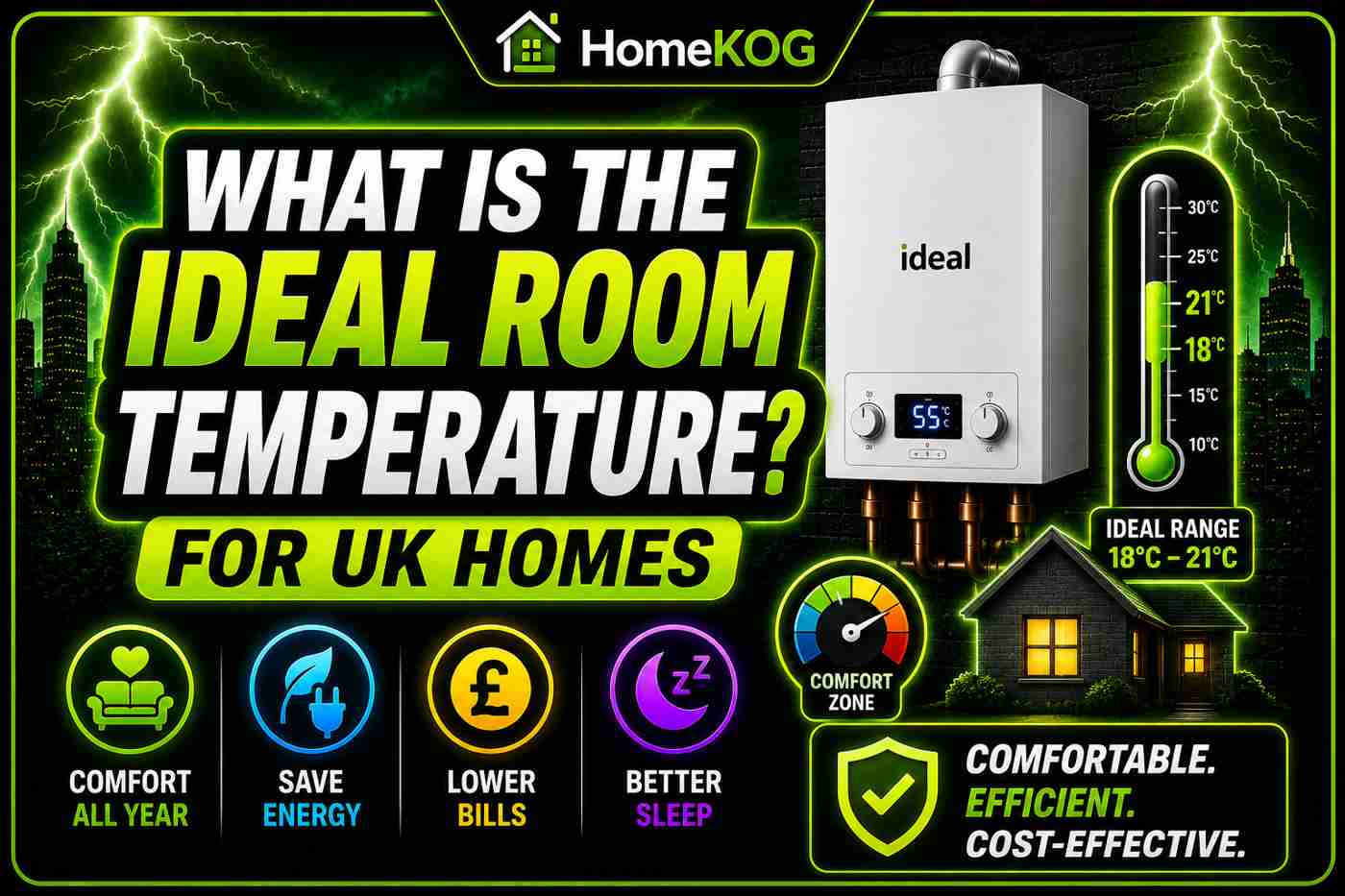
Quick Answer: The ideal room temperature for most UK homes is between 18°C and 21°C. Living rooms should be kept at 20°C to 22°C, bedrooms at 16°C to 18°C for optimal sleep, and spaces used less frequently, such as hallways, at 15°C to 18°C. Temperatures below 16°C pose health risks, while sustained readings above 24°C can increase cardiovascular strain.
Get boiler cover with a free annual service here >
Introduction
Room temperature affects far more than comfort — it directly influences sleep quality, respiratory health, cardiovascular function, energy bills, and even the structural condition of your home. Yet most UK households either overheat their living spaces, underheat their bedrooms, or apply a single flat temperature setting throughout the property, regardless of room use or time of day.
The average UK home sits at 18°C, while most residents believe 20°C to 22°C is their ideal — a gap that translates directly into higher energy bills without a meaningful improvement in comfort. Understanding which temperature is right for each room, at each time of day, and for each member of the household allows you to heat your home efficiently without compromising health or well-being. When it comes to maintaining optimal comfort and energy efficiency, considering boiler sizing tips for the UK is essential. A properly sized boiler ensures that you can achieve your desired temperature quickly and maintain it consistently throughout the day. This not only enhances comfort but also contributes to reducing unnecessary energy consumption and costs.
This guide covers the recommended temperature for every room type, age-specific guidelines, safe temperature thresholds, seasonal adjustments, and practical strategies for heating your home economically while maintaining the right environment throughout.

Understanding Ideal Room Temperature: The Core Relationships
Room temperature interacts with a network of health, comfort, and efficiency factors that determine the right setting for each space in your home.
- Indoor room temperature directly affects cardiovascular health, with sustained readings above 24°C and below 12°C both identified as risk thresholds by health guidelines.
- A central heating thermostat regulates the temperature throughout a property and is the primary tool for maintaining consistent, room-specific comfort levels.
- A smart thermostat enables zone-based temperature control, allowing different rooms to be maintained at different target temperatures simultaneously.
- Thermostatic radiator valves regulate the heat output of individual radiators, providing room-level temperature control without affecting the rest of the circuit.
- The Sleep Council identifies a bedroom temperature between 16°C and 18°C as optimal for restorative sleep in adults under 65.
- Mould growth accelerates in rooms held below 15°C because cold air allows water vapour to condense on walls and surfaces, creating the damp conditions mould requires.
- An energy-efficient A-rated condensing boiler maintains target room temperatures more consistently and at lower running cost than older, lower-rated boilers.
- Weather compensation technology adjusts boiler output in response to outdoor temperature changes, maintaining stable indoor temperatures without manual thermostat adjustment.
- A programmable thermostat reduces energy consumption by heating the home only when and where occupancy requires it, rather than maintaining a constant temperature throughout.
- Older adults over 65 require a minimum indoor temperature of 18°C at all times to reduce the risk of cold-related health complications, including hypothermia and respiratory illness.
- Duvet tog rating affects the effective bedroom temperature experienced during sleep, allowing occupants to maintain a lower room temperature while remaining thermally comfortable.
- Room insulation quality — including double glazing, wall insulation, and draught exclusion — determines how effectively any target temperature can be maintained at a given boiler output.
Indoor Temperature Guidelines at a Glance
Before exploring room-specific recommendations, it helps to understand the health-based thresholds that define safe and comfortable indoor temperatures across all living spaces.
| Temperature | Status | Health Implication |
|---|---|---|
| Above 24°C | Too hot | Cardiovascular strain risk |
| 20°C – 22°C | Ideal living temperature | Comfortable for most adults |
| 18°C – 21°C | Comfortable range | Suitable for general occupancy |
| 18°C | Minimum for comfort | Recommended minimum for over 65s |
| 16°C – 18°C | Cool but acceptable | Acceptable for under 65s |
| 12°C – 16°C | Too cold | Respiratory health risk |
| Below 12°C | Dangerous | Cardiovascular risk |
| Below 9°C | Critical | Hypothermia risk |
These thresholds apply to sustained temperatures rather than brief fluctuations. A room that temporarily drops to 15°C during the night is less concerning than one that remains at that level throughout the day.
Ideal Temperature for Each Room
Different rooms serve different purposes, and the activity that takes place in each room determines the appropriate temperature. Heating every room to the same setting wastes energy in low-occupancy spaces and may result in the wrong environment in rooms where comfort or health is most important.
Living Room: 20°C to 22°C
The living room is where most households spend the majority of their waking hours, typically in a sedentary or resting state. Seated inactivity reduces the body’s own heat generation, making a warmer ambient temperature necessary for comfort.
A target of 20°C to 22°C is recommended for living rooms and similarly used sitting rooms, reception rooms, and home offices. Research also suggests that maintaining 20°C to 22°C in a workspace supports concentration and cognitive performance — making it the right target for any room used for desk-based activity.
Bedroom: 16°C to 18°C
The bedroom requires a lower temperature than any other occupied room in the home. This is not simply about energy saving — it is based on the physiology of sleep. The body lowers its core temperature during sleep, and a cool bedroom environment supports that natural cooling process.
The Sleep Council recommends maintaining a bedroom temperature between 16°C and 18°C for adults to support restorative sleep. Temperatures above 24°C in the bedroom significantly disrupt sleep quality and reduce the recovery benefits of rest. For those over 65, the bedroom should not drop below 18°C.
Kitchen: 18°C to 20°C
Kitchens generate heat from cooking appliances, which naturally raises the ambient temperature during meal preparation. A baseline setting of 18°C to 20°C is appropriate, as cooking activity will bring the effective temperature up to a comfortable level during use. For maintaining comfort throughout the season, it’s essential to find the ideal thermostat settings for winter, which can further enhance energy efficiency. It’s advisable to lower the thermostat during the night or when the house is unoccupied to help save on heating costs. By adjusting these settings according to your daily routine, you can enjoy a warm home while minimizing unnecessary energy consumption.
Kitchens that are not used for prolonged periods of seated occupancy do not need to be maintained at living room temperatures, and a slightly lower setting reduces energy use without any loss of comfort during the times the room is most actively used.
Bathroom: 22°C to 24°C
Bathrooms benefit from a higher temperature than most other rooms because occupants are typically undressed and wet — conditions that accelerate heat loss from the body significantly. A temperature of 22°C to 24°C creates a warm, comfortable environment for bathing and dressing.
A heated towel rail or bathroom radiator provides targeted warmth in this space and can be controlled independently of the main heating circuit using a thermostatic radiator valve, preventing unnecessary heat from being applied when the bathroom is unoccupied.
Hallways, Corridors, and Utility Rooms: 15°C to 18°C
Spaces that are passed through rather than occupied for extended periods — hallways, stairwells, utility rooms, and storage areas — do not require the same temperature as living spaces. A range of 15°C to 18°C maintains a baseline that prevents damp and cold spots from developing without committing energy to heating rooms where nobody sits.
Children’s Rooms and Nurseries: 18°C to 20°C
Young children and infants are less able to regulate their own body temperature than adults. A room temperature of 18°C to 20°C is recommended for children’s bedrooms and nurseries, providing a warm environment that remains within safe limits. Monitoring with a room thermometer is advisable in nurseries to confirm the temperature remains consistent throughout the night.
Age-Specific Temperature Recommendations
Children and Infants
Homes with infants or very young children should maintain a slightly warmer baseline temperature than adult-only households, typically 18°C to 20°C in occupied rooms. Young children cannot communicate discomfort as clearly as adults, making proactive temperature management important. A room thermometer in the nursery provides a reliable reference point rather than relying solely on how the room feels subjectively.
Adults Under 65
Healthy adults under 65 can comfortably tolerate a slightly wider temperature range — a minimum of 16°C in occupied rooms is generally acceptable, with 18°C to 22°C representing the comfortable range for most activities. Sleeping at the lower end of this range — between 16°C and 18°C — supports better quality rest than warmer bedroom environments.
Adults Over 65
The NHS and Public Health England both recommend that adults over 65, and those with chronic health conditions, maintain indoor temperatures of at least 18°C throughout the home at all times during cold weather. The body’s ability to regulate temperature declines with age, making older adults more vulnerable to the health effects of cold exposure — including increased risk of respiratory infection, hypothermia, and cardiovascular events — at temperatures that younger adults would tolerate without issue.
During Pregnancy
Many women experience an increased perception of warmth during pregnancy due to hormonal changes and increased metabolic rate. There is no fixed recommended temperature for pregnant women, but comfort should guide the thermostat setting rather than a standard target. Staying cool and hydrated is more important than reaching any specific temperature. If there are concerns about thermal comfort during pregnancy, consulting a midwife or GP is advisable.
Homes with Pets
Most household pets are comfortable within the same 20°C to 22°C range that suits adult humans. Short-haired breeds and smaller animals are more vulnerable to cold than larger, long-haired animals — but as a general rule, if the temperature feels comfortable to the human occupants, it is likely to be adequate for domestic pets. Animals with specific temperature requirements — reptiles, for example — need dedicated heating solutions independent of the home’s central heating system.
What Temperature Is Too Cold for a House?
A sustained indoor temperature of 16°C or below is considered too cold for regular habitation in a UK home. At this level, occupants experience physical discomfort, disturbed sleep, and difficulty maintaining warmth through clothing alone. Below 12°C, respiratory health risks increase significantly. Below 9°C, hypothermia becomes a concern, particularly for older adults, infants, and those with underlying health conditions.
A home that consistently fails to reach 16°C during cold weather should be assessed for boiler efficiency, insulation quality, and heating system performance. An ageing boiler operating below its rated efficiency is one of the most common causes of a home that cannot maintain comfortable temperatures in winter. Regularly checking for issues can help prevent these inefficiencies, and understanding the ideal boiler error codes explained can guide homeowners in diagnosing specific problems. Familiarity with these codes allows for quicker troubleshooting and can lead to more informed conversations with service technicians. Investing time in this knowledge not only enhances comfort but can also save on energy costs in the long run.
The Link Between Room Temperature and Energy Bills
The average UK home is maintained at 18°C, while most households consider 20°C to 22°C their preferred temperature — a gap of 2°C to 4°C that carries a meaningful cost. Reducing your thermostat setting by just 1°C can reduce heating energy consumption by approximately 10%, according to energy efficiency guidance from the Energy Saving Trust. When considering the ideal hot water temperature in the UK, it’s recommended to set your boiler to 60°C for optimal health and safety. This temperature helps to eliminate the risk of bacteria growth while also being energy efficient. By making small adjustments to your water heating system, you can further enhance your household’s overall energy savings. Finding the best combi boilers for the UK can significantly improve your home’s energy efficiency. These boilers provide both heating and hot water on demand, making them a space-saving and cost-effective solution for many households. With the right combi boiler, not only can you achieve your desired indoor temperature, but you can also lower your utility bills and minimize your carbon footprint.
For a household that currently heats to 21°C, dropping to 20°C produces a 10% reduction in heating cost with a change in perceived comfort that most occupants adjust to within a few days. Dropping to 19°C produces approximately 20% savings — a significant reduction that, combined with an efficient boiler, can make a substantial difference to annual energy bills.
Achieving these savings without sacrificing comfort depends on heating the right rooms to the right temperatures at the right times — rather than applying a single flat setting across the whole property throughout the day.
How to Maintain Ideal Room Temperatures Economically
Use a Smart Thermostat
A smart thermostat enables time-based, zone-based, and demand-responsive temperature control that standard programmable thermostats cannot match. By learning occupancy patterns and adjusting heating schedules automatically, a smart thermostat reduces the energy spent heating unoccupied spaces without requiring manual intervention. Leading options include Hive, Nest, and Bosch EasyControl — all compatible with modern A-rated combi and system boilers.
Install Thermostatic Radiator Valves
Thermostatic radiator valves — commonly known as TRVs — are fitted to individual radiators and regulate the heat output of each one independently. A TRV on the bedroom radiator, for example, can maintain 17°C in that room while the living room radiator maintains 21°C from the same boiler cycle. This prevents rooms from overheating beyond their target temperatures and eliminates the energy wasted bringing rooms that are already warm up to an unnecessary level.
Improve Insulation
Heat loss through walls, windows, floors, and roofs is the primary reason homes fail to maintain target temperatures efficiently. Double glazing reduces heat loss through windows by up to 50% compared to single glazing. Cavity wall insulation reduces heat loss through external walls significantly, and loft insulation is one of the most cost-effective home energy improvements available in the UK. Draught exclusion around doors and windows also makes a meaningful difference at minimal cost.
Address Mould Before It Becomes a Structural Problem
Rooms held below 15°C for extended periods are at elevated risk of mould growth because cold air allows moisture to condense on cold wall and window surfaces. Mould causes structural damage to walls and ceilings over time and creates respiratory health risks — particularly for children and those with asthma or allergies. Maintaining rooms above 16°C and ensuring adequate ventilation prevents the condensation conditions that mould requires to establish.
Consider a Boiler Upgrade
An ageing boiler that operates at 70% to 80% efficiency wastes 20% to 30% of every pound spent on gas. Replacing it with a modern A-rated condensing boiler operating at 92% to 94% efficiency eliminates most of that waste and produces a direct reduction in monthly gas costs. Households replacing a 15-year-old or older boiler with a current A-rated model can save up to £880 per year on energy bills — savings that begin from the first heating season after installation. the worcester 4000 boiler performance analysis highlights how modern technology contributes not only to efficiency but also to reliability. Users can expect enhanced heating capabilities and improved environmental standards, making this boiler an attractive option for homeowners looking to upgrade. Additionally, the long-term benefits of reduced carbon footprints and lower maintenance costs further reinforce the practicality of such a switch.
Frequently Asked Questions
What is the ideal room temperature in the UK?
The ideal room temperature for a UK home is between 18°C and 21°C for general living spaces, with living rooms recommended at 20°C to 22°C and bedrooms at 16°C to 18°C for healthy sleep. The average UK home is currently maintained at 18°C, though most residents consider 20°C to 22°C their preferred comfort level. Temperatures below 16°C are considered too cold for sustained occupancy and carry respiratory and cardiovascular health risks.
What is the ideal bedroom temperature for sleeping?
The Sleep Council recommends a bedroom temperature of 16°C to 18°C for restorative sleep in adults under 65. The body naturally lowers its core temperature during sleep, and a cool bedroom environment supports this process. Temperatures above 24°C in the bedroom significantly disrupt sleep quality. For adults over 65, the bedroom should not drop below 18°C. Duvet tog rating can be adjusted seasonally to maintain comfort at lower room temperatures without increasing heating costs.
What temperature is too cold for a house?
A sustained indoor temperature of 16°C or below is considered too cold for regular habitation in a UK home. Below 12°C, respiratory health risks become significant. Below 9°C, hypothermia risk increases, particularly for older adults and infants. For households with occupants over 65 or those with chronic health conditions, 18°C is the recommended minimum temperature for all occupied rooms at all times during cold weather, in line with NHS and Public Health England guidance.
What is the ideal room temperature for elderly people?
Adults over 65 should maintain indoor temperatures of at least 18°C throughout their home at all times during cold weather. The body’s ability to regulate temperature declines with age, increasing vulnerability to respiratory illness, cardiovascular events, and hypothermia at temperatures that younger adults tolerate without issue. The bedroom should not drop below 18°C overnight, and all regularly occupied rooms should be monitored with a thermometer to confirm they remain within the safe range.
How much can I save by reducing my thermostat by 1°C?
Reducing your central heating thermostat setting by 1°C can reduce heating energy consumption by approximately 10%, according to Energy Saving Trust guidance. For a household spending £1,200 per year on gas for heating, a 1°C reduction could save around £120 annually. A 2°C reduction produces proportionally greater savings. These savings are most effectively achieved using a smart thermostat that maintains the lower target temperature consistently without manual adjustment throughout the day.
What is the ideal room temperature for a baby or infant?
A nursery or infant’s bedroom should be maintained at 16°C to 20°C. The NHS advises that the safest sleeping temperature for babies is around 16°C to 20°C, with 18°C often cited as the ideal midpoint. A room thermometer in the nursery is the most reliable way to confirm the temperature throughout the night. Overheating poses as much of a risk to infants as cold, so maintaining a consistent temperature within this range — rather than simply keeping the room as warm as possible — is the correct approach.
Does room temperature affect mould growth?
Yes — rooms held below 15°C for extended periods are at significantly elevated risk of mould growth. Cold air allows water vapour to condense on walls, windows, and other cold surfaces, creating the damp conditions that mould requires to establish and spread. Maintaining rooms above 16°C and ensuring adequate ventilation prevents this condensation from forming. Mould causes structural damage to walls and ceilings over time and creates respiratory health risks, particularly for children and those with asthma or allergies.
What is the recommended temperature for a home office?
A home office or any room used for desk-based work should be maintained at 20°C to 22°C. Research indicates that maintaining this temperature range supports concentration and cognitive performance during sustained mental activity. This is the same temperature range recommended for living rooms, reflecting the sedentary nature of both activities and the corresponding reduction in body-generated heat that makes a warmer ambient temperature necessary for comfort.
Conclusion: Heat the Right Room to the Right Temperature
Ideal room temperature is not a single number — it is a set of room-specific targets that balance health, comfort, sleep quality, and energy efficiency across your whole home. Living rooms benefit from 20°C to 22°C, bedrooms from 16°C to 18°C, and low-occupancy spaces from a cooler baseline that prevents damp without wasting energy.
A smart thermostat and thermostatic radiator valves give you the tools to maintain these different targets simultaneously, while an A-rated boiler ensures those targets are met efficiently without excess gas consumption. For older households where the boiler is working harder than it should to maintain comfortable temperatures, an upgrade to a modern condensing boiler can deliver savings of up to £880 per year — making the investment one of the most financially sound home improvements available. Understanding boiler requirements in the UK is essential for making informed decisions about your home heating system. Many homeowners may not be aware of the energy efficiency standards that must be met, which can significantly impact both comfort and cost. By aligning with these regulations and choosing the right boiler, you can enhance your household’s energy performance while reducing your carbon footprint.
Review the temperatures in each room of your home, invest in the right controls, and you will heat your home more comfortably and more efficiently every day.