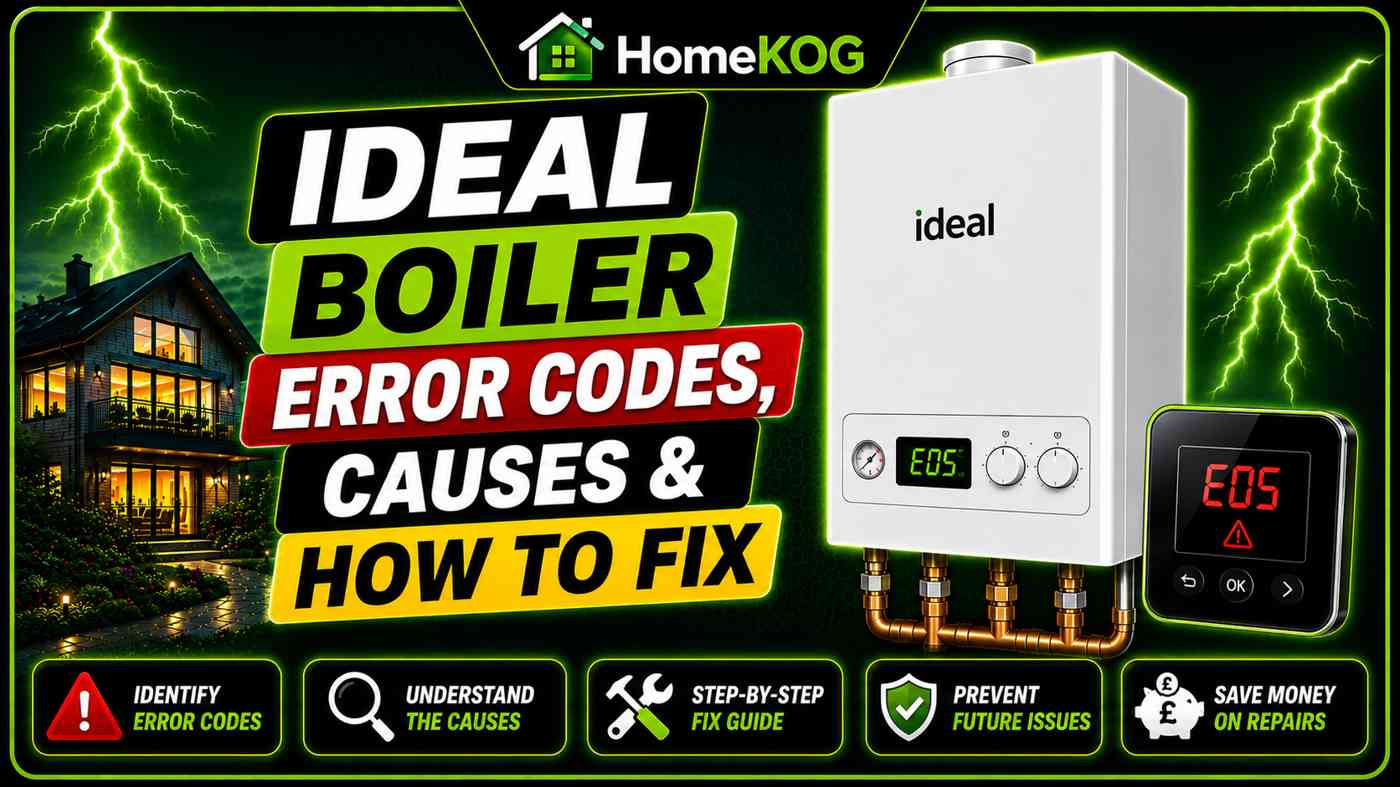

Ideal Boiler Error Codes: Full Guide to Causes and Fixes 2026
Quick Answer: The most common Ideal boiler error codes are F1 (low water pressure), L2 and F2 (flame loss lockout), F3 (fan fault), and L9/F9 (PCB fault). The F1 low pressure code is the only fault most homeowners can resolve themselves by repressurising the system. All lockout codes and component faults require a Gas Safe registered engineer. Ideal uses a consistent fault code system across popular models including the Logic C30, Vogue Max C32, and Logic Combi ESP1. Homeowners may encounter various intergas boiler error code solutions that also relate to their specific issues. It’s crucial to understand each error code to facilitate effective troubleshooting before contacting a professional. For example, familiarizing oneself with common codes can save time and potentially simplify communication with a Gas Safe registered engineer. For homeowners experiencing issues, it’s essential to consult the manufacturer’s guidelines for navien boiler error code troubleshooting. Common error codes may indicate problems such as a failure to ignite or overheating, which should be promptly addressed to prevent further damage. Always seek professional help for any errors that might require intricate knowledge of the system’s workings.
Ideal boilers are one of the most widely installed brands in the UK and have been manufactured domestically since 1906. Their fault code system is one of the more straightforward in the market and is consistent across most models in the current range, including the Logic, Vogue, and ESP1 series. This guide explains every Ideal fault code in plain English alongside detailed guidance on the most common faults and whether professional help is needed. Worcester 4000 boiler performance analysis highlights the efficiency and reliability that come with this popular brand. Regular maintenance and understanding of performance metrics play a pivotal role in maximizing the lifespan of these systems. Homeowners should be aware of the specifications outlined in the analysis to ensure optimal performance throughout the year.
Does the Fault Code System Apply to All Ideal Boiler Models?
Yes. Ideal uses a consistent fault code system across their main residential boiler range, including the Ideal Logic C30, Ideal Vogue Max C32, Logic H15 Regular, Logic Combi ESP1 30kW, and Logic Combi ESP1 35kW. If a code appears that is not listed in this guide, the full Ideal boiler manual for the specific model can be downloaded from the Ideal Boilers website free of charge. For those seeking ideal boiler thermostat recommendations, it’s essential to consider compatibility with your existing system as well as features that enhance energy efficiency. User reviews can provide valuable insights into the performance of various models, helping you make an informed choice. Additionally, many brands offer smart thermostats that can be controlled via mobile apps, adding convenience to your heating management.

Ideal Boiler Status Codes (Not Faults)
Before going through the fault codes, it is worth noting that some codes displayed on an Ideal boiler control panel are status indicators rather than faults — they show what the boiler is currently doing rather than signalling a problem.
| Status Code | Meaning |
|---|---|
| Status 0 | Standby — boiler waiting for a heating or hot water demand |
| Status C | Central heating mode active |
| Status D | Hot water mode active |
| Status F | Frost protection mode active |
If any of these appear on the display, the boiler is operating normally and no action is required.
Common Ideal Boiler Error Codes
F1 — Low Water Pressure
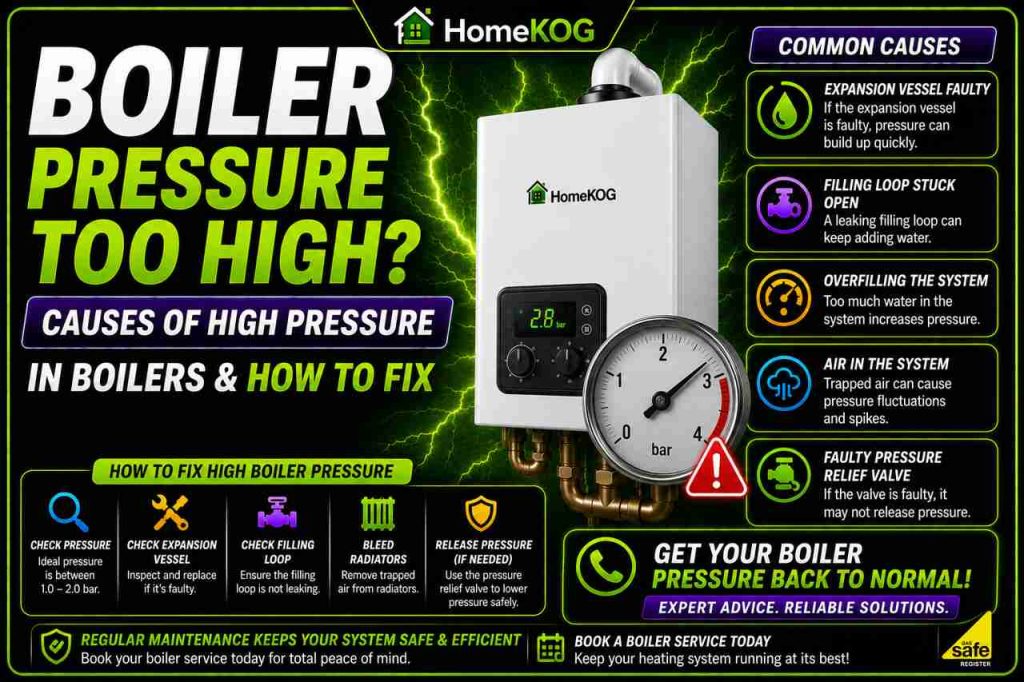
The F1 fault code is the most common Ideal boiler fault and indicates that the system water pressure has dropped below the minimum threshold required for safe operation. It is also one of the few Ideal fault codes that most homeowners can resolve themselves without calling a Gas Safe engineer. ideal f1 fault code explained, it is important to check your boiler’s pressure gauge regularly. If you notice that the pressure is low, you can often restore it by following the manufacturer’s guidelines. Understanding the ideal f1 fault code can empower you to take proactive measures and maintain your heating system effectively.
Low pressure is most commonly caused by a small leak in the system, natural pressure loss over time, or a drop following recent radiator bleeding. To resolve F1, locate the filling loop — usually a flexible braided hose with one or two taps found beneath the boiler — and open the valve or valves slowly while watching the pressure gauge. The target pressure is between 1 and 1.5 bar with the boiler cold. Once the gauge reaches the correct level, close the valve firmly and attempt to restart the boiler.
If the pressure drops again shortly after repressurising, a slow leak is present somewhere in the system and a Gas Safe engineer should locate and repair it rather than the homeowner continuing to top up indefinitely.
Can you fix it yourself? Yes — repressurise the system to 1 to 1.5 bar using the filling loop. Call an engineer if pressure keeps dropping.
L2 — Flame Extinguished (Lockout)
The L2 fault code appears when the boiler’s flame detection system confirms that the flame has gone out during operation, causing the boiler to enter lockout mode as a safety precaution. The boiler cannot restart until the underlying cause is identified and the lockout is cleared by a Gas Safe engineer.
There are several possible causes for an L2. Reduced gas supply pressure is one of the most common — this can sometimes be a temporary issue affecting the local gas network rather than a boiler fault, and it is worth checking with neighbouring properties or the gas network operator before calling an engineer. A blocked flue preventing proper combustion air flow, a faulty gas valve, or a failed flue sensor are the other primary causes. The L2 was a particularly common fault on the older Ideal Isar boiler range but continues to appear on current models when any of these conditions develop.
Can you fix it yourself? No — a Gas Safe engineer is required to diagnose the cause, carry out the repair, and reset the lockout.
F2 / FN / LN — Flame Loss (Lockout)
The F2 fault code and its variants FN and LN all indicate the same underlying condition as the L2 — the boiler’s flame has gone out and the boiler has entered lockout mode. On certain Ideal models the display may show F2 rather than L2 depending on the control board version fitted, but the cause and resolution are identical. A Gas Safe registered engineer must inspect the boiler, establish the reason for flame loss, carry out any necessary repairs, and reset the lockout before the boiler will operate again.
Can you fix it yourself? No — a Gas Safe engineer is required.
F3 — Fan Fault
The F3 code indicates a problem with the boiler’s combustion fan. The fan draws air into the burner and expels flue gases from the property, and a fan that is not running correctly prevents the boiler from firing safely. The fault can be caused by a failed fan motor, a wiring fault between the fan and the control board, or a blockage affecting the fan’s operation. Fan replacement or repair must be carried out by a Gas Safe registered engineer.
Can you fix it yourself? No — a Gas Safe engineer is required.
L4 / F4 — Thermistor Fault
The L4 and F4 codes indicate a fault with the boiler’s flow thermistor, which measures the temperature of the water entering the heat exchanger. A faulty thermistor can cause the boiler to misread water temperatures, leading to incorrect operation or a safety lockout. Thermistor replacement is a relatively straightforward and inexpensive repair for a Gas Safe engineer.
Can you fix it yourself? No — a Gas Safe engineer is required.
L5 / F5 — Return Thermistor Fault
The L5 and F5 codes indicate a fault with the return thermistor, which measures the temperature of the water returning from the radiator circuit to the boiler. As with the flow thermistor, a faulty return thermistor can cause incorrect temperature readings and trigger a safety shutdown. The repair process and cost are similar to the L4/F4 fault.
Can you fix it yourself? No — a Gas Safe engineer is required.
F6 — Outside Sensor Fault
The F6 code indicates a fault with the external temperature sensor, which is a component used in weather-compensated heating systems to allow the boiler to adjust its output based on outdoor conditions. If the sensor has failed, the boiler may default to a fixed output mode or shut down depending on the control configuration. Sensor replacement is a straightforward repair.
Can you fix it yourself? No — a Gas Safe engineer should replace the sensor.
F7 — Low Power Supply
The F7 code indicates that the electrical supply to the boiler is below the required voltage for correct operation. This is not a boiler fault in itself — it points to an issue with the property’s electricity supply. The first step is to check the consumer unit for tripped breakers, and if the power supply to the rest of the property appears normal, contacting the electricity network operator is the appropriate course of action. A Gas Safe engineer is not required to resolve an F7 unless the low voltage is confirmed to be caused by an internal boiler wiring fault.
Can you fix it yourself? Check the consumer unit for tripped breakers. Contact the electricity network operator if the supply appears low. Call a Gas Safe engineer only if an internal wiring fault is suspected.
L6 — Flame Detected Without Demand
The L6 code is an important safety lockout that appears when the boiler detects a flame signal when no heating or hot water demand has been made. This can indicate a faulty gas valve that is allowing gas to pass through when it should be closed, or a failed flame detection component producing a false signal. Both scenarios require immediate investigation by a Gas Safe engineer, as a gas valve that does not close correctly is a potential safety risk.
Can you fix it yourself? No — a Gas Safe engineer is required immediately.
LC — Multiple Resets Within 15 Minutes
The LC code appears when the boiler detects that it has been reset multiple times within a 15-minute period. This is a safety feature designed to prevent the boiler from being repeatedly forced into operation when an underlying fault is causing it to lock out. Turning the boiler completely off and allowing it to sit for several minutes before switching it back on will typically clear the LC code. However, if the boiler continues to lock out and require resetting after the LC clears, the underlying fault causing the repeated lockouts must be identified and repaired by a Gas Safe engineer.
Can you fix it yourself? Turn the boiler off and back on to clear the code. Call an engineer if the underlying lockout continues. When dealing with common issues, it’s helpful to consult resources that provide ideal boiler error code solutions. Understanding the specific error codes can empower you to troubleshoot effectively and potentially resolve the problem without professional assistance. If the solutions do not yield results, seeking expert help is always a wise choice. For those facing Keston boiler error code troubleshooting, it’s important to identify the exact issue indicated by the error code displayed. Many users have found it beneficial to refer to online forums or manufacturer manuals for hints and solutions customized for their specific models. If you remain uncertain, contacting a qualified technician can ensure proper diagnosis and repair, ultimately preventing further complications.
F8 / L8 / F9 / L9 — PCB Fault or Unconfigured PCB
These codes all indicate a problem with the boiler’s printed circuit board — the main electronic control unit that manages all boiler functions. The fault may indicate that the PCB is not correctly configured for the specific boiler model, or that the PCB itself has developed an electrical fault. PCB faults can sometimes occur after a power surge or following incorrect configuration during installation or a recent repair. Understanding alpha boiler fault code explanations is crucial for diagnosing the issue accurately. By referring to these codes, technicians can quickly identify the underlying problem and determine whether it’s related to the PCB or another component. This knowledge helps streamline the troubleshooting process and ensures a more efficient repair.
PCB replacement is one of the more expensive boiler repairs, typically costing between £200 and £500 including parts and labour. For older boilers where the PCB has failed, it is worth asking a Gas Safe engineer for an honest assessment of whether PCB replacement or full boiler replacement represents the better long-term investment before committing to the repair.
Can you fix it yourself? No — a Gas Safe engineer is required.
FU — Isolation Valve Issue
The FU code indicates a potential problem with the isolation valves in the system. This can occur when a valve has been partially or fully closed, restricting water flow through the boiler. Checking that all visible isolation valves on the pipework connected to the boiler are in the fully open position is a reasonable first check before calling an engineer.
Can you fix it yourself? Check that all isolation valves are fully open. Call a Gas Safe engineer if the fault persists.
FD — No Water Flow
The FD code indicates that the boiler cannot detect adequate water flow through the system. This may be caused by a closed or partially closed isolation valve, a failed pump, an airlock in the system, or a faulty flow sensor. It can occasionally be confused with low pressure, but the FD specifically indicates a flow detection issue rather than a pressure reading outside the normal range.
Can you fix it yourself? Check isolation valves are open and attempt a reset. Call a Gas Safe engineer if the fault persists.
Full Ideal Boiler Fault Code Reference
| Code | Fault | DIY Fix? |
|---|---|---|
| F1 | Water pressure too low | Yes — repressurise to 1–1.5 bar |
| L1 | Lockout — flow or overheat temperature fault | No — engineer required |
| L2 | Lockout — flame extinguished | No — engineer required |
| LC | Multiple resets within 15 minutes | Turn off and restart. Engineer if recurring |
| L6 | Flame detected with no demand | No — engineer required |
| F2 / FN / LN | Flame loss lockout | No — engineer required |
| F3 | Fan fault | No — engineer required |
| L4 / F4 | Flow thermistor fault | No — engineer required |
| L5 / F5 | Return thermistor fault | No — engineer required |
| F6 | Outside sensor fault | No — engineer required |
| F7 | Low power supply | Check consumer unit — contact electricity provider |
| F8 / L8 | PCB unconfigured or fault | No — engineer required |
| F9 / L9 | PCB unconfigured or fault | No — engineer required |
| FU | Isolation valve issue | Check valves open — engineer if persists |
| FD | No water flow | Check valves open — engineer if persists |
Which Ideal Boiler Models Use These Codes?
Ideal’s fault code system is consistent across their main residential range. The models most commonly associated with these codes in the UK market are the Ideal Logic C30, Ideal Vogue Max C32, Logic H15 Regular, Logic Combi ESP1 30kW, and Logic Combi ESP1 35kW. All of these models use the same code structure outlined in this guide. When considering the ideal temperature range for London, it’s important to note that a balance between comfort and energy efficiency is crucial. This balance can impact not only household comfort levels but also energy consumption and costs throughout the year. Ensuring your heating system operates optimally within this range can help maintain a cozy environment while keeping expenses manageable.
FAQ
What does the Ideal boiler F1 fault code mean?
The Ideal boiler F1 fault code means the system water pressure has dropped too low for the boiler to operate safely. It is the most common Ideal fault code and one of the few that homeowners can fix themselves. Repressurising the system via the filling loop to between 1 and 1.5 bar will resolve the fault in most cases. If pressure drops again shortly after topping up, a leak is present in the system and a Gas Safe engineer should investigate the cause rather than the homeowner continuing to repressurise repeatedly.
What is the difference between an L code and an F code on an Ideal boiler?
On Ideal boilers, L codes generally indicate a lockout — a safety shutdown that the boiler has entered and from which it cannot restart without engineer intervention. F codes indicate a fault that may or may not have caused a lockout, and some F codes such as F1 and F7 can be resolved without a Gas Safe engineer. The distinction is not absolute across all Ideal models, as some faults appear as either an L or F code depending on the specific control board fitted, which is why this guide covers both variants together.
Can I reset my Ideal boiler to clear a fault code?
A single reset attempt is appropriate for most Ideal fault codes as a first step, provided the reset button is not pressed repeatedly if the fault returns immediately. Repeatedly resetting a boiler that continues to lock out is inadvisable — it can mask a developing fault, cause additional component damage, and trigger the LC code which requires the boiler to be turned off completely before it will accept further commands. If a fault code returns after one reset, a Gas Safe engineer should identify and repair the underlying cause. When addressing persistent issues, it may be beneficial to consider resetting the ideal logic combi 30, especially if previous attempts have not yielded any results. This approach can provide a fresh start, allowing the system to recalibrate and potentially resolve minor glitches. However, it is crucial to monitor the boiler closely after resetting to ensure that any underlying faults are promptly addressed by a qualified technician.
What causes the Ideal L2 fault code?
The Ideal L2 fault code means the boiler’s flame has gone out during operation and the boiler has entered lockout mode. The most common causes are low gas supply pressure, a blocked flue, a faulty gas valve, or a failed flue sensor. It was a particularly frequent fault on older Ideal Isar boilers but continues to appear on current models when these conditions develop. A Gas Safe registered engineer must diagnose the specific cause, carry out the repair, and reset the lockout before the boiler will operate again.
How much does it cost to repair an Ideal boiler PCB fault?
PCB replacement on an Ideal boiler typically costs between £200 and £500 including parts and labour, depending on the specific model and the engineer’s rates. For older Ideal boilers where a PCB fault has developed, it is worth asking the engineer to give an honest assessment of whether PCB replacement or full boiler replacement represents the better long-term investment. On a boiler that is over 10 years old and developing multiple faults, the cost of a new A-rated boiler installation may deliver better value than continued repair of ageing components. Ideal boilers model specifications for 2026 are expected to incorporate advanced energy efficiency features, which could influence the decision to upgrade. Homeowners may find that investing in a newer model not only reduces maintenance costs but also aligns with potential regulatory changes aimed at reducing carbon emissions. As technology improves, opting for a more recent model could ensure better performance and lower energy bills in the long run.
How do I prevent Ideal boiler fault codes?
Annual servicing by a Gas Safe registered engineer is the most effective way to prevent Ideal boiler fault codes. During a service the engineer cleans key components, checks gas pressure and combustion quality, inspects the flue, tests all safety devices, and identifies any components showing early signs of wear. Many of the most common fault codes — including flame loss codes and fan faults — are directly preventable through regular maintenance. Keeping the system pressure within the correct range and addressing any pressure drops promptly also reduces the likelihood of F1 faults and the secondary problems that low pressure can cause.
When should I replace my Ideal boiler rather than repair it?
An Ideal boiler under 10 years old with a single straightforward fault is almost always worth repairing. For boilers over 10 to 12 years old with multiple recurring faults, or where a major repair such as PCB or heat exchanger replacement costs more than 50% of a new installation, replacement is likely the more cost-effective long-term decision. A Gas Safe engineer can assess the boiler’s overall condition and give an honest recommendation on whether the investment in repair is justified given the boiler’s age and fault history. Understanding the ideal boiler service pricing breakdown can also help homeowners make informed decisions about repairs versus replacements. By analyzing the costs associated with different types of service and the potential for future issues, one can better gauge the value of maintaining an older boiler. Ultimately, weighing these factors will contribute to achieving the best outcome for both comfort and budget.
Conclusion
Ideal boilers use one of the clearest and most consistent fault code systems in the UK residential boiler market, making it straightforward for homeowners and engineers to identify the source of a problem quickly. Of all the codes covered in this guide, only F1 can typically be resolved by the homeowner — by repressurising the system to between 1 and 1.5 bar. All lockout codes and component faults require a Gas Safe registered engineer to diagnose, repair, and reset safely. understanding how a system boiler operates is essential for effectively maintaining your heating system. This type of boiler works by heating water directly and distributing it throughout the home, ensuring a consistent supply of hot water. Regular maintenance can help prevent issues and extend the life of the boiler, ultimately providing peace of mind for homeowners.
Annual servicing remains the most reliable way to prevent fault codes from appearing in the first place, catching developing faults before they cause a lockout and keeping the boiler running efficiently throughout its operational life. For Ideal boilers that are developing repeated faults or where major component replacement is becoming the recurring theme, a new A-rated replacement will deliver better long-term reliability and running cost savings than continued investment in an ageing system. When considering a new A-rated boiler, it’s essential to evaluate the ideal boiler warranty options available to ensure comprehensive coverage and peace of mind. These warranties can provide significant benefits, protecting your investment against unexpected repairs and maintenance costs. By selecting a model with favorable warranty conditions, homeowners can enhance their overall satisfaction and confidence in their heating system.