
What Should Boiler Pressure Be? Correct Pressure for Boilers
Quick Answer
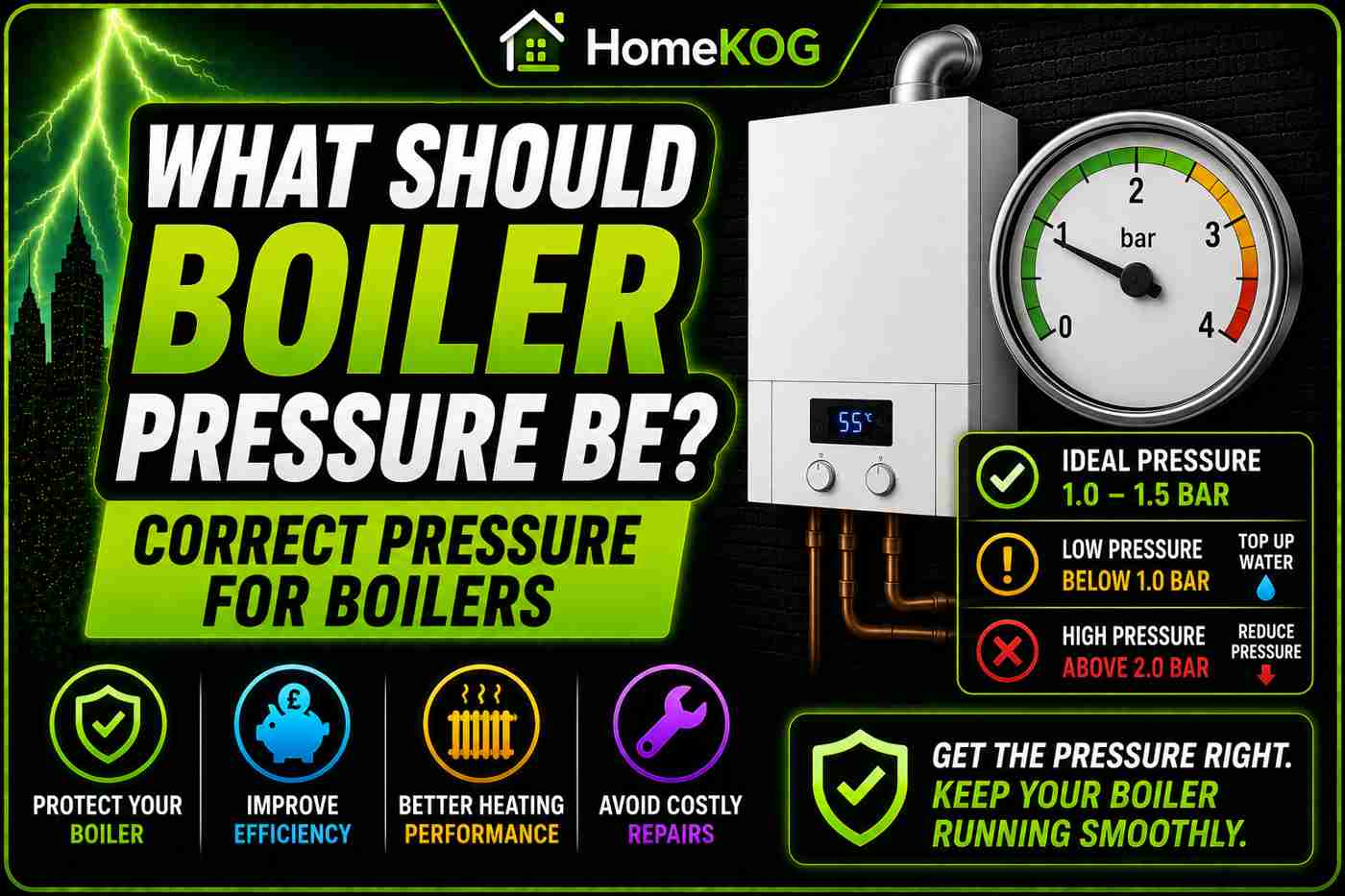
The correct boiler pressure is usually 1 to 1.5 bar when the heating is off and around 1.5 to 2 bar when the heating is on. If boiler pressure drops too low, your heating may stop working properly. If it rises too high, it can put strain on the boiler and central heating system.
Boiler pressure is one of the simplest checks you can make, yet it has a big effect on how well your heating system performs. If the pressure is too low or too high, your boiler can become inefficient, unreliable or even shut down entirely, so keeping it in the correct range is an important part of basic boiler care.
Boiler Pressure: Key Semantic Relationships
- Boiler pressure → affects → heating system efficiency
- Combi boilers → usually operate at → 1 to 1.5 bar when cold
- System boilers → rely on → stable sealed system pressure
- Regular boilers → need → correct pressure for proper circulation
- Low boiler pressure → reduces → heating and hot water performance
- High boiler pressure → increases → stress on components
- Pressure gauge → shows → current system pressure
- Filling loop → raises → boiler pressure safely
- Bleeding radiators → can lower → system pressure
- Expansion vessel → controls → pressure changes during heating
- Pressure relief valve → protects → boiler from excessive pressure
- Annual servicing → helps prevent → pressure-related faults

What Is Boiler Pressure?
Boiler pressure is the pressure of the water moving around your sealed central heating system. It helps push heated water through the pipework, radiators and boiler so your home warms up properly.
If the pressure is wrong, the system cannot work as intended. That can mean weak radiator performance, inconsistent hot water or a boiler that locks out altogether.
Why the Correct Boiler Pressure Matters
Correct boiler pressure helps the system circulate water efficiently. That means better heating performance, more reliable hot water and less strain on the internal parts of the boiler.
If the pressure is too low, the water may not move around the heating system effectively. If the pressure is too high, it can place excess stress on valves, seals and the expansion vessel.
Getting the pressure right also helps keep energy use under control. A boiler that is working within its intended range normally operates more smoothly and efficiently. boiler modulation explained in depth is essential for optimizing the performance of heating systems. By adjusting the output of the boiler to match the heating demands, it can significantly reduce fuel consumption and minimize wear on components. This not only enhances efficiency but also extends the lifespan of the boiler, ensuring long-term reliability and cost savings.
Different Boiler Types and Their Pressure Needs
Combi boiler pressure
A combi boiler will usually need a pressure reading of around 1 to 1.5 bar when the system is cold. When the heating is running, the pressure will usually rise.
Most modern combi boilers work best when they stay within the normal range marked on the gauge.
System boiler pressure
System boilers also operate as sealed systems, so they normally need similar pressure levels to combi boilers. In most homes, that means around 1 to 1.5 bar when cold and higher when the heating is on.
Regular boiler pressure
Traditional regular boilers are often associated with open-vented setups, but sealed regular boiler systems can also exist. Where pressure gauges are fitted, the system still needs to stay within the manufacturer’s recommended range.
Ideal Boiler Pressure Range
What should boiler pressure be when heating is off?
When the heating is off and the system is cool, boiler pressure should usually sit between 1 and 1.5 bar. That is the normal resting range for many domestic boilers.
If the needle drops well below 1, it may indicate low pressure. If it sits much higher than 1.5 while cold, you may have an overpressure issue.
What should boiler pressure be when heating is on?
When the heating is on, the pressure usually rises as the water heats up and expands. In most systems, the pressure will sit somewhere between 1.5 and 2 bar during normal operation.
A small rise is normal. A sharp jump toward 3 bar is not.
Boiler Pressure by Operating Condition
| Boiler Condition | Normal Pressure Range | What It Means |
|---|---|---|
| Heating off / system cold | 1.0 to 1.5 bar | Normal resting pressure |
| Heating on / system hot | 1.5 to 2.0 bar | Normal operating pressure |
| Below normal range | Under 1.0 bar | Pressure may be too low |
| High pressure warning area | Above 2.5 bar | System needs checking |
| Potential danger level | Around 3.0 bar or more | Too high, action needed |
How to Check Boiler Pressure
Finding the pressure gauge
The pressure gauge is usually on the front of the boiler or just underneath it. On some newer boilers, the reading may appear on a digital display rather than a traditional dial.
If you are unsure where to look, the boiler manual should show the exact gauge location.
Reading the gauge properly
On a standard dial, there is often a green zone showing the recommended pressure range. If the needle is inside that area when the system is cold, the pressure is generally fine.
If the needle is in the red or well outside the normal zone, the pressure needs attention.
What Causes Low Boiler Pressure?
Low pressure usually happens because water has left the heating system in some way. That can happen through a leak, radiator bleeding or a component fault.
A recently serviced or repaired system may also need repressurising afterwards, especially if water was drained off during the work.
Common Causes of Low Boiler Pressure
| Cause | How It Affects Pressure |
|---|---|
| Small leak in pipework | Water slowly escapes from the system |
| Radiators recently bled | Air release reduces water pressure |
| Faulty pressure relief valve | Water may discharge externally |
| Expansion vessel issue | Pressure becomes unstable |
| System repair or drain-down | Boiler needs repressurising afterwards |
What Happens If Boiler Pressure Is Too Low?
If boiler pressure is too low, the heating system may stop circulating water properly. That often leads to cold radiators, weak hot water performance or complete boiler lockout.
Low pressure is not usually dangerous in the way high pressure can be, but it does mean the system is no longer working correctly and should be fixed promptly.
How to Increase Boiler Pressure
In many homes, the pressure can be increased using the filling loop. This is a flexible silver hose or built-in filling arrangement that allows water into the heating system.
Open the filling loop slowly and watch the pressure gauge carefully. Once the pressure reaches around 1.2 to 1.5 bar when cold, close the valves fully.
You should not keep topping up the boiler frequently without finding out why the pressure is dropping. Repeated pressure loss usually points to a fault that needs investigating.
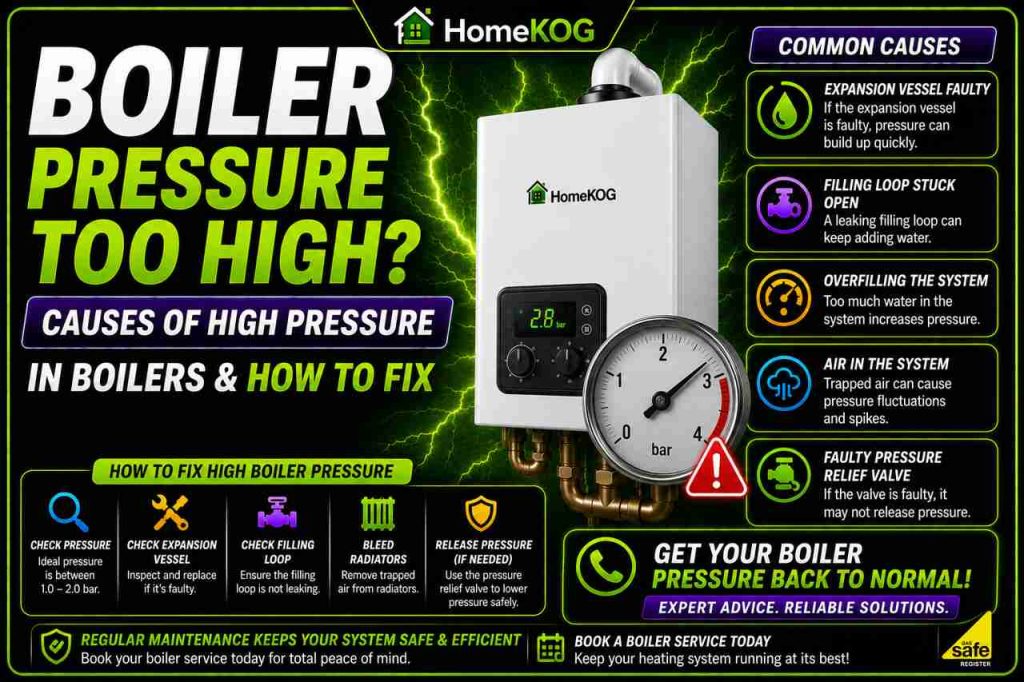
What Causes High Boiler Pressure?
High pressure usually happens when the system cannot cope with the normal expansion of heated water. The problem is often linked to the expansion vessel, pressure relief valve or incorrect recent topping up.
Sometimes the pressure rises because too much water has been added through the filling loop and the system has simply been overfilled.
Common Causes of High Boiler Pressure
| Cause | How It Raises Pressure |
|---|---|
| Overfilling via the filling loop | Too much water enters the system |
| Faulty expansion vessel | System cannot absorb pressure increase |
| Stuck or faulty valve | Pressure cannot regulate properly |
| Internal boiler fault | Pressure rises abnormally during heating |
| Recently repressurised incorrectly | Cold pressure starts too high |
What Happens If Boiler Pressure Is Too High?
High boiler pressure can place too much strain on the heating system. That can lead to leaks, worn seals, pressure relief discharge or possible damage to internal components.
If the pressure gets close to 3 bar, the boiler may start protecting itself by releasing water or shutting down. That is a sign the issue should be dealt with quickly.
How to Reduce Boiler Pressure
If the pressure is too high, you may be able to lower it by bleeding a radiator slightly or releasing a small amount of water from the system. This should be done carefully and only if you are confident doing it safely.
If the pressure keeps rising after you reduce it, the cause is probably a fault rather than simple overfilling. In that case, a Gas Safe engineer should inspect the system.
Boiler Pressure Maintenance Tips
Check the pressure regularly
A quick check every few weeks is a good habit. It only takes a moment and can help spot early pressure changes before they become bigger problems.
Watch for pressure patterns
A steady drop over time often suggests a leak. A pressure spike when heating comes on can point to an expansion vessel issue. Patterns matter more than a one-off change.
Deal with leaks quickly
Even a small leak can gradually lower system pressure and lead to wider heating problems. Any dripping pipe, valve or radiator should be dealt with promptly.
Get an annual boiler service
A yearly service helps identify issues with valves, expansion vessels and general system health before they lead to breakdowns or repeated pressure loss.
Is Low Boiler Pressure Dangerous?
Low boiler pressure is usually more of a performance issue than a direct safety risk. It can leave you without proper heating or hot water, but it is not normally the same level of danger as high pressure.
That said, if the pressure keeps dropping, the cause should still be checked because it may point to a leak or failing component.
Is High Boiler Pressure Dangerous?
Yes, high boiler pressure can be dangerous if it is ignored. Excessive pressure can put the system under strain and may lead to leaks, damaged components or water discharge from the pressure relief valve.
A boiler is designed with safety devices, but repeated overpressure is a sign something is wrong and needs attention. understanding pump overrun in boilers is crucial for maintaining efficiency and preventing potential hazards. If pumps are not functioning correctly, they can lead to increased pressure levels, which may compromise the boiler’s safety mechanisms. Regular monitoring and maintenance can help identify issues early and ensure the system operates within safe parameters.
When to Call a Heating Engineer
You should contact a Gas Safe engineer if the pressure keeps dropping, rises too high repeatedly or you are unsure how to correct it safely.
You should also call for professional help if you suspect a leak, if water is coming out of the pressure relief pipe, or if the boiler continues locking out after repressurising.
Boiler Pressure Problems and Likely Causes
| Symptom | Likely Cause | Best Action |
|---|---|---|
| Pressure below 1 bar | Leak, radiator bleeding, system loss | Repressurise and monitor |
| Pressure keeps dropping | Hidden leak or faulty component | Book engineer inspection |
| Pressure rises close to 3 bar | Expansion vessel or overfilling issue | Reduce pressure and investigate |
| Boiler locks out | Pressure outside safe range | Check gauge and correct pressure |
| Water from relief pipe | Pressure too high or valve fault | Call engineer promptly |
How Does the Pressure Release Valve Affect the Boiler Pressure?
Understanding pressure release valve functionality explained is crucial for effective boiler operation. This essential safety device maintains safe pressure levels by releasing excess steam or water. When the boiler pressure rises beyond designated limits, the pressure release valve activates, preventing potential damage and ensuring the system operates safely and efficiently.
Frequently Asked Questions
What should boiler pressure be normally?
Normal boiler pressure is usually around 1 to 1.5 bar when the system is cold and around 1.5 to 2 bar when the heating is running. The exact figure can vary slightly by model, but those ranges apply to most domestic sealed heating systems and are a good guide for regular checks. As temperatures drop, it’s crucial to keep boiler pressure recommendations in winter in mind to ensure efficient heating. Any significant deviations from the recommended pressure can lead to suboptimal performance and potential system issues. Regularly monitoring and adjusting your boiler pressure can help maintain comfort during the colder months. As summer approaches, it’s also important to consider ideal thermostat settings for summer to maximize comfort while minimizing energy consumption. Setting the thermostat to a higher temperature when you’re away can create significant energy savings without sacrificing comfort when you’re home. This balance will help maintain a pleasant atmosphere during the warmer months while ensuring your system operates efficiently.
What should boiler pressure be when heating is on?
When the heating is on, boiler pressure should generally rise to around 1.5 to 2 bar. This happens because water expands as it heats up. A small increase is completely normal, but if the pressure climbs toward 3 bar, the system may have a fault that needs attention.
What should boiler pressure be when heating is off?
When the heating is off and the system is cool, boiler pressure should usually sit between 1 and 1.5 bar. This is the normal resting pressure for most homes. If it falls much below 1 bar, the boiler may struggle to work properly and could eventually lock out.
Is 2 bar too high for boiler pressure?
Not necessarily. Around 2 bar can be normal while the heating is on and the system is hot. If the boiler is cold and resting at 2 bar or above, that may be higher than ideal and worth monitoring. The key issue is whether the pressure keeps rising beyond its normal operating range.
Why does my boiler pressure keep dropping?
Boiler pressure usually keeps dropping because water is leaving the system somewhere. That can be due to a small leak, recently bled radiators, a faulty pressure relief valve or an issue with the expansion vessel. If you keep topping it up, the cause needs checking rather than ignoring it.
How often should I check boiler pressure?
It is sensible to check boiler pressure every few weeks, especially during colder months when the heating is used more often. Regular checks help you spot unusual changes early and reduce the chance of unexpected breakdowns. It is also worth checking after bleeding radiators or after any heating work has been carried out.
Can I increase boiler pressure myself?
In many cases, yes. Most homeowners can increase boiler pressure using the filling loop, as long as they know where it is and follow the instructions carefully. The key is to add water slowly and stop once the pressure reaches the normal range. If you are unsure, it is safer to call an engineer.
Is high boiler pressure dangerous?
Yes, high boiler pressure can become dangerous if left unchecked. It can stress the heating system, damage internal parts and trigger the pressure relief valve to discharge water. While modern boilers have safety protections, a pressure reading near or above 3 bar should always be taken seriously and investigated.
Final Thoughts
Getting the boiler pressure right is one of the simplest ways to keep your heating system working properly. In most homes, you are aiming for around 1 to 1.5 bar when the heating is off and around 1.5 to 2 bar when it is running.
If the pressure keeps falling or climbing too high, do not just keep correcting it and hoping for the best. The pressure reading is often an early sign that something in the system needs attention, and dealing with it early can save money, hassle and a cold house later on.