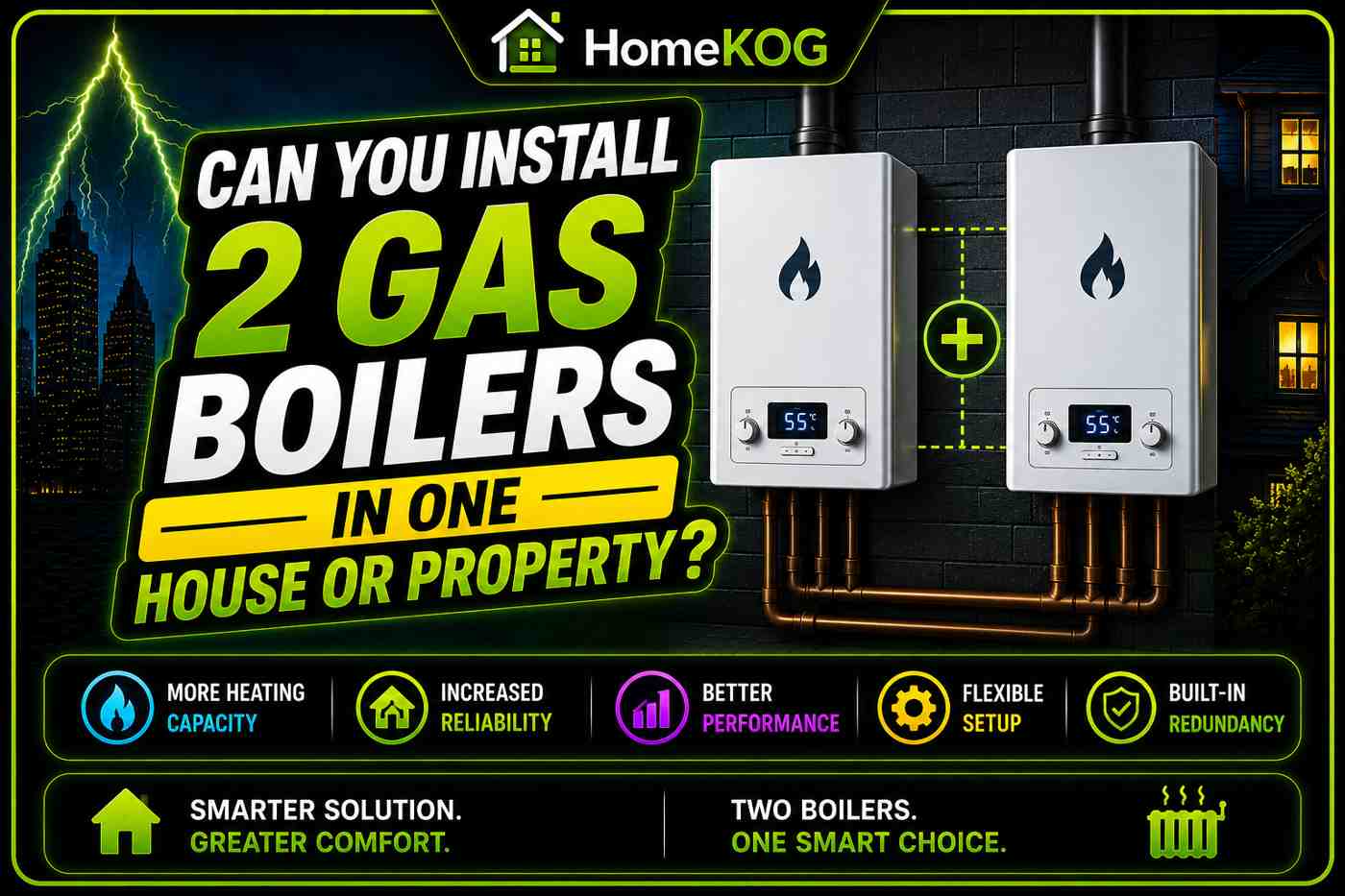

Can You Have 2 Gas Boilers in One House? Everything You Need to Know in 2026
Quick Answer: Yes, you can have two gas combi boilers in one house. It is a practical solution for larger properties, converted homes, multi-occupancy buildings, and properties with separate outbuildings. Both boilers can run from a single gas meter, though a second meter may be worth considering for billing purposes. Any installation must be carried out by a Gas Safe registered engineer.
Having two boilers in one property is more common than most people realise. Whether you are heating a large home with a converted annexe, managing a multi-occupancy building, or looking to improve heating efficiency across a sizable new development, a second boiler can be a sensible and practical solution.
This guide covers everything you need to know about running two gas combi boilers in one property in 2026 — from gas supply requirements and meter options to costs, advantages, and when a second boiler is genuinely worth it.
Key Facts: Two Boilers in One House Relationships
- A gas combi boiler is a combination boiler that provides both central heating and domestic hot water from a single compact unit, and multiple units can be installed within the same property.
- A Gas Safe registered engineer is the only qualified professional legally permitted to install a gas boiler in the UK, and all dual-boiler installations must be completed by one.
- A domestic gas meter in the UK has a typical output capacity of 65kW per hour, which is sufficient to supply two combi boilers operating simultaneously provided pipework is correctly sized.
- A 28mm gas supply pipe is the minimum pipe diameter typically required at the meter outlet when two combi boilers are to be served from a single gas supply before branching to smaller pipe sizes.
- A second gas meter is an optional addition for properties with two boilers and is most commonly used in multi-occupancy buildings to enable separate billing for each unit.
- A multi-occupancy property is a building containing more than one self-contained living space and is one of the most common reasons for installing two separate boiler systems within a single building.
- A zonal smart thermostat is a control device that can manage heating across multiple zones of a property and can in some cases reduce or eliminate the need for a second boiler by improving the efficiency of a single unit.
- A thermostatic radiator valve (TRV) is a radiator-mounted control that regulates heat output room by room and, when used with a smart thermostat, can provide the zone-specific control that some homeowners seek from a second boiler.
- An outbuilding conversion is a structure separate from the main house — such as a converted garage, office, or annexe — that often benefits from its own dedicated boiler installation due to the distance from the main heating circuit.
- Boiler modulation is the ability of a condensing boiler to adjust its output between a minimum and maximum level, and multiple modulating boilers working in parallel can achieve higher combined efficiency than a single oversized unit.
- An annual boiler service is a maintenance requirement for each boiler installed on a property, and running two boilers means budgeting for two separate service costs each year.
- A turndown ratio is the measure of a boiler’s ability to reduce its output to a low percentage of its maximum capacity, and using multiple boilers in a large property improves overall turndown performance and efficiency.

Can You Have Two Combi Boilers in One House?
Yes, and it is entirely legal provided the installation is carried out by a Gas Safe registered engineer. Two boilers in one property is not an unusual arrangement — it is simply a matter of ensuring that the gas supply infrastructure can support both units and that each boiler is correctly commissioned and certified. Failing to have the necessary credentials can lead to severe safety risks and potential legal issues. Moreover, installing a boiler without certifications can also void warranties and insurance policies, leaving homeowners unprotected. It’s crucial to prioritize safety and compliance by hiring qualified professionals for such significant installations.
The most common scenarios where two boilers make practical sense include large homes where the main boiler cannot efficiently serve all areas of the property, converted outbuildings or annexes requiring their own independent heating circuit, multi-occupancy buildings such as houses divided into flats, and new build developments where the heating system design benefits from distributed boiler placement.
For landlords managing properties with multiple tenants, two separate boilers — each serving a distinct part of the building — can simplify billing, reduce disputes over shared energy costs, and make it easier to comply with gas safety obligations for each tenancy. When considering the best boilers for rental properties, it’s essential to evaluate the heating needs of each unit and the efficiency of the systems. Investing in reliable heating solutions not only enhances tenant comfort but can also lead to lower energy costs over time. Landlords should also research different brands and models that are specifically designed for multi-tenant buildings to ensure optimal performance and compliance with safety standards.
Do You Need Two Gas Meters for Two Boilers?
No. Both boilers can operate from a single gas meter, and this is the most straightforward arrangement for owner-occupiers and single bill payers. The domestic gas meter in a standard UK property typically has a capacity of around 65kW per hour, which is sufficient to supply two combi boilers running simultaneously — as long as the supply pipework has been correctly sized to handle the combined demand. In addition to the boilers, understanding the various UK natural gas supply sources is essential for ensuring a reliable and efficient heating system. By knowing the primary sources of natural gas, homeowners can better assess the sustainability and cost-effectiveness of their energy choices. This knowledge also allows for informed discussions with energy providers about potential alternatives or upgrades.
A second gas meter only becomes necessary when there is a practical or administrative reason to separate the gas consumption recorded for each part of the property. The most common reasons are listed below.
When a Second Gas Meter Makes Sense
Multi-occupancy buildings where each tenant is responsible for their own energy bills benefit most clearly from separate meters. Without individual meters, splitting the gas bill fairly between tenants becomes complicated, and disputes are common.
Properties where a commercial or business element shares a building with a residential space may also benefit from separate metering, particularly where energy consumption needs to be tracked independently for accounting or tax purposes.
Anyone planning further development or conversion of a property — turning a garage into a self-contained annexe, for example — may find that installing a second meter at the outset is more cost-effective than attempting to add one later. A second gas meter can be arranged through your energy supplier, and in many cases the meter itself is provided without charge.
The Critical Consideration: Gas Supply Pipework
The most important technical factor when installing two combi boilers on a single gas supply is ensuring that the pipework is capable of delivering sufficient gas to both units at full demand simultaneously.
At the point where the gas supply leaves the meter, a 28mm supply pipe is typically required before any branching to smaller pipe sizes serving individual boilers or appliances. A Gas Safe engineer will calculate the correct pipe sizing for your specific setup based on the combined maximum output of both boilers and the length of the pipe runs involved.
This calculation must be carried out correctly. If the pipework is undersized, gas pressure at one or both boilers will drop under simultaneous demand, leading to ignition problems, reduced efficiency, and potential fault codes. For properties where a second boiler is being added to an existing installation, the engineer will assess the current pipework and advise on any upgrades needed before proceeding.
If you are planning a new build or a significant development with two or more boilers from the outset, the gas supply infrastructure should be specified and installed at the earliest stage of the project. Retrofitting larger pipework later is significantly more disruptive and expensive than getting it right during the initial build.
Advantages and Disadvantages of Two Boilers in One Property
Understanding both sides of the arrangement will help you decide whether a second boiler is genuinely the right solution for your property or whether alternatives might serve you better. In addition to assessing your needs, exploring boiler finance options for homeowners can provide insight into the financial implications of installing a new unit. Many providers offer flexible payment plans and incentives that may ease the upfront burden. Taking the time to compare these options can lead to a more informed decision that aligns with your budget and long-term goals.
Advantages
The most obvious benefit is independent zone control. Two separate boilers allow two distinct areas of a property to be heated entirely independently of one another, with separate thermostats, timers, and temperature settings for each zone. This is particularly valuable where an outbuilding, annexe, or converted space has very different heating requirements from the main house.
For large properties or developments, multiple boilers working together can be more efficient than a single high-output boiler. When demand is low, one boiler can handle the load while the other remains off, keeping both units operating closer to their optimal efficiency range. Some condensing boilers can modulate their output down to around 10% of maximum capacity, and distributing load across two smaller boilers can make the most of this modulation capability.
Installation flexibility is another advantage. Positioning a boiler closer to the area it serves reduces pipe run lengths, minimises heat loss in distribution, and can improve response times when heating or hot water is called for.
Disadvantages
The main drawback is cost — both upfront and ongoing. Two boilers represent twice the purchase and installation cost compared to a single unit, and each boiler will require its own annual service, meaning two service costs per year in perpetuity.
For properties where the driver is zone control rather than raw heating capacity, a zonal smart thermostat combined with thermostatic radiator valves and wireless TRVs may provide comparable control at a fraction of the cost of a second boiler installation. This is worth exploring with a heating engineer before committing to a full dual-boiler setup.
Two heating systems in a single property also means twice the components that can develop faults over time — two heat exchangers, two diverter valves, two sets of pumps and PCBs, each with their own maintenance and potential repair costs.
| Factor | One Boiler | Two Boilers |
|---|---|---|
| Upfront cost | Lower | Higher |
| Annual service cost | One service | Two services |
| Zone control | Limited without smart controls | Full independent control |
| Efficiency (large properties) | Can be lower | Can be higher |
| Fault risk | Single point | Doubled components |
| Billing (multi-occupancy) | Complex | Straightforward with two meters |
| Gas pipework required | Standard | 28mm supply pipe at minimum |
| Installation complexity | Standard | Higher — Gas Safe engineer required |
Multiple Boiler Installations for Large Properties and Developments
For larger residential developments, commercial-to-residential conversions, or properties with very high heating loads, a cascade system using multiple condensing boilers working in parallel is an established and efficient approach.
In this configuration, boilers are staged to switch on and off in sequence based on demand. When heating requirements are low, only one boiler operates. As demand increases, additional boilers are brought online. This keeps each individual boiler working at a higher percentage of its capacity — closer to its peak efficiency point — rather than having a single oversized boiler that cycles on and off repeatedly at low output.
Multiple condensing boilers in a cascade arrangement also improve the turndown ratio of the system as a whole, providing more precise temperature control and lower running costs over a full heating season.
Is a Second Boiler Right for Your Property?
The answer depends on the specific characteristics of your property and what you are trying to achieve. A second boiler is most clearly justified in the following situations. One of the important considerations is the size and heating capacity of the boiler, ensuring it meets your home’s needs. Homeowners should also evaluate energy efficiency ratings and potential fuel sources available in their area. Additionally, consulting boiler selection tips for homeowners can provide valuable insights into the brands and models best suited for your specific requirements. When selecting the best boilers for three bedroom homes, it’s essential to consider not just capacity but also installation requirements and maintenance services available in your area. Factors such as the longevity of the brand and customer service reputation can further influence your decision. By taking the time to research and compare options, homeowners can ensure they choose a boiler that will provide reliable warmth for years to come.
It makes strong sense for a property with a genuinely separate living space — a converted garage, garden room, or annexe — where running new pipework from the main boiler would be impractical or prohibitively expensive. A dedicated boiler positioned close to the separate space is often the most cost-effective and efficient solution. Implementing creative boiler concealment ideas can enhance the aesthetic appeal of the living area while also maintaining functionality. By cleverly incorporating cabinets or artwork around the boiler, homeowners can effectively disguise it, turning a utilitarian necessity into a stylish feature. This not only improves the overall design of the space but also ensures optimal access for maintenance and service needs.
It makes sense for multi-occupancy buildings where separate billing and independent tenant control are required, or where a single boiler serving the whole building creates practical management challenges.
It is worth considering for large properties where the main boiler is consistently struggling to meet demand across all areas simultaneously, and where the distance from the boiler to the furthest heat emitters is causing performance issues.
It is less clearly justified for properties where zone control is the primary goal but the building is otherwise a single domestic home. In this case, a modern smart thermostat with multi-zone capability and wireless TRVs is likely to achieve the desired result at significantly lower cost and with fewer ongoing maintenance obligations.
Frequently Asked Questions
Can you have two combi boilers in one house?
Yes. Having two combi boilers in a single house is entirely legal and is a recognised solution for larger properties, multi-occupancy buildings, and homes with converted outbuildings or annexes. Both boilers can be served from a single gas meter provided the supply pipework is correctly sized. All installation work must be carried out by a Gas Safe registered engineer, and each boiler will need to be serviced annually to remain safe and under warranty.
Do you need two gas meters for two boilers?
No. Two combi boilers can operate from a single gas meter without any technical or legal requirement for a second meter. A second meter is only necessary when there is a practical reason to separate the gas consumption recorded for each part of the property — most commonly in multi-occupancy buildings where each tenant pays their own bills, or in properties with a commercial element requiring separate energy accounting. Your energy supplier can arrange a second meter installation, and in many cases provides the meter itself at no charge.
What size gas supply pipe do you need for two boilers?
A 28mm gas supply pipe at the meter outlet is the typical minimum requirement when two combi boilers are to be served from a single supply. This larger diameter pipe is needed before the supply branches to the smaller pipes serving each individual boiler or appliance. A Gas Safe engineer will calculate the correct pipe sizing for your specific installation based on the combined maximum output of both boilers and the length of pipe runs involved. Undersized pipework will cause gas pressure to drop under simultaneous demand and lead to ignition problems on one or both boilers.
Is it more efficient to have two boilers or one large boiler?
For large properties and developments, two smaller boilers working together can be more efficient than a single high-output boiler. When demand is low, one boiler can carry the load while the other remains dormant, keeping both units operating near their optimal efficiency range. A single oversized boiler tends to cycle on and off more frequently at low output, which reduces efficiency. Multiple condensing boilers in a cascade arrangement also provide a better overall turndown ratio, improving temperature control and reducing fuel consumption across the heating season.
How much does it cost to have a second boiler installed?
The cost of a second boiler installation in 2026 depends on the boiler model chosen, the complexity of the pipework required, and whether any upgrades to the gas supply infrastructure are needed. A standard combi boiler with installation typically costs between £1,500 and £3,000 depending on the output and brand. If additional pipework, a new gas meter, or structural work is required to accommodate the second installation, the overall cost will be higher. Getting quotes from multiple Gas Safe registered engineers is the best way to establish an accurate figure for your specific property.
Can two boilers run from the same gas supply simultaneously?
Yes, provided the gas supply pipework has been correctly sized to handle the combined maximum demand of both units. A domestic gas meter has a typical capacity of around 65kW per hour, which is sufficient for two standard combi boilers. The critical factor is the pipe sizing between the meter and each boiler — a Gas Safe engineer must calculate this correctly to ensure adequate gas pressure is maintained at both boilers when they are running simultaneously at full output.
Do I need two boilers or would a smart thermostat do the same job?
For many homeowners, a zonal smart thermostat with thermostatic radiator valves — including wireless TRV options — can provide the independent room-by-room and zone-by-zone control they are looking for at a fraction of the cost of a second boiler. If the primary goal is to be able to heat different parts of the home to different temperatures or on different schedules, smart controls are worth exploring before committing to a dual-boiler installation. A second boiler makes the strongest case where a genuinely separate living space needs its own heating circuit, or where the distance from the main boiler makes running new pipework impractical.
Do both boilers need to be serviced every year?
Yes. Each boiler installed on a property requires its own annual service carried out by a Gas Safe registered engineer. This is a requirement to maintain the manufacturer warranty on each unit and to meet gas safety obligations, particularly important in multi-occupancy properties where the landlord has a legal duty to ensure all gas appliances are inspected annually. Running two boilers therefore means budgeting for two service costs each year, which is an ongoing financial consideration that should be factored into the decision to install a second unit.
Conclusion
Two gas combi boilers in one house is a legitimate, practical, and in many cases efficient solution — but it is not automatically the right answer for every property. The strongest cases for a second boiler are properties with a genuinely separate living space, multi-occupancy buildings requiring independent billing, and large developments where distributed boiler placement improves efficiency and performance. In addition to considering multiple boilers, there is also the growing trend of gas boiler installation in new builds, which offers modern energy solutions tailored to newly constructed homes. These installations can enhance energy efficiency and meet current building regulations more effectively. Homeowners in these developments often benefit from the latest technology, which can lead to significant long-term savings on energy costs.
For properties where the goal is simply better zone control within a single home, the combination of a modern smart thermostat and thermostatic radiator valves will often deliver the same result at significantly lower cost and with fewer ongoing maintenance commitments.
Whatever route you take, the gas supply pipework must be correctly sized to handle the combined demand of both boilers, and all installation work must be carried out by a Gas Safe registered engineer. Getting this right from the outset protects the efficiency, safety, and longevity of both units throughout their working lives.