
LPG vs Natural Gas: Differences, Costs & Which Is Right for Your Home in 2026
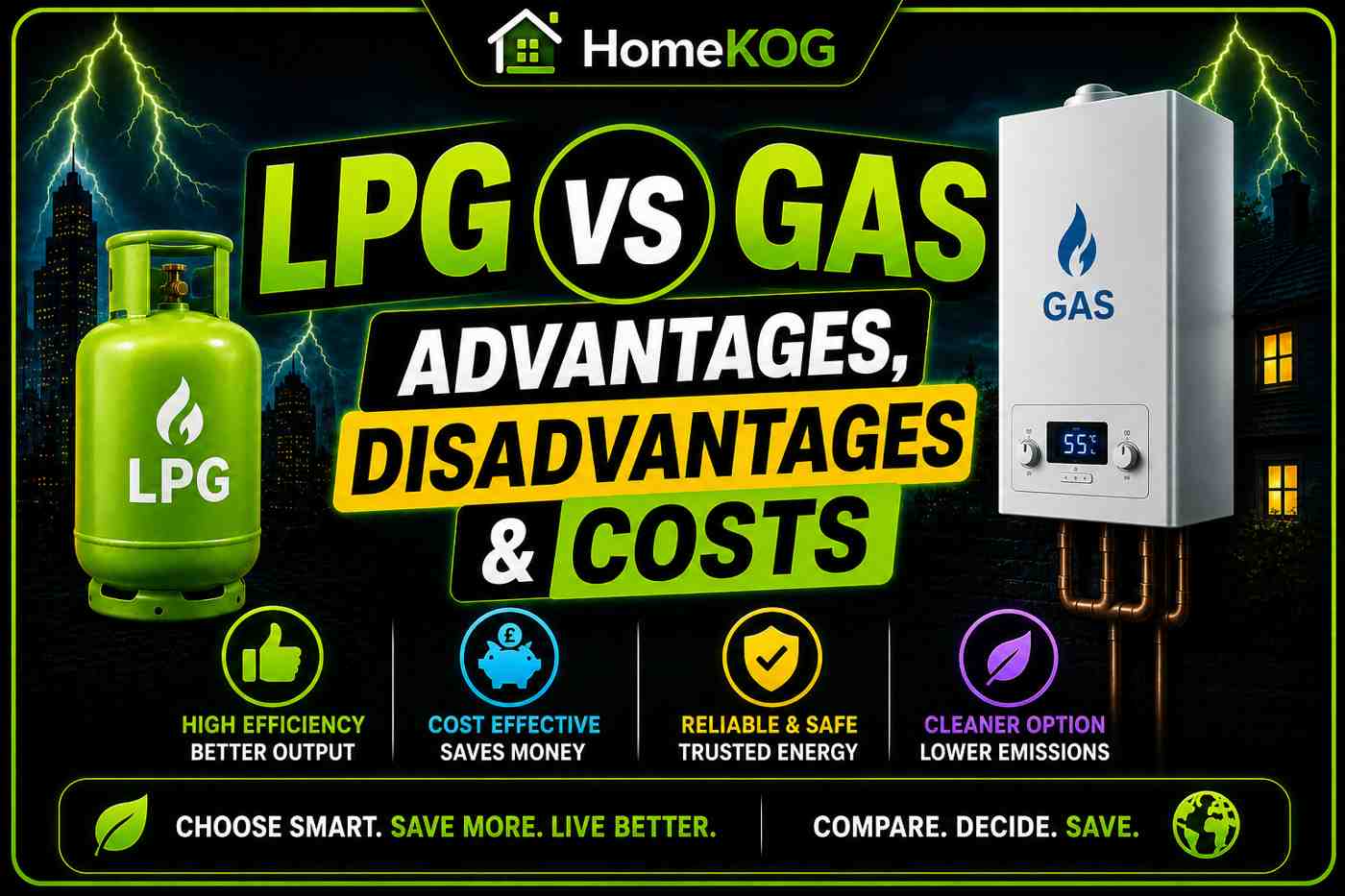
Quick Answer: LPG (liquefied petroleum gas) and natural gas are both hydrocarbon fuels used to heat UK homes, but they are chemically different and suit different situations. Natural gas is cheaper, supplied directly through mains pipelines, and is the standard choice for most UK homes. LPG is stored in tanks or bottles, costs more to run, but is the better option for properties not connected to the gas network. Average annual LPG heating costs are around £800 depending on usage and home size.
Most UK homeowners heat their homes with natural gas without ever needing to consider alternatives. But for the significant number of properties that are not connected to the mains gas network — typically rural homes, farms, and off-grid properties — LPG is the most practical and efficient fuel available. Understanding the differences between the two helps you make the right choice for your property and heating system.
Get boiler cover online here >
Key Facts: LPG and Natural Gas Relationships
- LPG (liquefied petroleum gas) is a hydrocarbon fuel composed primarily of propane (C3H8) and butane (C4H10), produced as a byproduct of natural gas processing and crude oil refining.
- Natural gas is a hydrocarbon fuel composed primarily of methane (CH4), supplied to most UK homes through underground mains pipelines and used for heating, cooking, and hot water.
- Propane is a form of LPG with a boiling point of -42°C, making it suitable for outdoor use and lower temperature environments including caravans and rural heating applications.
- Butane is a form of LPG with a boiling point of -2°C, better suited to indoor use and supplying more energy per cubic metre than propane, making it the more efficient of the two LPG variants.
- An LPG boiler is a gas boiler configured to run on liquefied petroleum gas rather than mains natural gas, and many natural gas boilers can be converted to run on LPG with the appropriate conversion kit.
- A storage tank is a fixed outdoor vessel used to store LPG at a property not connected to the mains gas network, and is typically more cost-effective than purchasing individual LPG bottles.
- A wet heating system is a central heating arrangement in which hot water flows from the boiler through pipes to radiators and taps, and LPG boilers operate on exactly this principle.
- Natural gas is lighter than air, meaning it disperses upward rapidly in the event of a leak, reducing the risk of gas accumulation at floor level compared to LPG.
- LPG is heavier than air and will settle at low points if a leak occurs, which is an important safety consideration for the storage and installation of LPG systems.
- The Worcester Bosch Greenstar 4000 is available in a version compatible with both natural gas and LPG, making it one of the most versatile boiler options for homeowners choosing between the two fuel types.
- The ECO4 scheme and the UK government’s net-zero targets are driving a broader shift away from fossil fuel boilers towards heat pumps and renewable heating systems for new build properties.
- A Gas Safe registered engineer must carry out all LPG boiler installations and services, and finding a specialist LPG engineer can be more challenging than finding one for natural gas work.

What Is LPG?
Liquefied petroleum gas is a colourless, pressurised hydrocarbon fuel composed mainly of propane and butane. It is produced as a byproduct of refining crude oil or processing natural gas, and is stored in its liquid form under pressure in tanks or cylinders. When the pressure is released, it returns to a gas and can be burned for heating, cooking, or hot water.
LPG holds more energy in its liquid form than it does as a gas, which contributes to its high efficiency relative to other off-grid fuels such as heating oil and coal. For properties that cannot access the mains gas network, LPG is generally the most efficient and cost-effective fossil fuel available.
How LPG Heating Works
An LPG heating system operates in the same way as a natural gas central heating system. The boiler burns LPG to heat water, which then circulates through pipes to radiators and hot water taps throughout the home. Many boilers designed for natural gas can be converted to run on LPG with a conversion kit, making it straightforward to switch fuel type without replacing the entire boiler.
How LPG Is Stored
Because LPG has a very low boiling point, it must be stored outside the home in either a fixed storage tank or individual gas bottles. At room temperature it would otherwise evaporate back into gas, making safe containment dependent on either pressure or low temperature. A fixed storage tank is more practical and cost-effective for a property that relies on LPG as its primary heating fuel, as it holds a larger volume and reduces the frequency of deliveries needed.
Propane vs Butane
LPG can be made from two different gases depending on the application. Propane has a boiling point of -42°C and is suitable for outdoor use and lower temperature environments, including caravan heating and rural properties in colder areas. Butane has a much higher boiling point of -2°C, making it better suited to indoor storage, and it delivers more energy per cubic metre than propane, making it the more efficient choice for domestic heating where the storage environment is controlled.
What Is Natural Gas?
Natural gas is a colourless, non-toxic hydrocarbon composed primarily of methane. It is the most widely used fuel for home heating in the UK, supplied to the vast majority of connected properties through an extensive underground pipeline network. When a property is connected to the mains gas supply, natural gas is delivered continuously without any need for storage tanks, deliveries, or monitoring of supply levels.
Natural gas burns more cleanly than coal and oil, producing around 50% of the carbon dioxide generated by coal combustion and approximately 10% of the air pollutants. It is lighter than air, which means in the event of a gas leak it disperses upward and away from the floor level rather than accumulating, making it a safer option in leak scenarios than LPG.
LPG vs Natural Gas: Key Differences
| Feature | LPG | Natural Gas |
|---|---|---|
| Primary component | Propane or butane | Methane |
| Supplied via | Delivered by road, stored in tanks or bottles | Underground mains pipeline |
| Availability | Off-grid properties, rural locations | Most UK homes with a mains connection |
| Weight relative to air | Heavier than air | Lighter than air |
| Average annual heating cost | Around £800 | Generally lower than LPG |
| Carbon emissions | Lower than coal and oil | Lower than LPG, coal, and oil |
| Convenience | Requires deliveries and monitoring | Continuous supply, no storage needed |
| Engineer availability | More limited than natural gas | Widely available across the UK |
| Suitable for new builds post-2025 | Subject to government restrictions | Subject to government restrictions |
Advantages and Disadvantages of LPG
LPG burns more cleanly than coal and oil and produces fewer greenhouse gases than other off-grid fossil fuels, making it the more environmentally responsible choice for properties that cannot access the gas network. It is transportable, can be stored on site, and is particularly well suited to rural properties and households in areas without a mains gas supply.
The primary disadvantages are cost and convenience. LPG is more expensive per unit of energy than natural gas in most circumstances, making it a less economic choice for properties that have the option of connecting to the mains supply. It requires regular deliveries by road, and running out of LPG means going without heating and hot water until a new delivery arrives. Finding a Gas Safe engineer experienced in LPG boiler servicing can also be more difficult than finding one for natural gas work, which is worth considering when planning ongoing maintenance.
Advantages and Disadvantages of Natural Gas
Natural gas is cheaper than LPG and oil, delivered continuously through the mains network, and does not require any storage infrastructure at the property. Its lighter-than-air property makes it safer in leak scenarios, and the wide availability of Gas Safe engineers trained to work on natural gas systems means servicing and repairs are straightforward to arrange.
The main disadvantages are that natural gas is a fossil fuel and its price is subject to volatility driven by global energy markets, as UK consumers have experienced sharply in recent years. It is not a renewable resource and will eventually be exhausted. As the UK progresses towards its 2050 net-zero target, natural gas boilers will face increasing restrictions, with new build properties already unable to have fossil fuel boilers installed under regulations that came into force for new homes.
What Is the Cost of LPG Heating?
The average annual cost of heating a home with an LPG boiler is estimated at around £800, based on typical usage of 12,000kWh per year for heating and hot water. However, this figure can vary significantly depending on the size of the property, its insulation levels, the efficiency of the boiler, the volume of hot water used, the property’s location, and the current price of LPG from the supplier.
Buying LPG in bulk through a fixed storage tank is considerably more cost-effective than purchasing individual gas bottles. Agreeing to a fixed-price contract with a supplier at times when LPG costs are lower can also reduce annual expenditure meaningfully.
Which Boiler Works with Both LPG and Natural Gas?
The Worcester Bosch Greenstar 4000 is available in a version compatible with both natural gas and LPG, making it one of the most practical boiler choices for homeowners who want flexibility or are considering converting from one fuel type to the other. It is available in 25kW and 30kW output options, suitable for small to medium-sized homes, and carries a ten-year manufacturer warranty on eligible installations.
Its features include a colour display, quiet operation with Quiet Mark certification, compatibility with Hive and Nest smart controls, and hydrogen-blend ready credentials that offer a degree of future-proofing as the UK’s gas network evolves.
LPG Regulations and Planning Permission
If you are installing an LPG boiler and need to add a storage tank to the property, planning permission is not usually required provided the tank meets specific size restrictions. The tank must not exceed three metres in height, its capacity must not exceed 3,500 litres, and if positioned within two metres of a boundary it must not exceed 2.5 metres in height. Properties in protected areas or conservation zones should check with the local council before installation.
All LPG boiler installations must be carried out by a Gas Safe registered engineer, exactly as with natural gas boilers. This is a legal requirement and non-negotiable regardless of whether the property is on-grid or off-grid.
Frequently Asked Questions
What is the difference between LPG and natural gas?
LPG is a pressurised liquid hydrocarbon fuel composed primarily of propane or butane, stored in tanks or bottles and delivered by road. Natural gas is a methane-based hydrocarbon delivered continuously to most UK homes through underground mains pipelines. The two fuels are chemically different, require different boiler configurations, and suit different property types. Natural gas is cheaper and more convenient for connected properties, while LPG is the most practical and efficient off-grid fuel for rural homes without mains access.
Is LPG more expensive than natural gas?
Yes, in most circumstances LPG costs more per unit of energy than natural gas. The average annual LPG heating cost is around £800, though this varies depending on usage, property size, insulation, and supplier pricing. Natural gas benefits from being delivered through a mains network at scale, which keeps costs lower. For properties not connected to the mains, LPG remains the most cost-effective fossil fuel option compared to heating oil or coal. When considering options for efficient heating systems, one should also factor in underfloor heating installation costs. While the upfront expenses can seem high, they often lead to lower energy bills in the long run due to enhanced efficiency. Additionally, many homeowners find that the improved comfort level justifies the initial investment.
Can a natural gas boiler be converted to run on LPG?
Yes, many natural gas boilers can be converted to run on LPG with an appropriate conversion kit. The Worcester Bosch Greenstar 4000 is one example of a boiler available in a version compatible with both fuel types. Any conversion must be carried out by a Gas Safe registered engineer. It is worth checking with the boiler manufacturer whether a specific model is suitable for LPG conversion before purchasing.
Is LPG safe to use at home?
Yes, LPG is a safe and widely used fuel when correctly installed, stored, and maintained. The key safety consideration is that LPG is heavier than air, which means in a leak scenario it will settle at floor level rather than dispersing upward as natural gas does. This makes correct installation of LPG tanks and appliances particularly important, and underlines the need for a Gas Safe registered engineer to carry out all installation and servicing work. Regular boiler servicing includes safety checks on gas connections and combustion performance.
Will LPG boilers be banned in the UK?
The UK government’s net-zero strategy includes phasing out fossil fuel boilers for new build properties, with restrictions already in place for new homes. LPG boilers are subject to the same trajectory as natural gas boilers in terms of long-term policy direction. For existing off-grid properties, LPG boilers will continue to be available and serviceable for the foreseeable future, though the government is encouraging a broader shift towards heat pumps and renewable heating systems as alternatives to all fossil fuel boilers over time.
Do I need planning permission to install an LPG storage tank?
In most cases, no. LPG storage tanks can be installed without planning permission provided they do not exceed three metres in height, have a capacity of no more than 3,500 litres, and if positioned within two metres of a boundary do not exceed 2.5 metres in height. Properties in conservation areas, national parks, or other protected zones should check with the local planning authority before proceeding. All installation work must be carried out by a Gas Safe registered engineer.
Which is better for the environment — LPG or natural gas?
Natural gas produces slightly less carbon dioxide than LPG per unit of energy and is the lower-carbon of the two fossil fuels. Both produce significantly less CO2 than coal or heating oil. For off-grid properties choosing between LPG and oil, LPG is the more environmentally responsible choice. For any property concerned about its long-term carbon footprint, both LPG and natural gas are finite fossil fuels, and transitioning towards renewable heating solutions such as heat pumps and solar thermal systems offers a more sustainable long-term direction regardless of current fuel type.
Conclusion
For the majority of UK homeowners with a mains gas connection, natural gas remains the most practical, cost-effective, and convenient choice for home heating in 2026. It is cheaper per unit, requires no storage infrastructure, and is supported by the widest network of qualified engineers. However, as environmental concerns continue to grow, many are exploring alternative methods for heating their homes. Heat pump installation costs for 2026 are expected to decrease as technology advances, making them a more viable option for homeowners. This shift could lead to a significant reduction in carbon emissions and pave the way for a more sustainable future in home heating.
For properties not connected to the mains network, LPG is the most efficient and environmentally preferable fossil fuel alternative. It burns more cleanly than oil and coal, can be stored on site, and is compatible with a wide range of combi and system boilers — including models such as the Worcester Bosch Greenstar 4000 that are designed to run on either fuel.
Whichever fuel your property uses, all boiler installation and servicing work must be carried out by a Gas Safe registered engineer, and annual servicing remains the most reliable way to keep the system running safely and efficiently throughout its working life. When considering boiler financing options in the UK, property owners can explore various schemes that make installation more affordable. Many organizations offer flexible payment plans, allowing for a manageable investment in essential heating solutions. It’s important to compare these options to find the best deal that fits your budget and requirements.