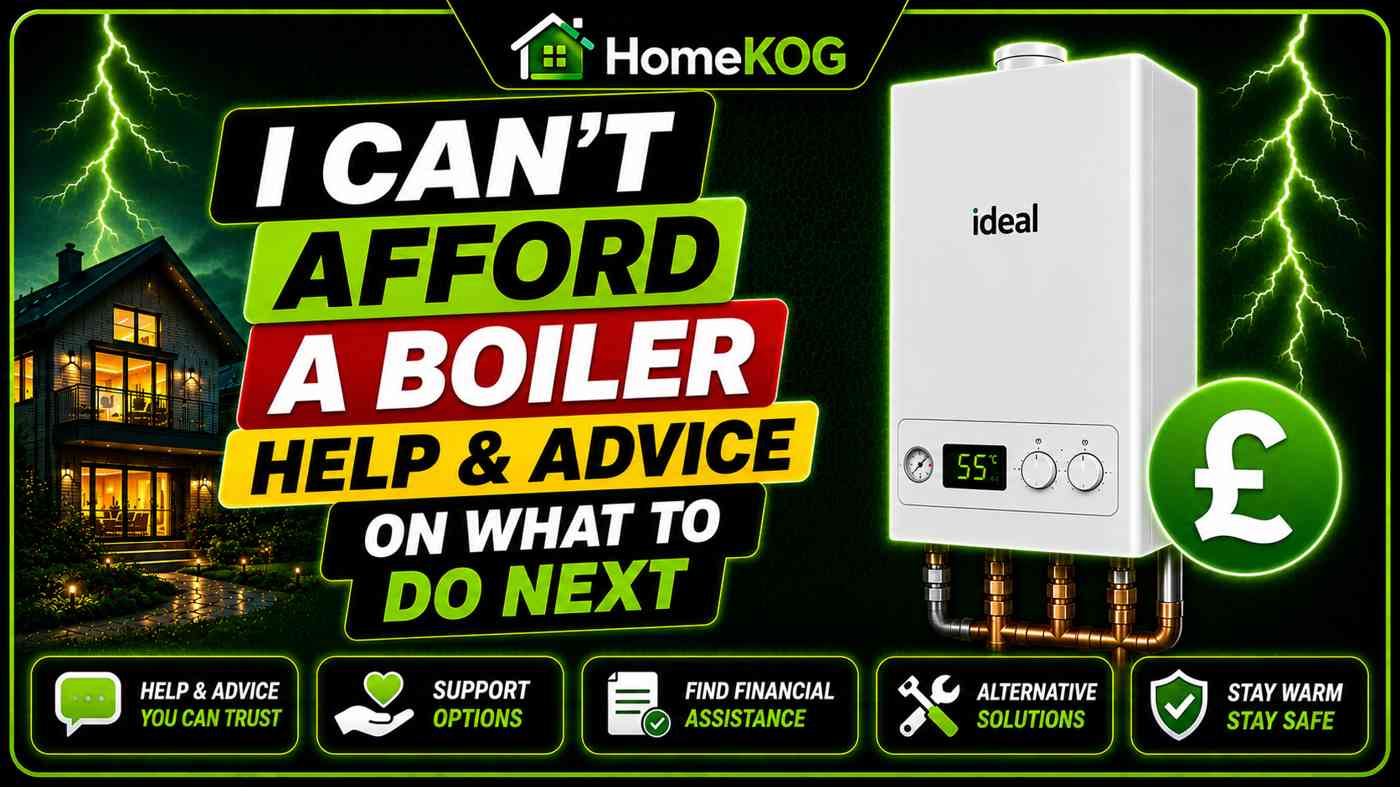

I Can’t Afford a New Boiler: Help, Grants & Finance Options in 2026
Quick Answer: If you cannot afford a new boiler in 2026, there are three main routes available: applying for a free or subsidised boiler through the ECO4 government grant scheme, spreading the cost with boiler finance from as little as £10 per month, or using a boiler subscription with no large upfront payment required. The average cost of a new boiler with installation is around £2,300, but eligible households may qualify for a fully funded replacement.
An unexpected boiler breakdown is one of the most stressful and costly home emergencies a household can face. With the average UK home spending around £2,000 per year on energy, and with surveys suggesting most households have only around £765 set aside for home repairs, an unplanned boiler replacement can feel genuinely out of reach.
The good news is that there are real options available in 2026. This guide explains each one clearly so you can identify the route that is right for your circumstances.
Key Facts: Boiler Affordability and Grant Relationships
- The ECO4 scheme is a UK government programme that requires energy companies to fund heating and insulation upgrades for eligible low-income and fuel-poor households, and runs until 31 March 2026.
- A free boiler grant is a form of financial assistance available under the ECO4 scheme that can cover the full cost of a replacement boiler for qualifying households.
- An EPC rating of F, G, or E makes a property more likely to qualify for fully funded measures under the ECO4 scheme, as the programme prioritises the least energy-efficient homes.
- Universal Credit is one of a range of qualifying benefits that can make a household eligible for ECO4 boiler grant funding, alongside Income Support, Pension Guarantee Credit, and several others.
- Boiler finance is a payment option that spreads the cost of a new boiler and installation over monthly instalments, with options including 0% APR for two years and low or zero deposit arrangements.
- A boiler subscription is a monthly payment arrangement that covers the cost of a new boiler installation without a credit check requirement, making it accessible to households who may not qualify for standard finance.
- The Energy Saving Trust estimates the average cost of a new boiler including installation at £2,300, with costs ranging from around £1,595 to £4,500 or more depending on the boiler type and installation complexity.
- The Affordable Warmth Obligation is a core component of the ECO scheme that specifically covers boiler repair and replacement grants for low-income households.
- A landlord must give permission before a tenant can apply for ECO4 boiler grant funding, as the work is carried out on a property the landlord owns.
- Major energy suppliers including British Gas, EON, EDF, Octopus, OVO, and Scottish Power are among the companies obligated to fund ECO4 measures in qualifying properties.
- An estimated 2.5 million UK households are believed to be eligible for boiler grants under the ECO scheme, though take-up remains significantly lower than the eligible population.
- Properties with outdated heating systems, poor insulation, or cavity walls are among those most likely to qualify for fully funded improvements under ECO4.

Why Affording a New Boiler Is a Real Challenge for Many Households
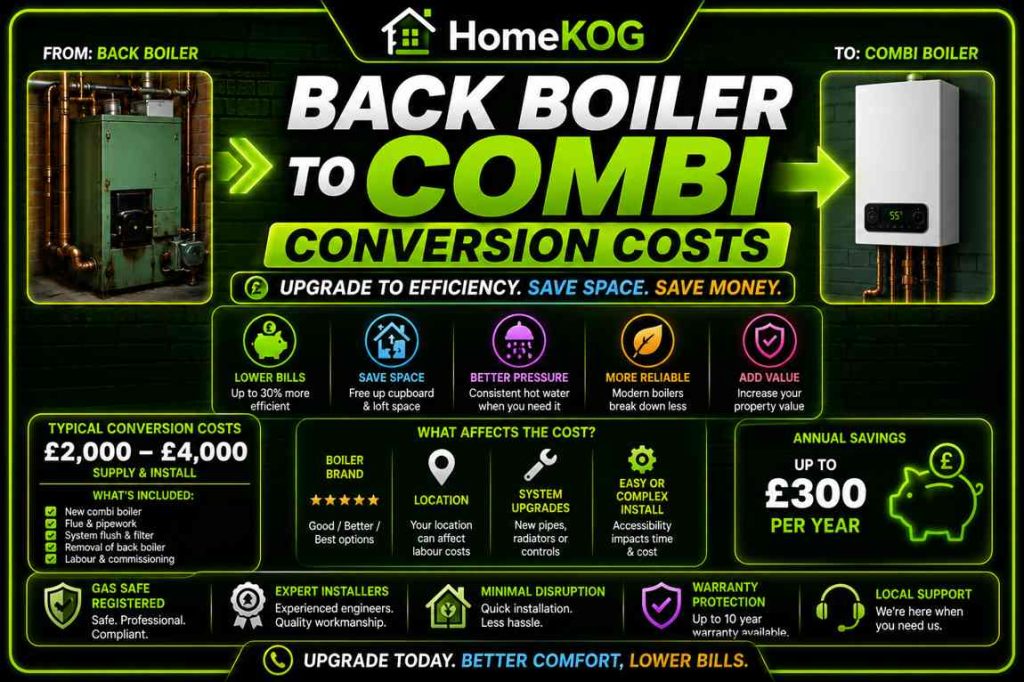
The cost of a new boiler installation has risen alongside broader increases in the cost of living. A standard combi boiler installation typically costs between £1,595 and £4,500 depending on the boiler model, the complexity of the installation, and the engineer’s rates in your area. When considering a new boiler, homeowners often look for the best combi boilers in the UK to ensure efficiency and reliability. Brands like Worcester Bosch and Vaillant consistently rank high for their performance and customer satisfaction. Additionally, investing in a quality combi boiler can lead to long-term savings on energy bills while enhancing overall comfort in your home.
Research suggests that the average UK household has approximately £765 saved for home repairs — around £1,535 less than a typical entry-level boiler installation. For households on lower incomes, benefits, or fixed pension income, an unplanned boiler failure can mean going without heating and hot water for an extended period while attempting to find funds for a replacement.
The three main routes to addressing this are grants, finance, and subscription arrangements. Each suits different circumstances, and understanding which applies to your situation is the starting point.
Option 1: ECO4 Free Boiler Grants
The Energy Company Obligation scheme — currently in its fourth iteration, known as ECO4 — is the primary government-backed route to a free or heavily subsidised boiler replacement for eligible households. The scheme requires medium and large energy suppliers to fund energy efficiency improvements in qualifying properties, with boiler replacement being one of the eligible measures.
ECO4 runs until 31 March 2026 and focuses specifically on properties with the lowest energy efficiency ratings — those with EPC bands D, E, F, and G. Properties in bands F and G must be upgraded to at least a D rating, while those in bands D and E must reach at least a C. This means the scheme covers not just boilers but a broader package of improvements including insulation and heating system upgrades.
Approximately 2.5 million UK households are estimated to be eligible for boiler grants under the ECO scheme. Take-up remains lower than this figure, meaning many qualifying households have not yet accessed funding they are entitled to.
Who Qualifies for an ECO4 Boiler Grant?
Eligibility is primarily determined by household income and benefit status. If anyone in the household receives one of the following benefits, they may qualify for ECO4 funding.
- Universal Credit
- Income Support
- Income-based Jobseeker’s Allowance
- Income-related Employment and Support Allowance
- Pension Guarantee Credit
- Child Benefit (subject to household income thresholds)
- Child Tax Credits or Working Tax Credits
- Disability Living Allowance
- Personal Independence Payment
- Attendance Allowance
- Carer’s Allowance
- Armed Forces Independence Payment
- Constant Attendance Benefit
- Industrial Injuries Disablement Benefit
- Mobility Supplement
- Severe Disablement Allowance
A property with an EPC rating of E, F, or G is more likely to qualify for fully funded measures. Properties with outdated heating systems, poor insulation, or cavity walls are also more likely to be eligible for full funding rather than a partial contribution.
The ECO4 scheme does not require you to be a homeowner. Tenants in rented properties can apply, but they will need written permission from their landlord, social housing provider, or property management company before the work can proceed.
How to Check Your EPC Rating
Your property’s current EPC rating can be found through the government’s EPC register. If your home has an F, E, or G rating, this significantly improves your chances of qualifying for a fully funded replacement under ECO4.
Option 2: Boiler Finance
For households that do not qualify for ECO4 funding but cannot afford to pay for a new boiler outright, finance arrangements spread the cost into manageable monthly payments. Several options are typically available.
0% interest finance allows the full cost of the boiler to be spread over an agreed period — often up to two years — without any additional interest charges. This means the total amount repaid is exactly the same as the purchase price, with no added cost for spreading the payments.
Buy now, pay later arrangements allow installation to proceed immediately with repayment deferred for up to 12 months, giving households time to manage the cost without delaying the work.
Low or zero deposit finance options allow installation to begin without a large upfront payment, with the full amount spread across monthly instalments instead. Boiler finance arrangements can start from as low as £10.32 per month depending on the boiler cost, the term of the agreement, and the interest rate applied.
Finance arrangements are subject to credit checks, so eligibility varies between applicants. Using a finance calculator before committing to an arrangement helps establish what monthly payment level is realistic for your budget and which finance option offers the best terms for your circumstances.
Option 3: Boiler Subscription
A boiler subscription is a monthly payment arrangement that covers the cost of a new boiler installation without the requirement for a credit check. This makes it accessible to households who may not qualify for standard finance products due to their credit history.
Payments are spread across a fixed monthly amount and typically include ongoing maintenance or cover as part of the arrangement. For households who have struggled to access traditional finance but need a new boiler without delay, a subscription model can provide a route to installation that would otherwise be unavailable.
What Does a New Boiler Cost in 2026?
Understanding the full cost of a boiler replacement helps clarify how much financial assistance you need to access and which option is most appropriate. boiler efficiency considerations for homeowners are essential in evaluating long-term savings and environmental impact. By selecting a model with higher efficiency ratings, you can reduce energy consumption and lower monthly utility bills. It’s also important to consider any local incentives available for upgrading to a more efficient system, which can further enhance your investment.
| Installation Type | Typical Cost Range (2026) |
|---|---|
| Standard combi boiler with installation | £1,595–£2,500 |
| Mid-range combi boiler with installation | £2,300–£3,500 |
| Premium combi boiler with installation | £3,000–£4,500+ |
| System boiler with cylinder and installation | £2,500–£4,000 |
| ECO4 funded replacement (eligible households) | Free or heavily subsidised |
| Finance from (monthly) | From £10.32/month |
The Energy Saving Trust puts the average all-in cost of a new boiler installation at around £2,300. A modern A-rated condensing boiler can reduce annual energy bills by up to £800 compared to an older inefficient model, meaning the investment pays back meaningfully over time even when financed.
What If You Are a Tenant?
Tenants cannot apply for ECO4 funding without their landlord’s consent. If your boiler has broken down and your landlord is responsible for its repair or replacement — which is a legal requirement in rented properties — you should notify the landlord in writing as soon as possible. Landlords are legally obligated to ensure the heating and hot water in a rental property are operational and safe.
If the landlord is slow to act, contacting your local council’s housing department is a route to applying additional pressure. In cases where the property qualifies for ECO4 funding, the landlord may be able to access the grant to fund the replacement at no cost to themselves, which removes the financial barrier that can sometimes delay action.
Frequently Asked Questions
What is the ECO4 scheme and how does it help with boiler costs?
ECO4 is the fourth phase of the UK government’s Energy Company Obligation scheme, which requires major energy suppliers to fund energy efficiency improvements — including boiler replacements — in qualifying low-income and fuel-poor households. Eligible households may receive a fully funded new boiler at no cost. The scheme runs until 31 March 2026 and focuses on properties with EPC ratings between D and G. Eligibility is assessed based on benefit status and property energy rating.
Who qualifies for a free boiler grant in 2026?
Households receiving qualifying benefits — including Universal Credit, Income Support, Pension Guarantee Credit, and several disability and care-related payments — may be eligible for a free boiler grant under ECO4. Properties with low EPC ratings of E, F, or G are more likely to qualify for fully funded measures. Both homeowners and tenants can apply, though tenants require their landlord’s permission before work can proceed.
Can I get a new boiler on finance with no deposit?
Yes. Zero deposit finance options are available for boiler installations, allowing the work to proceed without any upfront payment. Monthly repayments are spread over an agreed term, with 0% APR options available for periods of up to two years on eligible purchases. Finance is subject to a credit check, so the terms and eligibility will vary depending on the applicant’s financial circumstances. A finance calculator can help establish what monthly payment is realistic before committing to an arrangement.
What is a boiler subscription and how does it work?
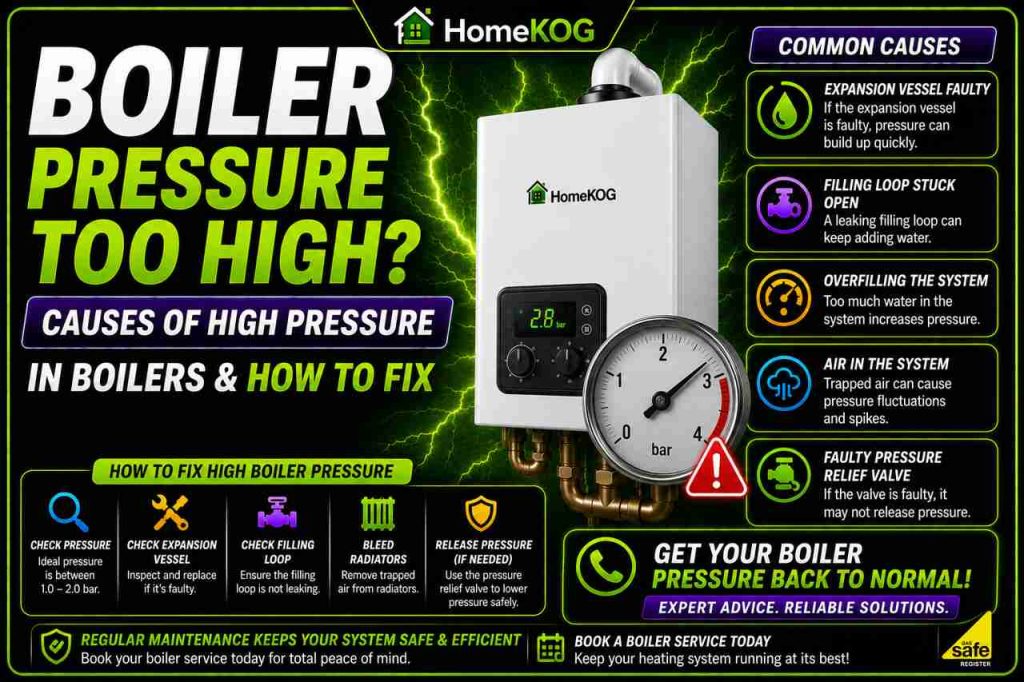
A boiler subscription is a monthly payment arrangement that covers the cost of a new boiler installation without requiring a credit check. Payments are spread across a fixed monthly amount and typically include ongoing maintenance or cover as part of the package. It is designed for households who need a new boiler without delay but cannot access standard finance due to their credit history or financial situation. Understanding the mechanics of heating systems often involves looking at how various components operate, such as when discussing pressure release valve functions explained. These valves are crucial for maintaining safety by preventing excess pressure buildup, which can lead to system failures or accidents. Regular maintenance ensures these valves remain functional, contributing to the overall efficacy and longevity of the heating system.
How much does a new boiler cost in 2026?
A new boiler with full installation typically costs between £1,595 and £4,500 or more in 2026, depending on the type and model of boiler, the complexity of the installation, and the engineer’s rates in your area. The Energy Saving Trust estimates the average all-in cost at around £2,300. A modern A-rated condensing boiler can save up to £800 per year on energy bills compared to an older inefficient model, making it a meaningful long-term investment even when the upfront cost is spread through finance.
What happens if I can’t afford a boiler and don’t qualify for ECO4?
If ECO4 funding is not available to you and you cannot afford to pay for a boiler outright, boiler finance and subscription arrangements provide alternative routes to installation. Finance options start from as little as £10.32 per month and allow the full cost to be spread over a period that suits your budget. A boiler subscription provides a similar monthly payment model without a credit check. Contacting a heating specialist to discuss your specific circumstances is the best first step to identifying which option is most suitable.
Can a tenant apply for a free boiler grant?
Yes, but only with the landlord’s written permission. The ECO4 scheme is available to tenants as well as homeowners, provided the property qualifies and the landlord consents to the work being carried out. If the property is a rental and the boiler has failed, the landlord has a legal obligation to restore heating and hot water, and in eligible properties the ECO4 scheme may cover the full cost of a replacement. Tenants should notify their landlord in writing as soon as possible and can contact the local council if the landlord fails to act within a reasonable timeframe.
Will a new boiler reduce my energy bills?
Yes. Replacing an old inefficient boiler with a modern A-rated condensing model can reduce annual heating bills by up to £800, according to industry estimates. Older boilers operating at lower efficiency ratings waste a significant proportion of the fuel they consume, whereas modern condensing boilers convert more than 90% of the energy they use into useful heat. For households on a tight budget, the long-term saving on energy bills is an important part of the financial case for replacing an ageing boiler as soon as it is practically possible to do so.
Conclusion
Not being able to afford a new boiler is a stressful situation, but in 2026 there are more options available than many households realise. The ECO4 scheme offers a route to a fully funded replacement for eligible low-income households, and with an estimated 2.5 million qualifying properties in the UK, it is worth checking eligibility before assuming the full cost must be paid privately.
For households that do not qualify for grants, boiler finance and subscription arrangements make it possible to access a new installation with monthly payments that fit a realistic budget — without waiting until the full cost has been saved. In addition to these options, winter energy bill assistance programs can provide crucial support for families facing high energy costs during the colder months. These programs often help reduce overall expenses, making essential heating more affordable. By exploring available resources, households can ensure they stay warm without the burden of excessive bills.
The worst outcome is going without heating and hot water while attempting to manage the situation alone. Checking ECO4 eligibility, speaking to a heating specialist about finance options, and acting quickly when a boiler fails are the three most important steps any household in this situation can take. For those experiencing heating issues, underfloor heating troubleshooting tips can be invaluable in diagnosing problems early. Simple checks for leaks or blockages can save time and money, ensuring a faster resolution. Additionally, maintaining consistent temperatures and regular inspections can help prevent future breakdowns and extend the lifespan of the system. Understanding and following E1 error code troubleshooting steps can further assist in identifying specific boiler issues. Resolving these errors promptly ensures that your heating system operates efficiently and minimizes the risk of extended downtime. If you encounter persistent problems, it may be worthwhile to consult a qualified technician for a thorough assessment.