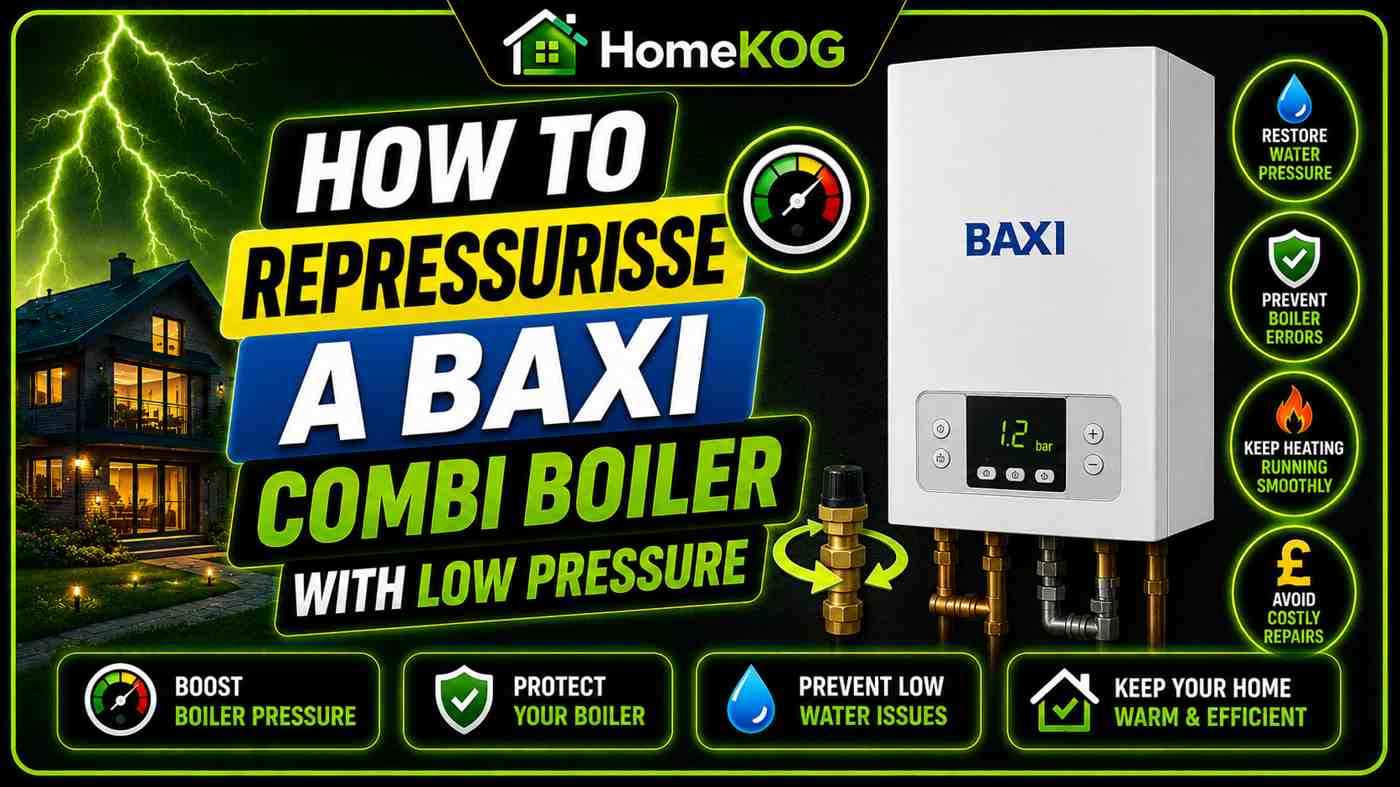

How to Repressurise a Baxi Combi Boiler: Step-by-Step Guide
Quick Answer: To repressurise a Baxi combi boiler, locate the filling loop beneath the boiler, attach it if it is the removable rigid type, open the left valve fully then the right valve slowly, and watch the pressure gauge rise to between 1.0 and 1.5 bar. Close both valves, remove the filling loop if applicable, and restart the boiler. The process takes approximately 10 seconds once the loop is connected. If pressure drops repeatedly, a system leak is the likely cause.
Get boiler cover with a free annual service here >
Introduction
Low boiler pressure is one of the most common reasons a Baxi combi boiler stops working correctly. When the sealed central heating system loses water through a small leak, after bleeding radiators, or following routine maintenance, the pressure gauge drops below the 1.0 bar minimum, and most modern boilers lock out automatically as a safety measure.
The good news is that repressurising a Baxi combi boiler is one of the few boiler maintenance tasks that most homeowners can carry out safely without calling an engineer. The process takes a matter of minutes once you know where the filling loop is and how to use it. Understanding how to perform combi boiler draining techniques can also empower homeowners to tackle minor issues on their own. By familiarizing themselves with the essential steps involved, they can avoid potential leaks and maintain optimal efficiency. Regularly practicing these techniques will ensure that the boiler remains in good working condition for years to come. combi boiler working principles and benefits highlight the efficiency and reliability that these systems provide. By understanding the fundamentals, homeowners can take full advantage of features like on-demand hot water and space heating. Additionally, knowing how to maintain a combi boiler effectively can lead to long-term savings on energy bills and increased comfort in their living spaces.
This guide covers the correct pressure range for Baxi combi boilers, the three types of filling loop Baxi uses, step-by-step instructions for each, how often you should repressurise, and when repeated pressure drops indicate a professional inspection is required.

Understanding Baxi Boiler Pressure: The Core Relationships
Boiler pressure involves several interconnected components — understanding what each one does makes the repressurisation process straightforward and safe.
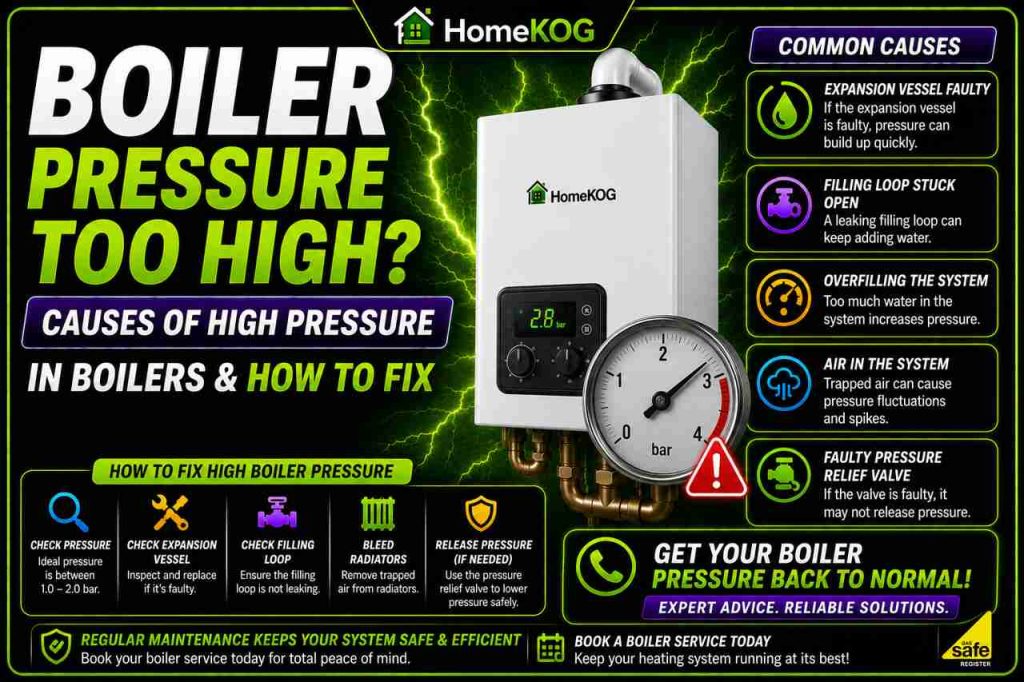
- A Baxi combi boiler operates at a sealed system pressure of between 1.0 and 2.0 bar, with the ideal operating range being 1.0 to 1.5 bar when the system is cold.
- A pressure gauge on the front of the Baxi boiler displays the current system pressure — a needle in the green zone indicates correct pressure; a reading below 1.0 bar indicates the system needs repressurising.
- A filling loop is the connection between the cold mains water supply and the sealed heating system, used to introduce mains water into the circuit to restore the correct pressure when it drops.
- A rigid filling loop is a short fixed pipe with two silver taps and removable end caps — it must be physically attached to the boiler before use and removed afterwards to prevent accidental overpressurisation.
- A flexible filling loop is a braided hose with two valve taps on the copper pipework beneath the boiler — it is permanently attached but must be disconnected from one end when not in use.
- The Baxi Easy-Fill permanent filling link is a built-in lever-operated system that allows repressurisation without attaching or detaching any components, simply by operating a green lever on the underside of the boiler.
- Error code E118 on a Baxi boiler display indicates that the system pressure has dropped too low for normal operation — repressurising to above 1.0 bar clears this code and restores normal function.
- A pressure relief valve is a safety device that automatically releases water from the system if pressure exceeds the safe maximum. Persistent discharge from the overflow pipe indicates an overpressure fault.
- Bleeding radiators releases trapped air from the heating circuit but also reduces system water volume, causing a small pressure drop that typically requires a brief repressurisation through the filling loop afterwards.
- A system leak is indicated when pressure drops repeatedly within a short period after repressurising — small drips at pipe joints, radiator valves, or within the boiler itself are the most common sources.
- A Gas Safe registered engineer is the only professional legally qualified to investigate and repair internal boiler leaks or gas-related pressure faults.
- Annual boiler servicing includes a pressure check and confirmation that the filling loop and expansion vessel are functioning correctly — maintaining correct system pressure throughout the year.
What Is the Correct Pressure for a Baxi Combi Boiler?
A Baxi combi boiler should operate with a sealed system pressure between 1.0 and 2.0 bar. The ideal range when the system is cold is 1.0 to 1.5 bar — this gives sufficient headroom for the pressure to rise slightly as the system heats up during a heating cycle without exceeding the safe upper limit. When considering the best models for combi boilers, it’s essential to evaluate their efficiency ratings and compatibility with your home’s heating system. Brands like Worcester Bosch and Vaillant are often recommended for their reliability and performance. Additionally, it’s beneficial to check customer reviews to ensure you choose a model that meets your specific needs and expectations. When assessing Baxi Boilers pricing in the UK, it’s important to consider the features and warranties offered alongside the cost. Many homeowners find that investing in a high-quality boiler can lead to significant savings on energy bills in the long run. As you compare prices, ensure you factor in installation costs and potential maintenance expenses to get a complete picture of your investment.
A cold pressure reading between 1.0 and 1.5 bar means the boiler is operating correctly and the system water level is adequate. No action is required.
A cold pressure reading below 1.0 bar means the system has lost water and requires repressurising. Most Baxi boilers display error code E118 at this point and will not fire until pressure is restored.
A cold pressure reading consistently above 2.0 bar — or rising above 2.5 bar when the system is warm — indicates an overpressure fault. Do not repressurise further. Contact a Gas Safe engineer to inspect the expansion vessel and pressure relief valve.
Which Type of Filling Loop Does Your Baxi Boiler Have?
Baxi combi boilers use one of three filling loop configurations depending on the model and age of the boiler. Identifying which type you have determines which of the following step-by-step guides applies to your boiler.
- Rigid filling loop — a short metal pipe that is stored separately and must be attached beneath the boiler before use. Identified by two silver-coloured threaded taps with metal end caps on the boiler’s underside.
- Flexible filling loop — a braided hose permanently connected to the copper pipes beneath the boiler. The loop should be disconnected at one end when not in use to prevent accidental repressurisation.
- Easy-Fill permanent filling link — a built-in system with a green lever on the underside of the boiler. No separate hose is required. This is fitted to more recent Baxi combi models.
Check your boiler manual if you are unsure which type is fitted. The manual also confirms the correct pressure range for your specific model.
How to Repressurise a Baxi Combi Boiler: Step-by-Step
Method 1: Rigid Filling Loop
- Switch off the boiler and allow the system to cool completely if it has been running recently. Repressurising a hot system can cause a temporary pressure spike above the target range.
- Locate the silver taps on the underside of the boiler. These will have metal end caps fitted when the filling loop is not in use. Using a screwdriver or spanner, unscrew the end caps anticlockwise and set them aside safely.
- Attach the rigid filling loop. The loop is a short rigid pipe with rubber washers at each end. Check that both rubber washers are present and correctly seated before fitting — water will leak from the connection if a washer is missing. Fit the loop between the two silver taps and tighten the wing nuts clockwise by hand until the loop is held firmly in place.
- Open the left-hand tap fully by turning it clockwise. Then slowly open the right-hand tap, watching the pressure gauge on the boiler front panel as you do so. Water from the mains will enter the system and the pressure will begin to rise.
- Watch the pressure gauge and stop when the reading reaches 1.0 to 1.5 bar. Close the right-hand tap first, then the left-hand tap. Both must be fully closed before removing the loop.
- Remove the filling loop by unscrewing the wing nuts anticlockwise. Place a bowl beneath the connection point before removing the loop to catch any residual drips. Refit the metal end caps by tightening them clockwise.
- Switch the boiler back on. The E118 error code should clear, and the boiler should resume normal operation. Check the pressure gauge after the first heating cycle — it may rise slightly as the system warms, which is normal.
Method 2: Flexible Filling Loop
The flexible filling loop process is very similar to the rigid loop method, but the loop is permanently attached to the copper pipework beneath the boiler rather than being stored separately.
- Switch off the boiler and allow it to cool.
- Locate the flexible braided hose on the copper pipes beneath the boiler. Confirm that the hose is connected at both ends before proceeding — one end should be reconnected if it was previously disconnected after the last use.
- Open both taps on the filling loop — the taps are located where the hose connects to the copper pipes. Open them slowly and watch the pressure gauge rise.
- Close both taps when the gauge reads between 1.0 and 1.5 bar.
- Disconnect one end of the flexible loop after closing both taps. This is important — leaving the flexible loop connected at both ends with the taps open risks accidental overpressurisation if the taps are disturbed.
- Switch the boiler back on and confirm normal operation.
Method 3: Easy-Fill Permanent Filling Link
The Easy-Fill system is the simplest of the three methods and requires no hose attachment or removal.
- Switch off the boiler if it is currently running.
- Locate the green lever on the underside of the boiler — this is the Easy-Fill filling link control.
- Operate the green lever to allow mains water into the system. Watch the pressure gauge as you do so.
- Stop when the gauge reaches 1.0 bar — the Easy-Fill system makes it easy to overshoot, so stop at 1.0 bar rather than pushing to 1.5 bar and risking going above the target range. Place a bowl beneath the boiler to catch any drips during the process.
- Release the lever once the target pressure is reached. The system is now at the correct operating pressure.
- Switch the boiler back on and confirm the E118 error has cleared.
How Long Does Repressurisation Take?
Once the filling loop is connected and the valve is opened, the pressure rises from below 1.0 bar to the target of 1.0 to 1.5 bar, typically taking approximately 10 seconds. If it takes significantly longer than 10 seconds to reach the target pressure, this may indicate that the filling loop connection is partially restricted or that there is an ongoing leak in the system that allows water to escape faster than it is being introduced.
How Often Should You Repressurise a Baxi Combi Boiler?
There is no fixed schedule for repressurising a Baxi combi boiler — you should only need to do it when the pressure drops below 1.0 bar. For a healthy system without any leaks, this might be once or twice a year at most, often triggered by bleeding radiators.
A small, gradual pressure drop over many months is normal in a sealed heating system — micro-leaks at pipe joints and valve packing allow tiny amounts of water to escape over time, and a brief annual top-up is sufficient to restore correct pressure.
Repeated pressure drops within a short period — for example, needing to repressurise every few weeks — indicate an active leak somewhere in the system. Common leak locations include radiator valve packing, compression fittings at pipe joints, the boiler’s internal components, and the pressure relief valve discharge pipe. A Gas Safe engineer should inspect the system if pressure is dropping consistently and frequently.
Baxi Boiler Pressure Keeps Dropping: What to Do
If your Baxi boiler pressure keeps dropping and requires frequent repressurising, the most likely causes are: Baxi boiler error code solutions can provide valuable insights into the specific issues your system might be facing. It’s essential to consult the manufacturer’s manual to understand these error codes better, as they often indicate problems with components such as the pressure relief valve or the expansion vessel. Addressing these concerns promptly can prevent further damage and ensure your boiler operates efficiently.
- A weeping radiator valve — a small, slow drip at a radiator valve connection that may not be immediately visible but allows water to escape gradually.
- A compression fitting leak — a joint in the copper pipework that has loosened slightly over time, allowing a small seep of water.
- A faulty pressure relief valve — if the valve is releasing water continuously or intermittently, it may be set incorrectly or have developed a fault.
- A leaking expansion vessel — the internal diaphragm of the expansion vessel can fail, causing pressure fluctuations and eventual loss.
- An internal boiler leak — a seal or component failure within the boiler itself.
Visually inspect all visible radiator connections and accessible pipework for damp patches, staining, or drips. If no external leak is visible but pressure continues to drop, contact Baxi customer support or a Gas Safe-registered engineer to arrange a professional system inspection.
Frequently Asked Questions
How do I repressurise a Baxi combi boiler?
To repressurise a Baxi combi boiler, locate the filling loop beneath the boiler — this is either a rigid pipe with two silver taps, a flexible braided hose, or the built-in Easy-Fill lever system, depending on your model. With the boiler switched off, open the filling loop valves slowly and watch the pressure gauge rise to between 1.0 and 1.5 bar. Close both valves, remove or disconnect the rigid or flexible loop, and switch the boiler back on. The E118 low-pressure error should clear, and normal operation should resume.
What pressure should a Baxi combi boiler be at?
A Baxi combi boiler should operate at a sealed system pressure between 1.0 and 2.0 bar, with the ideal cold operating range being 1.0 to 1.5 bar. A reading below 1.0 bar indicates the system has lost water and needs repressurising. A reading consistently above 2.0 bar when cold, or rising above 2.5 bar when the system is warm, indicates an overpressure condition that requires investigation by a Gas Safe engineer — do not repressurise further if this is the case.
What is error code E118 on a Baxi boiler?
Error code E118 on a Baxi boiler display indicates that the system pressure has dropped below the minimum operating threshold — typically 1.0 bar or lower. The boiler locks out automatically when this error is triggered and will not fire until pressure is restored. Repressurising the system through the filling loop to between 1.0 and 1.5 bar clears the E118 error and returns the boiler to normal operation. If E118 reappears frequently, an ongoing system leak is the likely cause.
Why does my Baxi boiler keep losing pressure?
A Baxi boiler that loses pressure repeatedly after repressurising has an active leak somewhere in the sealed central heating system. Common locations include radiator valve connections, compression fittings in the pipework, the pressure relief valve, the expansion vessel, or internal boiler seals and components. Visually inspect accessible radiator connections and pipework for drips or damp staining. If no external leak is visible, contact a Gas Safe registered engineer to carry out a professional leak investigation.
How often should I repressurise my Baxi boiler?
A healthy Baxi boiler system without leaks may only require repressurising once or twice a year — often after bleeding radiators, which slightly reduces system water volume. There is no fixed schedule; you should repressurise only when the pressure gauge drops below 1.0 bar. Repressurising more frequently than once every few months suggests an active leak that requires investigation. Annual boiler servicing includes a pressure check and can identify developing faults before they cause repeated pressure loss.
Can I repressurise a Baxi boiler myself?
Yes — repressurising a Baxi combi boiler through the filling loop is one of the few boiler maintenance tasks most homeowners can safely carry out without calling an engineer. The process does not involve any gas components and only requires operating the filling loop valves while watching the pressure gauge. Follow the step-by-step instructions for your filling loop type carefully, do not exceed 1.5 bar, and ensure both valves are fully closed before removing the rigid loop. If you are unsure of any step, contact a Gas Safe engineer.
Conclusion: A Simple Task — Done Carefully
Repressurising a Baxi combi boiler is one of the most accessible boiler maintenance tasks available to homeowners — a 10-second process once you know where the filling loop is and how it works. Understanding the correct pressure range, the three filling loop types Baxi uses, and the warning signs of an ongoing leak means you can manage routine pressure drops with confidence and recognise when a professional is needed.
An isolated pressure drop after bleeding radiators or after a period of inactivity is normal and requires only a brief top-up through the filling loop. Repeated drops in pressure are the system’s way of telling you there is a leak that needs finding and fixing — and that is a job for a Gas Safe engineer.
Annual boiler servicing remains the most effective way to keep your Baxi boiler operating correctly and to catch developing pressure faults before they escalate. Understanding the baxi service cost breakdown for homeowners can help you budget effectively for maintenance. By anticipating these costs, you can ensure your boiler remains in top condition throughout the year. Regular servicing not only extends the lifespan of your unit but also enhances its efficiency, ultimately saving you money on energy bills.