
Hot Water Cylinder Guide: Unvented vs Vented Systems
Quick Answer
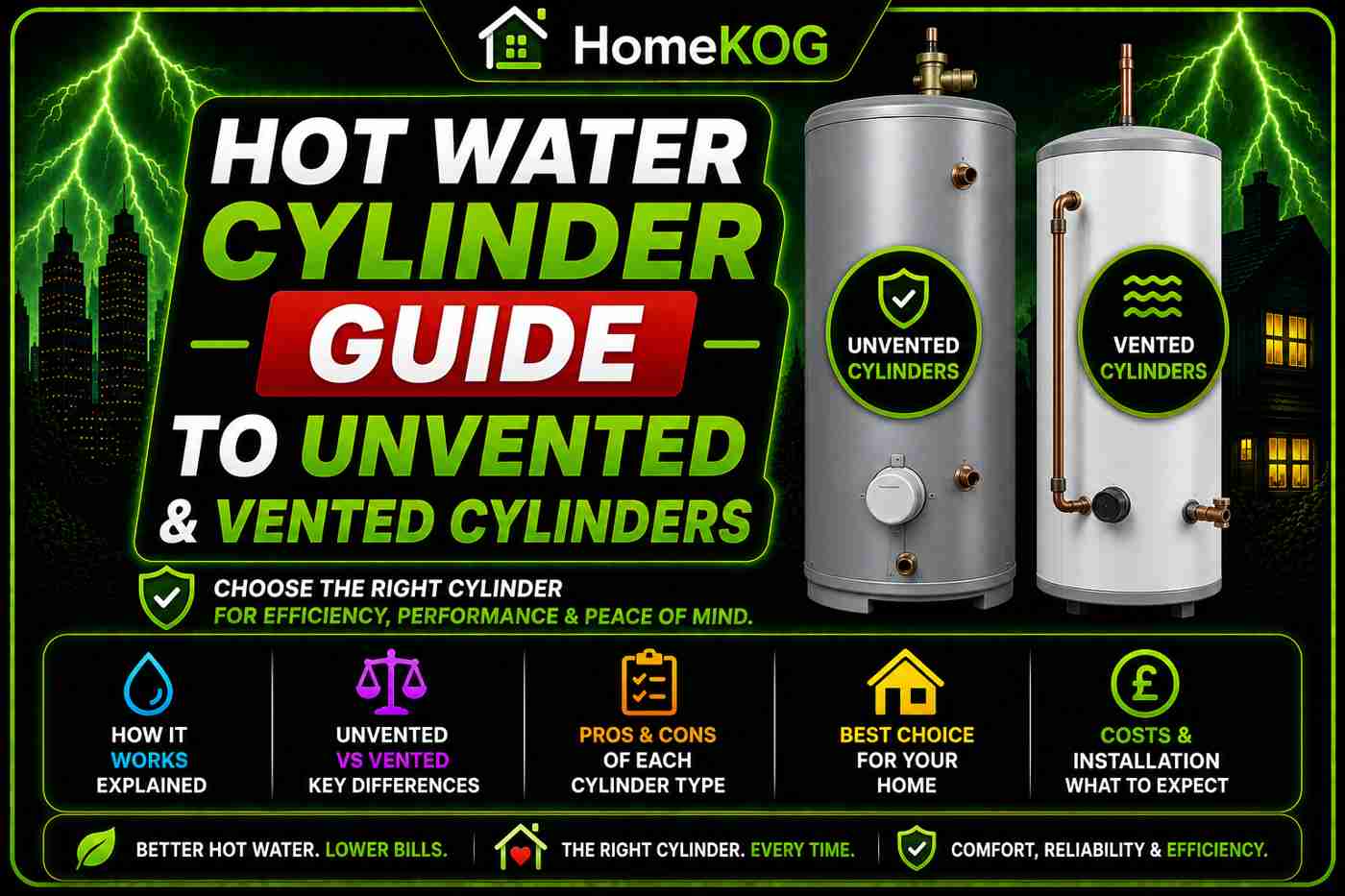
Hot water cylinders store and supply hot water in homes with system or regular boilers. Unvented cylinders use mains pressure for stronger flow and better efficiency, while vented cylinders rely on a loft tank and are cheaper to install. The best choice depends on your property size, water demand, and existing system.
Hot water cylinders remain a key part of many UK heating systems in 2026, especially in homes that need consistent hot water for multiple outlets.
Choosing between vented and unvented systems affects performance, installation costs, and long-term efficiency.
Hot Water Cylinder Entity Relationships
- Hot water cylinder → stores → heated water
- Boiler → heats → water inside cylinder
- Unvented cylinder → connects to → mains supply
- Vented cylinder → relies on → cold water tank
- Expansion vessel → regulates → pressure
- Pressure relief valve → protects → system safety
- Insulation → reduces → heat loss
- Household demand → determines → cylinder size
- System boiler → works with → hot water cylinder
- Loft tank → feeds → vented cylinder
- Water pressure → impacts → shower performance
- Energy efficiency → lowers → running costs

What Is a Hot Water Cylinder?
A hot water cylinder is an insulated tank that stores heated water for later use.
It works alongside a boiler to ensure hot water is available when needed.
H3: Why cylinders are still used
They are ideal for homes with high hot water demand.
They allow multiple taps or showers to run at the same time without pressure drops.
Types of Hot Water Cylinders
There are two main types used in UK homes.
H3: Overview comparison
| Type | System Type | Pressure Source |
|---|---|---|
| Unvented cylinder | Sealed system | Mains pressure |
| Vented cylinder | Open system | Gravity-fed tank |
Each system suits different property types and usage needs.
Unvented Hot Water Cylinders Explained
Unvented cylinders are sealed systems connected directly to the mains water supply.
They deliver strong, consistent pressure across all outlets.
H3: Key benefits
Higher water pressure improves shower performance and flow rates.
Better insulation and sealed design reduce heat loss.
No need for a cold water tank saves space in the loft.
H3: Typical costs
| Item | Estimated Cost |
|---|---|
| Cylinder unit | £800 – £2,500 |
| Installation | £500 – £1,500 |
They require professional installation due to safety regulations.
Vented Hot Water Cylinders Explained
Vented cylinders rely on a cold water tank, usually located in the loft.
Water flows into the cylinder using gravity rather than mains pressure.
H3: Key benefits
Lower installation costs make them more affordable upfront.
Simpler systems are easier to maintain and repair.
They work well with older pipework and heating systems.
H3: Typical costs
| Item | Estimated Cost |
|---|---|
| Cylinder unit | £500 – £1,500 |
| Installation | £400 – £1,000 |
They remain common in older UK properties.
Unvented vs Vented Cylinders Comparison
Understanding the differences helps you choose the right system.
H3: Side-by-side comparison
| Feature | Unvented Cylinder | Vented Cylinder |
|---|---|---|
| Water pressure | High (mains-fed) | Lower (gravity-fed) |
| Installation cost | Higher | Lower |
| Maintenance | More complex | Simpler |
| Space required | No loft tank needed | Requires loft tank |
| Efficiency | Higher | Moderate |
Unvented systems are better for modern homes, while vented systems suit older setups.
How to Choose the Right Cylinder
Selecting the right cylinder depends on your household needs.
H3: Key considerations
Cylinder size must match daily hot water demand.
Insulation quality affects heat retention and energy efficiency.
Energy rating determines long-term running costs.
Warranty length indicates product reliability and lifespan.
Installation and Maintenance
Proper installation ensures safety and performance.
H3: What installation involves
A qualified engineer connects the cylinder to the boiler and water supply.
Safety components such as expansion vessels and valves are fitted where required.
The system is tested to ensure correct operation.
H3: Ongoing maintenance
Regular checks help prevent leaks and maintain efficiency.
Servicing ensures safety valves and pressure systems function correctly.
What Should I Consider About Hot Water Cylinders if My Shower Has No Hot Water?
When facing a sudden cold shower, it’s essential to conduct cold shower troubleshooting and quick fixes. Check the hot water cylinder for any leaks or malfunctions, inspect the thermostat settings, and ensure that the heating element is functioning. Regular maintenance can prevent such issues and keep hot water flowing smoothly.
FAQs
What is the difference between vented and unvented cylinders?
Unvented cylinders use mains pressure to deliver stronger water flow, while vented cylinders rely on a gravity-fed tank. This difference affects performance, installation cost, and suitability for modern or older homes.
Which hot water cylinder is best for my home?
The best cylinder depends on your property and water usage. Unvented cylinders suit modern homes needing high pressure, while vented cylinders are better for older systems with existing tanks.
Do unvented cylinders need special installation?
Yes, unvented cylinders must be installed by a qualified engineer. They operate under pressure and require safety devices such as expansion vessels and pressure relief valves.
Are unvented cylinders more efficient?
Unvented cylinders are generally more energy-efficient because they are sealed and better insulated. This reduces heat loss and lowers energy consumption over time.
How long does a hot water cylinder last?
Most hot water cylinders last between 10 and 20 years depending on quality, usage, and maintenance. Stainless steel models typically last longer than older copper units.
Can I replace a vented cylinder with an unvented one?
Yes, but it may require system upgrades such as removing the loft tank and adding safety components. A professional assessment is recommended before switching.
What size hot water cylinder do I need?
Cylinder size depends on household demand. Larger homes with multiple bathrooms require bigger cylinders, while smaller homes can use more compact units.
Do hot water cylinders save energy?
Modern cylinders with good insulation can reduce energy waste by retaining heat for longer. Choosing the correct size and energy rating improves overall efficiency.
Conclusion
Hot water cylinders are essential for homes that require reliable and consistent hot water.
Unvented cylinders offer higher pressure and better efficiency, making them ideal for modern households.
Vented cylinders remain a practical and cost-effective option for older systems.
By choosing the right type, size, and insulation level, you can ensure efficient performance while keeping energy costs under control in 2026.