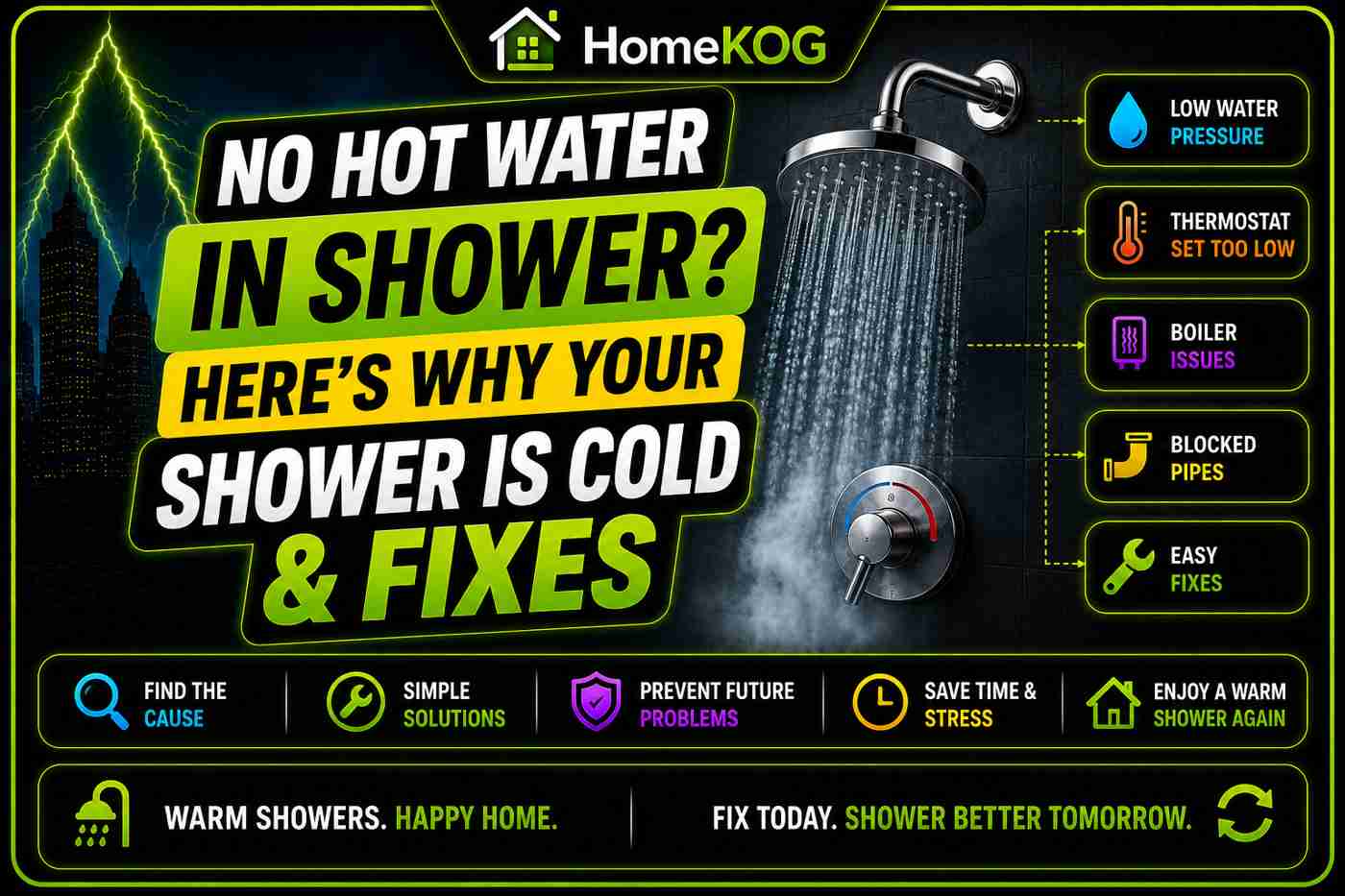

Stepping into a cold shower when you’re expecting hot water is frustrating — and surprisingly common. Whether the shower is cold from the start, won’t reach a comfortable temperature, or keeps going hot and cold mid-use, the cause is usually identifiable without calling anyone out.
The first thing to establish is whether the problem is limited to the shower or affecting the whole house. Turn on a hot tap at a sink in another room.
-
Hot water at other taps but not the shower — the fault is within the shower system itself
-
No hot water anywhere — the issue is with the boiler or heating system
No Hot Water in Shower But Sinks Are Fine
Thermostatic Shower Cartridge Failure
If hot water is available at sinks and taps but the shower runs cold, a failed thermostatic cartridge is the most likely culprit. Most modern UK showers use a thermostatic mixing valve with a cartridge inside that blends hot and cold water to maintain a consistent temperature. Over time — and especially in hard water areas — these cartridges wear out or become clogged with limescale. Other common reasons for no hot water include issues with the water heater, such as a broken thermostat or a blown heating element. Additionally, a malfunctioning diverter valve can prevent hot water from reaching the showerhead. Regular maintenance can help identify these problems before they lead to complete temperature loss.
When a cartridge fails, it loses the ability to regulate the hot/cold balance correctly. You might get cold water regardless of how far you turn the temperature control up, or the shower may start warm and then drop off after a few minutes.
In many cases, only the cartridge needs replacing rather than the full valve. A plumber can assess whether it’s a simple cartridge swap or whether the shower valve needs replacing entirely — on older or discontinued models, parts can be hard to source.
Blocked Inlet Filter
Thermostatic shower valves have small mesh filters on the hot and cold water inlets. These catch debris from the pipework and can become partially or fully blocked — particularly after plumbing work elsewhere in the property disturbs scale or sediment. A blocked hot inlet filter restricts the flow of hot water into the valve without affecting supply elsewhere.
This is worth checking before assuming the cartridge is at fault. Remove the filters and clean them in descaler — it takes minutes and can resolve the problem entirely without any parts.
Anti-Scald Limiter Set Too Low
Built into most thermostatic shower valves is a physical temperature stop — a limiter that prevents the control being turned beyond a set maximum. This safety feature exists to prevent scalding, but if set too conservatively it can restrict the shower from reaching a comfortable temperature even when there’s plenty of hot water available.
The adjustment process varies by brand and model, so refer to the specific shower manual. If you’re not confident adjusting it yourself, a plumber can do this quickly during a visit.
Cross-Connected Pipework
Less common but worth mentioning: in older properties that have been replumbed multiple times, it’s occasionally possible for hot and cold supply pipes to be incorrectly connected. Cold water ends up coming through the hot supply to the valve. A plumber can identify and correct cross-connection during a pipework inspection.
No Hot Water in Shower or Anywhere Else
Check the Boiler Display
Before investigating anything else, look at the boiler display. Modern boilers show fault codes when something goes wrong — these give a direct indication of the problem rather than requiring guesswork. Common boiler faults that cut off hot water include: understanding ideal boiler error codes explained can help you quickly pinpoint issues. Each code corresponds to a specific malfunction, allowing you to take appropriate action or convey detailed information to a technician. Knowing these codes not only saves time but can also reduce the risk of further damage to your heating system.
Low system pressure
the pressure gauge on the boiler front should read between 1 and 1.5 bar when cold. Below 1 bar, most boilers lock out and stop producing hot water. Repressurise using the filling loop beneath the boiler until the gauge reaches 1.5 bar, then reset the boiler. If pressure keeps dropping, there’s a leak somewhere in the system that needs professional attention.
Diverter valve fault
this is one of the most frequently misdiagnosed boiler problems. The diverter valve on a combi boiler controls whether hot water is directed to the heating circuit or the domestic hot water outlets. When it sticks or fails, the boiler often continues heating radiators normally but delivers cold or lukewarm water at the shower and taps. There’s no fault code for a sluggish diverter valve in many cases — the symptom is the main indicator. A Gas Safe registered engineer needs to diagnose and replace it.
Frozen condensate pipe
in cold weather, the plastic condensate pipe that carries acidic wastewater from the boiler to an external drain can freeze and cause the boiler to lock out completely. Pour warm water along the external section of the pipe to thaw it, then reset the boiler. Once the issue recurs once, insulate the pipe before the next cold spell.
Ignition or gas fault
if the boiler isn’t firing, check whether other gas appliances in the house are working. A hob or gas fire that also has no supply confirms the issue is with the gas supply to the property rather than the boiler itself.
Any boiler fault beyond basic pressure or condensate fixes should be handled by a Gas Safe registered engineer. A general plumber without Gas Safe registration cannot legally work on gas appliances.
Gas Supply Problems
If no gas appliances are working, contact your gas supplier directly. If you have a prepayment meter, check it hasn’t run out of credit — this catches people out more often than you’d think. If everything seems in order but there’s still no supply, your supplier can arrange an inspection.
If you can smell gas at any point, do not touch any switches or appliances. Leave the property immediately and call the National Gas Emergency Service on 0800 111 999 from outside.
Sediment Build-Up in a Hot Water Cylinder
This only applies to properties with a hot water cylinder — system boilers and conventional boilers with a separate tank. It does not apply to combi boilers, which have no storage tank.
Limescale and debris settle at the base of the cylinder over time, reducing heating efficiency. The water may still get warm but struggles to reach the right temperature, particularly during high-demand periods. Other signs include a rumbling or kettling sound from the cylinder when heating. A plumber can flush the cylinder to remove sediment, or advise on replacement if the build-up is significant.
Shower Going Hot and Cold Mid-Use
A shower that starts hot but then fluctuates or runs cold is a different problem from one that’s cold from the start. The two most common causes in UK homes are:
Simultaneous hot water demand — on a combi boiler, if a tap is turned on, a dishwasher starts, or a washing machine begins a hot fill cycle at the same time as you’re showering, the boiler has to share its output. This causes the shower temperature to drop noticeably. Run hot water appliances one at a time to see if that resolves it. If the household demand genuinely exceeds what the combi can supply simultaneously, a larger output boiler or a stored hot water system may be a longer-term consideration.
Worn thermostatic cartridge — a cartridge that’s starting to fail can maintain temperature adequately at the start but lose stability as conditions change — particularly when flow rate or pressure fluctuates slightly. Temperature goes hot and cold unpredictably, or the shower settles at a lower temperature than it used to.
Other contributing causes include a partially sticking diverter valve, a drop in mains pressure below the boiler’s minimum flow threshold, or — in properties with a shared cold supply — a toilet being flushed or a cold tap being opened elsewhere, which momentarily changes the hot/cold pressure balance at the shower valve.
Is Forgetting to Change the Clocks Related to Having No Hot Water in the Shower?
Forgetting to change the clocks may leave you feeling disoriented, but could it really relate to having no hot water in the shower? While they seem unrelated, both scenarios echo the chaos of fall back time adjustments and consequences. A missed time change might even disrupt your daily routine, including showers!
Electric Showers
Electric showers operate independently from the boiler — they heat water from the cold mains supply using an internal heating element. If you have an electric shower, boiler faults are completely irrelevant to the problem.
Common causes of no hot water from an electric shower:
-
Tripped RCD or blown fuse — the first thing to check; look at the consumer unit and the shower’s dedicated fuse or circuit breaker
-
Failed heating element — the most frequent component failure in electric showers, particularly in hard water areas where limescale coats the element
-
Faulty solenoid valve — prevents cold water entering the heater unit, so the shower runs but produces no heat
-
Limescale accumulation — gradually reduces element efficiency over time before eventual failure
Electric shower repairs involve live 240V electrical components. These should only be carried out by a qualified electrician or specialist shower engineer — not a general plumber.
When to Call a Professional
Gas Safe registered engineer:
-
Any boiler fault, ignition failure, or gas supply issue
-
Diverter valve diagnosis and replacement
-
Pressure loss that returns repeatedly after repressurising
Plumber:
-
Thermostatic shower valve or cartridge replacement
-
Inlet filter cleaning
-
Cross-connected pipework
-
Hot water cylinder flushing or replacement
Qualified electrician:
-
Any electric shower fault or repair
FAQs
Why is there no hot water in my shower when sinks are fine?
The fault is within the shower system rather than the boiler or heating. The most common causes are a failed thermostatic cartridge, a blocked inlet filter on the shower valve, or an anti-scald limiter set too conservatively. Check the inlet filters first — they’re easy to clean and often the culprit. If that doesn’t resolve it, the cartridge likely needs replacing.
Why does my shower keep going hot and cold?
On a combi boiler, the most common cause is simultaneous hot water demand from another appliance. Turn off any dishwashers, washing machines, or other hot taps running at the same time and see if the problem stops. If it continues when there’s no competing demand, a worn thermostatic cartridge or a partially failing diverter valve are the next things to investigate. In addition to checking for simultaneous hot water demand, it’s important to consider other common issues that may lead to boiler overheating. Regular maintenance can help prevent these problems, so be sure to schedule annual inspections. Following these boiler overheating troubleshooting tips can save you time and money in the long run.
My shower was fine yesterday — why has it suddenly gone cold?
Sudden total loss of hot water at the shower usually points to a boiler fault rather than the shower itself. Check the boiler display for fault codes and verify the system pressure reads between 1 and 1.5 bar. If pressure is low, repressurise via the filling loop and reset. If a fault code is showing, look it up in the boiler manual before calling an engineer.
What is a diverter valve and why does it matter for my shower?
The diverter valve in a combi boiler routes hot water either to the central heating circuit or to the domestic hot water outlets depending on demand. When it sticks or fails, the boiler typically continues heating radiators but delivers cold or inconsistent hot water at the shower and taps. It’s one of the most common combi boiler faults affecting shower hot water and requires a Gas Safe registered engineer to replace.
Can limescale stop my shower getting hot?
Yes — and it’s more common than most people realise, particularly in hard water areas of the UK. Limescale builds up inside the thermostatic cartridge and on inlet filter mesh, gradually restricting hot water flow. Start by cleaning the inlet filters with descaler. If that doesn’t help, the cartridge itself may need descaling or replacing.
My electric shower has no hot water — what should I do?
Check the consumer unit first for a tripped RCD or blown circuit breaker. If that’s fine, the most likely cause is a failed heating element or solenoid valve. Both require a qualified electrician or specialist shower engineer — do not attempt to open an electric shower unit yourself due to the high-voltage components inside.
Do I need a Gas Safe engineer or a plumber?
For anything involving the boiler, gas supply, or diverter valve — a Gas Safe registered engineer. For shower valve, cartridge, inlet filter, or cylinder issues — a qualified plumber. For electric shower faults — a qualified electrician.