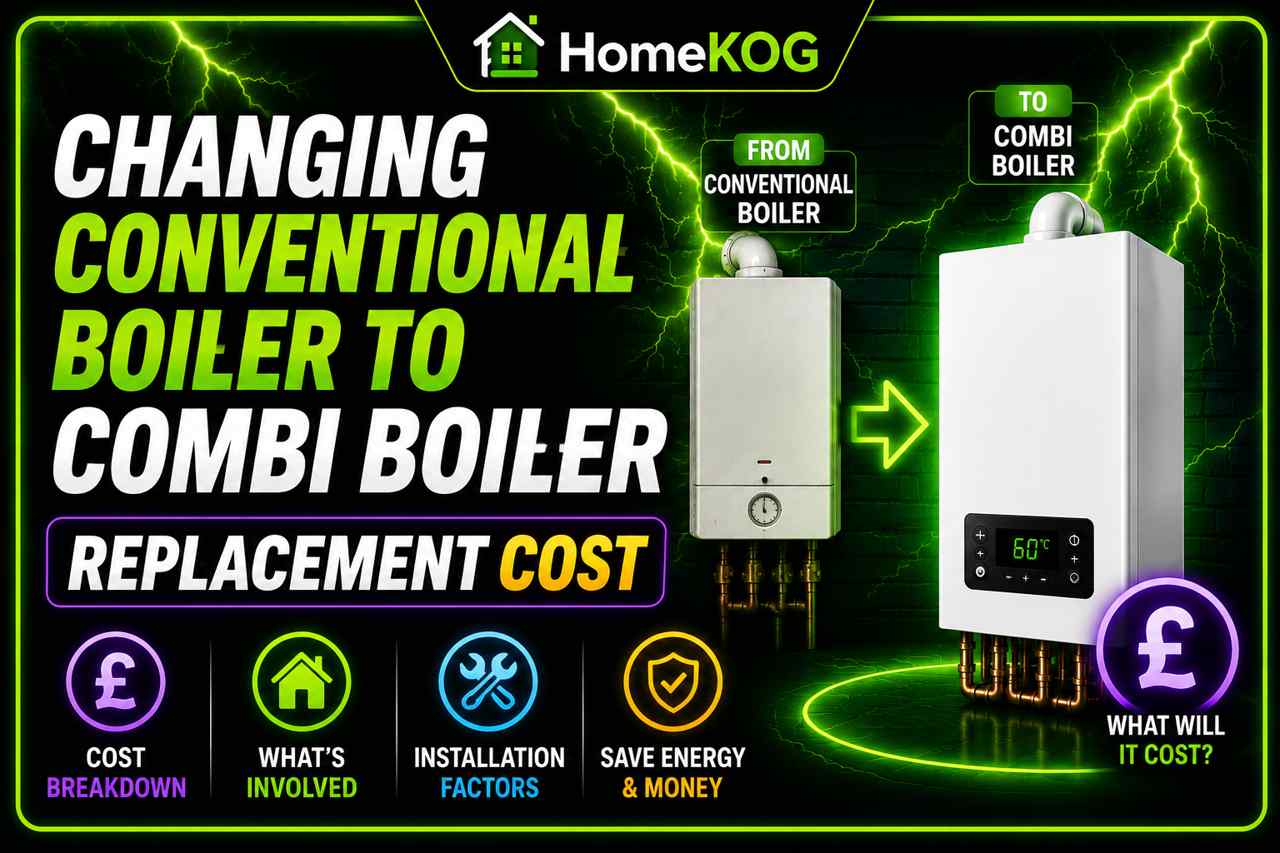

Converting to a Combi Boiler in 2026: Costs, Process & Is It Worth It?
Quick Answer: Converting from a conventional, system, or back boiler to a combi boiler typically costs between £2,500 and £4,500 in 2026, depending on the complexity of the work and your location. The conversion includes removing the old boiler, hot water cylinder, and cold water storage tanks, installing the new combi, and upgrading the pipework. Most conversions take two days to complete and must be carried out by a Gas Safe registered engineer. back boiler installation expenses explained can vary significantly based on different factors, including the type of boiler you choose and any additional modifications needed for your home. It’s crucial to factor in not just the initial installation costs but also potential ongoing maintenance and energy efficiency savings. Understanding these expenses can help you make a more informed decision about your heating system.
Switching to a combi boiler is one of the most common heating upgrades UK homeowners make, and for good reason. Removing the hot water cylinder from the airing cupboard and the cold water tank from the loft frees up valuable storage space, simplifies the heating system, and — when the right boiler is chosen and correctly installed — delivers improved energy efficiency and lower running costs.
But a combi boiler conversion is not the right choice for every home. This guide covers the full costs, what the process involves, the advantages and limitations, and how to decide whether making the switch is the right decision for your property in 2026.
Get a new boiler quote online here >
Key Facts: Combi Boiler Conversion Relationships
- A combi boiler (combination boiler) is a single compact unit that provides both central heating and domestic hot water on demand, without requiring a separate hot water cylinder or cold water storage tank.
- A conventional boiler (regular or heat-only boiler) is a boiler system that requires both a hot water cylinder and a cold water storage tank in the loft, making it more complex and space-intensive than a combi system.
- A system boiler is a boiler type that requires a hot water cylinder but not a cold water storage tank, and represents an intermediate option between a conventional boiler and a combi.
- A back boiler is an older boiler type installed behind a gas fire in a chimney breast, and converting from one to a combi requires removing the fire, the back boiler unit, and all associated tanks.
- A combi boiler conversion is the process of replacing a conventional, system, or back boiler with a combi boiler, including removal of the old unit, hot water cylinder, and cold water tanks, along with any necessary pipework modifications.
- A Gas Safe registered engineer is the only qualified professional legally permitted to carry out a combi boiler conversion in the UK, and the work must meet current Building Regulations.
- A 22mm gas supply pipe is typically required as part of a combi boiler conversion to ensure adequate gas flow to the new unit.
- A power flush or chemical flush is carried out as part of a combi boiler installation to remove sludge and debris from the existing central heating pipework before the new boiler is connected.
- A smart thermostat such as Hive or Nest is typically installed alongside a new combi boiler to maximise efficiency and provide remote heating control.
- The Energy Saving Trust estimates that switching from an older inefficient boiler to a new A-rated condensing combi boiler can reduce energy bills by up to 40%.
- A storage combi boiler is a hybrid variant that includes an internal hot water storage vessel, making it suitable for larger homes with higher simultaneous hot water demand.
- A conventional boiler conversion to a combi typically adds £800 to £1,200 to the cost compared to a straightforward like-for-like combi boiler replacement, reflecting the additional labour and pipework involved.

How Much Does It Cost to Convert to a Combi Boiler in 2026?
The cost of a combi boiler conversion depends on the type of system being replaced, the complexity of the work, the boiler model chosen, and where the property is located. Regional labour rate differences are significant — a conversion in London will typically cost more than the same job in the north of England.
| Conversion Type | Typical Cost (2026) |
|---|---|
| Replace conventional boiler with combi | Around £2,800 |
| Replace system boiler with combi | Around £2,800 |
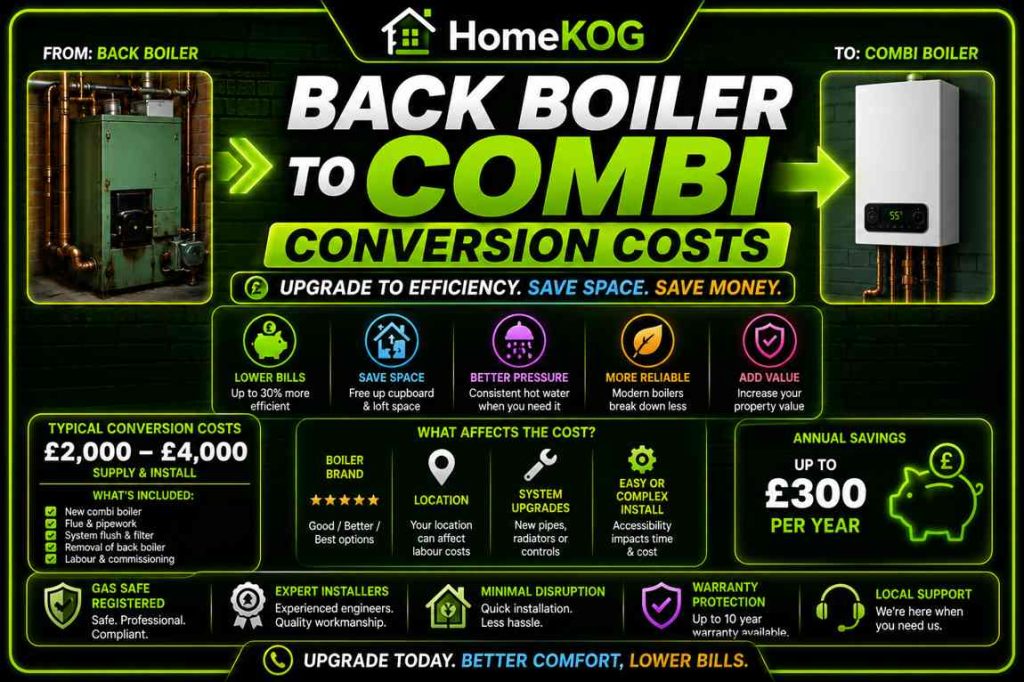
| Replace back boiler with combi | Around £3,500 |
| Remove hot water tank only | £100–£150 |
| Additional conversion complexity (extra labour/pipework) | £800–£1,200 above standard |
| Full conventional boiler to combi conversion range | £2,500–£4,500 |
A straightforward like-for-like combi replacement — where the property already has a combi boiler — takes one day and costs significantly less. A full conversion from a conventional or system boiler takes two days in most cases, as the engineer needs to remove the old system’s additional components, modify the pipework, and commission the new installation correctly.
Back boiler conversions are the most expensive because the unit is embedded in the chimney breast and typically surrounded by a gas fire that must also be removed at the same time. boiler flue installation costs explained can vary significantly depending on the complexity of the job and local labor rates. Additional factors such as the type of flue system and necessary materials also contribute to the overall expense. Understanding these elements can help homeowners budget more effectively for their heating system upgrades.
Why Do People Convert to a Combi Boiler?
The most common reasons UK homeowners choose to convert to a combi boiler are to reclaim the space occupied by the hot water cylinder and loft tanks, to improve energy efficiency, and to simplify the heating system by reducing the number of components that can develop faults over time.
Older conventional and system boilers lose efficiency progressively as their internal components corrode. A non-condensing boiler that was 80% efficient when new may have degraded to 50 to 70% efficiency after ten or more years of use. At that level, a household is effectively wasting £30 to £50 of every £100 spent on energy. A modern A-rated condensing combi boiler operating above 90% efficiency represents a fundamental improvement in how the fuel is being used.
The Energy Saving Trust estimates that switching from an ageing boiler to a new A-rated condensing combi can reduce energy bills by up to 40%, depending on the efficiency of the outgoing boiler. For households where the old boiler is more than 12 to 15 years old, the savings over the life of the new boiler can significantly offset the conversion cost.
Advantages of Converting to a Combi Boiler
The space saving is the most immediately tangible benefit. Removing the hot water cylinder from the airing cupboard returns that space to general storage use — often a significant gain in properties where built-in storage is limited. Removing the cold water tank from the loft eliminates the risk of loft pipework freezing in winter and frees up loft space for insulation or storage.
Combi boilers heat water on demand directly from the mains supply, which means there is no stored volume of hot water cooling down and requiring periodic reheating throughout the day. In a conventional or system boiler setup, the cylinder reheats whether or not the hot water is being used — a continuous source of energy waste that a combi eliminates.
Modern condensing combi boilers are compact enough to be installed in a kitchen cupboard, bedroom wardrobe, or utility room without dominating the space. They integrate readily with smart thermostats and heating controls, giving the homeowner far more precise management of when and how the system operates.
Installation is also simpler and less expensive when the pipework is already broadly in place from the existing system. The conversion cost premium over a like-for-like replacement is largely in the additional labour of removing the old tanks and modifying the pipework connections.
For homes with 0% interest finance options, the full cost of the conversion can be spread across manageable monthly payments without adding to the total outlay.
Disadvantages of Converting to a Combi Boiler
A combi boiler has real limitations that make it the wrong choice for some properties, and these should be assessed honestly before committing to the conversion.
The most important constraint is hot water delivery rate. A combi boiler heats water on demand as it flows through the unit, which means the volume it can deliver at any one moment is limited by its output in kilowatts. A 30kW combi boiler produces a flow rate of approximately 12 to 14 litres per minute — sufficient for a single shower or bath tap at a time, but not for two showers running simultaneously.
For larger homes with two or more bathrooms in frequent simultaneous use, a combi boiler will struggle to meet demand without a noticeable drop in water temperature or pressure. In these properties, a system boiler with a properly sized hot water cylinder is almost always the more practical choice. When considering options, it’s essential to look at combi boiler efficiency comparisons to understand how different models stack up against one another. Homeowners should evaluate the specific needs of their households and the efficiency ratings of various brands. Additionally, factors like installation costs and ongoing energy consumption play crucial roles in the final decision-making process.
The conversion also carries a significant upfront cost. Moving from a conventional system to a combi is not cheap, and for properties with older pipework that may not be compatible with the higher mains pressure delivered by a combi, additional work may be required before the installation can proceed.
Can I Convert a Back Boiler to a Combi?
Yes, but it is the most involved type of conversion. A back boiler is installed inside the chimney breast behind a gas fire, typically from cast iron or heavy-duty materials. Removing it requires taking out the gas fire first, then extracting the back boiler unit itself — a physically demanding process that requires careful management of the chimney space.
Once the back boiler is removed, the associated water tanks and pipework must also be decommissioned and removed. The new combi boiler is then installed in a more accessible location — typically in the kitchen — with new pipework connections run to the central heating circuit and cold water mains supply.
Back boiler conversions typically cost around £3,500 and should be budgeted for two full days of engineer time in most cases.
Combi Boiler vs System Boiler: Which Is Right for Your Home?
| Factor | Combi Boiler | System Boiler |
|---|---|---|
| Hot water storage | Not required | Requires hot water cylinder |
| Cold water tank | Not required | Not required |
| Simultaneous hot water outlets | One at a time | Multiple simultaneously |
| Best suited to | Smaller homes, 1–2 bathrooms | Larger homes, 2+ bathrooms |
| Space required | Minimal | Moderate (for cylinder) |
| Installation complexity | Lower | Higher |
| Running cost | Lower for smaller households | Better for high-demand households |
| Mains pressure required | Yes | Less critical |
What Does the Conversion Process Involve?
Once the conversion is scheduled, a Gas Safe engineer will typically spend two days at the property working through the following steps. The process begins with draining the existing central heating system and removing the old boiler. The hot water cylinder and the cold water storage tanks in the loft are then removed and disposed of.
Where required, the gas supply pipe is upgraded to 22mm to ensure sufficient gas flow to the new combi boiler. The new boiler is then positioned and installed in its new location, with pipework connections run to the cold mains supply, the gas supply, the central heating circuit, the flue, and the condensate drain.
The central heating system receives a chemical or power flush to remove sludge and debris that has accumulated in the pipework before the new boiler is connected. This is an important step — installing a new boiler onto a dirty system can cause early heat exchanger damage and may invalidate the manufacturer warranty.
A smart thermostat such as Hive or Nest is installed and paired with the new boiler, the system is filled and pressurised, and all safety checks and commissioning procedures are completed. Building Regulations certification is issued, and the engineer walks the homeowner through how to operate the new system before leaving.
Is Converting to a Combi Boiler Worth It?
For the right home, yes — unambiguously. A smaller property with one or two bathrooms, modest simultaneous hot water demand, and an ageing conventional or system boiler will benefit significantly from the switch. The space gain, improved efficiency, lower running costs, and simplified system make conversion a sound investment that pays back meaningfully over time.
For larger homes where multiple simultaneous hot water outlets are regularly needed, the case is less clear. A new system boiler with a modern hot water cylinder may serve those properties better than a combi, and the conversion cost would be better directed towards that solution rather than a combi that will struggle to keep up with demand.
The honest starting point is an assessment of the property’s actual hot water usage patterns. If simultaneous demand from multiple bathrooms is a regular occurrence, discuss a system boiler replacement with the engineer. If the household is typically using one tap or shower at a time, a combi conversion is very likely to serve them well.
Frequently Asked Questions
How much does it cost to convert from a conventional boiler to a combi in 2026?
A conventional boiler to combi conversion typically costs around £2,800 as an average for the UK in 2026, with the full range running from £2,500 to £4,500 depending on the complexity of the work, the boiler model, and the property’s location. Back boiler conversions cost more — around £3,500 — due to the additional work required to extract the unit from the chimney breast. Regional variation is significant, with installations in London and the south typically costing more than those in other parts of the UK.
How long does a combi boiler conversion take?
Most combi boiler conversions take two days to complete. This is longer than a like-for-like combi replacement, which can typically be done in one day, because the conversion requires removing the old boiler, the hot water cylinder, and the cold water storage tanks, modifying the pipework, and commissioning the new installation. Complex conversions involving difficult access, back boilers, or significant pipework alterations may take longer.
Is a combi boiler suitable for a large home?
A combi boiler is generally suitable for smaller homes with one or two bathrooms where hot water outlets are not in simultaneous use. For larger homes with multiple bathrooms where two or more showers or taps are regularly running at the same time, a system boiler with a correctly sized hot water cylinder is almost always the better choice. The engineer carrying out the installation assessment will be able to advise definitively based on the specific property and household usage patterns.
Can I convert a back boiler to a combi boiler?
Yes. A back boiler can be replaced with a modern combi boiler, but it is the most complex and expensive type of conversion. The gas fire must be removed first, then the back boiler unit extracted from the chimney breast, followed by removal of all associated tanks and pipework. The new combi boiler is installed in a more accessible location, typically the kitchen. The total cost for a back boiler to combi conversion is typically around £3,500.
Will converting to a combi boiler save money on energy bills?
For most households replacing an ageing conventional boiler with a modern A-rated condensing combi, yes. The Energy Saving Trust estimates that switching from an older inefficient boiler to a new A-rated condensing model can reduce energy bills by up to 40%, depending on how inefficient the outgoing boiler has become. The savings are most pronounced where the existing boiler is more than twelve to fifteen years old and has degraded in efficiency from its original rating.
Do I need a power flush when converting to a combi boiler?
Yes, in most cases. A chemical or power flush is carried out as part of the conversion process to remove sludge and debris from the existing central heating pipework before the new combi boiler is connected. Installing a new boiler onto a dirty system risks early heat exchanger damage and can invalidate the manufacturer warranty. A power flush costs between £300 and £600 depending on system size and is typically included within the overall conversion quote.
What is a storage combi boiler and is it suitable for larger homes?
A storage combi boiler is a variant that includes an internal hot water storage vessel, typically holding between 30 and 50 litres of pre-heated water. This means it can deliver hot water at a higher flow rate than a standard on-demand combi, making it more capable of serving homes with higher simultaneous hot water demand. For households that want the space-saving and efficiency benefits of a combi but need more hot water capacity than a standard model provides, a storage combi is worth considering as an alternative to a full system boiler setup.
Conclusion
Converting to a combi boiler is one of the most practical and rewarding heating upgrades available to UK homeowners in 2026. The combination of space saving, improved efficiency, reduced running costs, and a simplified system that is easier and less expensive to maintain makes it the right choice for the majority of smaller and medium-sized homes.
The key considerations before committing are whether the property’s hot water demand can be met by a combi — particularly if multiple bathrooms are in frequent simultaneous use — and whether the budget allows for the conversion costs rather than a less disruptive like-for-like replacement.
For homes where a combi is the right fit, the investment pays back through lower energy bills, reclaimed space, and a new manufacturer warranty that protects against repair costs for years to come. Always use a Gas Safe registered engineer for the installation, ensure the existing system is flushed before the new boiler is connected, and take full advantage of any available finance options to spread the cost comfortably.