
Beep Patterns of Carbon Monoxide Alarms
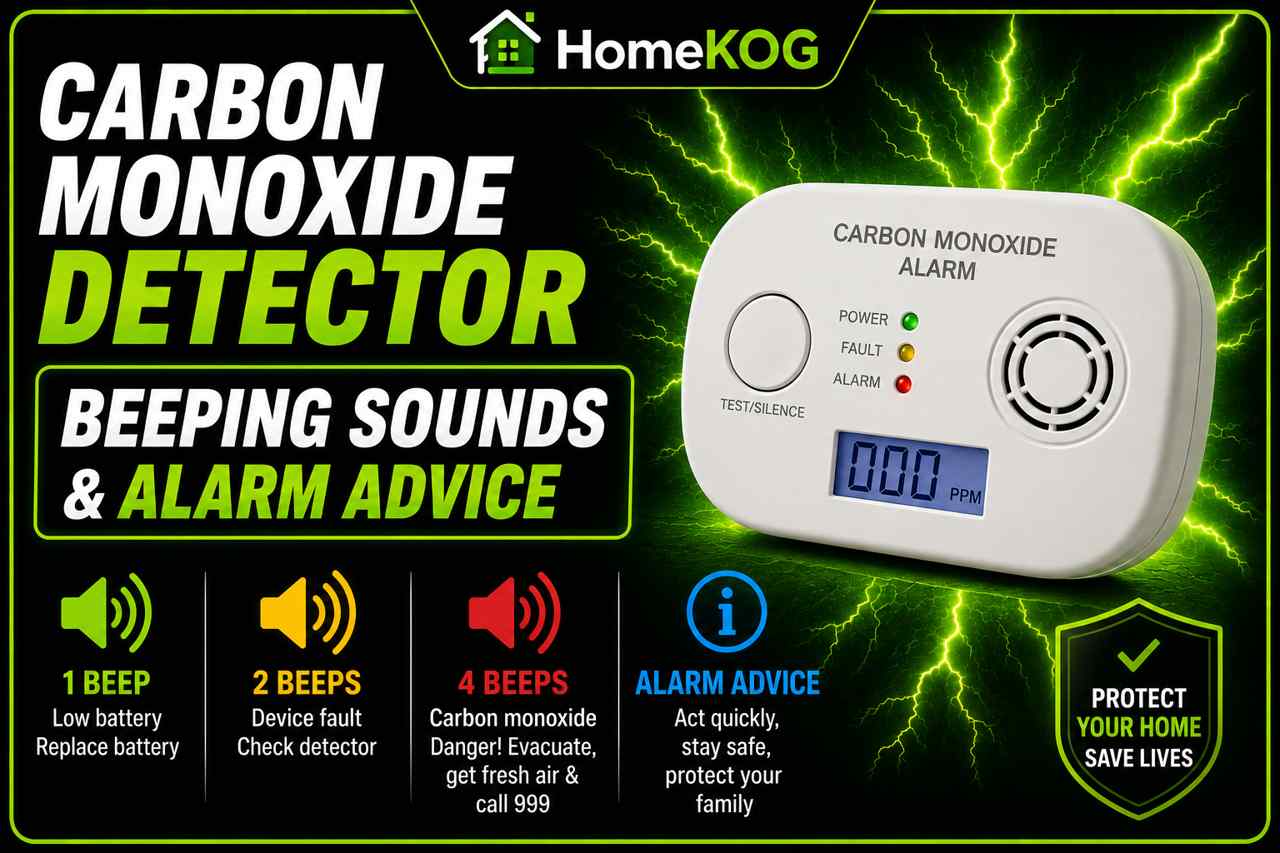
UK carbon monoxide detectors follow BS EN 50291 standards. Four loud beeps followed by a pause (repeating) means dangerous levels of carbon monoxide are present and requires immediate action. A single chirp every 30–60 seconds usually indicates a low battery or that the unit has reached the end of its life and needs replacing.
Immediate Actions for Different Alerts
If you hear four beeps and a pause, evacuate everyone to fresh air straight away, including pets, and call the National Gas Emergency Service on 0800 111 999. Do not re-enter the property until a Gas Safe registered engineer has declared it safe.
For a single chirp every 30–60 seconds, replace the battery immediately. If the chirp continues after a fresh battery, the detector has reached the end of its life and must be replaced with a new BS EN 50291 compliant unit.
Dangers of a Carbon Monoxide Alarm Beeping
Carbon monoxide is a colourless, odourless, and tasteless gas that can escape from a faulty boiler, blocked flue, or poorly maintained appliance. Prolonged exposure causes carbon monoxide poisoning with symptoms that include headaches, dizziness, nausea, shortness of breath, confusion, and drowsiness. In severe cases it leads to unconsciousness, organ damage, or death. A beeping carbon monoxide detector gives you the only warning you will receive.
Recognising Carbon Monoxide Poisoning Symptoms
Early signs often mimic flu or tiredness. Seek fresh air and medical help immediately if anyone in the household shows headaches, weakness, dizziness, nausea, vomiting, shortness of breath, confusion, blurred vision, or drowsiness after the alarm has sounded.
Troubleshooting Common CO Detector Beeps
| Symptom | Likely Cause | Recommended Action |
|---|---|---|
| Four beeps + pause (repeating) | Dangerous CO levels present | Evacuate, call 0800 111 999, contact Gas Safe engineer |
| Single chirp every 30–60 seconds | Low battery or end-of-life | Replace battery; if chirp continues, replace detector |
| Continuous beeping | Detector malfunction or high CO | Evacuate and call emergency services |
| Beeping after power cut | Low battery or post-outage false alarm | Test unit and replace battery if needed |
| No sound despite known CO risk | Expired or faulty detector | Replace immediately with new BS EN 50291 unit |
Ensuring Proper Function of Carbon Monoxide Detectors
Test your detector weekly and replace batteries every six months. During your annual boiler service, ask the Gas Safe registered engineer to check the unit and perform a boiler flue inspection at the same time. Most detectors last five to seven years; replace them on or before the expiry date shown on the label.
What Should You Do if Your Carbon Monoxide Detector Beeps While Experiencing Viessmann F2 Fault Code?
If your carbon monoxide detector beeps while you encounter a Viessmann F2 fault code, take immediate action. First, evacuate the area and ensure fresh air circulation. Then, consult a professional for a thorough inspection. Prioritize safety by understanding Viessmann F2 fault code solutions for proper diagnosis and resolution.
Installation Tips for Optimal Carbon Monoxide Detection
Install a carbon monoxide detector in every room containing a fuel-burning appliance and within 3 m of bedrooms. Mount units on the wall at head height or on the ceiling, at least 150 mm from walls and 1–3 m horizontally from the appliance. Avoid bathrooms, areas near windows or doors, and locations directly above cookers or heaters.
What to Do After Addressing the Beeping Alarm
Once the immediate danger has passed and the property is declared safe by a Gas Safe registered engineer, arrange a full inspection and repair of the suspected source—usually a faulty boiler, blocked flue, or leaking appliance. Implement ongoing prevention by scheduling annual gas safety checks and never attempting gas work yourself.
How Can Plumbing Issues Affect the Performance of a Carbon Monoxide Detector?
Carbon monoxide detectors can be affected by plumbing issues, particularly if there are leaks or blockages. For UK homes, addressing these problems is crucial. Implementing effective plumbing and drainage solutions for UK homes ensures proper ventilation and reduces the risk of harmful gas build-up, keeping residents safe and healthy.
Frequently Asked Questions
What do I do if my carbon monoxide detector is beeping?
Evacuate everyone to fresh air immediately. If you hear four beeps and a pause, call the National Gas Emergency Service on 0800 111 999. For a low-battery chirp, replace the battery or the entire detector.
Why is my carbon monoxide alarm beeping then stops?
Four beeps and a pause indicate carbon monoxide is present; move to fresh air and call 0800 111 999. A single beep every minute usually means low battery—replace it straight away.
How many beeps means carbon monoxide?
Four loud beeps followed by a pause (repeating) signals dangerous carbon monoxide levels. Treat this as an emergency and evacuate immediately.
Why is my carbon monoxide detector beeping when the power is out?
It is usually caused by a low battery or a false alarm after the outage. Test the unit and replace the battery. If the chirp continues, fit a new detector.
How often should I change the batteries in my carbon monoxide detector?
Replace batteries every six months and test the alarm weekly. Replace the entire detector every five to seven years or at the manufacturer’s expiry date.