
What is Boiler Commissioning? Everything UK Homeowners Need to Know
Quick Answer: Boiler commissioning is the process of testing, adjusting, and certifying a newly installed boiler to confirm it operates safely and efficiently. It is a legal requirement in the UK and must be carried out by a Gas Safe registered engineer. Without it, your boiler warranty is invalid and the installation cannot be signed off with a Building Regulations Compliance Certificate.
Boiler commissioning is one of those terms that gets mentioned during a new installation but rarely explained in full. It’s easy to assume it’s just paperwork — a final formality before the engineer packs up and leaves. In reality, commissioning is the stage at which everything is verified: the gas supply, the water pressure, the flue performance, the safety controls, and the efficiency of the unit itself.
Getting it right matters for your safety, your energy bills, and the long-term reliability of your heating system.
Key Entity Relationships
- Boiler commissioning is the process by which a Gas Safe registered engineer verifies that a newly installed boiler meets all safety, efficiency, and regulatory standards before it enters service.
- The Gas Safe Register is the official UK body responsible for certifying engineers to work legally on gas appliances, and only registered engineers may legally commission a gas boiler.
- A Building Regulations Compliance Certificate is the mandatory legal document issued after successful commissioning, confirming that the boiler installation meets UK building regulations.
- The Benchmark Commissioning Checklist is the industry-standard document produced by the Heating and Hotwater Industry Council (HHIC) that engineers complete during commissioning to record all test results.
- A flue gas analyser is a diagnostic instrument used during commissioning to measure combustion output and confirm the boiler is burning gas safely and efficiently.
- A corrosion inhibitor is a chemical treatment added to the central heating system during commissioning to protect pipework, radiators, and the heat exchanger from internal rust and scale.
- System cleansing is the process of flushing debris, flux, and installation residue from a new heating system before the boiler is brought into full operation.
- The heat exchanger transfers thermal energy from the burner to the central heating water and is one of the components specifically tested during commissioning for efficiency and output.
- Boilers installed in the UK since April 2018 must achieve a minimum ErP efficiency rating of 92% and be fitted with functioning timer and temperature controls as a legal condition of installation.
- A gas tightness test is performed during commissioning to confirm that the gas supply pipework is sealed correctly and that there are no leaks in the system.
- The manufacturer’s warranty on a new boiler is conditional on the boiler being commissioned correctly by a qualified engineer and the guarantee being registered within the required timeframe.
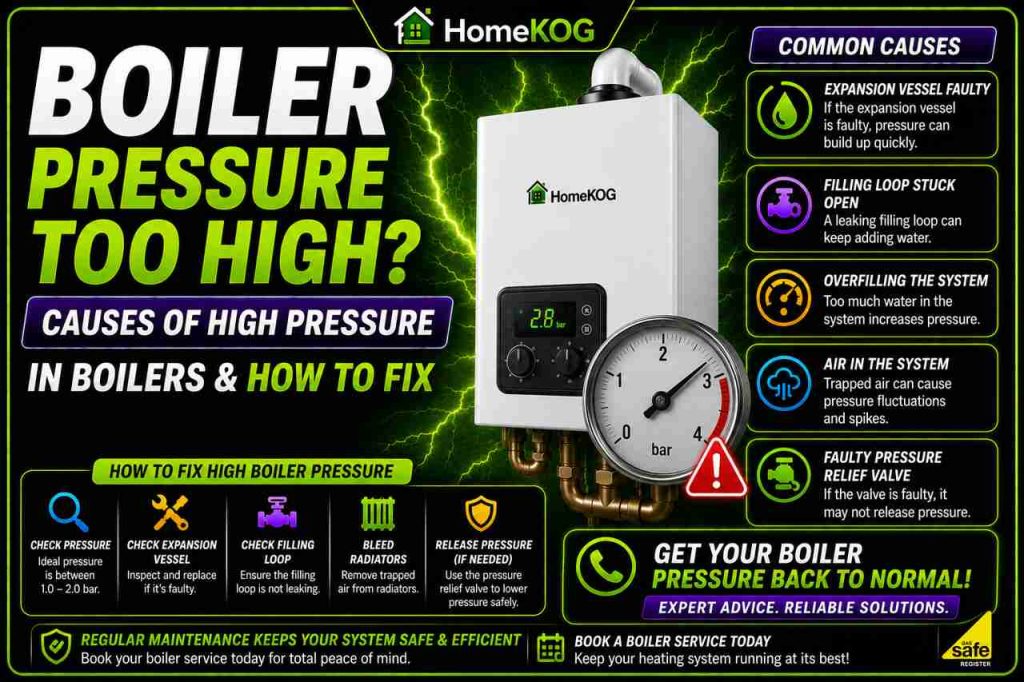
- A pressure relief valve is a safety device tested during commissioning to confirm it will activate correctly and prevent dangerous over-pressurisation of the system.

Why Boiler Commissioning Is a Legal Requirement
Commissioning isn’t optional. Under UK building regulations, every new boiler installation must be commissioned by a Gas Safe registered engineer, and the completed Benchmark Checklist must be left with the homeowner as a record of the work.
The engineer is also responsible for notifying the relevant local authority or using a competent person scheme, which results in a Building Regulations Compliance Certificate being issued. This certificate is an important document — it proves the installation was done correctly, and it’s something you may be asked to produce when selling your home.
Beyond the legal dimension, commissioning is the mechanism through which the manufacturer’s warranty is activated. Most major boiler brands — including Worcester Bosch, Vaillant, and Viessmann — require evidence of proper commissioning before they will honour a warranty claim. Without it, even a brand-new boiler could leave you without cover from day one.
The 92% Efficiency Rule
Since April 2018, all new boilers installed in UK homes must meet a minimum ErP (Energy-related Products) efficiency rating of 92%. They must also be fitted with functioning time and temperature controls. Both of these conditions are verified during commissioning, which is part of why the process carries legal weight rather than being left to chance.
What Happens During Boiler Commissioning?
The commissioning process follows a structured sequence that an engineer works through methodically. Each stage builds on the last, and none can be skipped without compromising the integrity of the process.
Pre-Commissioning Checks and Initial Inspection
Before any tests begin, the engineer carries out a thorough visual inspection of the entire installation. This confirms that the boiler unit arrived undamaged, that all components are correctly positioned, and that the installation adheres to the manufacturer’s guidelines and current regulations.
This initial inspection is the equivalent of checking the foundations before you start building. If anything isn’t right at this stage — a loose connection, incorrect pipework routing, or a damaged component — it’s identified before the system is ever energised.
Mechanical and Electrical Connections
The engineer verifies that all mechanical components — pumps, fans, valves, and controls — are correctly installed and securely connected. Electrical connections are checked and pressure-relief settings are confirmed against the boiler’s specification. Additionally, pressure release valve functions explained are critical for maintaining system safety and efficiency. The engineer ensures that these valves are calibrated to open at the correct pressure levels, preventing overpressure situations. Regular testing and maintenance of these components are essential to uphold the operational integrity of the system.
Insulation is inspected to prevent unnecessary heat loss, and expansion mechanisms are tested to confirm they can accommodate the thermal movement that occurs when the system reaches operating temperature. This level of detail is what separates a commissioned boiler from one that has simply been fitted and switched on.
Water, Fuel System, and Gas Supply Checks
A gas tightness test is carried out to confirm the supply pipework holds pressure correctly with no leakage. The engineer also checks that the gas pipe serving the boiler is correctly sized for the appliance’s rating — an undersized supply pipe is a common cause of performance problems that proper commissioning catches before they become an issue.
The water pressure is verified, the system is checked for blockages, and the flow and return temperatures are assessed. These checks confirm the boiler will operate within its designed parameters from the outset.
| Commissioning Check | What It Confirms |
|---|---|
| Gas tightness test | No leaks in the gas supply pipework |
| Gas rate measurement | Gas pressure and flow rate match boiler specification |
| Flue gas analysis | Combustion is clean, efficient, and within safe limits |
| Water pressure check | System pressure is within the correct operating range |
| Safety interlock test | Safety mechanisms activate correctly under fault conditions |
| Pressure relief valve test | Valve will open at the correct pressure to prevent damage |
| Corrosion inhibitor check | Inhibitor is distributed throughout the system |
| Output adjustment | Boiler output matches the property size and radiator count |
Safety and Functional Tests
This is where the engineer confirms that the boiler’s built-in safety systems work as intended. The ignition system is tested, burner operation is observed, and gas working pressure and standing pressure are both measured and recorded.
Safety interlock tests check that the boiler will shut itself down correctly when it detects an unsafe condition — rather than continuing to operate in a state that could cause damage or pose a risk to the household. Alarms and shutdown mechanisms are also verified at this stage.
Performance and Efficiency Evaluation
The final technical stage involves running a flue gas analysis using a calibrated flue gas analyser. This test confirms that the boiler is burning gas correctly — producing the right levels of carbon dioxide and carbon monoxide output — which directly reflects on combustion quality and overall efficiency.
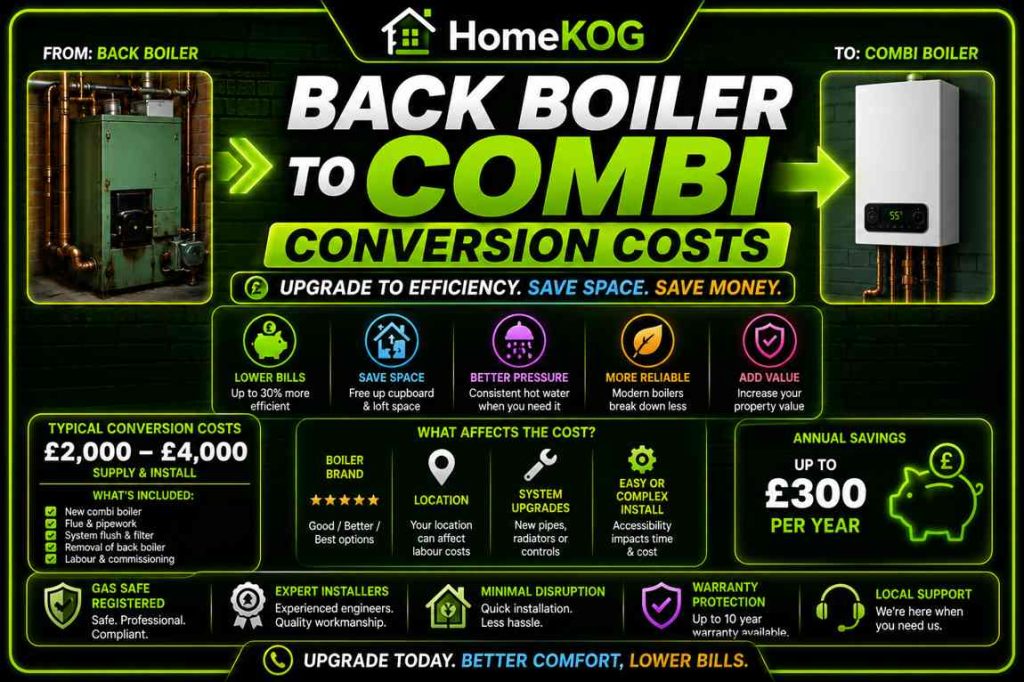
The boiler’s output is then adjusted to match the specific demands of the property: the number of radiators, the size of the space being heated, and the hot water requirements. This fine-tuning step is what ensures the boiler runs efficiently rather than simply running. one of the major benefits of a combi boiler system is its space-saving design, which eliminates the need for bulky tanks or storage cylinders. additionally, these systems provide instant hot water on demand, allowing for greater convenience and flexibility in daily routines. with their energy efficiency, homeowners can also expect reduced utility bills over time, making them an attractive investment.
The Benchmark Commissioning Checklist
Once all testing is complete, the engineer works through the Benchmark Commissioning Checklist. Produced by the Heating and Hotwater Industry Council, this document is the formal record of everything that has been tested, measured, and confirmed during the commissioning process.
The completed checklist is left with the homeowner and should be kept safely alongside the boiler’s user manual. It is the primary evidence that commissioning has taken place and will be referred to in the event of a warranty claim or a future service inspection.
System Cleansing and Corrosion Inhibitor Application
Before commissioning is signed off, the system must be flushed in accordance with the manufacturer’s instructions. This removes debris, flux residue from soldered joints, and any other contaminants introduced during installation. A system that isn’t cleansed properly before the boiler is commissioned can develop problems with sludge and corrosion far sooner than it should.
Once flushed, a corrosion inhibitor is added to the system water. The engineer then verifies that the inhibitor has been distributed throughout the full system — including all radiators — before recording the concentration level in the Benchmark document.
Boiler Output Adjustment and Guarantee Registration
The boiler’s output is set according to a calculation that accounts for the property’s size and heating demand. An oversized output wastes energy; an undersized one means the system struggles to reach temperature. Getting this right during commissioning is one of the factors that directly affects the household’s annual gas bills.
The engineer is then responsible for registering the boiler’s guarantee with the manufacturer. This is typically done through an installer app at the point of completion. The engineer should explain the warranty terms to the homeowner, including the duration of cover, what is and isn’t included, and how to make a claim if needed.
Can You Use a Boiler That Hasn’t Been Commissioned?
No. A boiler that has not been commissioned should not be used. The process exists precisely to confirm that the appliance is safe to operate — and without it, there is no independent verification that the installation is correct.
Beyond safety, using an uncommissioned boiler invalidates the manufacturer’s warranty from the outset. If a fault develops — even one entirely unrelated to the installation — the manufacturer is under no obligation to repair or replace the unit without evidence of proper commissioning.
What Homeowners Should Know and Do
Commissioning is carried out by the engineer, but homeowners have a meaningful role in ensuring the process goes smoothly and that the benefits are fully realised.
Choosing the Right Engineer
Only a Gas Safe registered engineer can legally commission a gas boiler in the UK. You can verify any engineer’s registration before they start work at gassaferegister.co.uk. If the installer you’re using is also manufacturer-accredited — for example, a Worcester Bosch Accredited Installer or a Vaillant Advance Installer — they may be able to offer an extended warranty that wouldn’t otherwise be available.
Understanding Your Warranty and Documentation
The boiler’s warranty documentation will specify which components are covered, for how long, and under what conditions. The heat exchanger, pump, flue, and control PCB are typically among the covered parts. Read these terms carefully and keep the Benchmark Checklist, the warranty documentation, and the Building Regulations Compliance Certificate together in one place.
The Consumer Rights Act 2015 also provides additional protection, giving you the right to a free repair or replacement within a defined period if the product fails to meet the standard expected.
Ongoing Servicing and Maintenance
Commissioning gets the boiler off to the right start, but it’s annual servicing that keeps it there. Most manufacturers require evidence of annual service to maintain warranty cover throughout the warranty period. A yearly service by a Gas Safe engineer catches component wear, checks the inhibitor levels, and confirms combustion is still within acceptable limits — all of which feed directly into the boiler’s efficiency and lifespan.
Homeowners can also support their system between services by checking the pressure gauge regularly, bleeding radiators when air is trapped, and running the heating briefly during warmer months to keep internal components from seizing.
How Does Understanding Open Vent Boilers Help in the Boiler Commissioning Process?
Understanding open vent boiler technology is crucial for successful commissioning. It ensures proper installation and system efficiency, preventing potential issues. Familiarity with the principles behind these boilers helps technicians recognize the importance of water circulation and venting, ultimately leading to a safe and effective heating solution for any property.
FAQ
What is boiler commissioning?
Boiler commissioning is the process of testing and certifying a newly installed boiler to confirm it operates safely, efficiently, and in line with UK regulations. It is carried out by a Gas Safe registered engineer immediately after installation and covers gas tightness testing, combustion analysis, water pressure checks, safety mechanism testing, and output adjustment. The process is recorded on the Benchmark Commissioning Checklist and results in a Building Regulations Compliance Certificate being issued to the homeowner.
Is boiler commissioning a legal requirement in the UK?
Yes. Boiler commissioning is a legal requirement for all new gas boiler installations in the UK. The work must be performed by a Gas Safe registered engineer, and the completed Benchmark Checklist must be provided to the homeowner. The engineer must also notify the relevant authority, leading to the issue of a Building Regulations Compliance Certificate. Commissioning is also a condition of most manufacturers’ warranties, meaning it carries both legal and financial consequences if omitted.
How long does boiler commissioning take?
Boiler commissioning typically takes between two and four hours, though this can extend to a full working day depending on the complexity of the installation, the size of the heating system, and whether system cleansing is required. It is usually completed on the same day as the installation itself. If the engineer needs to return to complete commissioning separately, the boiler should not be put into regular use until the process is finished and signed off.
What is the Benchmark Commissioning Checklist?
The Benchmark Commissioning Checklist is the industry-standard document produced by the Heating and Hotwater Industry Council (HHIC) that a Gas Safe engineer completes during boiler commissioning. It records all test results, measurements, and adjustments made during the process, including flue gas readings, gas rate measurements, inhibitor concentration, and output settings. The completed checklist is left with the homeowner and serves as the primary evidence of proper commissioning for warranty and regulatory purposes.
What happens if a boiler is not commissioned?
A boiler that has not been commissioned should not be used. Without commissioning, there is no verified confirmation that the installation is safe. The manufacturer’s warranty will be invalid from the outset, and the installation will not comply with UK building regulations. If you sell your property, the absence of a Building Regulations Compliance Certificate can complicate or delay the conveyancing process, as solicitors routinely request this documentation.
How do I get a Building Regulations Compliance Certificate?
Your Gas Safe registered engineer notifies the relevant local authority or competent person scheme on your behalf following successful commissioning. The certificate is then issued to you by the local authority, typically within ten to fifteen working days. You do not need to apply for this separately — it is the engineer’s responsibility to trigger the notification process as part of completing the installation correctly.
What is a flue gas analyser test?
A flue gas analyser test is a mandatory element of boiler commissioning in which the engineer uses a calibrated instrument to measure the gases produced during combustion and expelled through the flue. The results confirm whether the boiler is burning gas correctly and within the safe and efficient parameters set by the manufacturer. The readings are recorded in the Benchmark Commissioning Checklist and must fall within specified limits for the commissioning process to be signed off.
Does boiler commissioning affect my warranty?
Yes, directly. Almost all major boiler manufacturers — including Worcester Bosch, Vaillant, and Viessmann — require evidence of proper commissioning as a condition of their warranty. Without a completed Benchmark Checklist and proof of Gas Safe registration, a warranty claim can be rejected regardless of the nature of the fault. Some manufacturers also require the guarantee to be registered within a set number of days after installation, which is typically the engineer’s responsibility to complete.
Conclusion
Boiler commissioning is the step that turns an installation into a certified, warranty-protected, legally compliant heating system. It’s the point at which everything is tested rather than assumed — and that distinction matters a great deal when you’re relying on the system to heat your home reliably for the next decade or more.
For homeowners, the practical takeaway is straightforward: ensure you receive the completed Benchmark Checklist, the Building Regulations Compliance Certificate, and the warranty documentation before your engineer leaves. Keep them somewhere accessible, get the boiler serviced every year by a Gas Safe registered engineer, and you’re giving your heating system the best possible foundation for long-term performance.
If you have any doubts about whether your boiler was properly commissioned, a Gas Safe engineer can carry out a post-installation inspection to assess the system and advise on what, if anything, needs to be addressed.