

What Is an Open Vent Boiler?
Quick Answer
An open vent boiler, also known as a regular or conventional boiler, uses a hot water cylinder and cold water tank to supply heating and hot water. It relies on gravity-fed systems and is ideal for larger or older UK homes with high hot water demand and existing pipework.
Choosing the right boiler is essential for long-term efficiency, comfort, and running costs. Open vent boilers remain a reliable option in many UK homes, especially where traditional heating systems are already in place.
Understanding how they work and where they fit best can help you decide if this system suits your property in 2026.
Open Vent Boiler Entity Relationships
-
Open vent boiler → uses → hot water cylinder and cold water tank
-
Cold water tank → feeds → boiler system via gravity
-
Feed and expansion tank → regulates → system pressure
-
Open vent pipe → releases → excess heat and pressure
-
Boiler → heats → water for radiators and taps
-
Hot water cylinder → stores → heated domestic water
-
Gravity system → reduces → pressure on pipework
-
Older homes → benefit from → low-pressure systems
-
Large households → require → high hot water storage
-
Heat-only boiler → includes → open vent systems
-
Insulation → improves → system efficiency
-
Boiler replacement → easier with → like-for-like systems

What Is an Open Vent Boiler and How Does It Work?
An open vent boiler is a traditional heating system commonly found in UK homes. It uses separate components to heat water and supply it throughout the property.
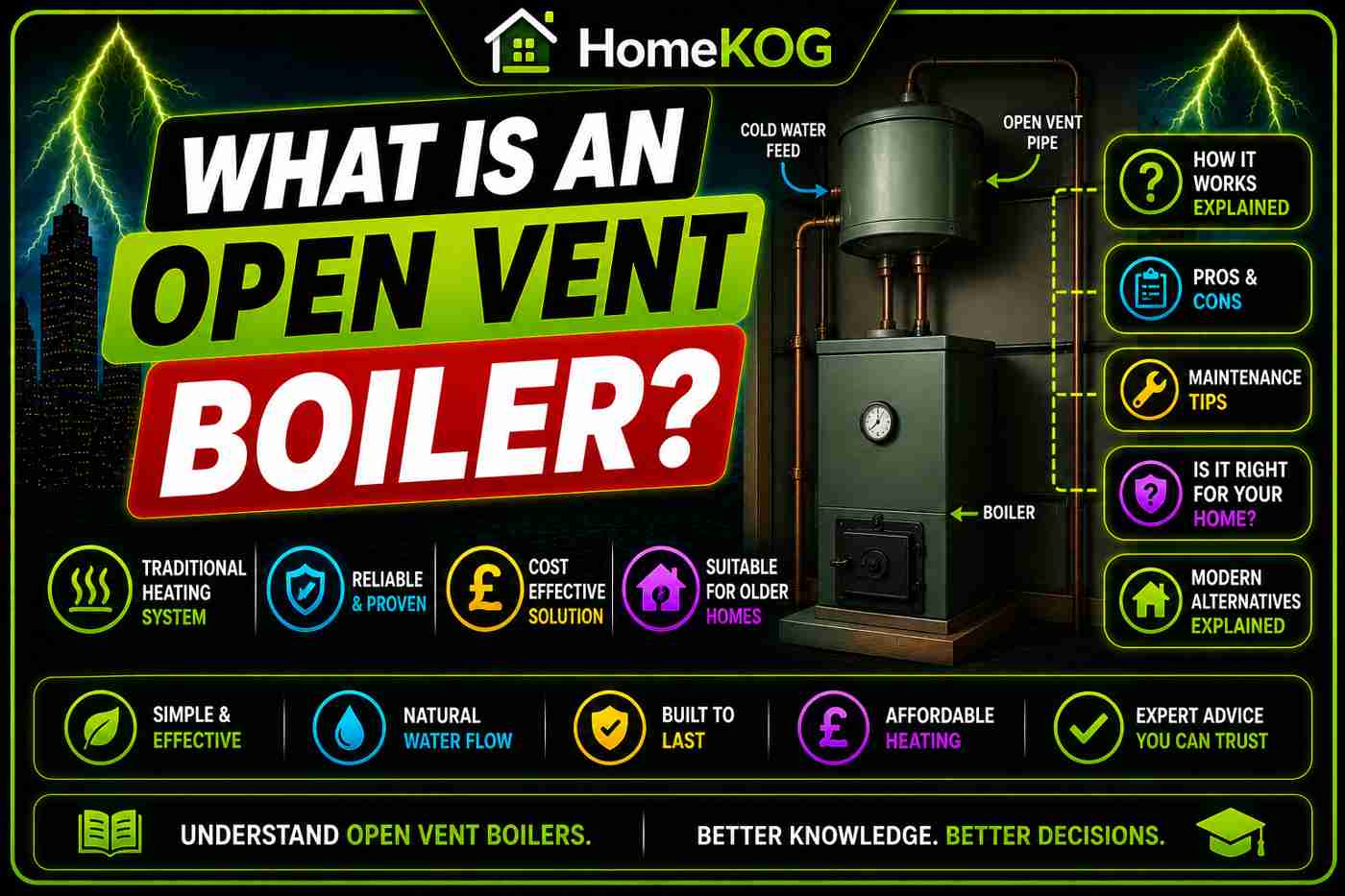
The system includes a boiler, a hot water cylinder, and two tanks.
H3: Key components explained
The cold water storage tank is usually located in the loft. It feeds water into the system using gravity.
A feed and expansion tank manages pressure and allows water to expand safely when heated.
H4: How the system operates
-
Cold water flows from the loft tank into the boiler.
-
The boiler heats the water using gas or another fuel.
-
Heated water circulates through radiators.
-
Some hot water is stored in the cylinder for later use.
-
Excess pressure is released through the open vent pipe.
This process ensures a steady supply of heating and stored hot water.
Open Vent Boiler System Layout
| Component | Location | Function |
|---|---|---|
| Cold water tank | Loft | Supplies water to system |
| Feed & expansion tank | Loft | Regulates pressure |
| Hot water cylinder | Airing cupboard | Stores hot water |
| Boiler unit | Kitchen/utility | Heats water |
| Open vent pipe | Connected to tank | Releases excess pressure |
This setup is typical in older UK properties with traditional heating systems.
Advantages of an Open Vent Boiler
Open vent boilers still offer several practical benefits despite newer alternatives being available.
They are particularly useful in homes with existing infrastructure.
H3: Key benefits
They are simple systems with fewer complex components.
Maintenance costs are typically lower over time compared to pressurised systems.
They work well with older radiators and pipework that may not handle high pressure.
Stored hot water ensures availability even if mains pressure drops.
They are ideal for larger homes with multiple bathrooms.
Disadvantages of an Open Vent Boiler
While reliable, open vent systems are not suitable for every home.
They come with limitations that should be considered carefully.
H3: Key drawbacks
They require more space due to tanks and cylinders.
Heat loss can occur from stored water, reducing efficiency.
They are generally less efficient than combi boilers.
There is a higher risk of sludge and debris entering the system.
Installation and upgrades can be more complex in modern homes.
When Is an Open Vent Boiler the Best Choice?
Open vent boilers are best suited to specific property types and heating demands.
They are particularly effective where high water usage is required.
H3: Ideal property types
Large homes with multiple bathrooms benefit most from stored hot water.
Older properties with ageing pipework are better suited to low-pressure systems.
Homes already using this system can save money by replacing like-for-like.
Switching to a different system may require costly upgrades to pipework and radiators.
Are Open Vent Boilers Efficient?
Open vent boilers can still be efficient when installed and maintained correctly.
Modern versions can achieve high efficiency ratings.
H3: Improving efficiency
Insulating the hot water cylinder helps reduce heat loss.
Using modern controls and thermostats improves performance.
Regular servicing ensures the system runs efficiently.
While less efficient than combi systems, they perform well in high-demand households.
Open Vent Boiler Sizes Guide
Choosing the correct boiler size is essential for performance and efficiency.
| Property Size | Recommended Output |
|---|---|
| 2–3 bedrooms (well insulated) | 7–8 kW |
| 2–3 bedrooms (average insulation) | 9 kW |
| 3–4 bedrooms | 10–12 kW |
| 4+ bedrooms | 14–16 kW |
Correct sizing ensures consistent heating and hot water supply.
How Does a Heat Exchanger Improve the Efficiency of an Open Vent Boiler?
Efficient operation of an open vent boiler hinges on its heat transfer capabilities. By incorporating a heat exchanger, the system maximizes energy transfer, minimizing fuel consumption. For optimal performance, technicians emphasize the importance of understanding boiler heat exchangers, as this knowledge ensures longevity and cost-effectiveness in heating solutions.
FAQs
What is an open vent boiler?
An open vent boiler is a traditional heating system that uses a cold water tank and hot water cylinder to provide heating and stored hot water. It operates using gravity and includes a vent pipe to release excess pressure, making it suitable for older or larger UK homes. Understanding pressure release valve definitions is crucial for ensuring the safety and efficiency of the system. These valves prevent the buildup of excess pressure that can lead to system failures or hazardous situations. Maintenance and regular inspection of these components are essential to prolong the lifespan of the boiler and ensure optimal performance.
How does an open vent boiler work?
An open vent boiler works by drawing water from a loft tank into the boiler, where it is heated. The heated water circulates through radiators and is stored in a cylinder. A feed and expansion tank manages pressure, while an open vent pipe releases excess heat.
What is the difference between an open vent and combi boiler?
An open vent boiler stores hot water in a cylinder and uses tanks, while a combi boiler heats water on demand without storage. Combi boilers are more compact and efficient, whereas open vent systems are better for homes with high hot water demand.
Are open vent boilers still used in the UK?
Yes, open vent boilers are still used in many UK homes, particularly older properties. They remain a practical option where existing pipework cannot handle pressurised systems or where high volumes of hot water are required for multiple bathrooms.
Do open vent boilers need a water tank?
Yes, open vent boilers require both a cold water storage tank and a feed and expansion tank. These tanks supply water and regulate pressure within the system, making them essential components of how the system operates safely and effectively.
Can you replace an open vent boiler with a combi boiler?
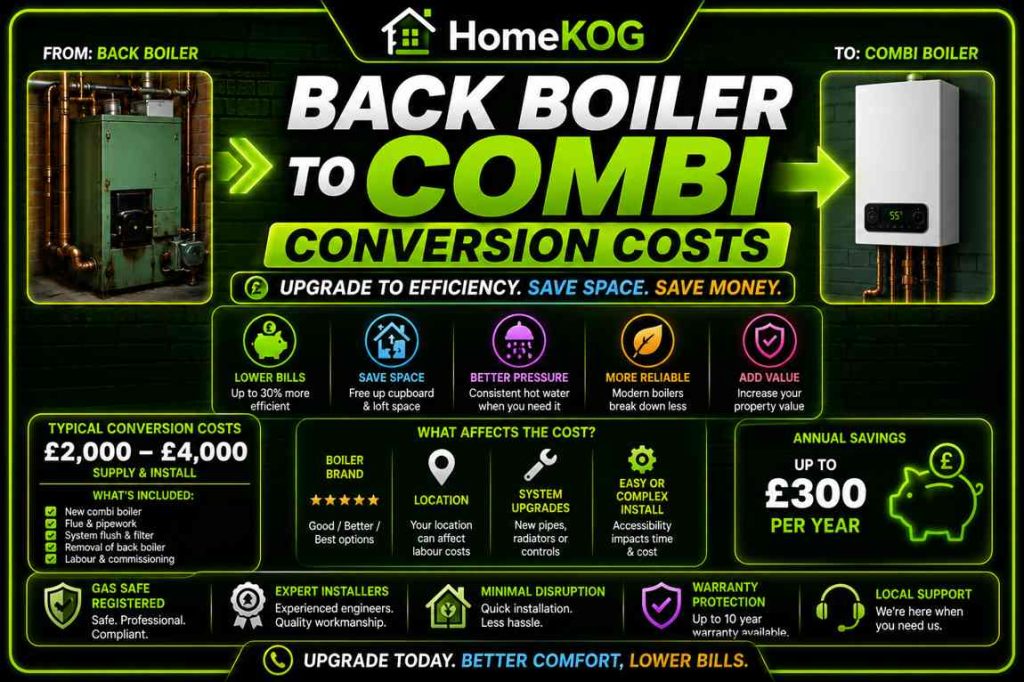
Yes, but it can be costly. Switching to a combi boiler often requires removing tanks, upgrading pipework, and possibly replacing radiators. A like-for-like replacement is usually cheaper and simpler if your current system is still suitable. One of the key benefits of installing a combi boiler is the space-saving design, as it eliminates the need for bulky water tanks. Additionally, combi boilers provide on-demand hot water, which can lead to increased energy efficiency and lower utility bills. This can be particularly advantageous for households with limited space or those looking to reduce their environmental footprint.
Are open vent boilers expensive to run?
Open vent boilers can be slightly more expensive to run than modern combi boilers due to heat loss from stored water. However, in larger homes with high demand, they can still be efficient when properly maintained and insulated.
What homes are best suited to open vent boilers?
Open vent boilers are best for large homes, properties with multiple bathrooms, and older houses with traditional pipework. They are also ideal where consistent hot water supply is needed without relying heavily on mains pressure.
Conclusion
Open vent boilers remain a dependable choice for many UK homes, particularly where space and existing infrastructure support their installation.
They may not be the most modern option, but they excel in properties with high hot water demand and older heating systems.
If your home fits these criteria, an open vent boiler can still deliver reliable performance, steady heating, and long-term value in 2026.