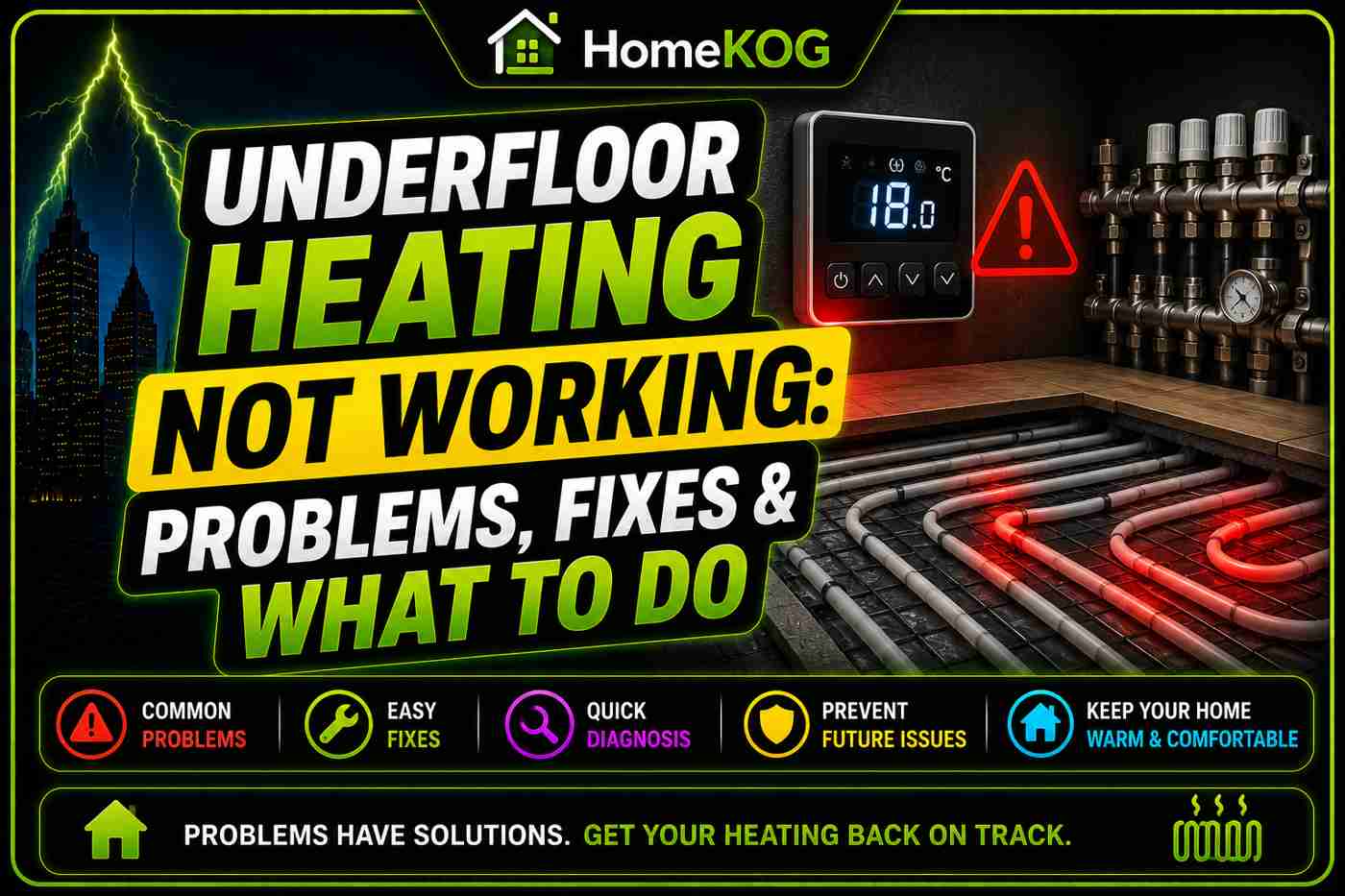


Underfloor heating problems almost always come down to a handful of root causes — trapped air, pressure loss, thermostat faults, actuator failure, or pump issues.
This guide covers both wet (hydronic) and electric underfloor heating systems, with clear steps to help you diagnose what’s wrong. When considering boiler types for home heating, it’s essential to evaluate the specific needs of your space, including the size and insulation of your home. Each type has its advantages, such as energy efficiency and heating speed, which can greatly affect your overall comfort and costs. Additionally, understanding the compatibility of different boilers with various heating systems will ensure you make an informed decision.
Troubleshooting Wet vs Electric Underfloor Heating
Before diagnosing a fault, it helps to know which type of system you have. Wet (hydronic) UFH circulates warm water through pipes embedded in the floor, fed from a boiler or heat pump via a manifold. Electric UFH uses heating cables or mats powered directly from the mains. The two systems share some fault types — thermostat problems, for instance — but most troubleshooting steps differ significantly between them.
The sections below identify which system each issue applies to where relevant.
Common Underflooor Heating Problems and Their Causes
Uneven Heat Distribution (Wet Systems)
Cold patches across a floor — particularly in one zone while others heat normally — usually indicate trapped air, an unbalanced manifold, or debris partially blocking a circuit. Wet UFH systems run at relatively low flow temperatures, typically 35–55°C depending on floor construction and heat source, which makes them more sensitive to flow restrictions than a standard radiator circuit.
Check the manifold — the central distribution unit, usually located in a cupboard or utility area — for any circuits where the flow and return temperature difference (delta T) appears abnormal. A balanced manifold should show similar differential temperatures across all loops. If one circuit is running significantly cooler than the others, it may need balancing via the manifold’s flow regulators.
Trapped air in a specific loop can also cause cold patches. Most manifolds have automatic air vent valves (deaerators), but manual bleeding points are also common. Bleeding the affected circuit and checking that the system pressure remains stable afterwards should resolve air-related cold spots.
Constant Pump Operation (Wet Systems)
A pump that runs continuously without the system reaching setpoint temperature can indicate air in the circuit reducing flow efficiency, a blocked or partially restricted pipe loop, or a failed actuator keeping a zone valve permanently open. Check the manifold actuators — the small motorised heads mounted on each valve — are responding correctly to thermostat signals. A stuck-open actuator will keep a zone calling for heat indefinitely.
If the pump is running but flow temperatures at the manifold are normal and all zones are at temperature, the issue may be with the pump’s own controls rather than the heating circuit.
Low System Pressure (Wet Systems)
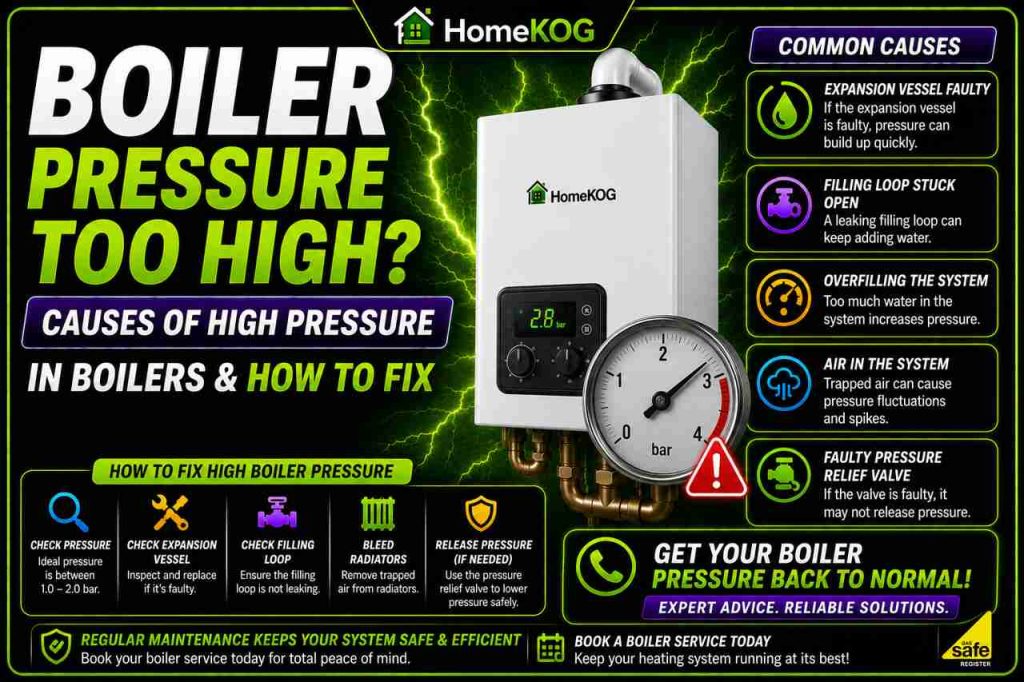
Wet UFH systems operate as sealed, pressurised circuits. Normal operating pressure is typically 1.0–2.0 bar, though the correct range will be specified on your manifold or system documentation. Pressure that drops repeatedly points to a leak — either in the pipework beneath the floor, at a manifold connection, or at a valve fitting.
If the boiler is also part of the system, check the boiler pressure gauge first and top up via the filling loop if pressure has dropped below 1.0 bar. Open the filling loop valves slowly until pressure reaches approximately 1.2–1.5 bar (cold), then close both valves fully. If pressure continues to drop without an obvious cause, contact a heating engineer — locating a leak under a screed floor requires thermal imaging equipment and should not be delayed.
Do not attempt to address high pressure by manipulating the filling loop — this has no effect on existing pressure. A Gas Safe registered engineer can safely reduce pressure via the system’s drain-off point.
Cold UFH Troubleshooting Table
Single Zone UFH Problems
Thermostat Faults
A zone thermostat that isn’t calling for heat — due to a flat battery, incorrect programming, or a failed floor or air sensor — is the most common cause of a single zone not working. Check the obvious first: is the thermostat powered, is the setpoint higher than the current room temperature, and is the timer schedule active?
Many UFH thermostats have a frost protection mode that only activates heating below a set minimum temperature (commonly 5–7°C). If the thermostat appears active but the zone isn’t heating, check it hasn’t been inadvertently switched to frost protection only.
If settings are correct and the zone still won’t heat, the thermostat may need replacing. UFH thermostats are generally straightforward to replace on a like-for-like basis, but if any wiring work is required, it must comply with Part P of the Building Regulations and be carried out by a competent person.
Actuator Failure
Each zone on a wet UFH manifold is controlled by an actuator — a small electrically operated valve that opens when the thermostat calls for heat. A failed actuator may leave a zone permanently closed (no heat) or permanently open (constant heat regardless of thermostat). Actuators can be tested by removing them from the manifold valve and checking manually whether the valve pin is free. Replacement actuators are widely available and straightforward to fit, but confirm compatibility with your manifold brand before ordering.
Trapped Air in a Single Circuit
Air locked in one pipe loop causes localised cold patches and can be identified by a loop running significantly cooler at the manifold return than its neighbours. Bleed the affected circuit using the manifold’s bleed valve, then check that system pressure has remained stable. Re-pressurise via the filling loop if needed.
Whole-System or Multi-Zone Faults
Circulation Pump Failure
The circulation pump drives water from the heat source through the manifold and around all the pipe circuits. If the pump fails, the system will not heat regardless of thermostat or actuator status. Signs of pump failure include a hot boiler with cold floors, unusual noise from the pump housing, or no audible circulation. Pump replacement should be carried out by a qualified heating engineer.
Isolation Valves
Isolation valves on the flow and return connections to the manifold are sometimes inadvertently closed — particularly after maintenance work. If the entire system stops heating suddenly after any work has been carried out, check that all isolation valves are in the open (inline) position before calling an engineer.
Wiring Centre Faults
Most multi-zone wet UFH systems use a central wiring centre to coordinate signals between thermostats, actuators, and the pump/boiler relay. Faults here can affect multiple zones simultaneously. A pump relay stuck in the off position will prevent circulation even if thermostats and actuators are functioning correctly. Wiring centre faults should be assessed by a qualified electrician — do not attempt to inspect live wiring terminals yourself.
Flooring Compatibility
The thermal resistance of your floor covering directly affects how efficiently heat reaches the room. Materials with high thermal conductivity — ceramic and porcelain tiles, natural stone, polished concrete — are the best performers. Engineered timber and luxury vinyl tile (LVT) are also well-suited, provided they are specified as compatible with underfloor heating by the manufacturer.
Thick carpets and high-tog underlays are the most common cause of poor UFH performance in existing installations. The combined TOG value of carpet and underlay should not exceed 1.5 for most systems — some manufacturers allow up to 2.5 tog with appropriately uprated flow temperatures, so check your system documentation. Any flooring change on top of an existing UFH system should be assessed for thermal resistance before installation.
What Should I Check for Underfloor Heating Issues if My Hive Thermostat is Not Functioning Properly?
If your underfloor heating is unresponsive, start by verifying the Hive smart thermostat settings. Check for connectivity issues, ensure the thermostat is paired with your heating system, and examine the power supply. For thorough guidance, consider following some hive smart thermostat troubleshooting tips to identify and resolve the problem efficiently.
Maintenance
A wet underfloor heating system benefits from annual inspection of the manifold — checking valve positions, actuator operation, system pressure, and inhibitor concentration. Water treatment should comply with BS 7593; a correctly dosed corrosion inhibitor protects the pipework and components from internal corrosion.
The pressure relief valve should be tested annually. If it weeps or fails to reseat cleanly, it should be replaced — there is no fixed replacement interval, but a valve that has been operating for more than 10 years without inspection warrants attention.
Electric systems require far less maintenance — an annual check of thermostat operation and a visual inspection of any accessible wiring is typically sufficient.
When to Call a Professional
Call a Gas Safe registered engineer for any fault involving the boiler, sealed system pressure, pump replacement, or suspected pipework leaks. For electric system faults beyond a thermostat swap, contact a qualified electrician who is registered as a competent person under Part P. Leak detection in screed floors requires thermal imaging equipment and should always be handled professionally — early intervention prevents significantly more costly remediation.
Frequently Asked Questions
Why is my underfloor heating not working?
The most common causes are a thermostat fault, trapped air in the system, a failed actuator, low system pressure, or a circulation pump problem. For electric systems, check the circuit breaker and thermostat first. For wet systems, start at the manifold — check pressure, actuator operation, and whether the pump is running.
Why is only one zone of my underfloor heating not working?
A single zone fault usually points to the thermostat, the actuator on that manifold circuit, or trapped air in that specific pipe loop. Check the thermostat is powered and set correctly, inspect the actuator, and bleed the circuit if needed.
What TOG value is safe for underfloor heating?
Most wet UFH systems specify a maximum combined TOG value of 1.5 for carpet and underlay, though some systems can accommodate up to 2.5 tog with adjusted flow temperatures. Check your system documentation or contact your installer before laying new flooring.
How do I reset my underfloor heating thermostat?
Reset procedures vary by manufacturer and model. Consult the manual supplied with your thermostat or search for the specific model number. A generic reset procedure does not exist across UFH thermostat brands.
How often does underfloor heating go wrong?
A correctly installed and commissioned wet UFH system is generally reliable. Most faults trace back to installation errors, incorrect commissioning, or lack of maintenance rather than inherent system failure. Electric systems are similarly reliable but more sensitive to physical damage to cables during flooring work.
When should I call a professional for underfloor heating problems?
Call a professional for any suspected pipework leak, pump failure, wiring centre fault, or situation where system pressure cannot be stabilised. Gas Safe registered engineers should handle any work involving the boiler or sealed wet system. A Part P-registered electrician should address electrical faults in electric systems. In addition to ensuring safety with professional repairs, homeowners should explore affordable heating options for homeowners that maximize efficiency and comfort. By investing in the right heating solutions, you can not only reduce energy bills but also enhance the overall warmth of your living space during colder months. It’s essential to weigh multiple choices and consider long-term benefits to find the best fit for your home.