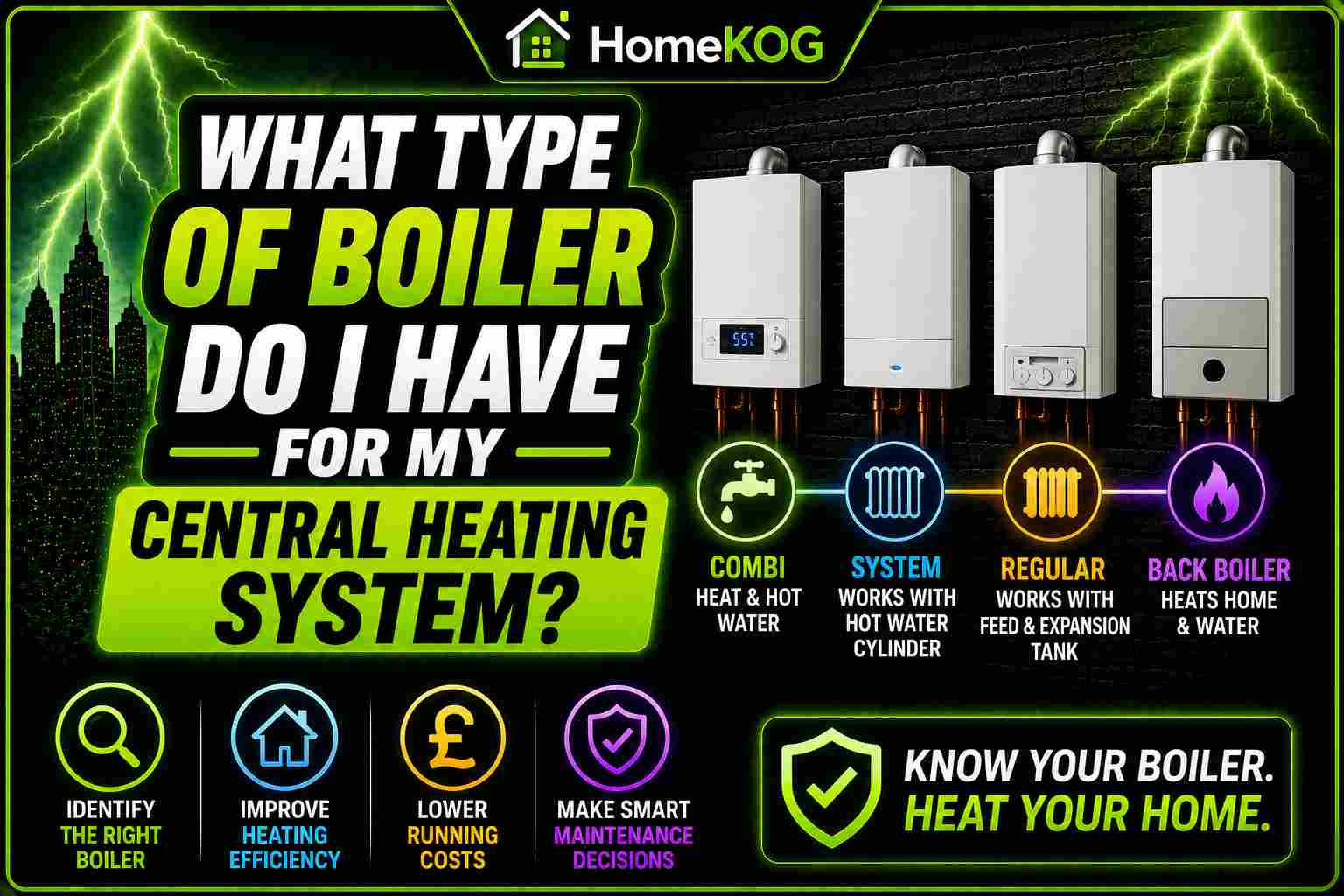

Knowing your boiler type is the quickest way to understand how your heating system works, what it needs to run efficiently, and what’s involved if you want to upgrade or change it.
The Three Main Types of Boiler in UK Homes
Almost every UK home has one of three boiler types: a combi, a system, or a conventional (also called regular or heat-only) boiler. Each one works differently and has a distinct setup you can identify without any technical knowledge. When choosing the best energyefficient boilers for homes, it’s essential to consider your heating needs and the size of your property. Additionally, many modern options come with smart technology that allows for better energy management and savings on utility bills. With the right boiler, you can enhance your home’s comfort while minimizing your environmental impact. boiler types for residential heating can significantly influence your home’s efficiency and energy consumption. Understanding the specifics of each type is crucial for making an informed decision and optimizing your heating system. Furthermore, considering factors like maintenance requirements and longevity will ensure you choose a boiler that meets both your immediate and future heating needs.
The most reliable way to identify your boiler is not by counting pipes but by looking at what else is in your home — specifically whether you have a hot water cylinder in your airing cupboard and a cold water tank in the loft.
How to Identify a Combi Boiler
A combi boiler is a self-contained unit that heats both your central heating water and your domestic hot water directly from the mains — on demand, without storing it. There is no separate hot water cylinder and no cold water tank in the loft. If your boiler is the only unit involved in heating your home and you have no cylinders or loft tanks, you almost certainly have a combi. understanding combi boiler advantages can lead to significant energy savings and more efficient use of space in your home. With their compact design, combi boilers fit easily into small areas, making them a practical choice for modern living. Additionally, their on-demand heating capabilities ensure you have hot water whenever you need it, without the need for extensive storage solutions.
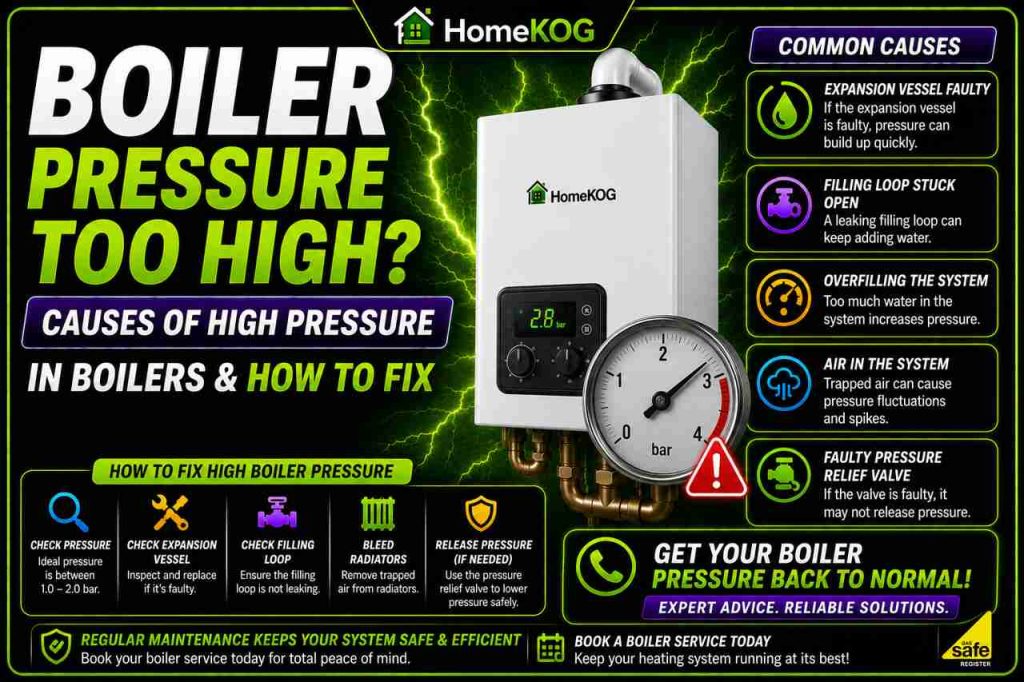
As a rough visual guide, combi boilers typically have around five visible pipe connections at the base: CH flow, CH return, mains cold water in, domestic hot water out, and gas supply. Most modern installations will also have a condensate pipe and a pressure relief valve (PRV) discharge, bringing the total to seven. The pipe count alone is not conclusive — what matters is the absence of external storage. a pressure release valve explained is essential for understanding the safety mechanisms in a combi boiler system. This device prevents pressure build-up within the boiler, automatically releasing water when the pressure exceeds safe limits. Proper installation and maintenance of the pressure release valve are crucial to ensure efficient operation and avoid potential hazards.
Popular combi boiler brands in UK homes include Worcester Bosch, Vaillant, Viessmann, Baxi, and Ideal. When considering the best combi boilers for the UK, it’s important to evaluate factors such as energy efficiency and warranty options. Many homeowners also find that customer service and reliability are key elements in their decision-making process. Brands like Worcester Bosch and Vaillant consistently receive high marks for their performance and support.
How to Identify a System Boiler
A system boiler heats your central heating in the same way as a combi but stores domestic hot water in a separate cylinder — typically in an airing cupboard. All the major components (pump, expansion vessel, pressure relief valve) are built into the boiler itself, so there is no cold water tank in the loft and no external pump on the pipework.
System boilers suit larger homes with more than one bathroom, as the cylinder can supply multiple outlets simultaneously. If you have a hot water cylinder but no cold water tank in the loft, and your boiler has no external pump visible on the pipework, you have a system boiler. The cylinder is often unvented (mains-fed), which means it operates under mains pressure.
How to Identify a Conventional (Regular/Heat-Only) Boiler
A conventional boiler — also called a regular or heat-only boiler — is the oldest configuration and requires the most components. You will have a hot water cylinder in the airing cupboard, a cold water storage tank and a separate feed-and-expansion (F&E) cistern in the loft, and an external pump on the pipework. The system is open-vented, meaning it operates at low pressure fed by gravity from the loft tanks.
This setup was standard in UK homes built before the 1990s. If you have a hot water cylinder, loft tanks, and a pump mounted on visible pipework near the boiler or cylinder, you have a conventional system. It is the most complex to replace, as removing the loft tanks is usually recommended when upgrading to a combi or system boiler.
Other Boiler Types You Might Have
Oil Boiler
Oil boilers work on the same principles as gas boilers — they can be combi, system, or conventional — but are fired by heating oil stored in an external tank. They are most common in rural areas without a mains gas connection. Identification follows the same logic as above; the distinguishing feature is the oil storage tank outside.
Biomass Boiler
A biomass boiler burns organic fuel — typically wood pellets, wood chips, or logs — to generate heat. They are usually housed in an outbuilding or dedicated plant room rather than a kitchen cupboard, due to their size and fuel storage requirements. Biomass boilers qualify for the Boiler Upgrade Scheme (BUS) grant.
Electric Boiler
Electric boilers are compact, require no flue, and produce no combustion emissions on-site. They are a practical option where there is no gas supply. Running costs are higher than gas in most circumstances, though they pair well with solar PV generation.
Back Boiler
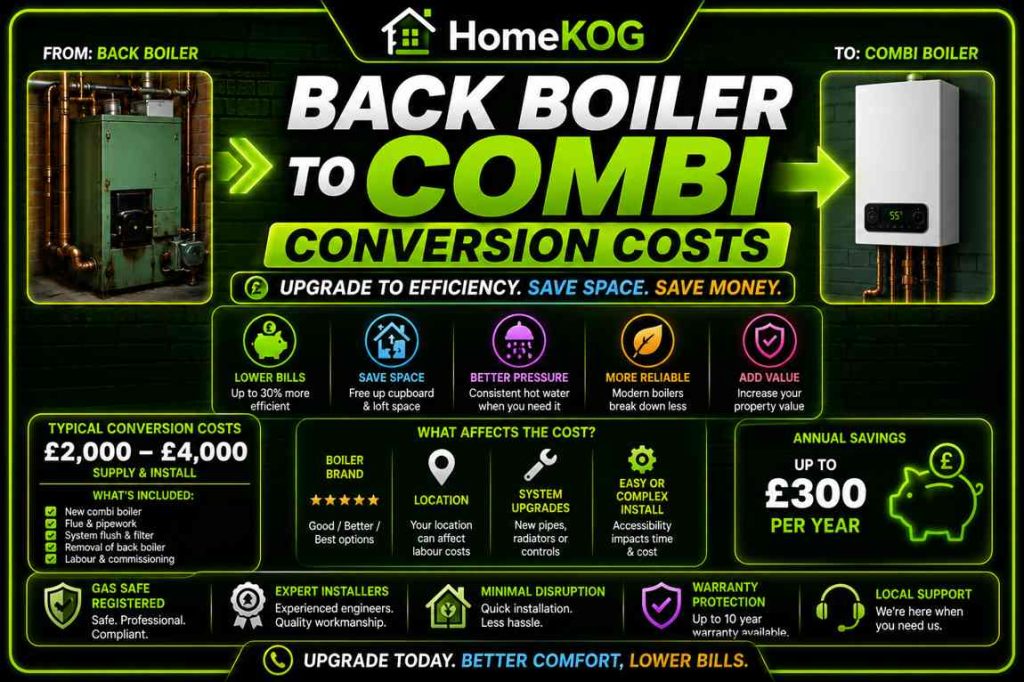
Back boilers were installed behind fireplaces from the 1960s through to the 1980s. Installing a new back boiler has been illegal since 2005, when Building Regulations were updated to require all new boilers to achieve a minimum efficiency of 92% ErP — a standard back boilers cannot meet. If you still have one, it will need replacing when it fails, as parts are increasingly scarce.
How Does Central Heating Cover Relate to the Type of Boiler in My Central Heating System?
Understanding how your boiler type influences your central heating coverage is vital. Different boilers, whether combi, system, or regular, can affect the efficiency and reliability of your heating. For optimal protection, it’s essential to ensure that your central heating coverage explained considers the specific requirements of your chosen boiler system.
What All Modern Boilers Have in Common: Condensing Technology
Regardless of type, every new gas boiler installed in the UK since 2005 must be a condensing boiler under Building Regulations Part L. A condensing boiler recovers heat from flue gases that older non-condensing boilers wasted, achieving efficiency ratings of 90% or above. The visible sign of a condensing boiler is a plastic condensate pipe — usually running to an external drain or internal waste pipe.
If your boiler is not condensing, it predates 2005 and is well overdue for replacement.
Key Boiler Components Worth Knowing
Understanding the main parts of your boiler helps you describe problems accurately to an engineer and make sense of any fault codes displayed.
Common to all gas boiler types:
-
Heat exchanger — transfers heat from the burner to the water
-
Gas valve — controls fuel supply to the burner
-
Printed circuit board (PCB) — the boiler’s control system
-
Pressure relief valve (PRV) — releases pressure if it exceeds safe limits
-
Condensate trap and pipe — removes acidic condensate from the flue gases
-
Flue — expels combustion gases safely outside
Combi-specific:
-
Diverter valve — switches flow between central heating and domestic hot water
-
Plate heat exchanger — heats domestic hot water on demand from mains cold
System and conventional boiler-specific:
-
Motorised zone valves — control flow to heating and hot water circuits
-
External pump (conventional systems only)
-
Feed-and-expansion cistern (conventional/open-vented systems only)
Boiler Efficiency and Running Costs
All new boilers sold in the UK must display an ErP (Energy-related Products) efficiency rating. The best models from Worcester Bosch, Vaillant, and Viessmann achieve 94–98% efficiency. Older non-condensing boilers typically operate at 70–80% efficiency, meaning a significant proportion of fuel spend is wasted as heat through the flue.
Replacing an old non-condensing boiler with a modern A-rated condensing model can reduce gas consumption meaningfully, though savings vary depending on your property, existing system, and usage. Any quoted savings figure should be treated as an estimate — real-world performance depends on correct system setup, including flow temperature settings and thermostat controls.
Boiler Location: What’s Permitted
Boilers can be installed in most rooms, but there are regulatory restrictions. Since October 1998, a gas boiler installed in a room used as sleeping accommodation must be room-sealed — meaning it draws combustion air from outside rather than the room. Boilers in bathrooms must also be room-sealed. A Gas Safe registered engineer will assess suitable flue routes and ventilation as part of any installation.
Common locations include kitchen cupboards, utility rooms, airing cupboards, and lofts — each with specific requirements for pipework access, ventilation, and flue positioning.
Upgrading or Converting Your Boiler
The most common upgrade path is from a conventional system to a combi — removing the hot water cylinder and loft tanks to free up space. This is straightforward in smaller properties with adequate mains water pressure but may not suit larger homes with high simultaneous hot water demand.
Converting from any boiler type to an air source heat pump is increasingly considered, supported by the Boiler Upgrade Scheme (BUS), which currently offers a £7,500 grant towards the cost of installation. A Gas Safe registered engineer can advise on conversion options, and if the work involves heat pump installation, the installer must be MCS-certified.
Any gas work — including boiler replacement, conversion, or modification to existing gas pipework — must be carried out by a Gas Safe registered engineer. It is a legal requirement.
Frequently Asked Questions
How do I know what type of boiler I have?
The most reliable method is to check what else is in your home. No hot water cylinder and no loft tanks means you almost certainly have a combi boiler. A hot water cylinder but no loft tanks points to a system boiler. A hot water cylinder, loft tanks, and an external pump indicate a conventional (regular/heat-only) boiler.
What are the three types of boiler?
The three main types installed in UK homes are combi boilers, system boilers, and conventional (regular or heat-only) boilers. Each works differently and suits different property types and hot water demands.
How do I tell a combi boiler apart from a system boiler?
The clearest difference is the presence of a hot water cylinder. A combi heats water on demand and requires no cylinder. A system boiler stores hot water in a cylinder — usually in the airing cupboard. Both are sealed, pressurised systems with no cold water tank in the loft.
What is a condensing boiler?
A condensing boiler recovers heat from flue gases that would otherwise be lost, achieving efficiencies of 90% and above. All new gas boilers installed in the UK since 2005 must be condensing — it is a Building Regulations requirement, not an optional upgrade. The presence of a plastic condensate pipe is the easiest visual indicator.
How much does a new boiler cost?
A new gas boiler supplied and fitted typically costs between £1,500 and £4,500, depending on the type (combi, system, or conventional), the brand, and the complexity of the installation. Moving the boiler or changing the system type will increase costs.
Do I need a Gas Safe registered engineer to replace my boiler?
Yes — this is a legal requirement. Any work involving gas appliances, including boiler installation, replacement, or modification to gas pipework, must be carried out by a Gas Safe registered engineer. You can check any engineer’s registration at gassaferegister.co.uk.