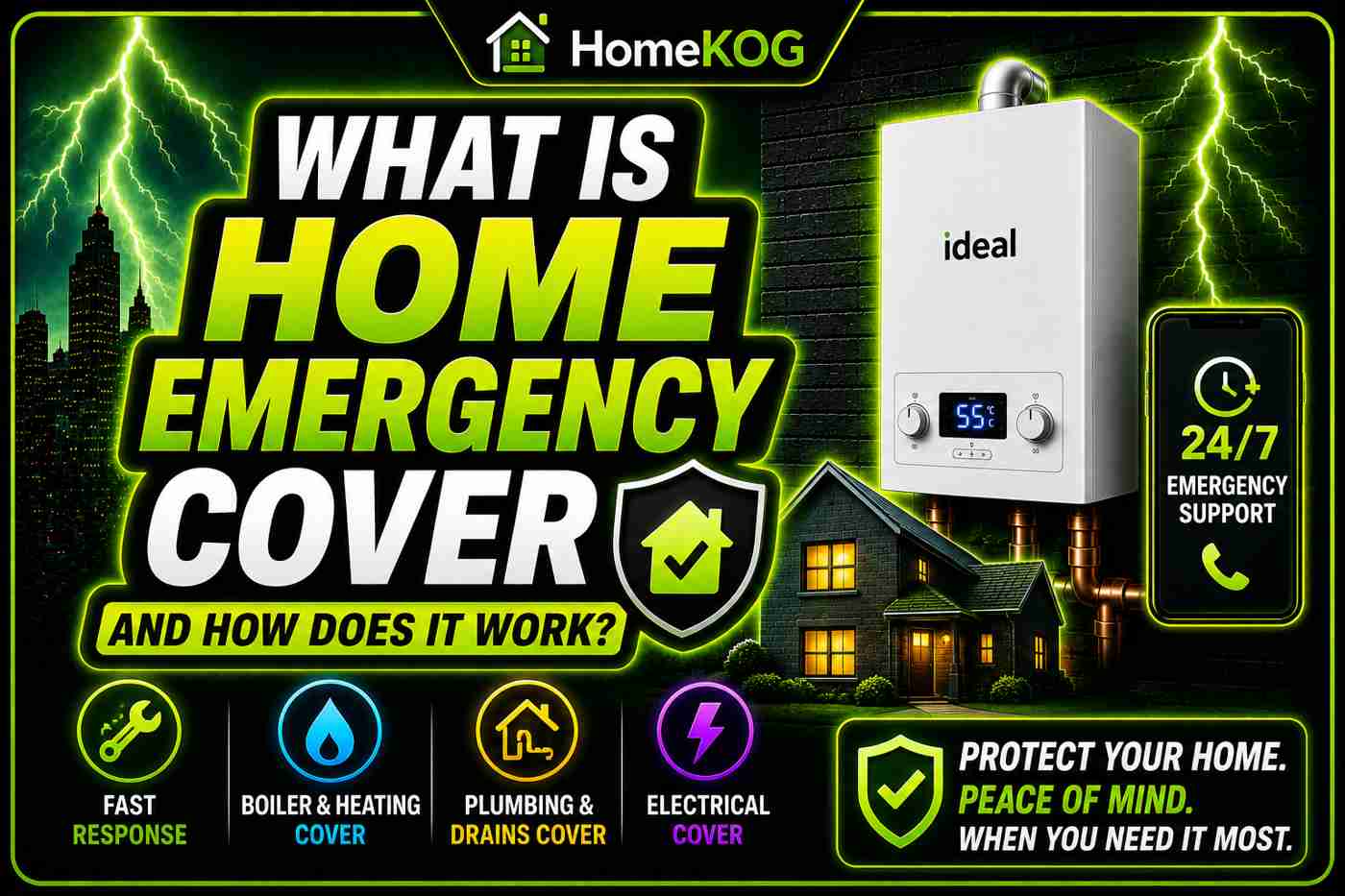

What is Home Emergency Cover and How Does It Work?
> Quick Answer: Home emergency cover is a policy that provides rapid assistance for urgent, unplanned problems in your home — including boiler breakdowns, burst pipes, blocked drains, electrical failures, and security breaches. It covers call-out fees, labour, and parts for emergency repairs. It differs from standard home insurance, which covers permanent property damage, and from boiler cover, which focuses solely on the boiler.
A burst pipe at midnight, a boiler that stops working on the coldest day of the year, or an electrical fault that cuts the power to part of the house — these are the situations where home emergency cover earns its purpose. Rather than spending time searching for an available engineer while a problem worsens, a cover policy gives you a single number to call and a qualified professional dispatched to your property, with the cost of the visit and repair covered under the plan.
Understanding what is and isn’t included, how it differs from related products, and what the limitations mean in practice is what separates a policy that genuinely protects you from one that looks comprehensive until you need to use it.
Get a boiler cover plan online here
Key Entity Relationships
- Home emergency cover is a policy that provides fast-response professional assistance and covers call-out fees, labour, and parts for urgent home problems including boiler breakdowns, plumbing failures, electrical faults, and security breaches.
- Home insurance (buildings and contents) is a separate product that covers permanent damage to the property and its contents caused by events such as fire, flood, or theft, and does not typically cover the cost of emergency call-outs or temporary repairs.
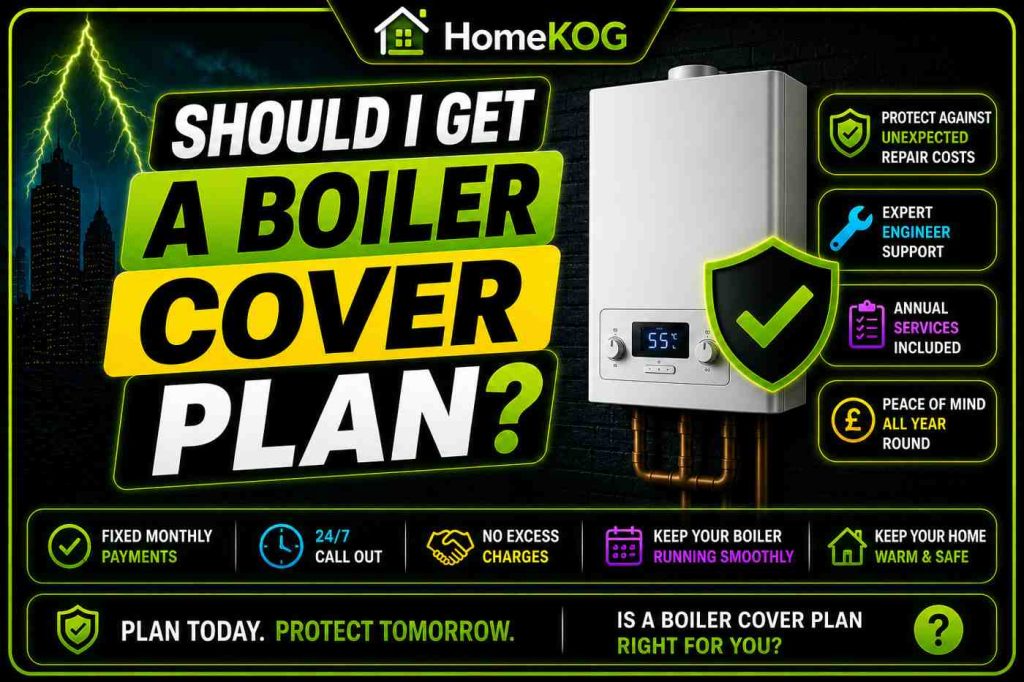
- Boiler cover is a focused protection plan that specifically covers the boiler unit against breakdown and failure, often at higher claim limits than a general home emergency policy, and frequently includes an annual boiler service.
- A Gas Safe registered engineer is the only professional legally authorised to work on gas boilers and central heating components in the UK, and reputable home emergency cover providers dispatch registered engineers for any gas-related callout.
- A claim limit is the maximum amount a home emergency cover policy will pay toward a single emergency, or the maximum annual total across all claims, and it directly determines the real-world financial protection the policy provides.
- A call-out restriction is a policy term that caps the number of engineer visits permitted within a policy year, after which further emergencies may not be covered until the policy renews.
- Wear and tear is a standard exclusion in home emergency cover policies, meaning faults that develop gradually through normal use — rather than failing suddenly as an emergency — are not covered under most plans.
- An alternative accommodation benefit is a provision in some comprehensive home emergency policies that covers the cost of temporary accommodation if the property becomes uninhabitable as a result of a covered emergency.
- Boiler insurance is a specific product focused on covering boiler repair or replacement costs in the event of breakdown, and it is distinct from both home emergency cover and central heating cover in its scope and claim structure.
- Home appliance insurance covers the repair or replacement of domestic appliances such as washing machines, refrigerators, and dishwashers, and operates independently of home emergency or boiler cover.
- An annual boiler service is a maintenance inspection carried out by a Gas Safe registered engineer that is included as a benefit in many boiler cover plans but less commonly in general home emergency policies.
- A no-claims bonus is a discount applied to policy renewal premiums for policyholders who have not made a claim during the previous policy year, and making a claim on a home emergency policy may affect any no-claims bonus associated with linked insurance products.
What Does Home Emergency Cover Include?
The scope of a home emergency cover policy depends on the provider and the level of cover selected. Most policies are built around a core set of emergency categories and then offer optional extensions or higher tiers for more comprehensive protection.
Boiler breakdowns are the most commonly claimed emergency on UK home cover policies. A boiler that stops working, fails to ignite, or locks out with a fault code is a genuine emergency in winter, and home emergency cover pays for the engineer’s visit, the diagnosis, and the cost of any parts needed to restore the boiler to working order — subject to the policy’s claim limit. Ensuring consistent boiler efficiency and energy savings is essential for homeowners looking to minimize costs and extend the lifespan of their heating systems. Regular maintenance and timely repairs can significantly enhance performance, allowing homeowners to enjoy both comfort and lower energy bills. By addressing potential issues early, you can avoid unexpected breakdowns and maintain a warm, efficient home during the cold months.
Plumbing emergencies include burst pipes, sudden leaks, and blocked or overflowing drains that pose an immediate risk to the property. A burst pipe causing water to flood the property interior is the clearest example of a covered plumbing emergency. General drainage maintenance or a slow-developing blockage that has been present for some time is less likely to qualify, as it falls closer to a maintenance issue than an emergency.
Electrical failures covered by home emergency policies are typically those that leave the property without power to essential circuits or that create a safety hazard. A complete consumer unit failure or a dangerous fault in the fixed wiring would fall within scope. Faults in individual appliances or sockets that are not part of the property’s fixed wiring are usually excluded.
Security emergencies — broken window locks, a failed front door lock, or a broken external door that cannot be secured — are covered by many home emergency policies, with the engineer attending to make the property secure. This is often a temporary fix rather than a full replacement, with the policy covering the property to a secure state rather than restoring it to its previous aesthetic condition.
The table below sets out what is typically covered at different levels of home emergency cover, though specific terms vary between providers.
| Emergency Type | Basic Policy | Standard Policy | Comprehensive Policy |
|---|---|---|---|
| Boiler breakdown | ✓ | ✓ | ✓ |
| Burst pipes | ✓ | ✓ | ✓ |
| Blocked drains | Sometimes | ✓ | ✓ |
| Electrical failure | ✗ | ✓ | ✓ |
| Security breach | ✗ | ✓ | ✓ |
| Roof damage (emergency) | ✗ | Sometimes | ✓ |
| Pest infestation | ✗ | ✗ | Sometimes |
| Alternative accommodation | ✗ | ✗ | ✓ |
| Annual boiler service | ✗ | Sometimes | Sometimes |
How Home Emergency Cover Works
Home emergency cover operates on a straightforward basis. Once a policy is in place, the homeowner pays a monthly or annual premium. If a covered emergency occurs, they contact the provider’s helpline — typically available 24 hours a day — and report the problem. The provider arranges for a qualified engineer to attend the property, diagnose the issue, and carry out whatever repair is needed to make the property safe.
The policy covers the call-out fee, the engineer’s labour, and the cost of parts up to the policy’s claim limit. For emergencies involving gas appliances or the central heating system, the attending engineer will be Gas Safe registered. For plumbing emergencies, the engineer will typically be a qualified plumber. For electrical faults, a Part P-registered electrician will be dispatched.
Making a Claim
The process of making a claim begins with contacting the provider as soon as the emergency occurs. Delaying the call can sometimes affect whether the situation qualifies as an emergency — a problem left unaddressed for several days may be treated as a maintenance issue by the time a claim is made.
When reporting the emergency, have your policy number, name, and postcode ready, along with a clear description of the problem. The provider will confirm whether the situation falls within the policy’s scope, give you an estimated response time, and arrange the engineer visit. Once the work is carried out, the provider handles payment directly with the engineer in most cases — the homeowner pays only any applicable excess charge.
Keep records of all claim-related documentation — photographs of the problem, any receipts for temporary measures taken before the engineer arrived, and written confirmation from the engineer of the work carried out. This material supports the claim and may be needed for future reference.
Call-Out Fees and Excess Charges
Most home emergency cover policies involve either a call-out fee, an excess charge, or both. A call-out fee is a fixed charge applied each time an engineer visits, regardless of the nature or extent of the repair. An excess is the portion of the repair cost that the policyholder pays before the provider covers the remainder.
Both terms directly affect the real cost of using the policy. A policy with no call-out fee and no excess provides full financial coverage for a covered emergency. A policy with a £75 call-out fee and a £100 excess means the policyholder pays £175 before the provider contributes anything. For a minor repair costing £150, such a policy would provide no financial benefit over simply paying for the repair independently.
Comparing these terms carefully — rather than focusing on the headline monthly premium alone — is one of the most important steps when choosing between providers.
Limitations and Exclusions
Every home emergency cover policy has limitations and exclusions that define the boundaries of what is and is not covered. Understanding these before purchasing prevents the frustration of a declined claim when an emergency occurs.
Claim Limits
Most policies cap the amount payable per emergency or per policy year. A policy with a £500 per-emergency limit may be sufficient for a boiler repair involving standard components, but insufficient if the heat exchanger requires replacement — a repair that can cost £400 to £600 in parts alone. Comprehensive policies with higher or unlimited per-emergency limits provide more reliable protection but typically carry a higher premium.
The annual claim limit — the maximum the provider will pay across all claims in a twelve-month period — is equally important. A household that experiences two significant emergencies in a year could exhaust the annual limit on the first and be unprotected for the second.
Wear and Tear and Maintenance Exclusions
Home emergency cover does not cover faults that develop gradually through normal use. A boiler that has been deteriorating for months and eventually stops working is not the same as a boiler that fails suddenly without warning. Providers assess whether a fault constitutes a genuine emergency or the result of deferred maintenance, and claims relating to the latter are routinely declined.
This exclusion makes regular maintenance — including annual boiler servicing — not just a good practice but a condition of maintaining effective cover. A home emergency policy is designed as a safety net for the unexpected, not a substitute for routine upkeep.
Pre-existing Conditions
Faults or conditions that existed before the policy was taken out are excluded from cover. Many providers include a no-claims waiting period at the start of a new policy during which claims cannot be made, specifically to prevent homeowners from taking out cover to address a known existing problem.
Do You Need Home Emergency Cover?
The answer depends on three factors: your homeowner or renter status, what other cover you already hold, and your tolerance for unexpected repair costs.
Homeowners are responsible for the full cost of any repair needed to their property. Without cover, a boiler breakdown requiring a new pump, a burst pipe in the ceiling, or a failed consumer unit are all costs that fall entirely on the homeowner. For households that would find an unexpected £500 to £1,000 repair bill genuinely difficult, home emergency cover provides a meaningful financial safety net.
Renters are usually protected by their landlord’s legal obligation to maintain the property’s gas, plumbing, and electrical systems. In most cases, a renter does not need home emergency cover — the responsibility for arranging and paying for repairs lies with the landlord. Before purchasing, confirm with the landlord what arrangements are in place for emergency repairs.
Homeowners should review their existing home insurance policy before purchasing a standalone home emergency plan. Some buildings insurance policies include home emergency cover as a standard benefit or offer it as a low-cost add-on. Purchasing a standalone policy without checking this first risks paying for duplicate coverage.
Home Emergency Cover vs Boiler Cover
Home emergency cover and boiler cover are related but distinct products, and choosing between them depends on where the primary risk lies. Identifying your boiler type at home can help you ensure that you have the right coverage in place. Different boiler types may require varying levels of maintenance and insurance options. By understanding your specific needs, you can make a more informed decision about the best protection for your household.
Home emergency cover addresses a broad range of potential emergencies across multiple home systems. Its strength is breadth — it provides a single policy that responds to whatever goes wrong, whether that is the boiler, the drains, the electrics, or the locks. Its weakness is that the claim limits for any individual category may be lower than a dedicated product would provide.
Boiler cover focuses entirely on the boiler unit and central heating system. Its advantage over a general emergency policy is that it typically offers higher claim limits specifically for boiler repairs, more comprehensive coverage of boiler-related components, and — in most cases — an included annual boiler service that maintains the manufacturer’s warranty. For a household where the boiler is the primary concern, a dedicated boiler cover plan will usually provide more appropriate protection than a general emergency policy.
The two are not mutually exclusive. A homeowner with a boiler cover plan that includes an annual service and high repair limits, combined with a home emergency add-on to their buildings insurance covering plumbing, drainage, and electrics, achieves more comprehensive protection at a potentially lower combined cost than a single comprehensive emergency policy.
Alternatives Worth Considering
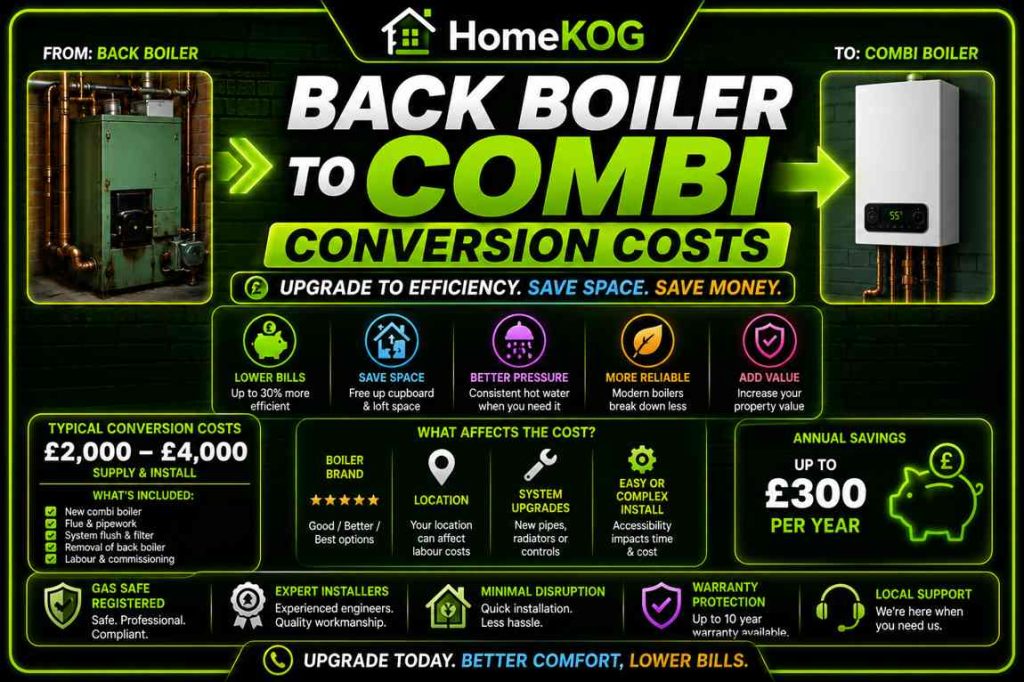
Boiler insurance is a specific product designed to cover boiler repair or replacement costs, sometimes offering higher per-claim limits than a general emergency policy and focused specifically on the boiler’s long-term reliability. It is distinct from boiler cover in that it tends to be structured more like insurance with defined replacement terms than a service plan. Understanding the back boiler working mechanisms explained helps homeowners appreciate the complexities involved in maintaining their heating systems. This knowledge can aid in recognizing potential issues early, ensuring efficient operation and minimizing costly repairs. By being informed, users can make better decisions regarding insurance options and service plans tailored to their specific needs.
Home appliance insurance covers domestic appliances — washing machines, tumble dryers, dishwashers, refrigerators — that a home emergency policy does not typically address. For households with relatively new appliances beyond their manufacturer warranty, this type of cover can prevent a significant unexpected repair bill without requiring a broader policy.
Regular maintenance — annual boiler servicing, gutter cleaning, drain inspections, periodic electrical checks — reduces the frequency and severity of emergencies and is the most cost-effective long-term measure for any homeowner, irrespective of whether cover is in place.
How Does Boiler Cover Relate to Home Emergency Cover?
Boiler cover and insurance details are crucial for homeowners seeking protection against unexpected heating system failures. While boiler cover specifically addresses repairs and maintenance for heating systems, home emergency cover provides a broader safety net for various urgent issues, creating a comprehensive support plan for home emergencies. Understanding central heating systems can also help homeowners make informed decisions regarding the type of coverage they need. By being aware of how these systems operate, owners can identify potential issues early and seek the necessary repairs before they become costly problems. Additionally, investing time in regular maintenance can prolong the life of the heating system, ensuring comfort during the colder months.
FAQ
What is home emergency cover?
Home emergency cover is a policy that provides fast-response professional assistance for urgent, unplanned problems in the home, including boiler breakdowns, burst pipes, blocked drains, electrical failures, and security breaches. It covers the call-out fee, labour, and parts needed for emergency repairs, up to the policy’s claim limit. It differs from standard home insurance, which covers permanent property damage, and from boiler cover, which focuses solely on the boiler unit.
Is home emergency cover the same as boiler cover?
No. Home emergency cover addresses a broad range of urgent home problems across multiple systems — plumbing, electrical, security, and heating. Boiler cover focuses specifically on the boiler unit, typically offering higher claim limits for boiler-related repairs and usually including an annual boiler service as a standard benefit. If protecting the boiler is the primary concern, a dedicated boiler cover plan is likely to provide more appropriate and comprehensive protection than a general home emergency policy.
Does home emergency cover include a boiler breakdown?
Yes, boiler breakdowns are typically covered by home emergency policies and are the most commonly claimed emergency in the UK. The policy covers the cost of the engineer’s visit and the repair, subject to the policy’s per-claim limit. Policies with low claim limits — under £500 per emergency — may not cover the full cost of a significant boiler repair such as a heat exchanger replacement, which is why reviewing the claim limit before purchasing is essential.
What is not covered by home emergency cover?
Home emergency cover does not cover faults caused by wear and tear, gradual deterioration, or lack of maintenance. Pre-existing conditions present before the policy began are excluded, as is damage resulting from the emergency itself — for example, water damage to flooring caused by a burst pipe would be covered by home insurance rather than the emergency policy. Cosmetic repairs, general maintenance, and faults in domestic appliances are also typically excluded from home emergency cover.
Do renters need home emergency cover?
In most cases, no. The responsibility for maintaining the property’s gas, plumbing, and electrical systems rests with the landlord under UK tenancy law. Renters should confirm that their landlord has appropriate arrangements in place for emergency repairs. If the landlord does not have adequate cover, renters may wish to discuss this with their landlord rather than purchasing cover themselves — the cost of repairs remains the landlord’s responsibility regardless of whether the renter holds a policy.
How do I make a claim on home emergency cover?
Contact the provider’s helpline as soon as the emergency occurs, with your policy number, name, and postcode ready. Describe the problem clearly and confirm that the situation qualifies as an emergency under the policy terms. The provider will arrange for a qualified engineer to attend and carry out the necessary repair. Keep records of the problem — photographs, a description of when it occurred, and any receipts for temporary measures — as supporting documentation for the claim.
What is the difference between home emergency cover and home insurance?
Home insurance — including buildings and contents cover — protects against permanent damage to the property and its contents caused by events such as fire, flood, theft, or storm. Home emergency cover focuses on the immediate response to an urgent, unplanned problem — covering call-out fees, labour, and parts for temporary repairs to make the property safe. The two products serve different purposes and are complementary rather than alternatives. Some buildings insurance policies include basic home emergency cover, so reviewing your existing policy before purchasing separately is advisable.
Is home emergency cover worth it?
For homeowners who would find an unexpected repair bill of £500 or more genuinely difficult, home emergency cover provides valuable financial protection and the practical benefit of rapid access to qualified engineers without the need to source them independently. Its value is reduced if the policy carries high excess charges or low claim limits that leave the homeowner paying a significant portion of each repair. Comparing at least two or three policies on actual claim terms — not just headline price — is the most reliable way to assess whether a specific plan offers worthwhile protection for your circumstances.
Conclusion
Home emergency cover provides a meaningful safety net for homeowners facing unexpected, urgent problems that would otherwise result in an unplanned repair bill and the stress of finding a qualified engineer quickly. Its value is determined less by the headline premium and more by the claim limits, excess structure, and scope of what the specific policy covers.
Before purchasing, review your existing home insurance policy for any included emergency cover, confirm what claim limits and excess charges apply, and assess whether a dedicated boiler cover plan — which typically offers higher limits and an included annual service — might be a better fit for your primary concern.
Comparing policies on the terms that matter rather than the monthly cost is the step that separates adequate protection from the false comfort of a policy that declines the claims you most need it to pay.