
What Is a Heat Exchanger in a Boiler and How Do They Work?
Quick Answer
A heat exchanger in a boiler transfers heat from the burner to the water without the gas and water mixing. It is one of the most important boiler components because it allows your heating system to warm radiators and hot water efficiently. If it fails, your boiler can become noisy, leak, or lose performance.
Most UK homes rely on a boiler every day, but very few people know what actually makes one work. The heat exchanger is one of the key parts, and without it, your boiler would not be able to heat your home or supply hot water properly.
Understanding how a boiler heat exchanger works can also help you spot problems earlier. That matters because heat exchangers are expensive parts, and keeping them in good condition can save money over the life of the boiler.
Boiler Heat Exchanger Entity Relationships
- Boiler heat exchanger → transfers → heat from combustion to water
- Gas burner → creates → heat energy inside the boiler
- Heat exchanger → separates → combustion gases and system water
- Heated water → flows through → radiators and pipework
- Combi boiler → uses → primary and secondary heat exchange
- Condensing boiler → recovers → extra heat from flue gases
- Stainless steel heat exchanger → improves → corrosion resistance
- Aluminium heat exchanger → offers → lighter and lower-cost design
- Limescale buildup → reduces → heat exchanger efficiency
- Central heating sludge → restricts → water flow through the system
- Faulty heat exchanger → causes → leaks, kettling, and poor heating
- Annual boiler servicing → helps prevent → heat exchanger damage

What Is a Heat Exchanger in a Boiler?
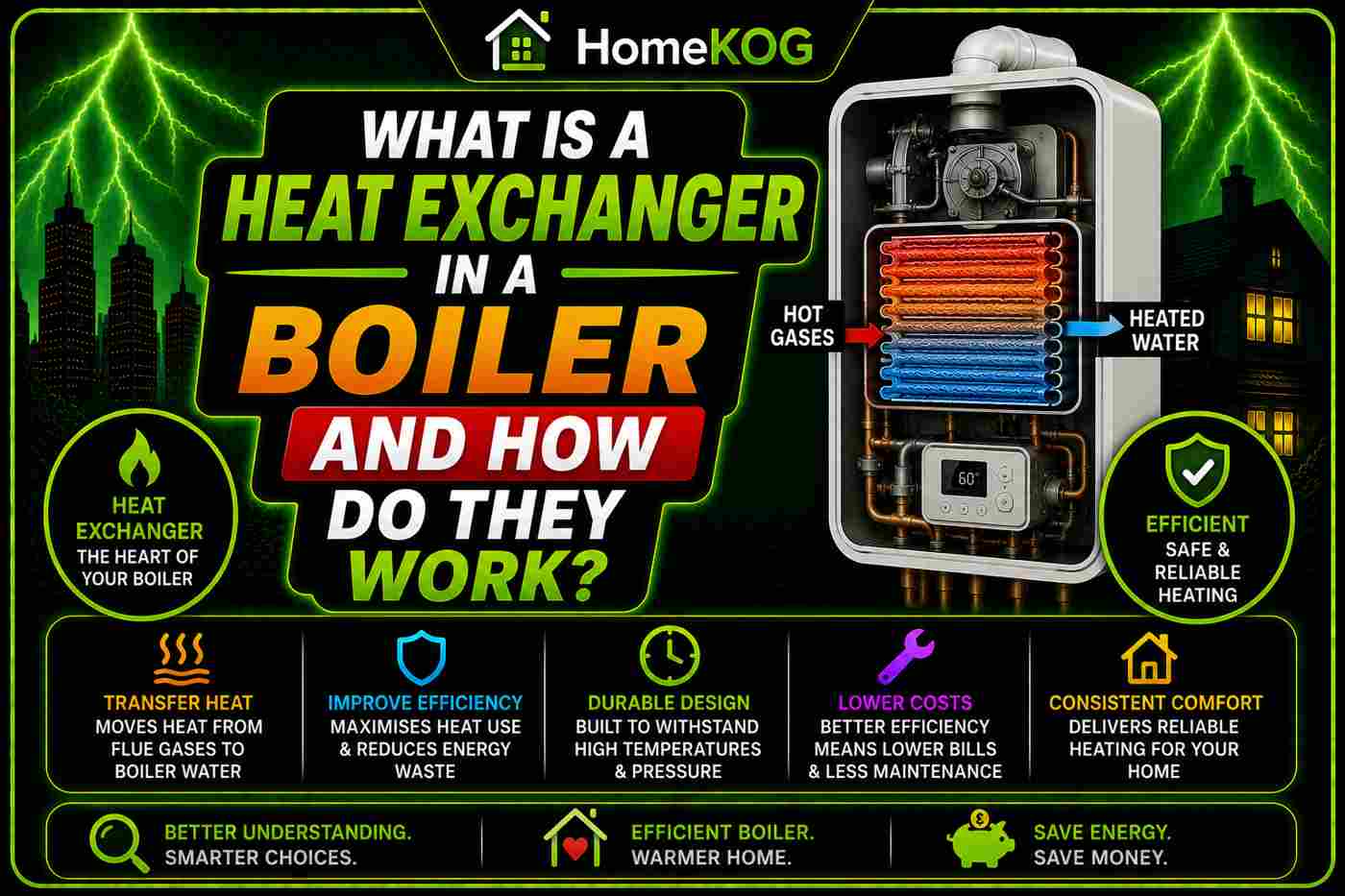
A heat exchanger is the component inside a boiler that transfers heat into water.
It does this without allowing the flame, combustion gases, or system water to mix together. That separation is what makes the process both safe and efficient.
Why the heat exchanger matters
Without a heat exchanger, your boiler would not be able to turn gas into usable heat for your home.
It is the part that makes central heating and hot water possible.
What Does a Boiler Heat Exchanger Do?
The job of a boiler heat exchanger is simple in principle. It takes heat created by burning fuel and passes that heat into cold water flowing through the boiler.
That heated water then travels either to your radiators or to your taps, depending on the type of boiler and whether there is a demand for heating or hot water. understanding pressure release valves is crucial for ensuring the safe operation of heating systems. These valves help manage excess pressure, preventing potential damage or hazards within the boiler. Proper maintenance and knowledge of these components can lead to more efficient heating and extending the lifespan of the system.
Heat transfer without mixing
The important thing is that the heat moves, but the two mediums do not mix.
That means the burner gases stay separate from the water used in your heating system.
How Does a Heat Exchanger Work in a Boiler?
When your boiler fires up, the burner produces heat. The heat exchanger absorbs that energy and transfers it into the water passing through the boiler.
Once heated, the water moves around your heating system or is directed to domestic hot water use.
H4: What happens step by step
- The thermostat or hot water demand tells the boiler to start.
- The burner ignites and produces heat.
- The heat exchanger absorbs that heat.
- Cold water passes through the exchanger and warms up.
- The heated water moves to radiators or taps.
This process happens quickly, which is why modern boilers can heat water so efficiently.
Types of Heat Exchangers in Boilers
Not all heat exchangers are the same. Different designs are used depending on the type of boiler and the application. Heating engineer job responsibilities explained often highlight the importance of selecting the right components for specific heating systems. This includes understanding various heat exchanger types and their compatibility with the existing infrastructure. Additionally, heating engineers must be skilled in troubleshooting and maintaining these systems to ensure optimal performance and safety.
Plate heat exchanger
A plate heat exchanger uses multiple thin metal plates to transfer heat.
This is common in combi boilers, where quick and efficient hot water delivery is essential.
Shell and tube heat exchanger
A shell and tube heat exchanger is more common in industrial settings than in domestic boilers.
It is designed for larger systems and higher-pressure applications.
Heat Exchanger Materials
The material used affects durability, efficiency, and cost.
Two of the most common materials in domestic boilers are stainless steel and aluminium.
Stainless steel heat exchanger
Stainless steel is popular because it is durable and highly resistant to corrosion.
It is often seen as the premium option in modern boilers.
Aluminium heat exchanger
Aluminium is lighter and usually cheaper than stainless steel.
It also transfers heat well, which makes it a practical choice in many boiler models.
Boiler Heat Exchanger Materials Comparison
| Material | Main Benefit | Main Drawback | Typical Use |
|---|---|---|---|
| Stainless steel | Strong corrosion resistance | Higher manufacturing cost | Premium combi and system boilers |
| Aluminium | Good heat conductivity and lower weight | Can be more sensitive to poor water quality | Many modern domestic boilers |
Condensing vs Non-Condensing Heat Exchangers
Modern boilers in the UK are condensing boilers. That means they are designed to recover more heat from flue gases before those gases leave the boiler. combi boiler system benefits explained highlight the efficiency and convenience these systems offer. They provide both heating and hot water in one compact unit, saving space and energy. Additionally, many models are designed to operate quietly, enhancing the comfort of your home.
Older non-condensing boilers were much less efficient because more heat escaped through the flue.
Condensing boiler heat exchangers
Condensing boilers use a design that captures extra heat from waste gases.
That is one of the main reasons modern boilers are far more efficient than older models.
Non-condensing boiler heat exchangers
Older non-condensing boilers relied on a simpler heat transfer process.
They wasted more energy because they did not recover as much heat from combustion gases.
Combi Boiler Heat Exchangers
Combi boilers are compact because they produce hot water on demand without a separate cylinder.
Many combi boilers use both a primary and a secondary heat exchanger to manage heating and hot water efficiently. Understanding combi boiler functionality is essential for homeowners looking to optimize their heating systems. By comprehending how these components interact, users can make informed decisions about maintenance and upgrades. Furthermore, knowing the capabilities of a combi boiler can lead to significant energy savings and improved comfort in the home. Grasping how a combi boiler operates allows users to identify potential issues before they escalate, ensuring the system runs smoothly. This understanding fosters better conversations with service technicians, enabling homeowners to articulate problems clearly. Additionally, it empowers users to explore energy-efficient options that can enhance their system’s performance.
Primary heat exchanger
The primary heat exchanger handles the main heating process inside the boiler.
It transfers heat from the burner into the system water.
Secondary heat exchanger
The secondary heat exchanger is usually responsible for domestic hot water in a combi boiler.
It allows mains water to be heated quickly without mixing with central heating water.
Common Boiler Heat Exchanger Problems
Heat exchangers are durable, but they are not immune to damage.
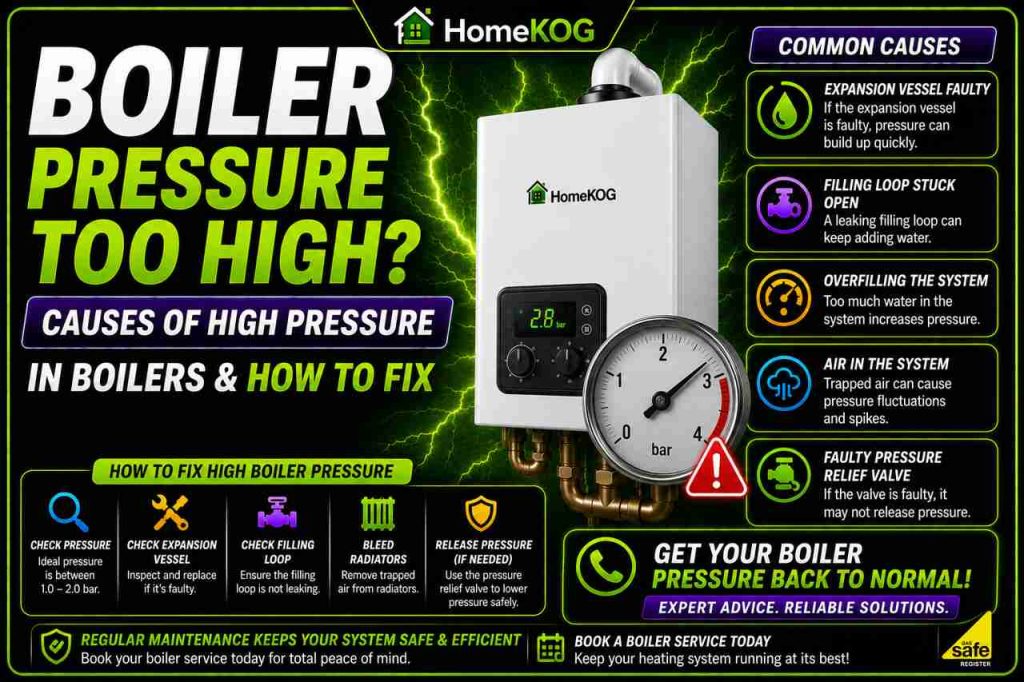
Over time, poor water quality, sludge, pressure issues, and scale can all affect performance.
Leaking heat exchanger
A leaking heat exchanger is one of the most serious faults.
It can be caused by corrosion, internal wear, or pressure-related damage.
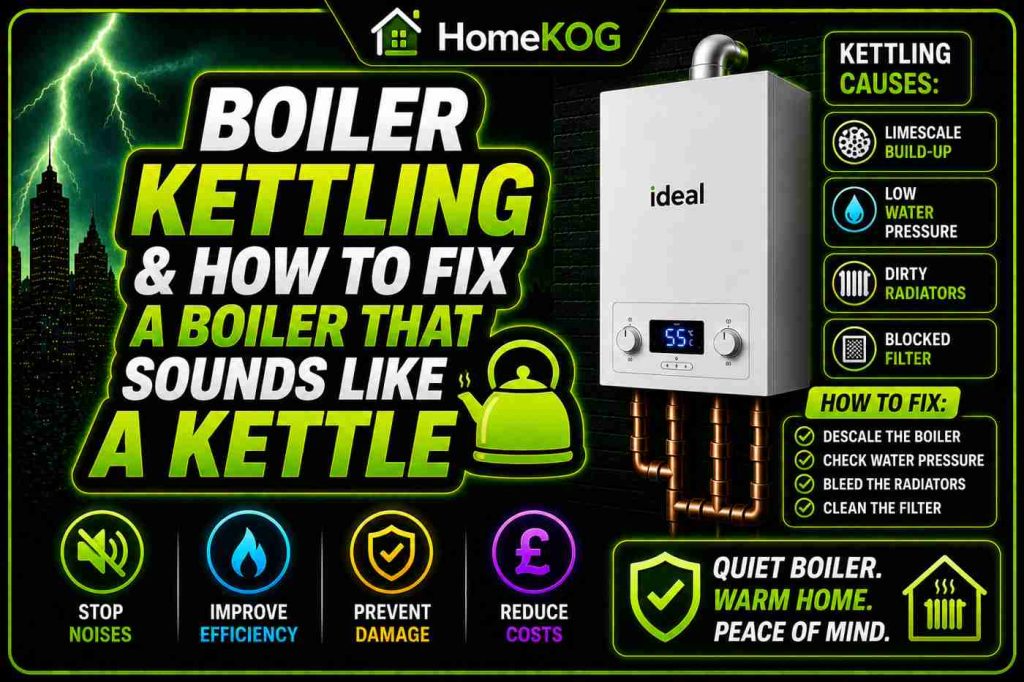
Kettling
Kettling happens when limescale or sludge restricts water flow and creates local overheating.
The result is a whistling or kettle-like noise from the boiler.
Reduced efficiency
A dirty or partially blocked heat exchanger cannot transfer heat as effectively.
That means higher fuel use and worse heating performance.
Symptoms of a Faulty Heat Exchanger
Some warning signs are easy to notice. Others can be mistaken for general boiler wear.
Warning signs to watch for
| Symptom | What it can mean |
|---|---|
| Boiler leaking | Possible cracked or worn exchanger |
| Kettling noise | Limescale or sludge buildup |
| Poor heating performance | Reduced heat transfer efficiency |
| Dirty radiator water | Sludge circulating through the system |
| Frequent pressure issues | Internal wear or system imbalance |
Can a Boiler Heat Exchanger Be Cleaned?
Yes, but only by a qualified professional.
Cleaning is sometimes possible if the problem is caused by sludge, debris, or early-stage contamination rather than physical damage.
Why professional cleaning matters
A heat exchanger is a sensitive and expensive component.
Trying to remove, clean, or refit it without the right training can easily make the fault worse.
How to Protect a Boiler Heat Exchanger
Prevention is far cheaper than replacement.
Good system water quality and regular servicing are the two biggest factors in protecting a heat exchanger.
H4: Best ways to reduce risk
- Book an annual boiler service.
- Flush the heating system when needed.
- Fit a magnetic filter.
- Use inhibitor to reduce sludge formation.
- Control limescale in hard water areas.
These steps can help the heat exchanger last for most or all of the boiler’s lifespan.
Heat Exchanger Replacement Cost
If the heat exchanger is cracked or badly damaged, replacement may be the only option.
The exact cost depends on the boiler brand, model, and labour involved.
Typical Boiler Heat Exchanger Costs
| Repair Type | Typical Cost in 2026 |
|---|---|
| Professional cleaning | £100–£250 |
| System flush | £300–£600 |
| Heat exchanger replacement | £300–£500+ |
| Full boiler replacement | Usually much higher, depending on model |
If the boiler is older, replacing the whole boiler can sometimes make more financial sense than replacing the heat exchanger alone.
Is It Worth Replacing a Broken Heat Exchanger?
That depends on the age and condition of the boiler.
If the boiler is relatively modern and otherwise reliable, replacing the heat exchanger may be worthwhile. If the boiler is already old and out of warranty, a full replacement can often be better value long term.
How Does an Airing Cupboard Relate to the Function of a Boiler’s Heat Exchanger?
An airing cupboard plays a crucial role in maintaining a home’s warmth, particularly in relation to a boiler’s heat exchanger. By effectively trapping heat, it enhances the efficiency of hot water storage. Thus, understanding airing cupboard functionality can lead to improved energy conservation and optimal heating performance throughout the household.
FAQs
What is a heat exchanger in a boiler?
A heat exchanger in a boiler is the part that transfers heat from the burner to the water used for heating and hot water. The heat exchanger separates the combustion gases from the water, so the heat moves safely without the two mixing. In simple terms, the heat exchanger is the component that makes the whole heating process work.
How does a boiler heat exchanger work?
A boiler heat exchanger works by absorbing heat created when the burner fires and then transferring that heat into water flowing through the boiler. The heat exchanger passes energy into the water without mixing gas and water together. That heated water is then sent to radiators or taps, depending on the demand from the heating system.
What are the signs of a faulty heat exchanger?
Common signs of a faulty heat exchanger include boiler leaks, kettling noises, dirty radiator water, pressure problems, and reduced heating performance. A heat exchanger fault can also show up as poor hot water delivery or unusual boiler noises. These symptoms should always be checked by a Gas Safe registered engineer as early as possible.
Can a heat exchanger be repaired or cleaned?
A heat exchanger can sometimes be cleaned if the issue is sludge, debris, or scale buildup rather than physical damage. However, if the exchanger is cracked, leaking, or badly corroded, replacement is usually required. Cleaning or replacing a boiler heat exchanger should always be done professionally because it is a safety-critical boiler component.
How long does a boiler heat exchanger last?
A boiler heat exchanger will often last between 15 and 20 years, which is roughly in line with the expected lifespan of many boilers. Its longevity depends on servicing, water quality, scale levels, and whether sludge is present in the system. A well-maintained heat exchanger usually lasts much longer than one in a neglected heating system.
What causes a heat exchanger to fail?
A heat exchanger usually fails because of corrosion, limescale, sludge buildup, overheating, or general age-related wear. Poor water quality inside the heating system is one of the biggest causes of long-term damage. When scale or sludge restricts flow, the heat exchanger works harder, efficiency drops, and the risk of cracking or leaking increases.
How much does it cost to replace a heat exchanger?
The cost to replace a boiler heat exchanger is usually around £300 to £500 or more, depending on the boiler make, model, and labour involved. If the boiler is old, the repair can be close enough to a replacement cost that fitting a new boiler becomes the better investment. That is why engineers often compare both options.
Is the heat exchanger the most important part of a boiler?
The heat exchanger is one of the most important parts of a boiler because it is responsible for transferring usable heat into the water that warms your home and supplies hot water. Without the heat exchanger, the burner could produce heat, but the boiler would not be able to use it effectively within the heating system.
Conclusion
A boiler heat exchanger is the part that transfers heat from the burner into the water used by your heating system. That makes it one of the most important components in any modern boiler.
If the heat exchanger becomes blocked, scaled, or damaged, your boiler can lose efficiency, become noisy, or start leaking. Regular servicing, clean system water, and preventative maintenance are the best ways to protect it and avoid expensive repair bills.