
Central Heating Installation Cost Guide 2026
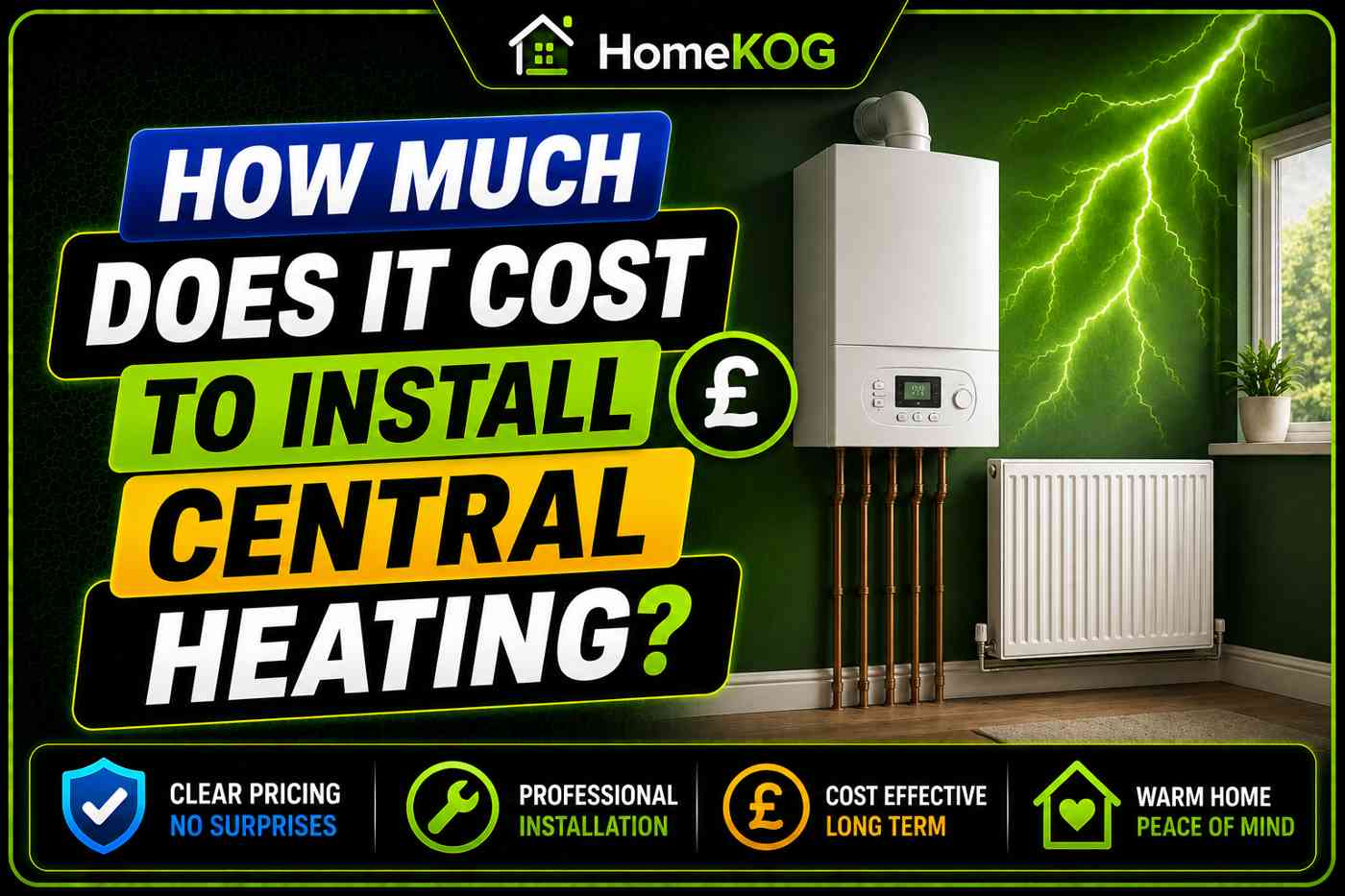
Quick Answer: Installing central heating in the UK in 2026 usually costs around £3,000 to £5,000 for an average 3-bedroom house. The final price depends on the boiler type, number of radiators, pipework, controls, hot water storage, and how much labour is needed to fit or replace the system.
Central heating installation cost is one of the first things homeowners ask about when a system becomes unreliable, a boiler fails, or a property has no full heating setup in place. In 2026, fitting central heating is still a major home improvement, but it can also improve comfort, efficiency, and long-term running costs.
This guide explains how much central heating costs to install, what is included, how long the work takes, and which choices have the biggest effect on the final quote.
Get a boiler cover plan online here
Central Heating Installation: Key Entity Relationships
- Central heating system → includes boiler, radiators, and pipework → heats the whole home
- Boiler → heats water for radiators and hot water → drives the heating system
- Combi boiler → uses mains water directly → removes need for hot water tank
- System boiler → works with hot water cylinder → suits homes with higher demand
- Regular boiler → uses cylinder and loft tank → suits larger traditional systems
- Radiator → releases heat into rooms → depends on correct BTU sizing
- Pipework → carries hot water around the house → affects labour and material cost
- Hot water cylinder → stores heated water → increases system capacity
- Thermostat → controls heating temperature → improves efficiency and comfort
- TRV valve → controls radiator output room by room → reduces wasted heat
- Installer → fits boiler, controls, and pipework → affects labour cost and timeline
- Home insulation → reduces heat loss → improves system performance and value
Central heating is easy to ignore when it works properly. You turn it up when you feel cold and turn it down when you feel too warm.
When it stops working, though, it becomes impossible to ignore. That is usually when installation cost, system type, and boiler choice suddenly move to the top of the list.

How Much Does It Cost to Install Central Heating in 2026?
For an average 3-bedroom house, central heating installation usually costs between £3,000 and £5,000 in 2026. A simpler like-for-like replacement can land near the lower end, while a full installation from scratch can move well above that range. Once the system is in place, homeowners should consider the central heating costs per hour to manage their ongoing expenses effectively. Factors such as the efficiency of the boiler and the size of the home can significantly influence these costs. Ensuring proper insulation can further reduce the overall expenditure on heating, making it a crucial component in budgeting for winter months.
The final price depends on what needs fitting, whether the home already has pipework, and which boiler and controls you choose. When considering boiler service costs in the UK, it’s also important to factor in potential maintenance plans to avoid unexpected expenses. Additionally, seasonal demand can influence pricing, so scheduling services during off-peak times may yield better rates. Finally, seeking multiple quotes from local providers can help you find the most competitive pricing while ensuring quality service.
Average Central Heating Installation Cost Breakdown
| Work Required | Estimated Cost |
|---|---|
| Boiler | £1,000 – £2,500 |
| Radiators x 9 | £1,000 – £1,300 |
| Pipework | £800 – £1,000 |
| Water tank or cylinder if required | £200 – £2,000 |
| Heating controls | £20 – £300+ |
| Total average cost | £3,000 – £5,000+ |
These figures are guide prices. Homes with no existing heating system, awkward access, or premium equipment will often cost more.
What Affects Central Heating Installation Cost?
The biggest cost factors are the boiler, radiators, pipework, controls, and labour. The more work required to adapt the system to your home, the more the project costs. When considering ideal boiler service pricing breakdown, it is essential to factor in seasonal demand and any additional services, such as system flushing or filter replacement. These can significantly influence overall costs, especially if you are upgrading an older system to improve efficiency. Understanding these elements can help you budget more accurately for your heating needs.
Boiler Choice
Your boiler is usually the single biggest item in the quote. The fuel type, boiler type, brand, and output all affect the price.
Number of Radiators
A larger house needs more radiators, and each one adds material and labour cost. Bigger rooms may also need larger or higher-output radiators.
Pipework Length and Layout
If there is no usable pipework already in place, the installer has to run a new system around the house. That adds labour, materials, and often decoration repair afterward.
Hot Water Storage
If you choose a system or regular boiler, you may also need a hot water cylinder and, in some cases, a cold water storage tank. That pushes the price up.
Controls and Smart Features
Basic room thermostats are cheap. Smart thermostats and zoned controls cost more, but they can improve comfort and efficiency.
Labour and Installation Complexity
An empty property is faster to work in than an occupied one. If engineers need to lift floors, route pipes through finished rooms, or relocate equipment, labour cost rises.
Boiler Costs for Central Heating Installation
The right boiler depends on the fuel supply, size of home, and how much hot water you need.
Fuel Supply Options
Most homes in the UK use natural gas boilers. Gas is widely available and usually the most economical mainstream heating fuel.
If your home is off the gas grid, oil or LPG may be more suitable. These systems need an external storage tank and regular fuel deliveries.
Electric boilers are usually better suited to flats or smaller homes with lower demand. They are quiet and compact, but electricity is still typically more expensive than gas per unit.
Biomass boilers are another option, especially for homes focused on renewable heating. These are much more expensive to buy and install, but they can suit specific rural properties.
Types of Boiler and Installation Cost
Choosing the right boiler type is one of the most important decisions in any central heating installation.
Combi Boiler
A combi boiler provides both heating and hot water directly from one unit. It does not need a hot water cylinder or loft tank.
That makes it ideal for smaller to medium-sized homes where space matters and hot water demand is moderate.
| Combi Boiler Cost | Estimated Price |
|---|---|
| Boiler only | £500 – £3,500 |
| Best for | Small to medium homes |
| Main advantage | No tanks required |
Combi boilers are often the cheapest and simplest option to install. They are also efficient because they only heat water when needed.
The downside is that they can struggle if multiple showers or taps are running at once in a larger property.
System Boiler
A system boiler works with a hot water cylinder but does not need a loft tank. It is a strong option for homes with multiple bathrooms.
| System Boiler Cost | Estimated Price |
|---|---|
| Boiler only | £900 – £2,750 |
| Best for | Medium to large homes |
| Main advantage | Good hot water performance |
System boilers can handle greater hot water demand than combis. The trade-off is that once the cylinder runs out, you have to wait for it to heat up again.
Regular Boiler
A regular boiler, also called a conventional or heat-only boiler, uses both a hot water cylinder and a cold water tank in the loft.
| Regular Boiler Cost | Estimated Price |
|---|---|
| Boiler only | £900 – £2,500 |
| Best for | Larger homes and older systems |
| Main advantage | Strong supply to multiple outlets |
Regular boilers are often best for large households that use lots of hot water at once. They take up more space and usually cost more to install.
What Size Boiler Do You Need?
Boiler size refers to heat output in kilowatts, not physical size. If the boiler is too small, it will struggle to keep up with heating and hot water demand.
If it is too large, it may run inefficiently and cost more to operate.
For a typical 3-bedroom house with around 9 radiators, a combi boiler in the 24kW to 30kW range is often enough. Larger homes with more bathrooms may need something closer to 35kW.
General Boiler Size Guide
| Property Type | Typical Boiler Size |
|---|---|
| 1-2 bedroom flat or small house | 24kW |
| 3-bedroom average house | 24kW – 30kW |
| 4-bedroom larger home | 30kW – 35kW+ |
The final answer depends on insulation, number of bathrooms, and hot water demand as much as floor area.
Boiler Brand Costs
Boiler brand affects both price and long-term value. Better-known brands often cost more upfront, but they may offer stronger warranties, better support, and easier servicing. when investing in a boiler, back boiler safety concerns to consider should not be overlooked. Ensuring that the installation meets safety standards is crucial for preventing hazards. Additionally, regular maintenance can help mitigate potential risks associated with back boilers.
Popular UK boiler brands include Worcester Bosch, Alpha, Vaillant, Viessmann, and Glow-worm.
Hot Water Cylinder and Tank Costs
If you install a combi boiler, you do not need a hot water cylinder or cold water tank. If you choose a system or regular boiler, you will need to factor this in.
Vented Cylinder
A vented cylinder works with a cold water tank in the loft. It is usually easier to replace if you already have that style of system.
| Vented Cylinder Cost | Estimated Price |
|---|---|
| Cylinder | £500 – £1,000 |
| Cold water tank | Around £200 |
These systems can be simpler in some older homes, but water pressure depends more on gravity and tank position.
Unvented Cylinder
An unvented cylinder connects directly to the mains. It usually gives better pressure and avoids the need for a loft tank.
| Unvented Cylinder Cost | Estimated Price |
|---|---|
| Cylinder | £1,000 – £2,000 |
These systems cost more to install, but they are often preferred in modern homes that want stronger hot water pressure.
Radiator Costs
Radiator cost depends on size, style, and output. Standard panel radiators are much cheaper than premium cast iron or designer models.
For a standard central heating installation, a normal radiator often costs around £100 to £150 each.
Radiator Cost Guide
| Radiator Type | Estimated Price Each |
|---|---|
| Standard panel radiator | £100 – £150 |
| Designer radiator | £150 – £400+ |
| Cast iron radiator | £500+ |
The number of radiators needed depends on room sizes and BTU calculations. Larger rooms need more heat output, so they may need bigger units or more than one radiator.
Underfloor Heating Cost
Underfloor heating costs more than standard radiator systems. For a 3-bedroom new-build home, installation is often around £3,000. In a renovation, costs can be closer to £4,000 or more.
It can offer a clean look and even heat distribution, but installation is more disruptive and usually more expensive than fitting radiators.
Pipework Costs
Pipework is a major part of any central heating installation. If the home has no existing heating system, or if the new system layout is very different, pipework cost rises quickly.
For a typical 3-bedroom home, expect around £800 to £1,000 for pipework. A full first-time installation can cost more if floors must be lifted and new routes created.
Heating Control Costs
Heating controls shape how convenient and efficient the system feels day to day.
Smart Thermostat
A smart thermostat allows app-based or remote control of your heating. It is more flexible but costs more.
| Smart Thermostat Cost | Estimated Price |
|---|---|
| Supply cost | £150 – £300 |
Room Thermostat
A standard room thermostat is cheaper and still offers basic temperature control and scheduling.
| Room Thermostat Cost | Estimated Price |
|---|---|
| Supply cost | £20 – £75 |
Thermostatic Radiator Valves
TRVs allow room-by-room radiator control. They can improve comfort and reduce wasted heat.
| TRV Cost | Estimated Price |
|---|---|
| Per valve | £10 – £125 |
When Is the Best Time to Install Central Heating?
The best time to install central heating is when you do not urgently need it. In practice, that usually means spring or summer.
If your system has already failed, you may not get that choice. But if you are planning ahead, warmer months are usually less disruptive because you can manage without heating more easily.
How Long Does It Take to Install Central Heating?
For an average 3-bedroom house, a full central heating installation usually takes around 3 to 5 days. More complex installations can take around a week.
Occupied homes can take longer because engineers have to work around furniture, flooring, and daily household life.
Typical Installation Times
| Job Type | Estimated Time |
|---|---|
| Simple combi swap | 1 – 2 days |
| Full 3-bed house installation | 3 – 5 days |
| Larger or more complex system | Up to 1 week |
If underfloor heating, tanks, or significant rerouting is involved, timescales increase.
What Is Involved in a Central Heating Installation?
A central heating installation usually follows a clear order so the system can be built, tested, and commissioned properly.
Typical Installation Process
- Fit the radiators.
- Lay the pipework connecting the radiators and boiler.
- Install the heating controls.
- Turn off mains water and gas where required.
- Fit and connect the boiler.
- Fill the system with water.
- Vent the system and test operation.
If the property is being renovated, it is often better to install central heating early. That reduces the risk of damaging new plaster, flooring, or decorations later.
What Factors Contribute to the Cost of Central Heating Installation?
When evaluating central heating installation pricing in 2026, several factors come into play. The type of system chosen, the complexity of the installation, and the size of the property all significantly influence costs. Additionally, regional labor rates and the availability of materials can further impact the overall pricing structure.
Final Thoughts
The cost to install central heating in 2026 will usually fall between £3,000 and £5,000 for an average 3-bedroom house, but the real figure depends on the system design and how much work is needed.
Boiler choice, radiator count, pipework, controls, and labour all play a major part. A simple combi setup in a house with existing pipework is far cheaper than fitting a full regular boiler system from scratch.
If you want the best value, focus on the whole system rather than just the cheapest boiler. A well-sized, well-fitted central heating system will usually be more comfortable, more efficient, and cheaper to run over time.
FAQs
How much does it cost to install central heating in a 3-bedroom house?
Installing central heating in a 3-bedroom house usually costs between £3,000 and £5,000 in 2026. That price typically includes the boiler, radiators, pipework, and labour. The final figure depends on boiler type, number of radiators, system controls, and whether the home already has usable heating infrastructure in place.
What is the cheapest type of central heating system to install?
A combi boiler system is usually the cheapest central heating setup to install because it does not need a hot water cylinder or loft tank. That reduces both equipment and labour costs. Combi systems are especially cost-effective in smaller to medium-sized homes where hot water demand is not too high at once.
Does installing central heating add value to a house?
Yes, installing central heating can add value to a house because buyers expect reliable and efficient heating. A modern system can also improve Energy Performance Certificate ratings and reduce future upgrade costs for the next owner. While the exact value increase varies, good heating is seen as a strong practical selling point.
How long does central heating installation take?
Central heating installation usually takes 3 to 5 days in an average 3-bedroom house. A simple boiler swap may take 1 to 2 days, while a full new system with radiators and pipework can take closer to a week. Timescales depend on property size, layout, access, and whether people are living in the house during the work.
Do I need a hot water tank with a new central heating system?
You only need a hot water tank if you choose a system boiler or regular boiler. A combi boiler heats water directly from the mains, so it does not use a separate cylinder or loft tank. Homes with multiple bathrooms often still choose system or regular boilers because they handle higher hot water demand better.
Is underfloor heating more expensive than radiators?
Yes, underfloor heating is usually more expensive to install than standard radiators. In a 3-bedroom property, it can cost around £3,000 in a new build and closer to £4,000 or more in a renovation. It offers even heat and a cleaner finish, but the installation is often more disruptive and labour-heavy.
What size boiler do I need for a 3-bedroom house?
A 3-bedroom house usually needs a boiler in the 24kW to 30kW range, especially if it uses a combi boiler. The right size depends on radiator count, insulation, and how much hot water the household uses. Homes with more bathrooms or higher demand may need a larger unit to maintain good performance.
Can I install central heating in summer?
Yes, summer is usually the best time to install central heating because you are less dependent on heating during the work. That makes the disruption easier to manage. Engineers may also have better availability outside the colder months, which can make scheduling and completing the installation more convenient.