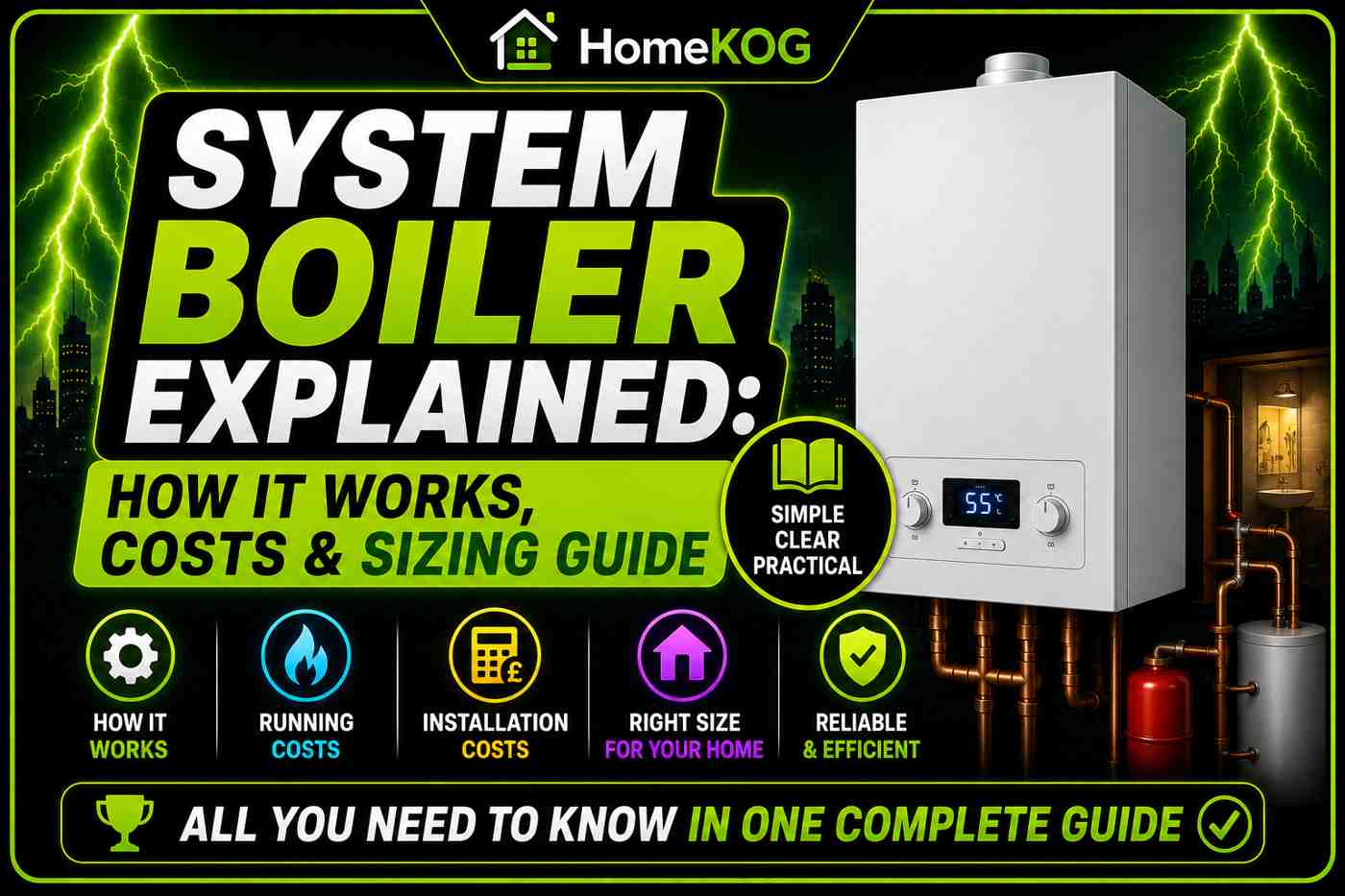

System Boiler Explained: What It Is, How It Works, Costs & Sizing Guide
A system boiler is a central heating unit that heats water, stores it in a separate hot water cylinder, and delivers consistent hot water to multiple taps and showers simultaneously. Unlike a conventional boiler, it connects directly to the mains water supply — no cold water tank in the loft is required. System boilers suit larger homes with two or more bathrooms and high simultaneous hot water demand. Installation typically costs £2,500 to £5,000. when considering a new heating system, it is essential to evaluate conventional boiler system efficiency ratings as they can impact energy usage and costs over time. Higher efficiency ratings often translate to lower utility bills, making them an attractive option for budget-conscious homeowners. Additionally, many newer models are designed to meet strict environmental standards, further enhancing their appeal.
Introduction
A system boiler is the right choice for the type of home that a combi boiler cannot serve adequately — larger properties with multiple bathrooms, higher occupancy, and regular simultaneous demand for hot water across several outlets at once.
A system boiler heats water from the mains and stores it in a separate hot water cylinder, typically located in an airing cupboard. This stored supply can be drawn on by multiple taps and showers simultaneously without any pressure reduction — the defining performance advantage that makes a system boiler the preferred choice for family homes with two or more bathrooms.
All modern system boilers are A-rated condensing boilers and hydrogen-ready to a 20% blend. This guide covers what a system boiler is, how it works, how to choose the right size, the main pros and cons, installation costs, and the leading models available in the UK.

Understanding System Boilers: The Core Relationships
A system boiler connects a series of components that work together to heat, store, and distribute hot water throughout a larger property.
- A system boiler is a central heating unit that heats water drawn directly from the mains supply and stores it in a separate hot water cylinder, providing both central heating and domestic hot water to the property.
- A hot water cylinder is the external storage component of a system boiler installation — it receives heated water from the boiler and holds it at temperature until demand draws it to taps, showers, and baths.
- An internal heat exchanger inside the system boiler transfers heat from the gas burner to the mains water supply, raising it to the target temperature before directing it to the cylinder.
- An internal pump is a built-in component of a system boiler that circulates heated water through the central heating circuit and to the hot water cylinder — its integration within the boiler unit eliminates the need for an external pump.
- An internal expansion vessel is a built-in sealed pressure vessel within the system boiler that accommodates the thermal expansion of water as it heats, removing the need for a loft-mounted feed and expansion tank.
- A conventional boiler requires both a hot water cylinder and a cold water storage tank in the loft, while a system boiler requires only the cylinder — making it more space-efficient in properties where loft space is limited.
- A combi boiler heats water on demand without any cylinder, making it more compact but unable to supply multiple outlets simultaneously — the key performance limitation that makes a system boiler better suited to larger homes.
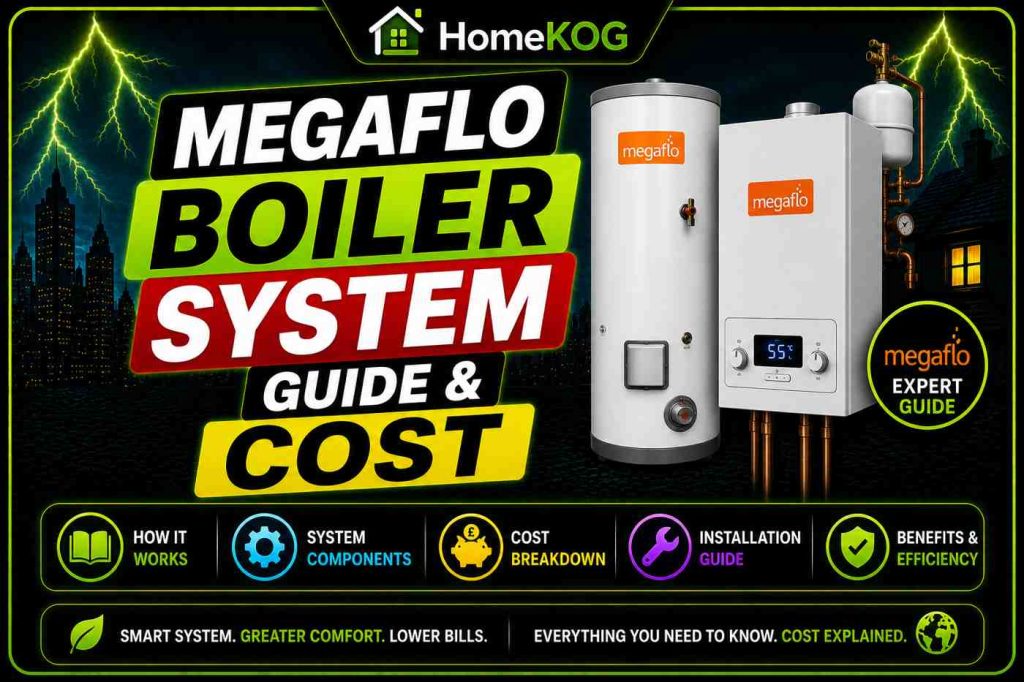
- An unvented hot water cylinder — such as the Megaflo range from Heatrae Sadia — connects to the mains water supply and delivers hot water at mains pressure, producing stronger shower and tap flow rates than a gravity-fed vented cylinder.
- An S-plan central heating system uses a separate zone valve to control the hot water cylinder circuit and the central heating circuit independently, providing flexible temperature management — and system boilers are compatible with this configuration.
- An immersion heater installed in the hot water cylinder provides an electric backup heat source that allows domestic hot water to be produced independently if the boiler develops a fault.
- A Gas Safe registered engineer is the only professional legally qualified to install, service, or repair a system boiler in the UK.
- A 10 to 12 year manufacturer warranty is available on leading system boiler models from Worcester Bosch, Viessmann, and Vaillant when installed by an accredited engineer, providing financial protection against component failure throughout the majority of the boiler’s operational life.
What Is a System Boiler?
A system boiler is one of the three main types of gas boiler used in UK homes, alongside combi boilers and conventional boilers. It heats water drawn directly from the mains and stores it in a separate hot water cylinder, providing a ready supply of hot water that can be delivered to multiple outlets simultaneously at consistent pressure.
The defining characteristic of a system boiler — compared to a conventional boiler — is that all the major components are built into the boiler unit itself. The pump, expansion vessel, and pressure relief valve are all contained within the boiler, removing the need for a separate cold water storage tank and feed and expansion tank in the loft. Only the hot water cylinder is external to the boiler unit.
This integrated design makes system boilers faster and simpler to install than conventional boilers, and more space-efficient in properties where loft storage space is not available. In homes where a cylinder is already in place, replacing an existing system boiler is a straightforward like-for-like installation that retains the existing cylinder and associated pipework.
How Does a System Boiler Work?
The Heating and Hot Water Cycle
- Cold water from the mains enters the system boiler directly, without passing through a cold water storage tank.
- The gas burner fires and heats the internal heat exchanger.
- The heat exchanger transfers heat from the combustion gases to the mains water as it passes through, raising its temperature.
- The internal pump circulates the heated water through two circuits: the central heating radiator circuit and the hot water cylinder.
- In the cylinder, the heated primary circuit water passes through an internal coil, transferring heat to the stored domestic hot water without the two water supplies mixing.
- The cylinder thermostat monitors the stored water temperature and signals the boiler to fire when reheating is required.
- When a tap, shower, or bath is opened, hot water from the cylinder is delivered at the available supply pressure — mains pressure in an unvented system, gravity pressure in a vented system.
- Cold mains water automatically replenishes the cylinder as hot water is drawn off.
S-Plan Systems
System boilers are compatible with S-plan central heating configurations, which use separate zone valves to independently control the hot water cylinder and central heating circuits. This allows the cylinder to be heated separately from the radiators, enabling different heating schedules for domestic hot water and space heating — improving efficiency in homes where the two demands occur at different times.
What Size System Boiler Do I Need?
Choosing the correct output size for a system boiler is essential for both efficiency and performance. An undersized boiler struggles to meet peak demand; an oversized model cycles inefficiently at low demand.
System boiler output is measured in kilowatts (kW) and ranges from approximately 9kW to 40kW. The correct size depends on the number of radiators in the property and the hot water demand generated by the number of bathrooms. When considering boiler size recommendations for families, it’s essential to assess the household’s specific needs, such as the frequency of hot water usage and the size of the living space. Larger families typically require higher output boilers to ensure adequate heating and hot water supply throughout the day. Consulting with a heating professional can help determine the ideal size for optimum efficiency.
| System Boiler Size | Bathrooms | Radiators | Typical Property |
|---|---|---|---|
| 9kW – 15kW | 1 | Up to 10 | 2–3 bedroom house, 1 bathroom |
| 18kW – 26kW | 2–3 | Up to 15 | 3–4 bedroom house, 2 bathrooms |
| 27kW – 40kW | 3 or more | 20+ | 4–5 bedroom house, 3+ bathrooms |
These are general guidelines — the precise output required for your property should be confirmed by a Gas Safe engineer carrying out a heat loss calculation, which accounts for the property’s insulation level, window area, and ceiling height in addition to its size and radiator count.
System Boiler vs Combi Boiler vs Conventional Boiler
Understanding where a system boiler sits relative to the other main boiler types clarifies exactly which households it is designed to serve.
| Feature | System Boiler | Combi Boiler | Conventional Boiler |
|---|---|---|---|
| Hot water cylinder required | Yes | No | Yes |
| Cold water loft tank required | No | No | Yes |
| Multiple simultaneous outlets | Yes | Limited | Yes |
| Space required | Medium | Low | High |
| Mains pressure connection | Yes | Yes | No (gravity fed) |
| Best for | 3–5 bed, 2+ bathrooms | 1–3 bed, 1 bathroom | Large older homes |
| Installation complexity | Medium | Low | High |
System Boiler vs Combi Boiler
A combi boiler heats water on demand from the mains, with no storage. It is more compact than a system boiler — no cylinder is required — but its on-demand output is split across concurrent demands, causing pressure reduction when multiple outlets are used simultaneously.
A system boiler stores a volume of pre-heated water that can supply multiple outlets simultaneously without reducing flow at individual taps or showers. For households where two people regularly shower at the same time, or where bath filling and kitchen use overlap, the system boiler’s stored supply consistently outperforms a combi’s on-demand output.
System Boiler vs Conventional Boiler
Both a system boiler and a conventional boiler use a hot water cylinder and can supply multiple outlets simultaneously. The difference is that a system boiler has all its major components — pump, expansion vessel, pressure relief valve — built in, eliminating the need for a cold water storage tank and feed and expansion tank in the loft.
For properties without existing loft tank infrastructure, a system boiler is significantly easier and less expensive to install than a conventional boiler. For properties that already have a conventional system with a loft tank in good condition, a like-for-like conventional replacement may be more cost-effective than converting to a system boiler.
Pros of a System Boiler
- Supplies multiple outlets simultaneously — the hot water cylinder stores a substantial preheated volume that serves several taps, showers, and baths simultaneously without pressure loss.
- No cold water loft tank required — connecting directly to the mains water supply eliminates the need for loft-mounted components, making system boilers more space-efficient than conventional boilers.
- Faster and simpler installation — all major components are integrated within the boiler unit, reducing the installation time and complexity compared to a full conventional system.
- Mains pressure performance — paired with an unvented cylinder such as a Megaflo, a system boiler delivers hot water at full mains pressure, producing genuinely powerful shower and bath performance.
- Compatible with immersion heater backup — a cylinder can accommodate an immersion heater, providing a hot water backup source if the boiler develops a fault.
- Compatible with solar thermal panels — system boilers work with solar thermal collectors that contribute heat to the cylinder, reducing gas consumption throughout the year.
- A-rated efficiency — all modern system boilers are condensing and A-rated, achieving over 90% efficiency and reducing running costs compared to older non-condensing predecessors.
- Hydrogen-ready — all current system boilers from UK manufacturers are compatible with hydrogen-blend gas supplies up to 20%, future-proofing the installation against the UK’s planned gas network transition.
Cons of a System Boiler
- Requires cylinder space — a hot water cylinder must be accommodated somewhere in the property, typically an airing cupboard. Properties without available storage space cannot accommodate a system boiler without creating it.
- Hot water volume is finite — the available hot water is limited to the cylinder’s capacity. During extended periods of high demand, the stored volume can be exhausted, requiring a wait while the cylinder reheats.
- Higher cost than a combi boiler — the cylinder and associated pipework add to the total installation cost compared to a combi boiler replacement in the same property.
- Standing heat loss from cylinder — maintaining a full cylinder of water at 60°C continuously uses energy even when no hot water is being drawn off. A well-insulated cylinder minimises this loss, but it cannot be eliminated entirely.
- Dependent on mains water pressure — while system boilers perform well where mains pressure is adequate, properties with low incoming mains pressure deliver reduced performance. A booster pump can address this but adds to the installation cost.
How Much Does a System Boiler Cost?
The total cost of a system boiler installation depends on the output size, brand, whether the hot water cylinder is being replaced, and the complexity of the installation.
| Cost Component | Price Range |
|---|---|
| System boiler unit (supply only) | £800 – £2,000 |
| Hot water cylinder (if replacing) | £500 – £1,000 |
| Installation labour | £1,000 – £2,000 |
| Total (supply, cylinder, installation) | £2,500 – £5,000 |
A like-for-like system boiler replacement — retaining the existing cylinder and associated pipework — is significantly less expensive than a full system installation including a new cylinder. Most homeowners replacing an existing system boiler retain the existing cylinder if it is in good condition, reducing the total cost meaningfully. The impact of regular boiler maintenance cannot be overstated, as it plays a crucial role in extending the lifespan of the system and ensuring optimal performance. Homeowners who prioritize maintenance can often avoid costly repairs and replacements down the line. This proactive approach not only enhances efficiency but also contributes to significant energy savings over time.
Finance options are available to spread the cost over 2 to 10 years, with interest-free terms available through specialist heating installers.
Leading System Boiler Models
Viessmann Vitodens 100-W System Boiler
The Vitodens 100-W is a reliable and efficient system boiler suited to larger homes with more than one bathroom. It features a stainless steel Inox-Radial heat exchanger, an LCD touchscreen display, and a high modulation ratio of 1:6 — meaning it can reduce its output significantly during low-demand periods rather than cycling on and off at full power. Available in output sizes from 26kW to 35kW.
Worcester Bosch Greenstar 8000 Life System Boiler
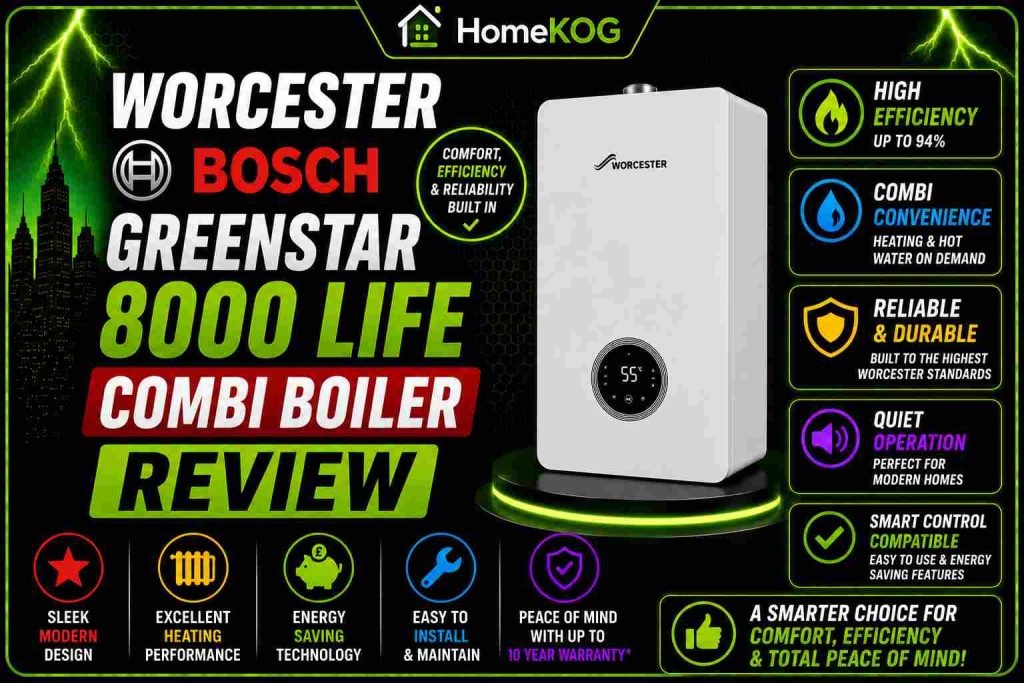
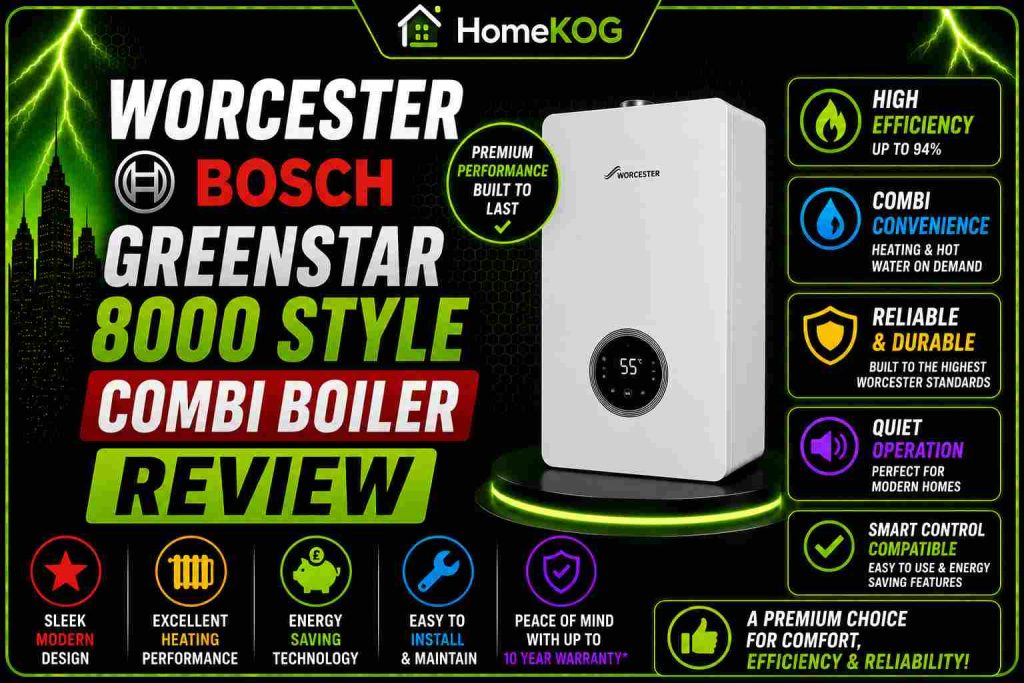
The Greenstar 8000 Life is a premium system boiler from one of the UK’s most recognised brands. It achieves 94% efficiency, is available in output sizes from 30kW to 35kW, and carries a 12-year warranty when installed by a Worcester Bosch accredited installer. It is hydrogen-ready and compatible with the full range of Bosch smart controls.
Vaillant ecoTEC Plus System Boiler
The ecoTEC Plus is a high-performance system boiler designed for larger homes with significant heating and hot water demands. It features a stainless steel heat exchanger, a backlit display, and is available in output sizes from 12kW to 37kW. The ecoTEC Plus is compatible with Vaillant’s VRC weather compensation controls, which modulate boiler output based on outdoor temperature for improved efficiency.
Key Considerations When Choosing a System Boiler
Efficiency Rating
All new system boilers are A-rated condensing models — this is a legal requirement for all new gas boiler installations in the UK. However, efficiency ratings still vary between models, with the most efficient current units achieving 94% compared to the 90% minimum. A higher efficiency rating reduces annual gas consumption and lowers heating bills over the boiler’s operational life.
Warranty Length
Manufacturer warranties on system boilers typically range from 5 to 12 years, depending on the brand and whether the installation is carried out by an accredited engineer. A longer warranty provides financial protection against unexpected repair costs and is a useful indicator of the manufacturer’s confidence in their product. Warranties from Worcester Bosch, Viessmann, and Vaillant of up to 12 years are available on leading models.
Smart Heating Controls
Pairing a system boiler with a smart thermostat — such as Hive, Nest, or a manufacturer-specific controller — enables remote management of heating schedules, geolocation-based automation, and energy monitoring. Smart controls reduce heating bills by ensuring the boiler fires only when and where heat is genuinely needed, and are particularly effective in larger homes where heating multiple zones efficiently is a meaningful operational challenge.
Qualified Installation
All system boiler installations must be carried out by a Gas Safe registered engineer. Using an unregistered engineer is illegal, invalidates the manufacturer’s warranty, and creates carbon monoxide and fire safety risks. Verify any engineer’s Gas Safe registration number at gassaferegister.co.uk before allowing work to proceed.
How Does Boiler Commissioning Affect the Performance of a System Boiler?
The efficiency of a system boiler heavily relies on the boiler commissioning process explained simply. Proper commissioning ensures that all components are calibrated correctly, optimizing performance and energy consumption. Neglecting this stage can lead to irregular operation, decreased efficiency, and increased maintenance costs, ultimately affecting overall system reliability.
Frequently Asked Questions
What is a system boiler?
A system boiler is a central heating unit that heats water drawn from the mains and stores it in a separate hot water cylinder, providing both central heating via radiators and domestic hot water to multiple outlets simultaneously. Unlike a conventional boiler, a system boiler has all its major components — including the pump and expansion vessel — built into the unit, removing the need for a cold water storage tank in the loft. It is best suited to larger homes with two or more bathrooms and high simultaneous hot water demand.
What is the difference between a system boiler and a combi boiler?
A system boiler stores pre-heated water in a hot water cylinder and can supply multiple taps and showers simultaneously at consistent pressure. A combi boiler heats water on demand directly from the mains without any cylinder, making it more compact but unable to maintain full pressure when multiple outlets are in use at the same time. A system boiler suits larger homes with multiple bathrooms; a combi boiler suits smaller homes with a single bathroom and lower simultaneous demand.
What is the difference between a system boiler and a conventional boiler?
Both system and conventional boilers store hot water in a cylinder and can supply multiple outlets simultaneously. The difference is that a conventional boiler also requires a cold water storage tank and a feed and expansion tank in the loft, while a system boiler connects directly to the mains and has its expansion vessel built in. System boilers are faster to install and need less loft space than conventional boilers, making them the preferred choice in properties without existing loft tank infrastructure.
Does a system boiler need a hot water tank?
Yes — a system boiler requires a separate hot water cylinder to store the water it heats. The cylinder is typically installed in an airing cupboard and must be adequately sized to meet the household’s peak hot water demand. Most homeowners replacing an existing system boiler retain their existing cylinder if it is in good condition, reducing the total installation cost. A new cylinder adds £500 to £1,000 to the total cost when required.
What size system boiler do I need?
The correct size depends on the number of radiators and bathrooms in your property. A 9kW to 15kW model suits a 2 to 3 bedroom home with one bathroom and up to 10 radiators. An 18kW to 26kW model suits a 3 to 4 bedroom home with 2 to 3 bathrooms and up to 15 radiators. A 27kW to 40kW model is required for a 4 to 5 bedroom home with 3 or more bathrooms and 20 or more radiators. A Gas Safe engineer should carry out a heat loss calculation to confirm the precise output required for your specific property.
How much does a system boiler installation cost?
A system boiler installation including the boiler unit, a new hot water cylinder, and installation labour typically costs between £2,500 and £5,000. A like-for-like replacement retaining the existing cylinder and pipework costs significantly less — typically £2,000 to £3,500. The total is affected by the output size and brand of the boiler chosen, the condition of the existing cylinder, and the complexity of any pipework modifications required. Finance options are available to spread the cost over 2 to 10 years.
Can I convert a system boiler to a combi boiler?
Yes — converting from a system boiler to a combi boiler is possible and removes the need for the hot water cylinder, freeing up the airing cupboard space it occupies. The conversion involves removing the cylinder and associated pipework and installing the combi boiler in place of the existing system boiler. The cost of conversion is higher than a like-for-like replacement due to the additional pipework work involved. A combi boiler may not be suitable if the property has more than one bathroom and regular simultaneous hot water demand.
Conclusion: Is a System Boiler Right for Your Home?
A system boiler is the right heating solution for larger homes where a combi boiler’s on-demand output cannot keep up with simultaneous demand across multiple bathrooms. Its stored cylinder supply, integrated components, and mains pressure connection make it a practical, efficient, and reliable choice for households with four or more occupants and two or more bathrooms.
The additional space required for a hot water cylinder and the slightly higher installation cost compared to a combi boiler are the practical trade-offs — but for the homes a system boiler is designed to serve, those trade-offs are significantly outweighed by the performance improvement in hot water delivery.
Get a fixed price from a Gas Safe registered engineer, confirm the correct output size through a proper heat loss calculation, and choose a model with a manufacturer warranty that reflects the longevity you expect from the investment. A well-specified system boiler, correctly installed and annually serviced, will heat your home reliably for 15 years or more.