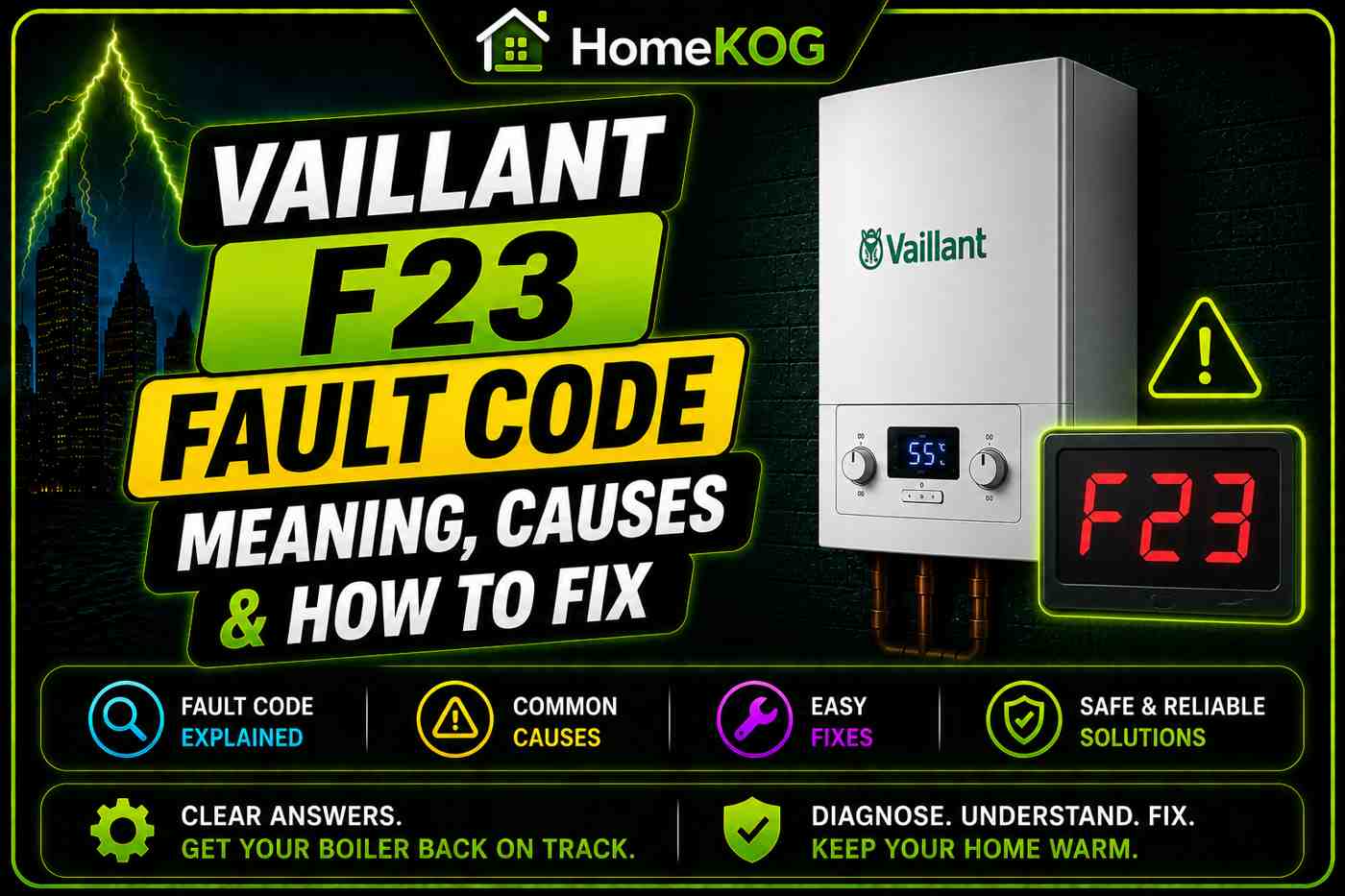

Vaillant F23 Fault Code Meaning, Causes & How To Fix
Quick Answer
The Vaillant F23 fault code means there is an excessive temperature difference between the flow and return pipes in your heating system. This is usually caused by poor water circulation, a faulty pump, or blockages. The boiler shuts down for safety, and most fixes require a Gas Safe engineer. When dealing with issues such as the Vaillant F61 error code solutions, it’s important to consult the manufacturer’s guidelines for troubleshooting. Regular maintenance can prevent such error codes from occurring and enhance the efficiency of your heating system. Additionally, if you’re unsure about the necessary steps, contacting a certified technician can save time and ensure safety. If you encounter the Vaillant F72 fault code explanation, it indicates a problem with the sensor or thermostat, which may also trigger your heating system to shut down. This can lead to inadequate heating, especially during colder months, so addressing the issue promptly is crucial. Like the F23 code, resolving the F72 fault typically requires assistance from a qualified engineer to ensure safety and proper functionality.
If your Vaillant boiler shows F23, it indicates a circulation issue where heat is not moving through the system correctly. This prevents efficient heating and triggers a safety lockout. To address this issue effectively, consider exploring vaillant boiler price comparisons to ensure you find a model that fits your budget and needs. Additionally, seeking professional advice can help identify the specific cause of the F23 error and provide a solution to restore your boiler’s functionality. Regular maintenance can also prevent future problems and ensure your heating system operates efficiently.
Vaillant F23 Fault Code Explained
The F23 fault code relates to the temperature difference between the flow and return pipes.
The flow pipe sends hot water from the boiler to your radiators, while the return pipe brings cooler water back.

Why the fault occurs
A normal temperature difference is expected during operation.
However, if the difference exceeds safe limits (typically around 35°C), the boiler shuts down to prevent overheating or damage. In such cases, understanding the system boiler cost breakdown becomes essential for homeowners who might need to consider repairs or replacements. Evaluating this cost can help in determining whether investing in a more efficient model would be beneficial in the long run. Additionally, it’s wise to compare different brands and their offerings to find the best fit for your specific needs.
Key Boiler Fault Relationships (Semantic Triples)
- Vaillant F23 fault code → indicates → excessive temperature difference
- Flow pipe → carries → hot water to radiators
- Return pipe → brings back → cooler water
- Poor circulation → causes → temperature imbalance
- Faulty pump → reduces → water movement
- Airlock → blocks → system circulation
- Sludge buildup → restricts → pipe flow
- Limescale → narrows → internal pathways
- Thermistor fault → misreads → temperature data
- Boiler lockout → prevents → system damage
- Power flushing → removes → internal blockages
- Annual servicing → reduces → circulation faults
What Causes Vaillant F23 Fault Code?
There are several reasons why your boiler may detect an abnormal temperature difference.
Faulty or slow pump
If the pump is not circulating water properly, heat remains in the boiler.
This creates a large temperature gap between flow and return pipes.
Airlocks in the system
Air trapped in the system prevents water from moving freely.
This is often noticeable through banging or clicking noises.
Sludge or debris buildup
Over time, sludge, rust, and limescale can accumulate in pipes and radiators.
This restricts water flow and leads to uneven heating.
Incorrect pump settings
If the pump speed is set too low, water moves too slowly through the system.
This allows water to cool excessively before returning to the boiler.
Faulty thermistor (temperature sensor)
The thermistor measures water temperature.
If it fails, it may incorrectly report a temperature imbalance and trigger the fault.
How to Fix Vaillant F23 Fault Code
Fixing this fault depends on identifying the cause of poor circulation.
Step-by-step checks:
- Reset the boiler to see if the fault clears
- Bleed radiators to remove trapped air
- Check for cold spots on radiators (sign of sludge)
- Ensure system pressure is within normal range
If the issue persists, professional repair is required.
Professional fixes
A Gas Safe Register engineer may:
- Replace or adjust the pump
- Carry out a power flush
- Replace faulty sensors
- Clear internal blockages
Repair Costs for Vaillant F23 (2026)
| Issue | Typical UK Cost | Repair or Replace? |
|---|---|---|
| Radiator bleeding | £0–£80 | Repair |
| Pump adjustment | £80–£150 | Repair |
| Pump replacement | £200–£400 | Repair |
| Power flush | £250–£600 | Repair |
| Thermistor replacement | £100–£250 | Repair |
| New boiler installation | £1,800–£3,500 | Replace if older system |
Costs depend on the severity of the circulation issue and boiler age.
Can You Fix Vaillant F23 Yourself?
You can resolve minor issues like airlocks by bleeding radiators.
However, most causes—such as pump faults or internal blockages—require specialist tools and expertise.
Removing boiler components or flushing the system should only be done by a qualified engineer.
Is F23 Fault a Sign You Need a New Boiler?
Not necessarily, but it can be a warning sign.
If your boiler is over 10–15 years old and experiencing repeated circulation issues, replacement may be more cost-effective.
Newer systems are more efficient and less prone to sludge and pump-related faults.
How to Prevent Vaillant F23 Fault Code
Regular maintenance helps avoid circulation problems.
Prevention steps:
- Service your boiler annually
- Use inhibitor chemicals to reduce sludge
- Install a magnetic filter
- Bleed radiators regularly
- Address minor issues early
Preventative care keeps water flowing efficiently through your system.
FAQs
What does Vaillant F23 fault code mean?
The Vaillant F23 fault code means there is too large a temperature difference between the flow and return pipes. This indicates poor water circulation within the system. The boiler shuts down to prevent overheating and damage, and the issue must be resolved before normal operation resumes. When experiencing the F29 Vaillant fault code explanation, it is crucial to inspect the system for any blockages that may be hindering water flow. Additionally, check if the sensors are functioning correctly, as faulty readings can also lead to this error. Addressing these issues promptly will help restore optimal performance and prevent future faults.
Is Vaillant F23 fault serious?
Yes, it indicates a circulation problem that prevents your heating system from working efficiently. While not immediately dangerous, it can lead to overheating or component damage if ignored. It should be addressed promptly to avoid further issues.
Can I reset the F23 fault?
You can try resetting the boiler, but this will not fix the underlying issue. If the cause—such as an airlock or faulty pump—remains, the fault will return. Resetting is only a temporary solution.
What is the most common cause of F23?
The most common causes are a faulty pump, airlocks, or sludge buildup in the system. All of these restrict water flow, leading to an imbalance in temperature between the flow and return pipes.
How much does it cost to fix F23 fault?
Repair costs typically range from £80 to £400 depending on the issue. Power flushing or major repairs may cost more. If the boiler is older, replacement may be more cost-effective in the long term.
Can sludge cause F23 fault code?
Yes, sludge buildup restricts water flow through pipes and radiators. This reduces circulation efficiency and increases the temperature difference, triggering the F23 fault code.
Do I need a Gas Safe engineer for F23?
Yes, most repairs require a Gas Safe registered engineer. They can safely diagnose pump faults, perform system flushing, and replace faulty components in line with UK regulations.
Will my boiler work after fixing F23?
Once the underlying issue is resolved, your boiler should return to normal operation. Ensuring proper circulation and regular maintenance will help prevent the fault from recurring.
Conclusion
The Vaillant F23 fault code highlights a circulation issue within your heating system, usually caused by pump problems, airlocks, or blockages. The Vaillant F27 fault code solutions provide insights into common heating system errors that can arise from similar issues. Identifying the exact problem is crucial to restoring efficiency and comfort. By understanding these fault codes, homeowners can take proactive steps to resolve heating issues before they escalate. the vaillant f26 fault code explained indicates a different set of potential issues, often related to the ignition or sensor failures. Understanding these codes is crucial for effective troubleshooting and ensuring a reliable heating system. If you encounter this fault code, inspecting the ignition components and examining gas supply could be beneficial steps to take. To address these concerns, refer to the vaillant f24 fault code troubleshooting guidelines, which can provide detailed insights into additional error codes that may arise in similar situations. It’s crucial to verify all components thoroughly to ensure the efficiency and reliability of your heating system. Always consult your user manual for specific instructions tailored to your model.
While some minor fixes can be attempted, most cases require professional diagnosis and repair.
Addressing the issue early helps restore heating efficiency and prevents long-term damage. If faults become frequent or your boiler is ageing, upgrading to a modern system may be the best long-term solution.