
Radiator Hot at Top, Cold at Bottom: Causes and Fixes 2026
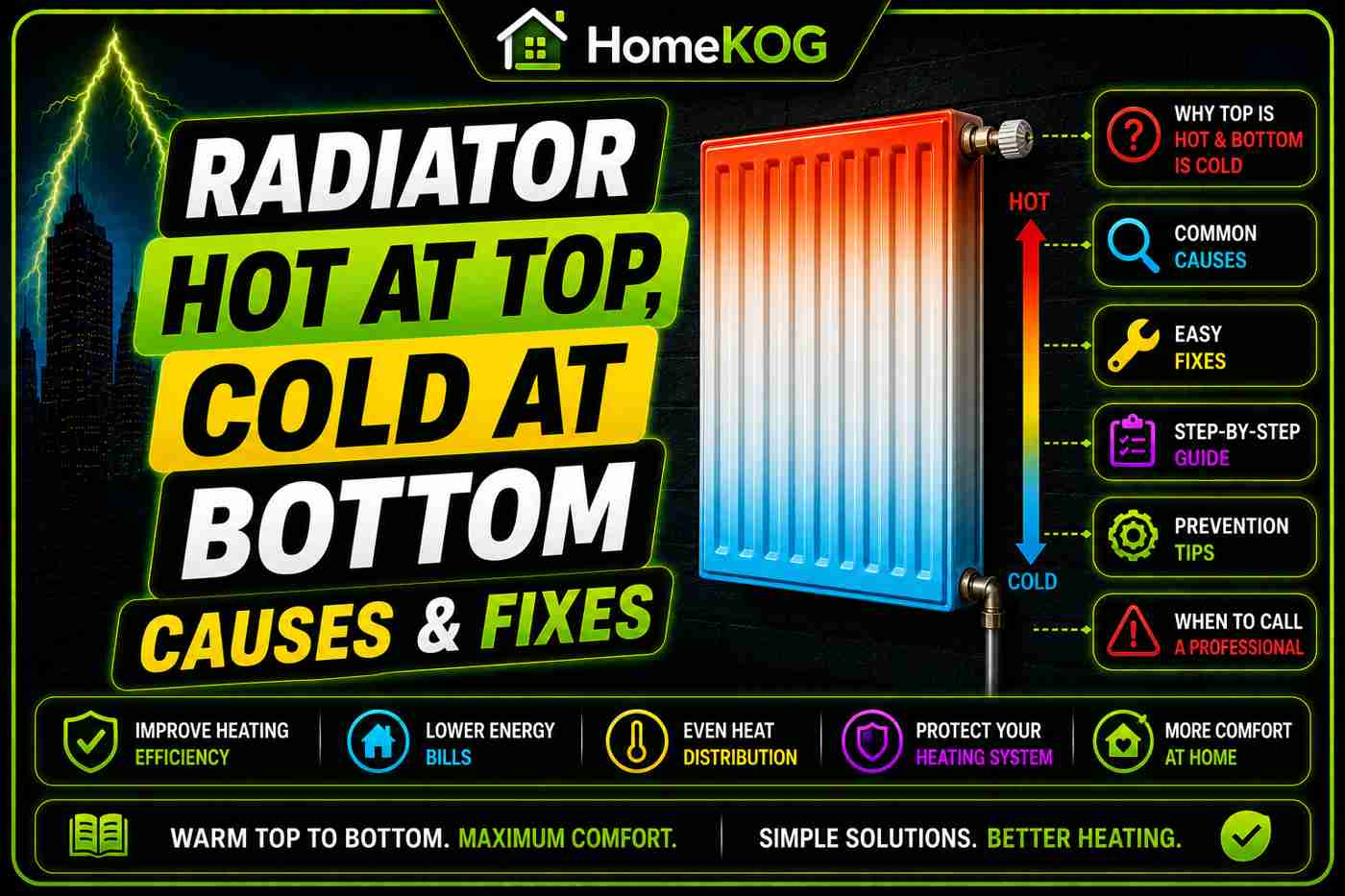
Quick Answer: A radiator that is hot at the top but cold at the bottom is almost always caused by sludge — iron oxide and debris that accumulates at the base of the radiator and blocks the flow channels, preventing hot water from reaching the lower section. This is a different problem to a radiator cold at the top (which is trapped air and is fixed by bleeding). A single cold-bottomed radiator can be fixed by removing it from the wall and flushing it with a hosepipe. Multiple cold-bottomed radiators require a professional power flush of the whole system. Prevention through a magnetic filter, inhibitor, and scale reducer stops sludge from accumulating in the first place.
A radiator that heats at the top but stays cold at the bottom is one of the most reliable indicators of sludge accumulation in the central heating system. It is a fundamentally different problem from a radiator cold at the top — which is caused by trapped air and is resolved by bleeding — and the fix is correspondingly different. Understanding why the cold-at-bottom pattern develops, how to resolve it, and crucially how to prevent it from recurring makes this a manageable issue rather than a signal that a new boiler or new radiators are needed.
How a Radiator Works
Hot water from the boiler travels through the flow pipework to each radiator in the home. Inside the radiator, the water is directed through internal channels — upwards, across, and back down — in a pattern designed to ensure that hot water contacts the entire radiator panel surface before returning to the boiler through the return pipework.
When everything is working correctly, the entire radiator surface — top, middle, and bottom — heats evenly. The progressive cooling from the top to the bottom of the return is normal, but the bottom should still reach a warm temperature under normal operation.

Why is the Radiator Hot at the Top and Cold at the Bottom?
The cause of a cold-bottomed radiator is almost always magnetite sludge — a thick black deposit formed when iron oxide (rust) from the internal surfaces of steel radiators combines with water in the heating circuit. Magnetite is ferromagnetic and significantly denser than water. As it circulates with the system water, it settles by gravity at the lowest, slowest-moving points in the circuit — typically the base of the radiator panels.
Once enough sludge has accumulated at the base of a radiator, it blocks the flow channels through which hot water should circulate in the lower section of the panel. Hot water can still flow through the upper channels — which is why the top of the radiator heats normally — but the lower section receives no hot water circulation and remains cold. The thicker the sludge layer, the larger the cold area. To address the issues caused by the blockage, it’s essential to consider radiator cover heat circulation effects. Improved design and maintenance practices can enhance the overall efficiency of your heating system, ensuring that warm air is distributed more evenly throughout the space. Regular maintenance not only prevents sludge buildup but also optimizes the performance of the radiator covers, allowing for better heat circulation and comfort.
Sludge formation is a natural consequence of metal and water coexisting in a closed circuit, accelerated by the absence of adequate corrosion inhibitor in the system water. Hard water areas with higher mineral content experience faster sludge formation. Systems without magnetic filtration accumulate sludge more rapidly because there is no ongoing mechanism removing the iron oxide particles from circulation.
Fixing a Single Cold-Bottomed Radiator
If only one radiator in the home has a cold bottom, the most practical fix is to remove it from the wall and flush it through with a garden hosepipe. This manual flush removes the accumulated sludge from that radiator specifically without requiring specialist equipment. In some cases, if the problem persists, you might need to check for bleeding air from your radiator to ensure proper heating efficiency. This process involves using a radiator key to open the valve and release trapped air that can prevent hot water from circulating. Regular maintenance like this can extend the life of your heating system and improve overall comfort in your home.
Step-by-Step Manual Flush
Step 1 — Isolate the radiator. Turn the thermostatic radiator valve (TRV) to 0. On the opposite side, locate the lockshield valve — covered with a plastic cap — and close it using an adjustable spanner. Count and note the number of turns used to close it (typically a quarter or half turn), as this must be returned to exactly the same position when refitting. If the radiator has no TRV, close both valves with the spanner. Allow at least one hour for the water in the radiator to cool completely.
Step 2 — Set up for the water release. Place old towels on the floor beneath the radiator valve connections and position buckets beneath both valve connections to catch the water. Have a container ready for the drained water.
Step 3 — Loosen the valve connection nuts. Using an adjustable spanner, loosen the connection nuts at both valve ends slightly — just enough for water to begin dripping. A small amount of water will emerge at this stage, not a large flow.
Step 4 — Open the bleed valve. Insert the bleed key into the bleed valve at the top of the radiator and open it. This allows air to enter the radiator as the water drains — the reverse of normal bleeding. Water will now flow more freely from the loosened nuts. Allow the radiator to drain completely into the buckets.
Step 5 — Remove the radiator. Once fully drained, fully disconnect the valve connection nuts and lift the radiator from its wall brackets. Keep the radiator level during removal to avoid spilling residual water. Carry it outside.
Step 6 — Flush the radiator. Connect a garden hosepipe to one of the valve connections and turn the water on fully. Allow the pressurised water to flow through the radiator and exit from the opposite valve connection. Hold the radiator at various angles and tap the panel gently with a rubber mallet to dislodge sludge adhered to the internal fins. Continue flushing until the water runs completely clear from both connection points.
Step 7 — Rehang and reconnect. Return the radiator to its wall brackets and reconnect the valve connection nuts. Open the lockshield valve the exact number of turns noted during isolation. Open the TRV to the desired temperature setting. Allow the radiator to refill — air in the radiator will cause it to gurgle. Open the bleed valve as soon as water rather than air starts to escape, then close it.
Step 8 — Repressurise and test. If the heating system is pressurised (sealed system), check the boiler pressure gauge and repressurise via the filling loop if the pressure has dropped below 1.0 bar. Switch the heating on and allow 20 to 30 minutes. Feel the bottom of the radiator — it should now heat evenly across its full height.
Fixing Multiple Cold-Bottomed Radiators — Power Flush
When multiple radiators show cold bottoms, sludge has distributed throughout the central heating circuit and a system-wide power flush is needed. A power flush cannot be performed as a DIY task — it requires specialist pumping equipment, chemical cleaning agents, a neutraliser, and an engineer who knows how to use them safely.
A Gas Safe or heating engineer connects a power flush machine to the central heating circuit and pumps water at high velocity through the system in both directions, dislodging accumulated sludge and debris from radiators, pipework, and the heat exchanger. Chemical cleaning agents are added to break down stubborn deposits. Once the water runs clean through the system, a pH-balanced neutraliser is added, followed by a correctly dosed inhibitor to protect the cleaned system going forward.
A power flush for a typical 3-bedroom home takes approximately 5 hours and costs £300 to £600 depending on the number of radiators and the degree of contamination. It is the most thorough cleaning method available and should be followed immediately by the installation of a magnetic filter on the return pipework to prevent rapid recontamination.
Prevention: Stopping Sludge from Building Up
Preventing sludge accumulation is significantly cheaper and simpler than cleaning it once it has accumulated to the point of causing cold radiators. Three measures work together to maintain a clean system.
A magnetic filter fitted to the return pipework near the boiler captures iron oxide particles continuously as they circulate in the water, removing them from the system before they can settle in radiators. The filter is cleaned at each annual service. Most boiler manufacturers require a magnetic filter as a warranty condition — it is standard practice for any new boiler installation.
A central heating inhibitor is a chemical added to the system water that reduces the rate of internal corrosion of metal components, significantly slowing the formation of iron oxide. It requires replenishment approximately every 12 months — typically topped up at the annual boiler service. Without inhibitor, even a recently flushed system will begin accumulating sludge rapidly. For homeowners looking to maintain their heating systems effectively, understanding boiler financing options for homeowners can provide crucial benefits. With various plans available, it’s easier to invest in regular maintenance and necessary upgrades, ensuring the longevity of the system. Homeowners can also explore energy-efficient options that may reduce overall heating costs in the long run.
A scale reducer installed on the cold water feed to the system reduces mineral deposits in hard water areas — these minerals contribute to the scaling that accelerates sludge formation, particularly on the heat exchanger.
FAQ
Why is my radiator hot at the top but cold at the bottom?
This pattern is caused by magnetite sludge accumulating at the base of the radiator and blocking the lower flow channels. Hot water circulates normally through the upper section but cannot penetrate the sludge layer to reach the lower panel. The fix is a manual flush of the individual radiator or a whole-system power flush if multiple radiators are affected.
Is a radiator cold at the bottom the same as a radiator cold at the top?
No — these are completely different problems with different causes and fixes. A radiator cold at the top while warm at the bottom indicates trapped air, which is resolved by bleeding the radiator with a bleed key. A radiator cold at the bottom while warm at the top indicates sludge, which requires flushing rather than bleeding.
Can I flush a radiator myself?
Yes, if only one radiator is affected and you are comfortable with the process described above. The manual flush requires basic tools — adjustable spanner, bleed key, buckets, towels, and a garden hosepipe. The process takes approximately 1 to 2 hours including setup, removal, flushing, and refitting. If multiple radiators are cold at the bottom, a professional power flush is required.
How long does a power flush take?
A typical 3 to 4-bedroom home with 10 to 14 radiators takes approximately 5 hours for a power flush. Larger properties with more radiators or more heavily contaminated systems take longer — up to a full day in extreme cases. The engineer will provide an estimate based on the property size and visible system condition.
How do I stop sludge from building up again?
Fit a magnetic filter on the return pipework — this is the single most effective ongoing measure. Maintain correct inhibitor concentration in the system water, checked and topped up at each annual service. In hard water areas, a scale reducer reduces mineral contribution to sludge formation. A system that is maintained with these three measures accumulates sludge far more slowly than one without them.
Conclusion
A radiator hot at the top and cold at the bottom is a reliable sign that the central heating system needs cleaning — specifically that sludge has accumulated in the affected radiators and is blocking hot water circulation in the lower panel sections. It is a maintenance issue rather than a boiler fault, and in most cases does not indicate that a new boiler or new radiators are needed. Additionally, homeowners should be aware of other common radiator problems in homes, such as uneven heating, which can also stem from trapped air in the system. Bleeding the radiators can often resolve this issue by allowing the trapped air to escape, ensuring more even heat distribution. Regular maintenance and timely interventions can help prevent more severe issues down the line.
A single affected radiator can be resolved as a DIY project through manual removal and hosepipe flushing. Multiple affected radiators require a professional power flush. In both cases, the three preventive measures — magnetic filter, inhibitor, and scale reducer — should be installed or confirmed in place after cleaning to prevent the sludge from building up again within a short time and returning the system to the same condition.