

New Boiler Cost UK 2026: Full Price Guide for Every Boiler Type
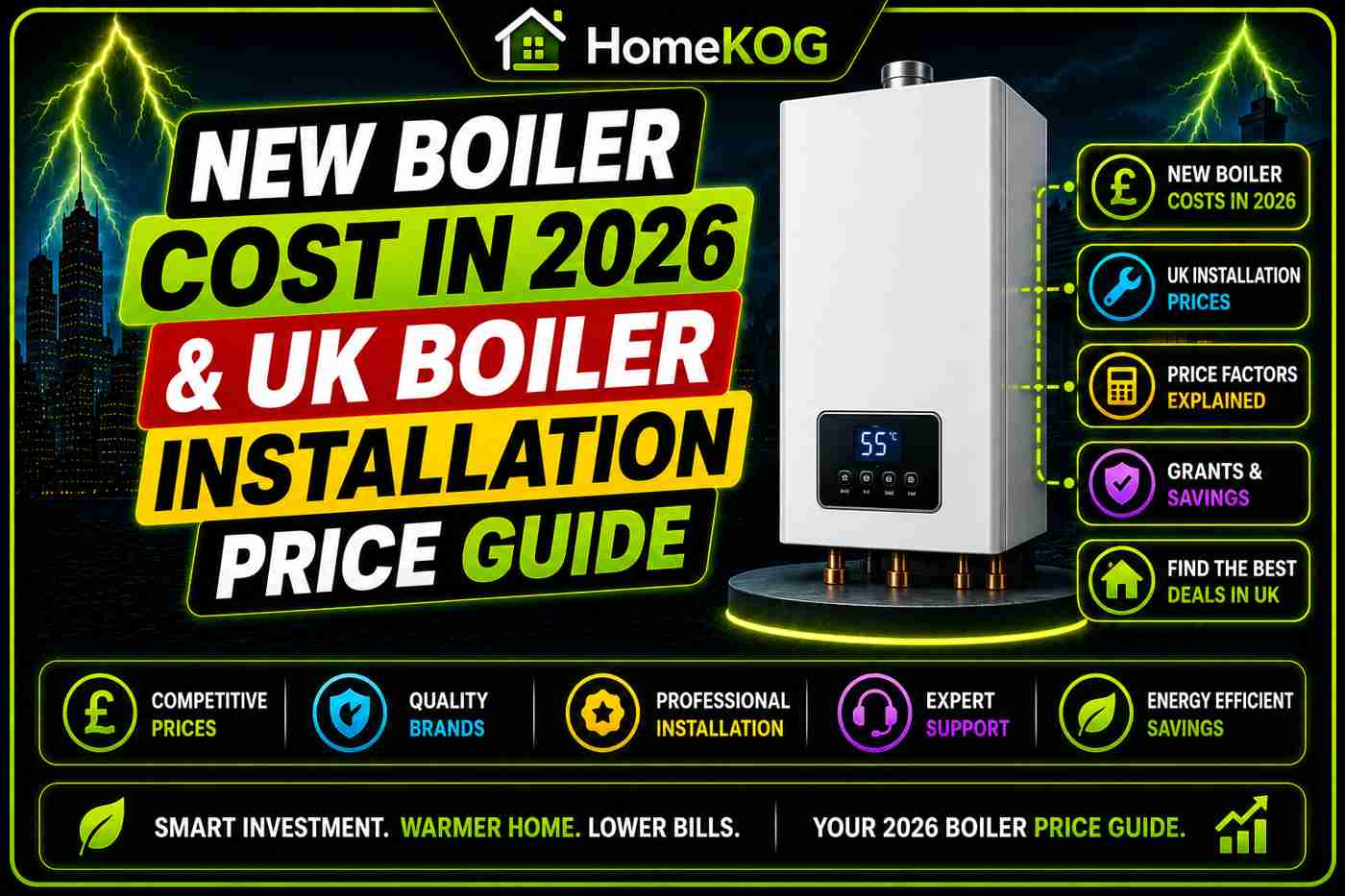
Quick Answer: A new boiler in the UK costs between £1,800 and £6,000, including installation in 2026, depending on boiler type, brand, property size, and installation complexity. A combi boiler replacement averages £2,295, a system boiler replacement averages £2,295 to £5,000, and a back boiler to combi conversion averages £4,000.
Introduction
Replacing a boiler is one of the most significant home improvement costs a UK homeowner faces, and understanding what drives the price helps you budget accurately, avoid overpaying, and identify the right boiler for your property. The price range is wide — a basic combi boiler in a small flat costs a fraction of a system boiler installation in a large family home — but the principles that determine cost remain consistent.
The cost of a new boiler in 2026 is influenced by the type of boiler, the brand and output rating you choose, the complexity of the installation, and where in the UK you live. Additional factors, including power flushes, smart thermostats, magnetic filters, and pipework upgrades, can increase the total, and government grants can significantly reduce it for eligible households.
This guide breaks down every cost component clearly, covers all boiler types, lists realistic price ranges by brand, explains what installation involves and why costs vary, and outlines the financial support available in 2026. Understanding potterton boiler installation costs is crucial for homeowners looking to budget effectively. This guide will also provide insights into different financing options, helping you make informed decisions about your heating solutions. Additionally, we will highlight seasonal promotions that might further reduce your overall expenses.

Understanding New Boiler Costs: The Core Relationships
New boiler pricing involves a network of interconnected factors — understanding how each one relates to the final cost enables more accurate budgeting and better purchasing decisions.
- A combi boiler is the most common replacement boiler type in the UK and produces the lowest installation cost when swapped like-for-like in a property with existing combi infrastructure.
- A system boiler installation requires a separate hot water cylinder, which adds to the total cost compared to a combi boiler replacement in the same property.
- A conventional boiler installation requires a hot water cylinder and a cold water storage tank, making it the most component-intensive and expensive boiler type to install in a new property.
- A back boiler conversion requires removing the old unit from behind the fireplace, installing new pipework, and positioning a replacement boiler in a new location — making it the most labour-intensive residential boiler installation available.
- Boiler output rating — measured in kilowatts — determines the unit cost of the boiler, with higher-output models required for larger properties commanding higher prices.
- Installation complexity increases cost when the boiler must be relocated, when pipework requires upgrading to current Gas Safe standards, or when the boiler type is being changed.
- Labour costs are higher in London and the South East than in other regions of the UK, reflecting the higher cost of Gas Safe engineer time in those areas.
- A power flush removes iron oxide sludge from the central heating circuit and is typically recommended during a boiler replacement to protect the new boiler’s heat exchanger from premature damage.
- A magnetic filter is installed on the central heating return pipe to continuously capture sludge particles, protecting the new boiler and extending its operational life.
- The Boiler Upgrade Scheme provides government grants of up to £7,500 to eligible households for replacing fossil-fuel heating systems with heat pumps or biomass boilers.
- The Energy Company Obligation (ECO4) provides funding for boiler replacements in low-income households that meet eligibility criteria related to benefits, income, and property energy efficiency.
- Boiler finance options allow homeowners to spread the cost of a new boiler over 2 to 10 years, with interest-free terms available from specialist heating installers.
How Much Does a New Boiler Cost in 2026?
The total cost of a new boiler includes the unit itself, installation labour, materials, and any additional work required. The following overview provides a starting point for budgeting based on boiler type and installation scenario.
Average Total Costs by Installation Type
| Installation Type | Average Total Cost |
|---|---|
| Combi boiler replacement (like-for-like) | £2,295 |
| System boiler replacement (like-for-like) | £2,295 – £5,000 |
| New boiler installation (no existing boiler) | £2,899 |
| System to combi conversion | £2,699 |
| Back boiler to combi conversion | £3,499 – £5,000 |
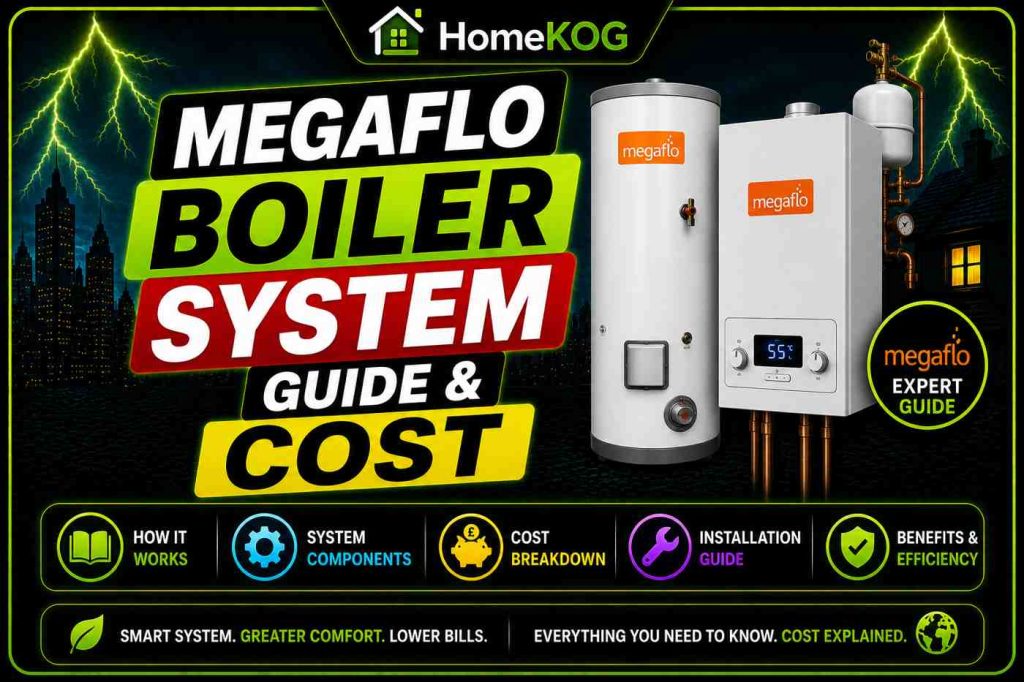
| Megaflo unvented system installation | £2,999 |
Prices correct as of January 2026.
These figures represent typical total costs including the boiler unit, installation labour, standard materials, and a new flue. Additional items such as a power flush, magnetic filter, smart thermostat, or extended warranty are not included in these base figures.
Boiler Costs by Type
Combi Boiler Cost
A combi boiler heats domestic hot water on demand from the mains and provides central heating from a single wall-hung unit — no cylinder or storage tanks required. It is the most popular boiler type in UK homes and produces the lowest total replacement cost when installed like-for-like.
| Cost Component | Price Range |
|---|---|
| Boiler unit (supply only) | £700 – £1,800 |
| Installation labour | £800 – £1,500 |
| Total (supply and installation) | £1,800 – £4,000 |
Combi boilers are best suited to homes with one or two bathrooms and up to 3 bedrooms. In larger properties with multiple bathrooms and high simultaneous hot water demand, a system boiler is typically a better match.
System Boiler Cost
A system boiler heats water stored in a separate hot water cylinder, delivering consistent high-pressure hot water to multiple outlets simultaneously. It suits larger homes with 2 or more bathrooms and higher household occupancy.
| Cost Component | Price Range |
|---|---|
| Boiler unit (supply only) | £800 – £2,000 |
| Installation labour | £1,000 – £2,000 |
| Hot water cylinder | £500 – £1,000 |
| Total (supply, cylinder, and installation) | £2,500 – £5,000 |
Conventional Boiler Cost
A conventional boiler — also called a regular or heat-only boiler — requires a hot water cylinder and a cold water storage tank. It is the most suitable option for large older properties with existing infrastructure, and is the most complex boiler type to install in a property without that infrastructure already in place.
| Cost Component | Price Range |
|---|---|
| Boiler unit (supply only) | £700 – £2,500 |
| Installation labour | £1,000 – £2,500 |
| Hot water cylinder and cold water tank | £500 – £1,500 |
| Total (supply, tanks, and installation) | £2,200 – £5,500 |
Back Boiler Conversion Cost
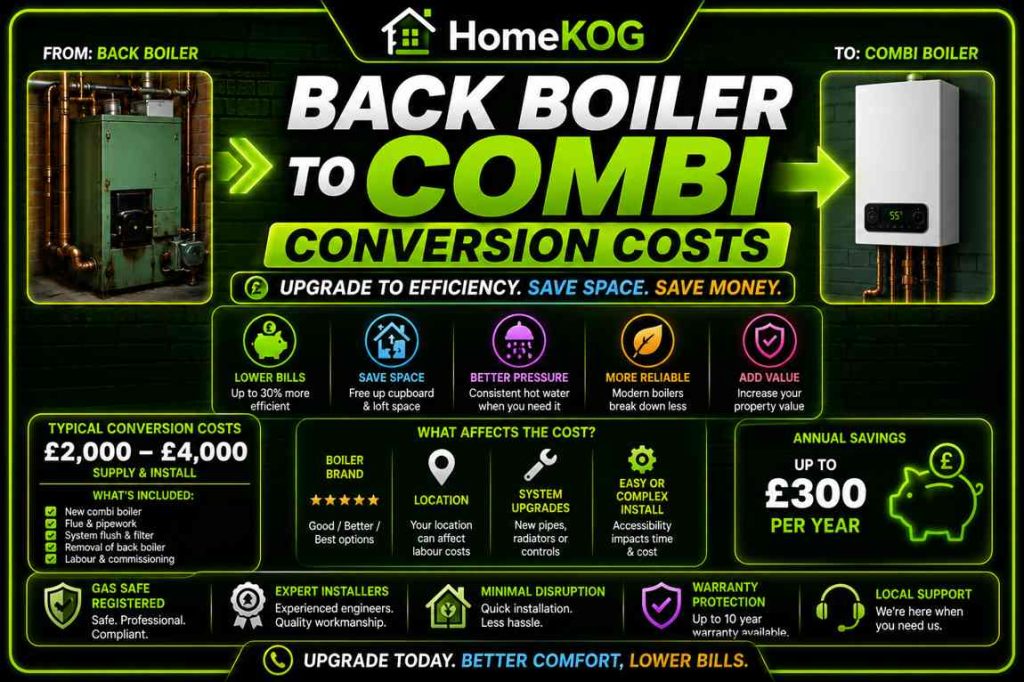
Converting from a back boiler to a combi boiler is the most labour-intensive standard residential boiler installation. The process involves decommissioning or removing the old back boiler from behind the fireplace, installing new pipework to a new boiler location, and fitting the replacement unit with a new flue.
| Cost Component | Price Range |
|---|---|
| Back boiler removal and decommissioning | £300 – £600 |
| New combi boiler supply | £700 – £1,800 |
| Pipework and installation labour | £1,500 – £2,500 |
| Total | £3,000 – £5,000 |
The average cost of a back boiler-to-combi conversion is approximately £4,000. The conversion typically takes 2 to 3 days and can reduce annual energy bills by over £800 due to the efficiency improvement from a 70%-rated back boiler to a 94% A-rated condensing replacement.
Electric Boiler Cost
Electric boilers are an option for properties without a gas connection — most commonly flats, small homes, and rural properties off the gas grid. They are cheaper to purchase and install than gas boilers but significantly more expensive to run due to the higher unit cost of electricity.
| Cost Component | Price Range |
|---|---|
| Electric boiler unit (supply only) | £500 – £3,000 |
| Installation | £1,500 – £3,000 |
| Total | £2,000 – £6,000 |
Electric boilers are most practical for flats and 1 to 2 bedroom homes with low heating demand. They are not cost-effective for larger properties with high heating requirements.
Oil Boiler Cost
Oil boilers serve properties in rural areas not connected to the gas grid. They use oil or diesel as fuel, which must be stored in an external oil tank on the property.
| Cost Component | Price Range |
|---|---|
| Oil boiler unit (supply only) | £1,000 – £4,000 |
| Installation | £1,500 – £3,000 |
| Total | £2,500 – £7,000 |
Oil boilers have higher annual running costs than gas — approximately £1,300 per year — and require an OFTEC-registered engineer for installation and servicing rather than a Gas Safe-registered engineer.
New Boiler Costs by Brand
The brand you choose affects both the upfront cost of the boiler unit and the long-term reliability, warranty length, and availability of parts. The following table outlines typical supply-only price ranges for the leading UK boiler brands.
| Brand | Price Range (Supply Only) | Key Strengths |
|---|---|---|
| Worcester Bosch | £1,000 – £2,500 | Which? Best Buy, up to 12-year warranty, wide installer network |
| Viessmann | £900 – £2,200 | High efficiency, hydrogen-ready, premium build quality |
| Vaillant | £1,000 – £2,000 | Strong reliability record, long warranties, wide parts availability |
| Ideal | £700 – £1,800 | Competitive pricing, up to 12-year warranty on selected models |
| Baxi | £850 – £1,500 | Budget-friendly entry point, reliable mid-range performance |
| Alpha | £600 – £1,200 | Budget-friendly, suitable for smaller properties |
| Glow-worm | £600 – £1,200 | Cost-effective, straightforward installation |
| Potterton | £600 – £1,100 | Affordable, widely available parts |
Choosing a brand with a 10 to 12-year warranty and a wide installer network reduces long-term maintenance risk and ensures that accredited engineers are accessible for servicing or repairs.
Breakdown of Installation Costs
Installation cost is the component that varies most significantly between quotes and between regions. Understanding what installation includes helps you evaluate quotes accurately and identify any items that may be missing.
| Installation Component | Price Range | Notes |
|---|---|---|
| Labour (standard combi swap) | £800 – £1,250 | Increases to £2,500 for system or conventional boilers |
| Materials (flue, fittings, valves) | £100 – £500 | Standard components for most installations |
| Power flush | £300 – £750 | Recommended when replacing a boiler in an older system |
| Magnetic filter | £100 – £200 | Protects the new boiler from sludge damage |
| Flue extension or plume kit | £75 – £300 | Required when the boiler is near windows or openings |
| Pipework upgrades | £200 – £500 | Required when existing pipes don’t meet current standards |
| Waste removal | £50 – £150 | Disposal of old boiler and associated components |
A like-for-like combi boiler swap in a standard property — same location, no pipework issues — represents the simplest and most affordable installation scenario. Costs increase materially when the boiler must be relocated, when pipework requires upgrading, or when the boiler type is being changed.
What Affects New Boiler Price?
Several factors beyond the boiler unit itself influence the final total cost of a new boiler installation.
Boiler Type
Combi boilers produce the lowest total installation cost in properties already configured for a combi. System and conventional boiler installations involve more components and higher labour time, increasing the total cost.
Boiler Output
Higher-output boilers designed for larger properties cost more than lower-output models. A 30kW combi boiler costs more than a 24kW model from the same manufacturer, and the correct output for your property should be confirmed by a Gas Safe engineer’s heat-loss calculation rather than an estimate.
Installation Complexity
Relocating the boiler — even within the same room — increases labour cost. Changing from one boiler type to another requires additional pipework. Installing in a property with no existing boiler infrastructure is more expensive than a like-for-like swap.
Location
Labour costs are higher in London and the South East than in other regions. An installation that costs £2,295 in the Midlands may cost £2,700 to £3,000 for the same specification in central London.
Additional Upgrades
A power flush, magnetic filter, smart thermostat, thermostatic radiator valves, and extended warranty are all optional additions that increase the upfront cost but deliver long-term benefits in efficiency, protection, or peace of mind.
Government Grants for New Boilers in 2026
Financial support is available to reduce the cost of boiler replacement and heating system upgrades for eligible households in 2026.
| Grant Scheme | Funding Amount | Eligibility |
|---|---|---|
| Boiler Upgrade Scheme (BUS) | Up to £7,500 | Replacing fossil fuel systems with heat pumps or biomass boilers; available until 2028 |
| Energy Company Obligation (ECO4) | Varies | Low-income households, benefit recipients; runs until March 2026 |
| Home Energy Scotland Grant | Varies | Scottish homeowners installing clean heating systems |
The Boiler Upgrade Scheme provides grants specifically for replacing gas or oil heating systems with low-carbon alternatives — it does not cover gas boiler replacements directly.
ECO4 can cover gas boiler replacements in qualifying low-income households. To check eligibility and apply, contact your energy supplier, local council, or an MCS-certified installer who can advise on the most appropriate scheme for your circumstances.
Spreading the Cost: Boiler Finance Options
For homeowners who cannot afford the upfront cost of a new boiler, finance options allow the total to be spread over monthly payments over 2 to 10 years.
Finance options available through specialist installers include:
- Interest-free finance — available on qualifying purchases, meaning the total repaid equals the original installation cost with no additional interest charges.
- 0% deposit — no upfront payment required, allowing installation to proceed immediately without saving the full amount first.
- Buy now, pay later — deferred payment options that allow a set period before repayments begin.
- Bad credit finance — specialist lending options for homeowners who have been declined standard finance, with dedicated providers who assess applications on broader criteria.
Finance agreements are regulated by the Financial Conduct Authority (FCA). Confirm that any finance option offered by a boiler installer is from an FCA-authorised lender before proceeding.
Tips for Reducing New Boiler Cost
The following measures help control the total cost of a new boiler installation without compromising on quality or safety.
- Get multiple quotes — obtaining three or more quotes from Gas Safe-registered installers ensures you are paying a competitive price and allows you to compare what is included in each quote.
- Book in summer — engineers are less in demand between May and September, and some offer seasonal discounts of up to 25% compared to peak winter pricing.
- Choose the right boiler type for your property — installing a higher-capacity boiler than your property requires wastes money on unit cost and ongoing running costs.
- Consider long warranty models — a boiler with a 10 to 12 year warranty costs more upfront but eliminates repair costs for the majority of its operational life.
- Check grant eligibility before buying — confirming whether ECO4 or another scheme applies to your circumstances before committing to a purchase could save thousands of pounds.
- Replace before it fails completely — a planned replacement allows time to compare quotes and choose the right boiler; an emergency replacement during a breakdown limits choice and increases cost.
Frequently Asked Questions
How much does a new boiler cost in the UK in 2026?
A new boiler in the UK costs between £1,800 and £6,000, including installation in 2026, depending on the boiler type, brand, output rating, and installation complexity. A standard like-for-like combi boiler replacement averages £2,295. A system boiler installation, including a hot water cylinder, averages £2,500 to £5,000. A back boiler-to-combi conversion averages £3,500-£5,000. Additional items such as a power flush, magnetic filter, or smart thermostat add to the base installation cost.
How long should a boiler last before replacement?
A gas boiler should be replaced approximately every 15 years. After this point, the boiler is likely operating below its original efficiency rating due to component wear, and the cost of maintaining an ageing unit typically exceeds the benefit of continued repair. A boiler over 15 years old operating at 70% to 80% efficiency wastes significantly more gas per unit of heat delivered than a current A-rated model at 94% efficiency — producing ongoing savings that help recover the installation cost of a replacement.
What is the cheapest type of boiler to install?
A like-for-like combi boiler replacement is the cheapest boiler installation in most standard properties, with total costs starting from approximately £1,800. This assumes the property already has a combi boiler at the same location, with no pipework changes or boiler relocation required. System and conventional boiler installations cost more due to the additional components required. Budget boiler brands, including Alpha, Glow-worm, and Potterton, offer lower unit costs than premium brands while still meeting current efficiency and safety standards.
Are there government grants available for boiler replacement in 2026?
Yes — the Boiler Upgrade Scheme (BUS) provides grants of up to £7,500 to eligible households for replacing fossil-fuel heating systems with heat pumps or biomass boilers, and is available until 2028. The Energy Company Obligation (ECO4) provides funding for boiler replacements in low-income households receiving qualifying benefits and runs until March 2026. Contact your energy supplier, local council, or an MCS-certified installer to check eligibility and begin an application. The boiler upgrade scheme in the UK not only aims to improve energy efficiency but also plays a crucial role in reducing carbon emissions across the country. By making these technologies more accessible, the scheme supports the government’s wider objectives for climate change and sustainable energy transition. Homeowners are encouraged to take advantage of these grants to enhance their properties and contribute to a greener future.
How much does a Worcester Bosch boiler cost?
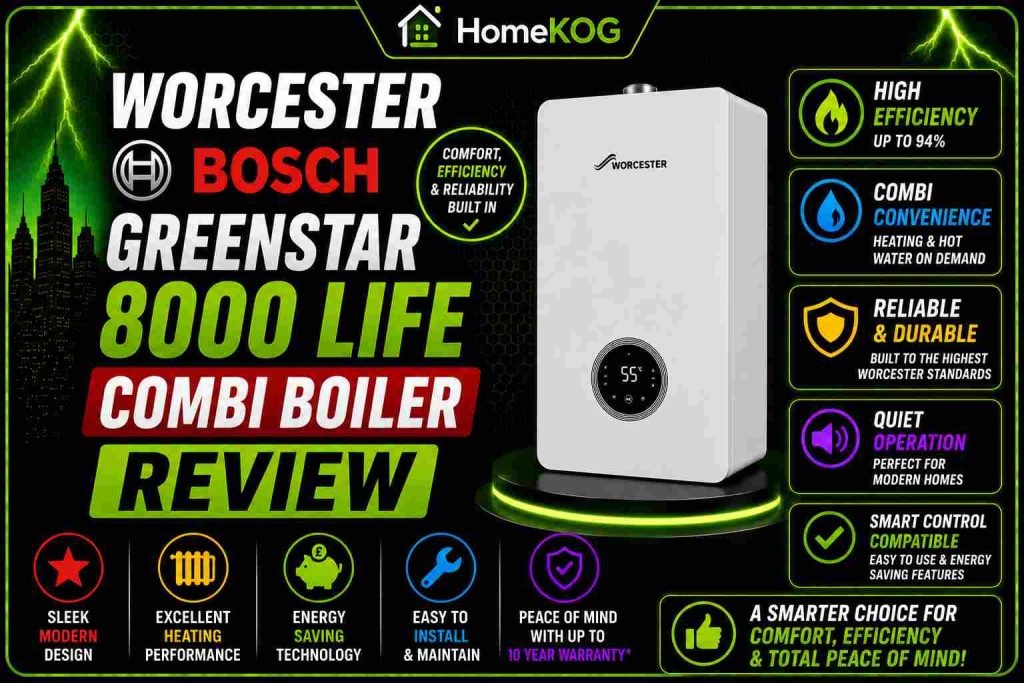
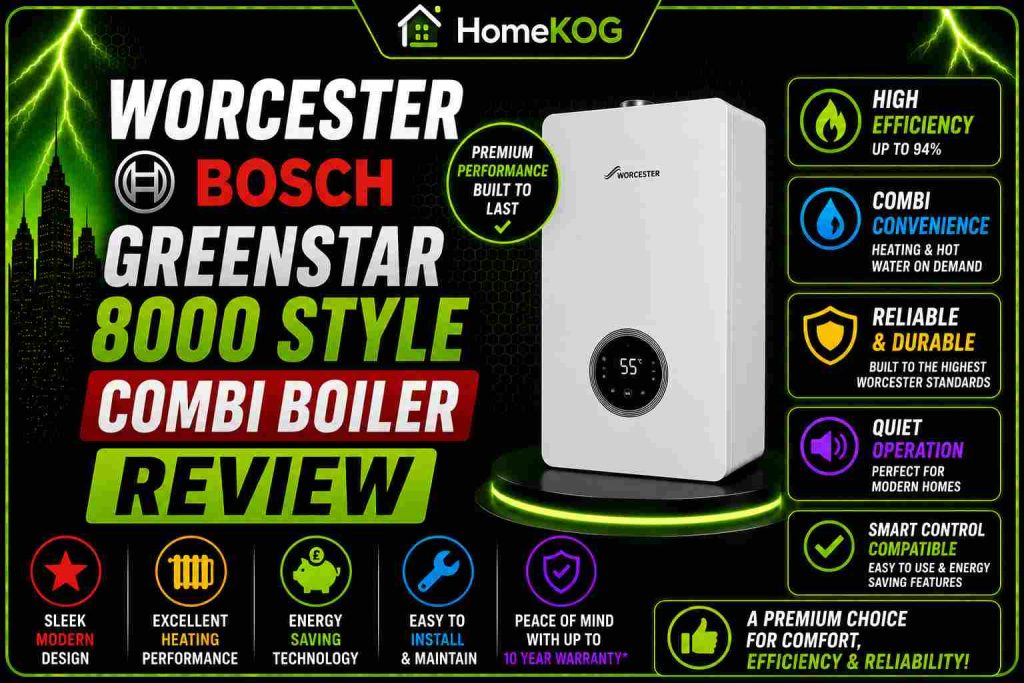
A Worcester Bosch boiler costs between £1,000 and £2,500 for the unit alone, depending on the model and output rating. Worcester Bosch holds the Which? Best Buy Award for boilers and offers warranties of up to 12 years on selected models when installed by an accredited engineer. The most popular current models include the Greenstar 8000 Life and the Greenstar 8000 Style, which are available in combi and system boiler configurations and are priced in the mid-to-upper range of the brand’s lineup. When making a decision, it’s important to consider a Worcester Bosch boiler pricing comparison to ensure you’re getting the best value for your investment. Take into account installation costs as well, as they can significantly affect the overall price. Many homeowners find that the long warranties and energy efficiency of Worcester Bosch models justify the initial price, leading to significant savings in the long run.
Can I spread the cost of a new boiler?
Yes — boiler finance options allow you to spread the total installation cost over 2 to 10 years through monthly payments. Interest-free finance is available on qualifying purchases through specialist heating installers, meaning the total repaid equals the original cost with no additional interest. Options for bad credit and buy now, pay later are also available. All finance agreements must be provided by FCA-authorised lenders — confirm the lender’s regulatory status before signing any agreement.
How much does it cost to convert from a back boiler to a combi?
Converting from a back boiler to a combi boiler costs between £3,000 and £5,000, with an average of approximately £4,000. The conversion involves decommissioning the back boiler behind the fireplace, installing a new combi boiler in a new location with new pipework and a dedicated flue, and removing the old hot water cylinder. The process typically takes 2 to 3 days. Despite the upfront cost, the efficiency improvement from a back boiler to a current A-rated combi can save over £800 per year in energy costs.
Is replacing a boiler a big job?
A standard like-for-like combi boiler swap in the same location is a straightforward job that most Gas Safe engineers complete within a day.
Replacing a boiler in a new location, changing from one boiler type to another, or installing in a property with no existing boiler infrastructure is a more significant project that may require 2 to 3 days and involve floorboard removal, new pipework runs, and structural modifications for flue routing. The complexity and duration depend on the specific installation scenario rather than the boiler itself.
Conclusion: Budget Realistically and Choose Wisely
A new boiler is an investment in your home’s comfort, efficiency, and reliability — not simply an unavoidable cost. Understanding the full breakdown of what drives the price allows you to budget accurately, compare quotes on a like-for-like basis, and identify the best boiler for your specific property and household needs.
A modern A-rated condensing boiler reduces energy consumption compared to any boiler more than 10 years old, delivering ongoing bill savings that help recover the installation cost over time. The longer you delay replacing an ageing, inefficient boiler, the more that gap in efficiency costs you every month.
Get multiple quotes from Gas Safe-registered engineers, check eligibility for government grants before committing to a purchase, and explore finance options if the upfront cost is a barrier. The right boiler, correctly installed and regularly serviced, will heat your home reliably and efficiently for 15 years or more.