
How to Save on Energy Bills in 2026: Energy Saving Tips and Advice
Quick Answer: The single biggest energy saving available to most UK households is replacing an old inefficient G-rated boiler with a modern A-rated condensing boiler — saving up to £580 per year according to the Energy Saving Trust. Beyond the boiler, the most impactful actions are installing a smart thermostat (save £75 to £150 per year), turning the heating down by one degree (save £80 per year), adding loft insulation (save £135 per year), fitting double glazing where single glazing remains (save up to £110 per year), and switching to LED lighting throughout (save 75% of lighting costs). Small changes to daily habits around standby appliances, washing temperature, and water use add up to a further £100 to £200 per year in savings.
Energy bills remain the largest discretionary household expense for most UK families — and unlike food or transport, heating and electricity use offer real opportunities for meaningful reduction through a combination of one-off investments and permanent changes to daily habits. The challenge is knowing which actions deliver the most return on the time, money, or effort invested. This guide ranks every practical energy-saving measure by typical annual saving and explains exactly what is involved in each.
Why the Boiler Is the Starting Point for Any Energy Saving Strategy
Heating accounts for approximately 55 to 65% of the average UK household’s total energy bill. This single fact means that any serious energy-saving strategy must address the boiler first — the return on investment from boiler efficiency improvements is simply higher than any comparable action elsewhere in the home.
A G-rated boiler operating at 65% efficiency wastes 35% of every unit of gas purchased. At typical household gas consumption levels, this wasted energy costs £400 to £700 per year in fuel that produces no useful heat — escaping through the flue while the family pays for it. A modern A-rated condensing boiler operating at 92 to 94% efficiency reduces this waste to 6 to 8%, immediately cutting gas consumption by approximately 25 to 30% for the same heating output.
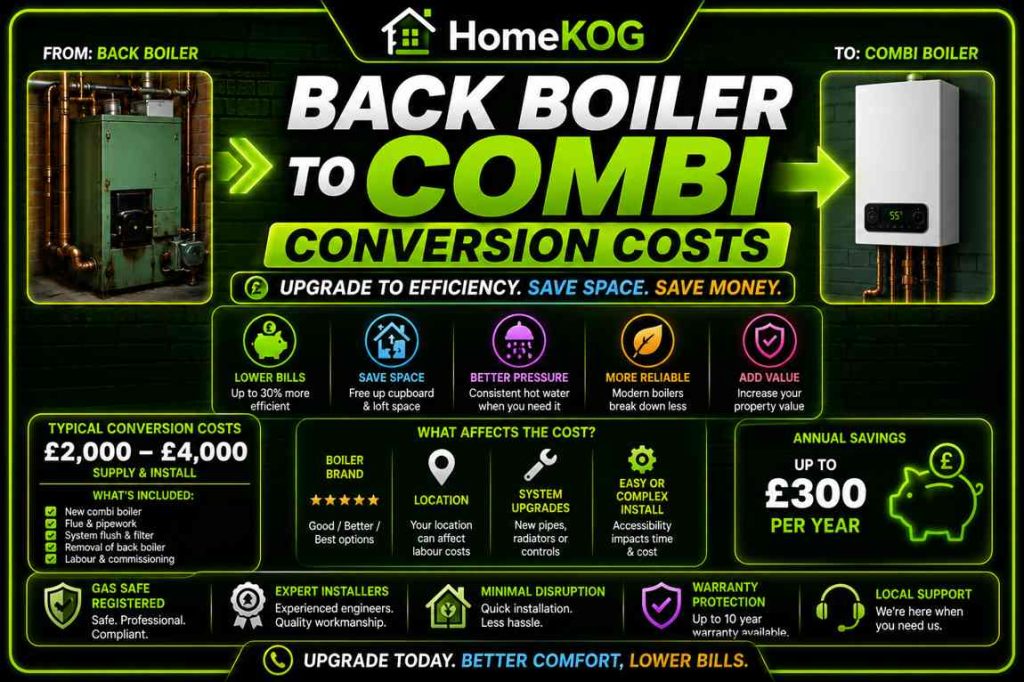
The Energy Saving Trust’s calculation that replacing a G-rated boiler saves approximately £580 per year is based on a detached home — semi-detached and terraced properties with lower gas consumption see proportionally lower but still significant savings. With typical mid-range boiler installation costs of £2,000 to £2,500, the payback period is four to five years in fuel savings alone, with the additional benefit of a 10 to 12-year warranty and vastly improved reliability.

Energy Saving Tips Ranked by Annual Saving
1. Replace an Old Inefficient Boiler — Save Up to £580/Year
An A-rated replacement for a G-rated boiler is the highest-return energy saving investment available for most UK homes. The saving is immediate and permanent — every subsequent winter costs hundreds less than the previous one. All new boilers are hydrogen-ready condensing models, ErP A-rated, and fully warranted for 10 to 12 years with annual servicing.
The best A-rated combi boilers for efficiency in 2026 include the Viessmann Vitodens range (up to 98% efficiency), Worcester Bosch Greenstar 4000 and 8000 (94%), Ideal Logic Max and Vogue Max, Alpha E-Tec, and Vaillant ecoTEC Plus. A modulating boiler — one that reduces its output to match actual demand rather than cycling between full power and off — adds further real-world efficiency gains beyond the headline ErP rating. The Viessmann Vitodens 200-W’s 1:17 modulation ratio is the widest available and delivers exceptional efficiency during the mild weather that characterises most of the heating season.
Annual saving: Up to £580 (Energy Saving Trust, detached home)
2. Insulate the Loft — Save £135/Year
The roof accounts for approximately 25% of heat loss in a typical UK home. For properties with no loft insulation or less than the recommended 270mm of mineral wool, adding or topping up loft insulation is the most cost-effective single structural improvement available. Installation cost is typically £300 to £600 for a professional installation and is often funded through the government’s ECO4 scheme for eligible lower-income households. Payback period is two to four years.
Annual saving: £135
3. Turn the Heating Down One Degree — Save £80/Year
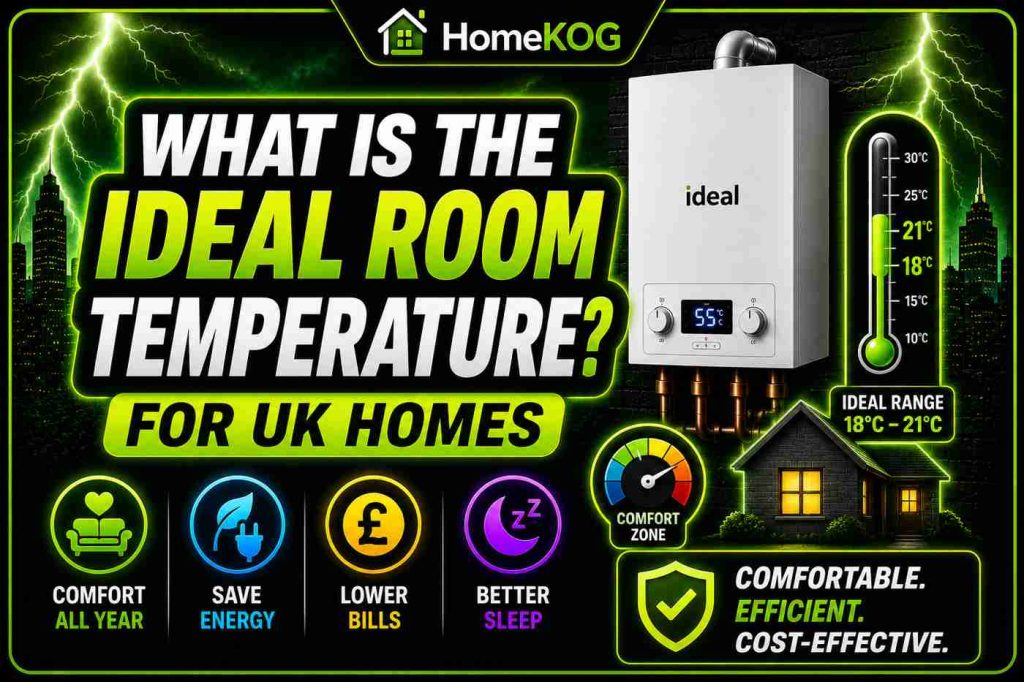
Reducing the thermostat set temperature by one degree — from 20°C to 19°C, for example — reduces the boiler’s total annual run time and gas consumption measurably. This costs nothing to implement and requires only the adjustment of the room thermostat or smart thermostat set point. The saving compounds — two degrees saves approximately £160 per year. Most homes are heated slightly above the occupants’ actual comfort preference, making this one of the highest return-on-effort actions available.
Annual saving: £80
4. Install a Smart Thermostat — Save £75 to £150/Year
A smart thermostat with GPS geofencing eliminates the heating of empty homes — the most common source of preventable heating cost in households with variable daily schedules. When the last registered household member leaves the property, the thermostat automatically reduces heating to a frost protection level. When they return, it restarts heating to reach the target temperature on arrival. Studies consistently report annual savings of £75 to £150 for typical UK households upgrading from a conventional programmer. Installation costs £150 to £300 including professional fitting, with payback typically within 12 to 24 months.
Recommended smart thermostats for 2026 include the Google Nest (self-learning, 20-zone capability, heat pump compatible), tado° (best room-by-room control via smart radiator valves, weather compensation), and Hive (simplest setup, best for British Gas customers).
Annual saving: £75 to £150
5. Fit Double Glazing — Save Up to £110/Year
Windows are a primary route for heat loss — uPVC single-glazed windows allow heat to escape rapidly and create cold draughts that make rooms feel colder than the air temperature suggests, driving up thermostat settings. Replacing single glazing with A-rated double glazing throughout a property saves up to £110 per year in heating costs. Triple glazing provides further improvement but the marginal saving over double glazing rarely justifies the additional cost for most UK climate conditions. Composite doors replacing old wooden front doors also improve thermal performance meaningfully.
Annual saving: Up to £110 per year for a full single-to-double glazing replacement
6. Use Thermostatic Radiator Valves — Save Up to £80/Year
Thermostatic radiator valves (TRVs) allow each radiator to be controlled independently, preventing rooms from overheating and eliminating the energy cost of heating unoccupied rooms to the same temperature as occupied ones. Installing TRVs on all radiators except the one in the room containing the main room thermostat costs approximately £10 to £25 per radiator for basic models, or £50 to £70 per radiator for smart TRVs compatible with tado°, Hive, or similar systems. For a five-bedroom house with multiple unoccupied rooms during the day, the savings can be substantial. Efficient heating solutions for homes not only enhance comfort but also optimize energy consumption, helping homeowners reduce their bills. By utilizing these technologies alongside TRVs, it’s possible to create a more balanced and cost-effective heating strategy. As a result, families can enjoy warmth where it’s needed while minimizing energy waste in unused spaces.
Annual saving: Up to £80
7. Draught-proof the Home — Save £35/Year
Gaps around doors, windows, letterboxes, keyholes, unused chimneys, and floorboards allow cold air into the home and warm air to escape — increasing heating demand without any improvement in comfort. Draught-proofing with self-adhesive foam strips on windows, draught excluders on doors, brush seals on letterboxes, and chimney balloons in unused fireplaces can all be done as DIY projects for minimal cost. The combined annual saving from comprehensive draught-proofing is approximately £35 — modest individually but achieved for a total material cost of under £50.
Annual saving: £35
8. Switch to LED Lighting — Save 75% of Lighting Costs
LED bulbs use approximately 75% less electricity than incandescent equivalents and last 15 to 25 times longer. Replacing all remaining incandescent or halogen bulbs in the home with LED equivalents is one of the fastest payback investments available — typically recovering the bulb cost within three to six months through electricity savings. A home with 20 light fittings using 60W incandescent bulbs saves approximately £60 to £100 per year by switching to 8W LED equivalents.
Annual saving: 75% of current lighting electricity cost
9. Switch Off Standby Appliances — Save £55 to £80/Year
The average UK household loses £55 to £80 per year to appliances left on standby or plugged in without active use. Games consoles, set-top boxes, smart TVs, and desktop computers are the highest standby consumers. Switching these off at the wall — or using smart plugs with schedules to automate the switching — eliminates standby waste entirely at no cost beyond the habit change.
Annual saving: £55 to £80
10. Wash Clothes at Lower Temperatures — Save £30 to £40/Year
Reducing washing machine temperature from 40°C to 30°C saves approximately 40% of the energy used per wash — the majority of washing machine energy consumption goes to heating the water rather than running the drum. A 30°C wash cleans effectively for everyday clothing. High-temperature washes of 60°C or above remain appropriate for white goods, bedding, and heavily soiled items. Reducing weekly wash cycles by one also saves approximately £5 per year.
Annual saving: £30 to £40
11. Use Water More Efficiently — Save £50 to £60/Year
Installing an efficient showerhead saves approximately £28 per year by reducing the volume of hot water used per shower without reducing the perceived shower experience. Using a bowl for washing up rather than running the tap continuously saves approximately £25 per year. Turning off taps while brushing teeth adds further modest savings. Combined, water efficiency measures save £50 to £60 per year with minimal upfront cost.
Annual saving: £50 to £60
12. Use Solar Panels — Variable Saving
Solar photovoltaic panels generate electricity from sunlight, reducing the amount purchased from the grid. Properties consuming significant electricity — those with electric vehicles, air source heat pumps, or high daytime occupancy — gain the most from solar generation. Annual savings depend on system size, roof orientation, local sunlight hours, and household electricity consumption but typically range from £200 to £600 per year in reduced electricity purchase plus Smart Export Guarantee payments for surplus exported to the grid. Installation costs of £6,000 to £10,000 for a typical 4kWp system give a payback period of 8 to 12 years at current electricity prices. The adoption of solar panels can significantly enhance property value and appeal, especially in eco-conscious markets. Moreover, local incentives and government grants may further subsidize the initial investment, making the transition to solar energy even more attractive. As awareness of renewable energy solutions grows, homeowners are increasingly recognizing the long-term financial and environmental benefits of solar technology.
Annual saving: £200 to £600 depending on system size and usage
Additional Everyday Energy Saving Habits
Closing curtains at dusk retains a meaningful amount of heat in rooms with uninsulated window glazing — heavy curtains with thermal lining perform best. Opening curtains on south-facing windows during sunny winter days allows passive solar gain to warm rooms without the boiler running. Keeping oven doors open briefly after cooking — with appropriate safety precautions — releases residual heat into the kitchen at no additional cost.
Reducing the boiler’s flow temperature — the temperature of water sent to the radiators — from the default 80°C to 55 to 60°C improves the boiler’s condensing efficiency and reduces gas consumption by 6 to 8%. This adjustment is best made by a Gas Safe engineer at the annual service but can save meaningfully on a modern modulating boiler in a well-balanced heating system. To further enhance the system’s efficiency, implementing energyefficient radiator balancing techniques can optimize heat distribution throughout the premises. This ensures that each room receives the adequate warmth needed while minimizing energy wastage. As a result, homeowners can enjoy a comfortable environment and lower energy bills simultaneously.
Summary: Total Potential Annual Savings
| Action | Annual Saving | One-Off Cost |
|---|---|---|
| Replace G-rated with A-rated boiler | Up to £580 | £2,000–£2,500 |
| Loft insulation | £135 | £300–£600 |
| Turn heating down 1°C | £80 | £0 |
| Smart thermostat | £75–£150 | £150–£300 |
| Double glazing | Up to £110 | £4,000–£8,000 (whole house) |
| TRVs on all radiators | Up to £80 | £100–£500 |
| Draught-proofing | £35 | £20–£80 |
| LED lighting | 75% of lighting cost | £50–£150 |
| Standby switching | £55–£80 | £0 |
| Lower wash temperature | £30–£40 | £0 |
| Water efficiency | £50–£60 | £20–£60 |
A household implementing all of the above measures — starting with the boiler, adding insulation and smart controls, and adopting the zero-cost daily habits — could realistically save £1,000 to £1,300 per year on energy bills over a sustained period.
FAQ
What is the single best way to reduce my energy bill?
Replacing an old G-rated boiler with a modern A-rated condensing boiler is the highest-return single action for most UK households — saving up to £580 per year on gas costs according to the Energy Saving Trust. No other single action comes close to this annual saving for a typical gas-heated home.
Does turning the heating off when out really save money?
Yes, for extended absences. Turning heating off when the property is empty for several hours saves meaningful energy compared to maintaining the property at the target temperature continuously. A smart thermostat’s geofencing function does this automatically — reducing to frost protection when all household members leave and restarting heating on the return journey to reach the target temperature on arrival. Turning heating off for very short absences — under two hours — may not save significantly if the building fabric is cold and the boiler must work hard to reheat on return.
How much does a smart thermostat actually save?
Independent research and smart thermostat manufacturers consistently report annual savings of £75 to £150 for typical UK households upgrading from a conventional programmer. The saving is higher for households with variable daily routines where geofencing automation has more frequent opportunities to reduce heating during absent periods, and lower for households with highly consistent schedules that a programmer can already optimise effectively.
Is it worth buying an electric blanket instead of heating?
An electric blanket costs approximately £1.68 per week to run (100W for one hour per day at current electricity prices) — making it an extremely cost-effective way to stay warm in bed without heating the entire bedroom through the night. For households trying to minimise heating costs, an electric blanket for sleeping combined with a programmed reduction in overnight boiler temperature is a practical combination. Electric blankets should not substitute for adequate daytime heating in cold weather, particularly for elderly or vulnerable occupants.
Do solar panels really reduce energy bills?
Yes, but the saving depends significantly on the household’s electricity consumption during daylight hours. Households with high daytime electricity use — those working from home, with electric vehicles, or with air source heat pumps — see the greatest benefit from solar generation. Export tariffs through the Smart Export Guarantee provide payment for surplus electricity sold back to the grid. At current electricity prices, typical systems save £200 to £600 per year with a payback period of 8 to 12 years.
Conclusion
Saving meaningfully on energy bills requires addressing the biggest costs first — and for 85% of UK households, the biggest cost is the gas boiler. No collection of minor lifestyle changes comes close to matching the saving available from replacing an old inefficient boiler with a modern A-rated model, and the investment typically pays back within four to five years before delivering free savings for the remainder of the boiler’s 10 to 15-year lifespan. To help manage this significant investment, many homeowners explore boiler finance options for homeowners that allow for monthly payments rather than an upfront cost. These financing plans can make the transition to an energy-efficient system more accessible, ensuring that families can start saving on their energy bills immediately. By choosing the right financing option, homeowners can invest in their comfort and future savings without straining their budgets.
Beyond the boiler, loft insulation, smart thermostat installation, and consistent application of the zero-cost habits — thermostat reduction, standby switching, lower wash temperatures, and draught-proofing — can collectively save a further £400 to £600 per year at minimal additional investment. Combining all of these measures, the average UK household has the potential to reduce its annual energy bill by £1,000 or more relative to the same household with an old boiler, poor insulation, and unchanged habits — a transformation that is practical, achievable, and financially compelling at any point in the energy price cycle.