
Viessmann Vitodens 200 Expansion Vessel Replacement Guide
Quick Answer: A faulty expansion vessel in a Viessmann Vitodens 200 boiler causes pressure fluctuations, leaks, and shutdowns. Replacement must be carried out by a Gas Safe engineer due to safety regulations. Typical repair costs range from £150 to £350 depending on labour and accessibility, with professional diagnosis strongly recommended.
If your Viessmann Vitodens 200 is losing pressure or shutting down, the expansion vessel could be the issue. This component plays a crucial role in maintaining stable pressure inside your heating system.
Understanding how it works, spotting the warning signs early, and knowing when to call a professional can save you from costly breakdowns or even a full boiler replacement.
Expansion Vessel: Key Entity Relationships
- Expansion vessel → regulates system pressure → prevents boiler shutdown
- Heated water → expands during heating → increases system pressure
- Internal diaphragm → separates air and water → stabilises pressure
- Schrader valve → controls air pressure → maintains vessel balance
- Pressure relief valve → releases excess pressure → prevents damage
- Boiler pressure gauge → monitors system pressure → detects faults
- Gas Safe engineer → replaces expansion vessel → ensures compliance
- Viessmann Vitodens 200 → contains internal vessel → supports sealed system
- Faulty vessel → causes pressure fluctuation → leads to boiler lockout
- Annual service → checks vessel pressure → prevents failure
- Heating system → relies on stable pressure → ensures efficiency
- Replacement vessel → restores balance → improves performance

What Is an Expansion Vessel?
An expansion vessel is designed to control pressure within a sealed heating system. As water heats up, it expands, and without somewhere to go, pressure would rise dangerously.
Inside the vessel is a diaphragm that separates water from compressed air. As water expands, the diaphragm moves, allowing pressure to remain stable.
When the system cools, the diaphragm returns to its original position, keeping everything balanced.
Why Expansion Vessels Are Important
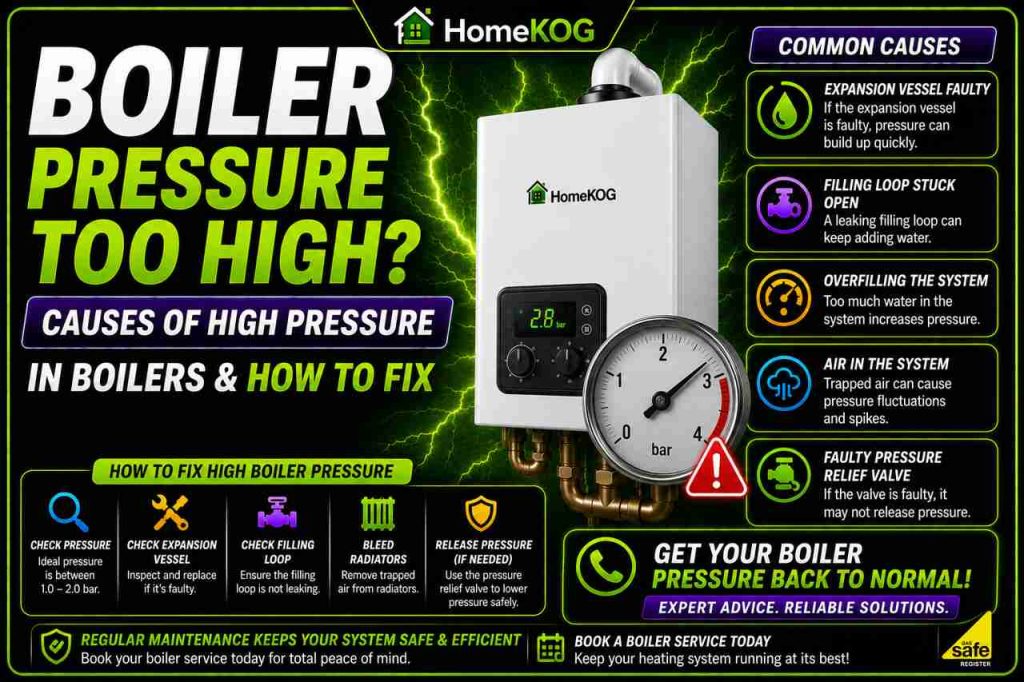
Without a functioning expansion vessel, pressure can rise too high. This can trigger safety shutdowns or force water out through the pressure relief valve.
Over time, this can damage internal components and reduce boiler efficiency.
Where Is the Expansion Vessel on a Viessmann Vitodens 200?
On most Viessmann Vitodens 200 models, the expansion vessel is located inside the boiler casing. This means it is not accessible without removing the cover.
By UK law, only a Gas Safe registered engineer can remove the casing and work on internal components of a gas appliance.
The exact position may vary depending on the model, but it is typically mounted at the rear or side of the unit.
Signs of a Faulty Expansion Vessel
A failing expansion vessel usually shows clear warning signs. These are often related to pressure issues within the system.
Common Symptoms
| Symptom | What It Means |
|---|---|
| Pressure rises rapidly when heating | Vessel not absorbing expansion |
| Pressure drops when system cools | Air charge lost |
| Boiler frequently shuts down | Unsafe pressure levels |
| Water leaking from relief pipe | Pressure too high |
| Constant need to repressurise | Vessel failure |
| If you notice these issues, the expansion vessel should be checked as soon as possible. |
What Pressure Should an Expansion Vessel Be?
The standard pressure setting for most domestic boilers is around 1 bar when the system is cold.
When the heating is on, pressure will naturally rise. However, it should remain within safe limits, typically between 1 and 2 bar.
If pressure fluctuates outside this range, it often indicates a fault with the vessel or air charge.
How Engineers Check Expansion Vessel Pressure
Checking expansion vessel pressure is usually part of an annual boiler service. Engineers follow a structured process to diagnose faults accurately.
Typical Check Process
- Isolate the boiler and allow it to cool
- Drain system pressure to zero
- Test air pressure using a gauge on the Schrader valve
- Recharge air if required
- Repressurise the heating system
If the vessel cannot hold pressure, replacement is usually required.
How to Replace a Viessmann Vitodens 200 Expansion Vessel
Replacing an expansion vessel is a complex job that involves working inside the boiler. This is not a DIY task and must be handled by a qualified engineer.
Typical Replacement Process
- Turn off gas, water, and electrical supply
- Remove boiler casing safely
- Drain the heating system
- Disconnect pipework and components blocking access
- Remove the faulty expansion vessel
- Install a new vessel and reconnect components
- Refill and repressurise the system
- Test operation and safety checks
In some cases, engineers may need to remove the boiler from the wall or disconnect the flue to gain access.
Cost of Replacing an Expansion Vessel in 2026
The cost of replacing an expansion vessel depends on labour, parts, and how accessible the component is.
Typical Costs
| Item | Estimated Cost |
|---|---|
| Expansion vessel (part) | £50 – £120 |
| Labour | £100 – £250 |
| Total replacement cost | £150 – £350 |
| If access is difficult or additional parts are needed, costs can increase. |
Repair vs Replacement: What’s Best?
In some cases, the issue may be a loss of air pressure rather than a complete failure. Recharging the vessel can be a quick and low-cost fix.
However, if the diaphragm inside the vessel is damaged, replacement is the only solution.
For older boilers, it may be worth comparing repair costs with the price of a new boiler, especially if multiple components are failing.
Can You Replace an Expansion Vessel Yourself?
No. Replacing an expansion vessel on a gas boiler is not a DIY job in the UK.
Only a Gas Safe registered engineer is legally allowed to work on internal gas appliance components.
Attempting this repair yourself could be dangerous, invalidate your warranty, and potentially break the law.
How to Prevent Expansion Vessel Failure
Preventative maintenance is the best way to avoid expansion vessel problems.
Regular servicing ensures pressure levels are correct and identifies early signs of wear before failure occurs.
Keeping your system clean and properly pressurised also helps extend the lifespan of internal components.
Conclusion
A faulty expansion vessel in a Viessmann Vitodens 200 can quickly lead to pressure issues, leaks, and complete boiler shutdown.
While the repair itself is relatively straightforward for a qualified engineer, it is not something homeowners should attempt themselves.
By recognising the warning signs early and keeping up with annual servicing, you can avoid unexpected breakdowns and keep your heating system running smoothly.
FAQs
What does an expansion vessel do in a boiler?
An expansion vessel regulates pressure inside a sealed heating system by absorbing the expansion of heated water. It uses a diaphragm to separate air and water, allowing pressure to remain stable. Without it, pressure would rise dangerously, causing leaks, shutdowns, or damage to boiler components.
How do I know if my expansion vessel is faulty?
A faulty expansion vessel causes pressure to rise when heating and drop when cooling. This results in boiler shutdowns, water leaks from the relief pipe, and frequent need for repressurising. These symptoms indicate the vessel is no longer maintaining stable pressure within the system.
Can an expansion vessel be repaired?
In some cases, an expansion vessel can be recharged with air if the pressure has dropped. However, if the internal diaphragm is damaged, the vessel cannot be repaired and must be replaced. A Gas Safe engineer will determine whether repair or replacement is the correct solution.
How long does an expansion vessel last?
An expansion vessel typically lasts between 5 and 10 years depending on usage, water quality, and maintenance. Regular servicing can extend its lifespan by ensuring correct pressure levels and identifying early signs of failure before they lead to system issues.
How much does it cost to replace an expansion vessel?
Replacing an expansion vessel usually costs between £150 and £350 in the UK. This includes the cost of the part and labour. The final price depends on how accessible the vessel is and whether additional work is required during installation.
What pressure should my boiler be after repair?
After repair, boiler pressure should typically be around 1 to 1.5 bar when the system is cold. When the heating is on, pressure may rise slightly but should remain below 2 bar. Stable pressure indicates the expansion vessel is functioning correctly.
Is low boiler pressure always caused by the expansion vessel?
Low boiler pressure is not always caused by the expansion vessel. It can also result from leaks, faulty valves, or bleeding radiators. However, repeated pressure loss combined with fluctuations often points to a failing expansion vessel.
Do I need to replace the boiler if the expansion vessel fails?
No, a failed expansion vessel does not automatically mean you need a new boiler. It is a replaceable component. However, if your boiler is old and has multiple faults, replacing the entire system may be more cost-effective in the long term.