
Boiler Lockout: Causes, What It Means & How to Fix It
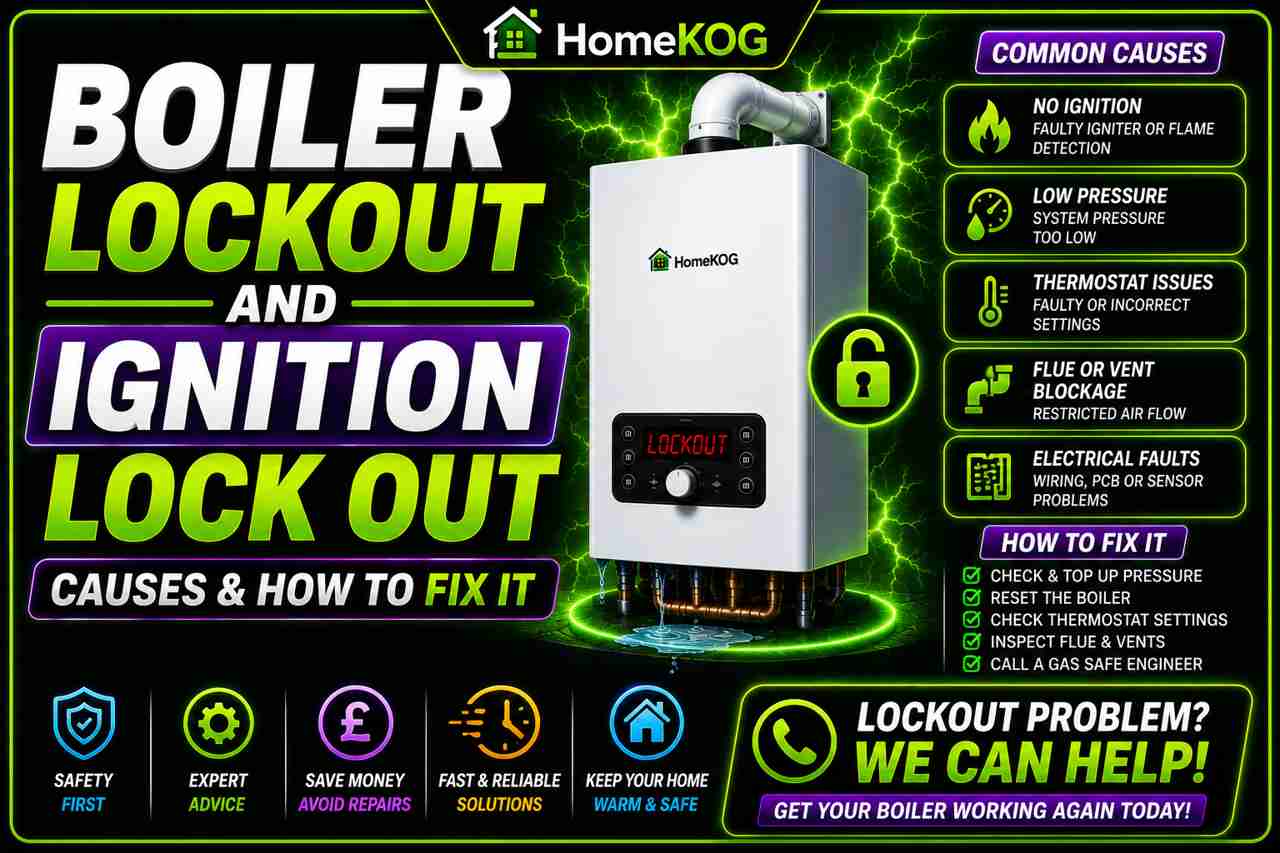
Quick Answer: A boiler lockout is an automatic safety shutdown triggered when the boiler detects a fault in one of its components or the wider heating system. It prevents dangerous conditions from developing by stopping the boiler from operating until the fault is resolved. Common causes include ignition failure, low pressure, system blockages, pump failure, and loss of power. The boiler should only be reset after the underlying cause has been identified and addressed.
A boiler lockout is one of those phrases that sounds alarming but describes something the appliance is doing correctly — protecting itself and your home by shutting down rather than continuing to run in an unsafe or compromised state. The frustration of losing heating and hot water is understandable, but the lockout itself is a feature, not a failure. Knowing how to recognise one, identify the cause, and respond appropriately makes the difference between a quick resolution and an avoidable escalation.
Boiler Lockout: Key Entity Relationships
- A boiler lockout is an automatic safety shutdown initiated by the boiler’s control system when it detects a fault condition in one of its components or in the heating system, preventing continued operation to protect the appliance, the property, and its occupants.
- An ignition lockout is a specific type of boiler lockout triggered when the boiler fails to establish a flame after a set number of ignition attempts — typically three — causing the control board to shut the appliance down rather than continue releasing unburnt gas.
- A fault code is a diagnostic code displayed on the boiler’s screen following a lockout that identifies the nature of the fault detected, allowing the homeowner or engineer to determine the cause of the shutdown and the appropriate corrective action.
- Low boiler pressure is a common cause of boiler lockout in which the water pressure within the sealed central heating circuit drops below the minimum safe operating threshold — typically 0.6 bar — causing the boiler to shut down as a precaution against operating without adequate water.
- A frozen condensate pipe is a seasonal cause of boiler lockout in which the plastic waste pipe carrying acidic condensate from the boiler to an external drain freezes during cold weather, blocking discharge and causing the boiler to lock out.
- Heating sludge is a mixture of iron oxide, limescale, and debris that accumulates in boiler pipework and radiators, with sufficient build-up causing blockages that restrict water flow and heat transfer to a level that triggers a safety lockout.
- A central heating pump is the component responsible for circulating water through the heating system, with pump failure, seizure, or blown seals preventing adequate water flow and causing a boiler lockout when the control system detects insufficient circulation.
- The boiler fan is the component that expels combustion gases safely through the flue, with a fan fault preventing safe venting of exhaust gases and triggering a lockout to prevent harmful gases from remaining within the boiler casing or property.
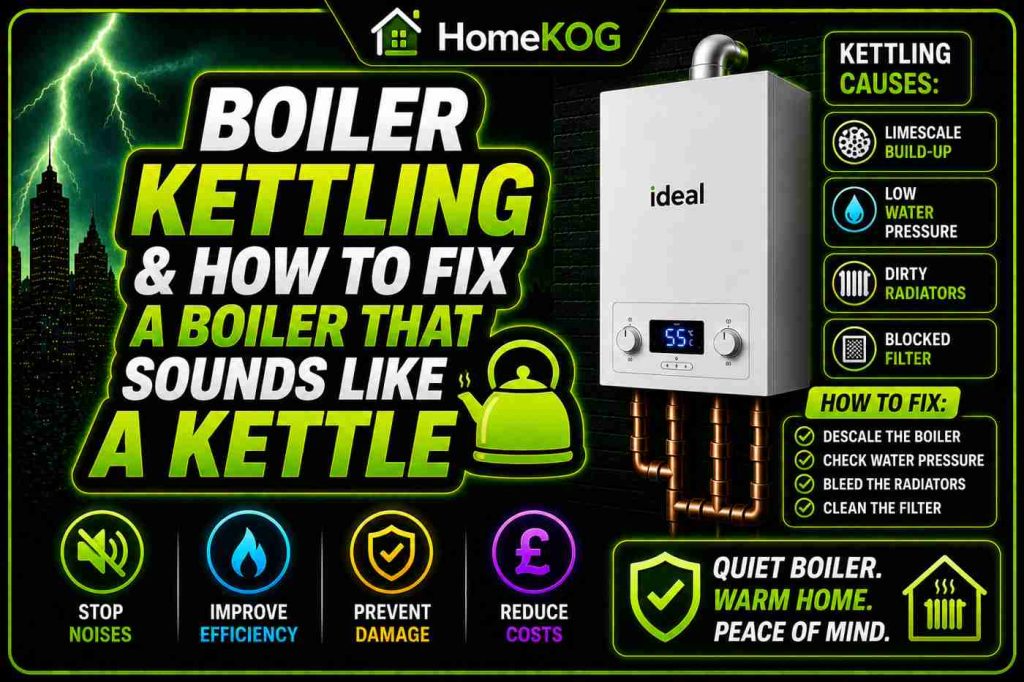
- Limescale build-up in the heat exchanger is a cause of boiler lockout in hard water areas where calcium carbonate deposits reduce heat transfer efficiency, cause kettling or whistling sounds, and eventually raise water temperatures to a level that triggers an overheating shutdown.
- A Gas Safe registered engineer is the legally required professional for diagnosing and repairing the internal component faults that cause boiler lockouts, including ignition system failures, pump replacement, fan replacement, and heat exchanger assessment.
- Annual boiler servicing by a Gas Safe registered engineer is the most effective preventive measure against frequent boiler lockouts, identifying developing faults in ignition components, pumps, fans, and heat exchangers before they cause a safety shutdown.
- A boiler reset is the procedure used to clear a lockout and allow the boiler to attempt normal operation again, performed by pressing and holding the reset button for the duration specified in the boiler manual, and only appropriate after the underlying fault has been resolved.

What Is a Boiler Lockout?
A boiler lockout is the heating industry’s term for an automatic safety shutdown. When the boiler’s control system detects that one of its components or the wider heating system is operating outside safe parameters, it shuts the appliance down completely rather than continuing to run in a condition that could cause damage, create a safety hazard, or allow a developing fault to escalate.
The shutdown eliminates risk in several ways simultaneously. It prevents the build-up of unburnt gas that could occur if ignition fails repeatedly. It stops the boiler from overheating when water flow is insufficient. It prevents combustion gases from accumulating if the flue system is compromised. In every case, the lockout exists because the alternative — continuing to operate with a known fault — carries a greater risk than the inconvenience of losing heating and hot water temporarily.
Modern boilers communicate the reason for the lockout through a fault code displayed on the screen. Older models without a digital display indicate a lockout through a flashing indicator light — red, green, or blue depending on the manufacturer and model. Either way, the information provided gives a starting point for diagnosis, and working from that starting point is always more productive than pressing reset repeatedly and hoping the problem resolves itself.
How to Recognise a Boiler Lockout
The first and most obvious sign is that the central heating and hot water have stopped working. Unlike a boiler that is simply in standby, a locked-out boiler will not respond to thermostat demand or to a hot tap being opened. The system is not waiting to be called into action — it has actively shut itself down.
On modern boilers with a digital display, a fault code will be visible on the screen. This code is specific to the manufacturer and model, and looking it up in the boiler manual or on the manufacturer’s website identifies the type of fault the control system detected before shutting down. This is the most efficient route to identifying the cause.
On older boilers without a display, a flashing indicator light signals the lockout. The colour and pattern of the flash varies between manufacturers and models — the boiler manual or the manufacturer’s customer support line will confirm what the specific pattern indicates for your appliance.
What to Do When Your Boiler Locks Out
Identifying the cause before attempting a reset is the most important step. A reset clears the lockout and allows the boiler to attempt normal operation again, but if the fault that triggered the lockout has not been resolved, the boiler will either fail to restart or will run briefly and lock out again — sometimes causing additional wear on components in the process.
Start with the boiler manual. It lists all fault codes and their explanations for that specific model. If the manual is unavailable, the manufacturer’s website holds the same information and is usually accessible by searching the boiler model number. If the boiler is older and shows no fault code, calling the manufacturer’s support line is a reasonable next step before contacting an engineer — they can sometimes identify the likely cause based on the boiler’s age, model, and the pattern of the indicator light.
Once the cause is identified, some faults — such as low pressure or a frozen condensate pipe — can be safely addressed by the homeowner. Others require a Gas Safe registered engineer. Attempting to resolve faults involving the boiler’s internal gas, electrical, or combustion components without Gas Safe registration is both illegal and genuinely dangerous.
Common Causes of Boiler Lockouts
System Blockages
Blockages within the boiler, pipework, and radiators are among the most common causes of recurring lockouts on older heating systems. Heating sludge — the dark, thick mixture of iron oxide particles, limescale, and debris that builds up in the circuit over time — can accumulate to the point of restricting water flow through the pump and heat exchanger, causing the boiler to lock out when it detects insufficient circulation.
A professional power flush from a Gas Safe engineer clears accumulated sludge from the heating circuit and restores normal flow. Fitting a magnetic filter after flushing captures future debris before it can accumulate again, and using central heating inhibitor annually slows the rate of corrosion and sludge formation significantly.
The condensate pipe is a different type of blockage risk. This plastic waste pipe exits the property externally and carries acidic water from the boiler to a drain. During cold snaps it can freeze, and the resulting blockage causes the boiler to lock out. Applying warm water to the frozen external section thaws the ice and, once the boiler is reset, typically restores normal operation immediately.
Limescale accumulation within the heat exchanger is a slower-developing but more serious blockage risk. Heavy scale deposits restrict heat transfer, cause the characteristic kettling sound from the boiler, and can raise water temperatures to the point of triggering an overheating lockout. In hard water areas, fitting a limescale reducer to the heating system reduces the rate of calcium carbonate accumulation and helps protect the heat exchanger over the long term.
Ignition Problems
Many boilers are programmed to lock out after three consecutive failed ignition attempts. If the boiler tries to light, fails, tries again, fails again, and fails a third time, the control board shuts it down rather than continuing to release gas into the combustion chamber without achieving ignition.
The ignition system consists of the spark generator, ignition electrodes, ignition leads, and the flame sensor that confirms to the PCB that a flame has been established. A fault in any of these components — worn electrodes, damaged leads, or a corroded flame sensor — can cause the repeated ignition failures that end in a lockout. A Gas Safe engineer will inspect and test each component and replace any that are found to be defective.
Checking that gas is reaching the property before calling an engineer is a reasonable first step. Testing another gas appliance confirms whether the supply is active — if other appliances work normally, the gas supply is not the cause of the ignition failure.
Fan Issues
The boiler fan serves a critical safety function, expelling combustion gases through the flue and out of the property. Before the boiler fires, the control system checks that the fan is running at the correct speed and that the flue pathway is clear. If the fan is not operating correctly — whether through a mechanical fault, a wiring issue, or a blocked flue preventing it from achieving the required pressure reading — the boiler will not proceed with ignition and a lockout follows.
A fan fault is not something a homeowner can investigate safely. A Gas Safe engineer will test the fan motor, check the wiring connections, and assess the flue pathway for obstructions before confirming whether the fan requires replacement or whether the fault lies elsewhere in the air pressure circuit.
Pump Failure
The central heating pump circulates water through the heating system, and a pump that has failed, seized, or blown its seals cannot maintain the water flow the boiler needs to operate safely. When the control system detects that circulation is insufficient, it locks the boiler out to prevent the heat exchanger from overheating with inadequate water flow.
A seized pump sometimes produces symptoms before the lockout occurs — the pump casing may feel excessively hot, the noise profile of the heating system may change, or the radiators may take longer than usual to warm up. In some cases, a seized internal component can be freed by a gentle tap on the pump body, though this is a temporary measure that does not address the underlying deterioration.
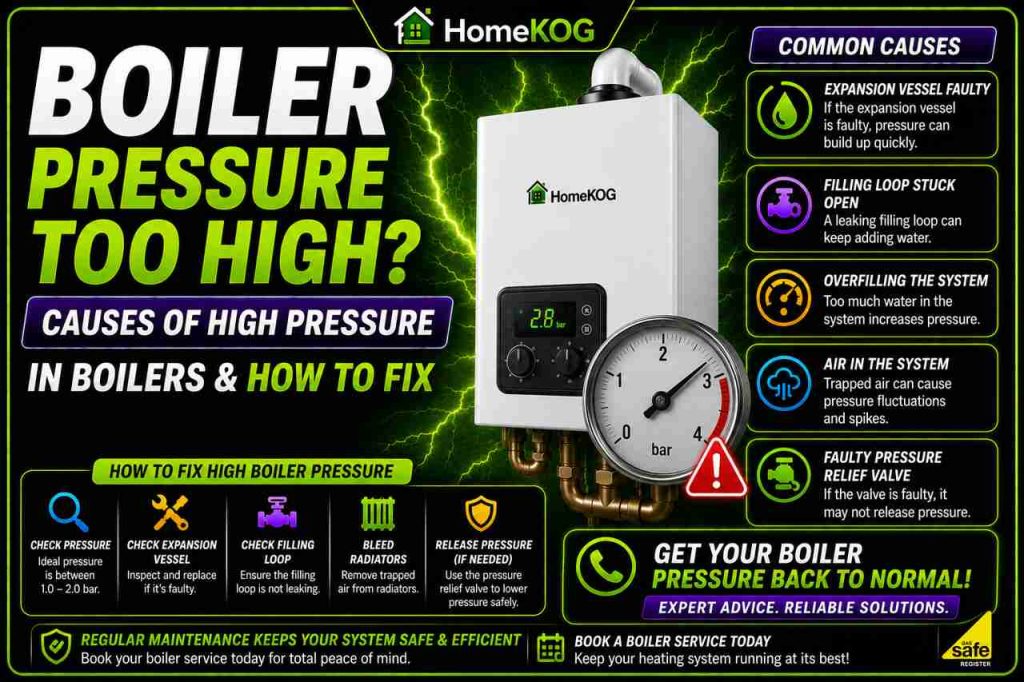
Where the pump has genuinely failed, replacement is required. System pressure checks are also relevant at this point — most boilers operate correctly between 1 and 1.5 bar, and pressure outside this range independently contributes to lockouts. Low pressure can be corrected by topping up via the filling loop; high pressure can be reduced by carefully bleeding a radiator valve until the reading falls back within range.
Loss of Power
A lockout can result from an interruption to the boiler’s electrical supply. A tripped circuit breaker in the fuse box, a blown fuse on the boiler’s dedicated spur, or a power cut to the property can all cause the boiler to shut down and display a lockout condition when power is restored.
Checking the fuse box for tripped switches and confirming that the boiler’s electrical supply is active is a straightforward homeowner check that takes only a minute. If the boiler was working normally before a power interruption and fails to restart cleanly once power is restored, a manual reset typically clears the lockout — this is one of the few situations where resetting immediately is appropriate, as there is no underlying mechanical fault to investigate first.
How to Reset Your Boiler After a Lockout
The reset procedure varies between boiler manufacturers and models, but the principle is the same across all modern appliances. Most boilers have a reset button on the front panel or display board. Press and hold the button for the duration specified in the manual — typically between three and ten seconds — then release. The boiler will initiate a start-up sequence and either return to normal operation or display the fault code again if the underlying cause has not been resolved.
On older boilers without a visible reset button, the manufacturer’s website or customer support line can confirm the reset location and procedure for that specific model.
Resetting without resolving the cause is not a long-term solution. If the boiler locks out repeatedly in a short period, the fault is persistent and needs professional diagnosis. Frequent lockouts on a boiler over 10 years old are often a signal that multiple components are approaching the end of their service life, and the cumulative cost of addressing faults individually may make a new installation the more financially sensible decision.
FAQ: Boiler Lockout
What is a boiler lockout?
A boiler lockout is an automatic safety shutdown initiated by the boiler’s control system when it detects a fault in one of its components or the heating system. The boiler shuts down completely to prevent dangerous conditions — including gas accumulation, overheating, and flue gas venting failures — from developing. It is a safety feature built into modern boilers, not a sign that the appliance has failed permanently. The lockout will not clear until the underlying fault has been identified and resolved, and the boiler has been manually reset.
How do I know if my boiler is in lockout?
The heating and hot water will have stopped working and the boiler will not respond to thermostat demand or hot tap use. On modern boilers with a digital display, a fault code will be visible on the screen identifying the nature of the detected fault. On older models without a display, a flashing indicator light — red, green, or blue depending on the model — signals the lockout. Consulting the boiler manual or the manufacturer’s website with the fault code or light pattern will identify the cause.
What are the most common causes of a boiler lockout?
The most common causes are low system pressure, ignition failure after repeated unsuccessful ignition attempts, a frozen condensate pipe in cold weather, heating sludge blocking the heat exchanger or pump, a pump failure preventing adequate water circulation, a fan fault preventing safe flue gas expulsion, and loss of electrical power to the boiler. Each cause produces a specific fault code on modern boilers, which guides the diagnosis and determines whether the homeowner can resolve the fault or whether a Gas Safe registered engineer is needed.
Can I reset my boiler myself after a lockout?
Yes, but only after identifying and resolving the cause of the lockout first. Pressing the reset button without addressing the underlying fault will result in the boiler locking out again, sometimes immediately. Once the fault has been resolved — for example, by repressurising the system, thawing a frozen condensate pipe, or confirming an electrical supply issue has been corrected — press and hold the reset button on the boiler display for the duration specified in the manual. If the boiler locks out again after a successful reset, the fault has not been fully resolved and a Gas Safe engineer should be contacted.
Is a boiler lockout dangerous?
A boiler lockout itself is not dangerous — it is the boiler’s safety system working correctly to prevent a dangerous condition from developing. The conditions that cause lockouts can carry risks if they are ignored or if the boiler is repeatedly forced back into operation without addressing the fault. A gas supply interruption that caused ignition failure, an overheating condition, or a flue fault all carry genuine safety risks that the lockout is specifically designed to prevent from escalating. Always identify and resolve the cause before resetting.
How do I fix a boiler lockout caused by low pressure?
Low pressure — typically indicated by a pressure gauge reading below 1 bar — can be corrected by repressurising the system using the filling loop beneath the boiler. Open both filling loop taps until the pressure gauge reads 1.5 bar, then close both taps fully. Reset the boiler and check whether it operates normally. If the pressure drops repeatedly over a short period, a slow leak somewhere in the heating circuit is the underlying cause and a Gas Safe registered engineer should be contacted to locate and repair it.
When should I call a Gas Safe engineer for a boiler lockout?
A Gas Safe engineer should be called when the cause of the lockout cannot be identified from the fault code, when the fault involves an internal boiler component such as the ignition system, fan, pump, or heat exchanger, when the lockout recurs shortly after a reset, or when a gas supply issue is suspected. All work on internal gas, combustion, and electrical components must be carried out by a Gas Safe registered professional. If at any point you detect the smell of gas, leave the property and call the National Gas Emergency Service before any other action.
How can I prevent my boiler from locking out frequently?
Annual servicing by a Gas Safe registered engineer is the single most effective preventive measure. A service covers the ignition system, fan, pump, heat exchanger condition, system pressure, and all safety components — identifying developing faults before they cause a lockout. Using central heating inhibitor annually, fitting a magnetic filter to capture metallic debris, and insulating the condensate pipe externally all reduce specific lockout risks between service visits. For boilers over 10 years old that are locking out repeatedly, assessing the cost of continued repairs against the cost of a new installation is a worthwhile exercise.
Conclusion
A boiler lockout is never welcome, particularly in the middle of winter, but it is always preferable to the alternative of a boiler continuing to run unsafely. The shutdown is the appliance protecting itself and your household — and approaching it that way, as a diagnostic starting point rather than a crisis, makes it significantly less stressful to resolve.
Working from the fault code, checking the accessible causes first, and only resetting the boiler after the fault has been addressed gives the best chance of a lasting resolution without unnecessary engineer visits or repeat lockouts. For faults that involve internal components, a Gas Safe registered engineer is the right call — and annual servicing remains the most reliable way to prevent the component deterioration that makes lockouts progressively more common as a boiler ages.