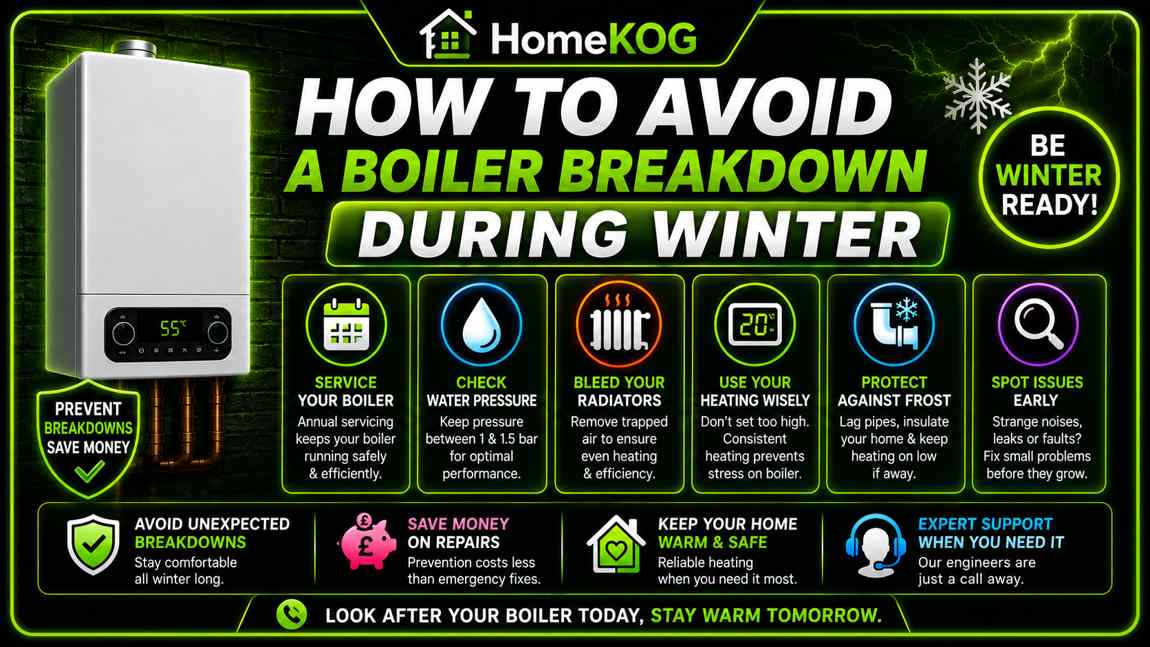

How to Avoid a Boiler Breakdown This Winter: Tips, Costs & Advice for 2026
Quick Answer: The most effective way to prevent a boiler breakdown this winter is to book an annual service with a Gas Safe registered engineer before the cold weather arrives. Additional steps include insulating the condensate pipe, bleeding the radiators, checking the system pressure, draught-proofing the property, and considering boiler cover for financial protection if a fault does occur. A boiler service typically costs between £75 and £100.
A boiler breakdown in winter is one of the most disruptive home emergencies a household can face. No heating, no hot water, and the prospect of waiting for an engineer during the busiest period of the year for the whole industry. The good news is that the majority of boiler breakdowns are preventable with straightforward maintenance steps taken before temperatures drop.
This guide covers everything UK homeowners need to do before winter 2026 to give their boiler the best possible chance of getting through the cold months without a problem. One crucial aspect of boiler maintenance is ensuring compliance with boiler flue safety regulations in the UK. Homeowners should be aware of the necessary checks and inspections required to prevent any hazardous situations. By staying informed about these regulations, they can ensure a safe and efficient heating system throughout the winter season.
Get a boiler cover plan here online >
Key Facts: Winter Boiler Breakdown Relationships
- An annual boiler service is the single most effective preventative measure against winter boiler breakdowns and must be carried out by a Gas Safe registered engineer.
- A Gas Safe registered engineer is the only professional legally permitted to service, repair, or inspect a gas boiler in the UK.
- Boiler pressure should sit at approximately 1 bar when the system is cold and around 2 bar when the heating is running, and a reading below 1 bar requires the system to be repressurised.
- A condensate pipe is the plastic drainage pipe on a condensing boiler that carries acidic wastewater to an external drain and is highly vulnerable to freezing during cold weather, causing boiler lockout.
- Pipe lagging is insulating foam material wrapped around exposed pipework to prevent freezing, and is the most effective and inexpensive way to protect the condensate pipe during winter.
- Bleeding a radiator is the process of releasing trapped air from the central heating circuit to restore full heat output and eliminate cold spots.
- A power flush is a high-pressure cleaning process carried out by a Gas Safe engineer to remove limescale and sludge from the central heating system, particularly relevant in hard water areas.
- Boiler cover is an insurance-style policy that covers the cost of call-outs, parts, and labour if the boiler breaks down, and typically includes an annual service.
- A carbon monoxide detector is a safety device that alerts occupants to the presence of carbon monoxide — an odourless, colourless, and potentially fatal gas produced by faulty combustion.
- Draught-proofing is the process of sealing gaps and cracks in the building fabric to prevent warm air from escaping and cold air from entering, reducing the demand placed on the central heating system.
- A heat exchanger is one of the most frequently replaced boiler components and is vulnerable to damage from limescale, sludge, and overheating caused by poor system maintenance.
- A PCB (printed circuit board) is the electronic control unit of the boiler and among the more expensive components to replace, with costs upwards of £450.

Why Winter Is the Riskiest Time for Boiler Faults
A boiler that has sat unused through summer is asked to work hard the moment autumn temperatures drop. Components that have degraded gradually over the year often show their first symptoms under the increased demand of the heating season — and the colder the outdoor temperature, the more the system is asked to do. boiler maintenance tips for summer are essential for ensuring your system can handle the demands of the colder months. Regular checks and preventative measures can help catch issues before they escalate, allowing for a seamless transition into the heating season. Not only does this protect your investment, but it also boosts efficiency, reducing energy costs in the long run.
External pipework is also at greater risk in winter. Condensate pipes that run along outside walls or through unheated spaces can freeze in sub-zero conditions, blocking wastewater drainage and triggering a boiler lockout that leaves the household without heating until the pipe is cleared.
For these reasons, taking preventative action before winter arrives — rather than waiting for a fault to develop — is the most cost-effective and least stressful approach to boiler maintenance.
The Best Ways to Prevent a Boiler Breakdown This Winter
1. Book a Boiler Service Before Winter Arrives
Having the boiler serviced before the heating season begins is the most reliable way to catch developing faults before they cause a breakdown. A Gas Safe engineer will inspect all internal components, clean the heat exchanger, check the burner and ignition system, test the flue for safe operation, verify the gas pressure, and confirm that the boiler is operating safely and efficiently.
Scheduling the service in summer rather than autumn has a practical advantage: engineers are less busy during the warmer months, which can mean lower prices and more flexible appointment availability. A boiler service typically costs between £75 and £100, and this investment regularly prevents repair bills that run into hundreds of pounds.
Annual servicing is also a condition of most boiler manufacturer warranties. Missing even one service can invalidate the warranty, leaving the homeowner responsible for the full cost of any component failure that follows.
2. Consider Boiler Cover
Even a well-maintained boiler can develop a fault. Boiler cover provides financial protection against the cost of call-outs, parts, and labour if something does go wrong during the heating season. Most policies also include the annual service, which means the servicing cost is absorbed within the cover plan. For homeowners exploring their financial options, understanding boiler financing options for homeowners can be crucial in making informed decisions. Many providers offer various plans that can fit a range of budgets, ensuring that essential heating systems remain functional without straining personal finances. Additionally, taking advantage of these options can lead to more energy-efficient upgrades, ultimately lowering long-term energy costs and enhancing comfort.
If the boiler is more than a few years old and outside its manufacturer warranty, cover becomes increasingly valuable as the probability of a component fault rises. Knowing that a qualified engineer can be dispatched at short notice — and that the repair cost is covered — removes much of the stress associated with a winter breakdown.
3. Insulate the Condensate Pipe
The condensate pipe is the most common cause of winter boiler lockouts in the UK. This plastic pipe carries acidic wastewater from the boiler to an external drain, and where it runs along an external wall or through an unheated space it is vulnerable to freezing in sub-zero temperatures.
Wrapping exposed sections of the condensate pipe with waterproof foam lagging is an inexpensive and straightforward DIY job that can be completed in under an hour. Lagging materials are available from any hardware store. The lagging prevents the pipe from losing heat to the cold air around it, significantly reducing the risk of a freeze-related lockout during cold spells.
4. Bleed the Radiators
If any radiators in the property are not heating evenly — warm at the bottom but cold at the top, or cool in patches — trapped air is the most likely cause. Air in the radiator prevents hot water from circulating through the full volume of the panel, reducing heat output and making the boiler work harder to achieve the desired room temperature.
Bleeding the radiators releases this trapped air. Use a radiator bleed key to open the small valve on each radiator, starting with the one furthest from the boiler on the ground floor and working back towards the boiler. Hold the key in position until water begins to flow steadily from the valve — this confirms the air has been released — then close the valve and move to the next radiator.
After bleeding all radiators, check the boiler’s pressure gauge. Releasing air from the system can cause a small pressure drop, and the pressure should be restored to 1 bar using the filling loop if it has fallen below that level.
5. Check the Boiler Pressure
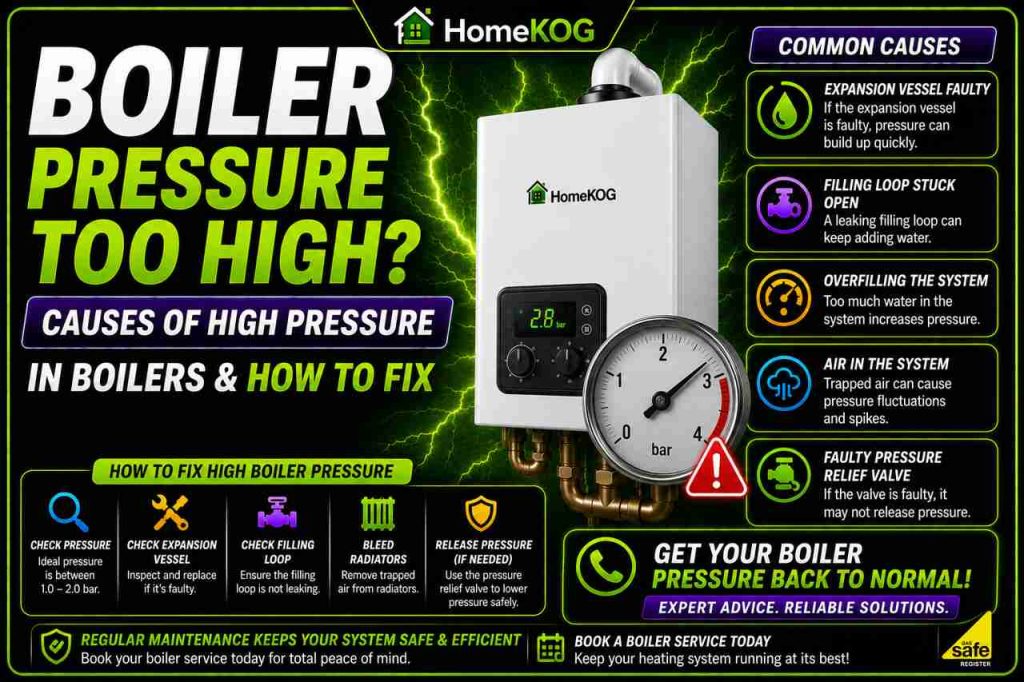
System pressure that is too low is one of the most common reasons a boiler fails to fire or underperforms in winter. The pressure gauge on the boiler’s front panel should read approximately 1 bar when the system is cold and around 2 bar when the heating is running.
If the gauge reads below 1 bar with the heating off, the system needs to be repressurised. Locate the filling loop — typically a short metal hose connecting the mains water supply to the central heating circuit — and open the valves until the pressure gauge rises to 1 bar, then close them again. If pressure continues to drop after repressurising, a leak somewhere in the system is the likely cause and a Gas Safe engineer should investigate.
6. Power Flush the System
Hard water deposits and heating sludge accumulate inside boilers, radiators, and pipework over time. If left unaddressed, this build-up reduces system efficiency, causes boiler noise, accelerates heat exchanger wear, and can eventually block components entirely.
A power flush — carried out by a Gas Safe engineer using high-pressure water and cleaning chemicals — removes this contamination and restores the system to efficient operation. It is particularly relevant for older systems, for properties in hard water areas, or for any system where radiators are slow to heat or the boiler is noisy during operation.
Following a power flush, adding a central heating inhibitor to the system and fitting a magnetic system filter helps prevent future build-up. Regular maintenance is crucial for ensuring your heating system operates efficiently. For additional guidance, check out some central heating system maintenance tips that can extend the life of your unit and improve its performance. Scheduling annual inspections and keeping the system clean are essential practices that homeowners should adopt.
7. Draught-Proof the Property
The less heat the home loses through gaps, cracks, and poorly sealed doors and windows, the less work the boiler has to do to maintain comfortable temperatures. Draught-proofing is one of the simplest and most cost-effective energy improvements available.
Seal gaps around door and window frames with draught-excluding tape or foam strips. Fit draught excluders to the bottoms of external doors. Check for gaps where pipes or cables enter the building through external walls and fill them with appropriate sealant. Heavier curtains on windows reduce heat loss further, particularly on cold nights.
These measures do not just reduce the heating bill — they reduce the frequency and duration of boiler firing cycles throughout winter, which reduces wear on the system as a whole.
8. Install a Carbon Monoxide Detector
Around 30 people in the UK die from carbon monoxide poisoning each year, and a significant proportion of these cases are linked to faulty central heating systems. Carbon monoxide is colourless, odourless, and undetectable without a dedicated alarm, making it one of the most dangerous potential consequences of a boiler fault.
A carbon monoxide detector should be installed in the same room as the boiler and on each floor of the property. The detector will sound an alarm if CO levels rise to a dangerous level, giving occupants time to evacuate and call the Gas Safe emergency line. Detectors are inexpensive, widely available, and require minimal maintenance beyond an occasional battery change.
9. Consider a New Boiler If the Current One Is Ageing
If the boiler is approaching or has passed ten years of age, has already required multiple repairs, and is exhibiting signs of declining performance, the most cost-effective decision before winter may be to replace it rather than repair it again. An ageing boiler is statistically more likely to break down during the period of highest demand, and a breakdown in December or January means longer waits for engineers and potentially days without heating.
A new A-rated condensing boiler installed before winter arrives provides a full manufacturer warranty, improved efficiency that reduces monthly gas bills, and the peace of mind of starting the heating season with a reliably functional system.
Average Boiler Repair Costs in 2026
| Repair or Service Type | Typical Cost (2026) |
|---|---|
| Annual boiler service | £75–£100 |
| Boiler repair (general) | Around £300 |
| Gas valve replacement | £250–£360 |
| PCB replacement | £450+ |
| Heat exchanger replacement | £500+ |
| Fan replacement | £200–£350 |
| Power flush | £300–£600 |
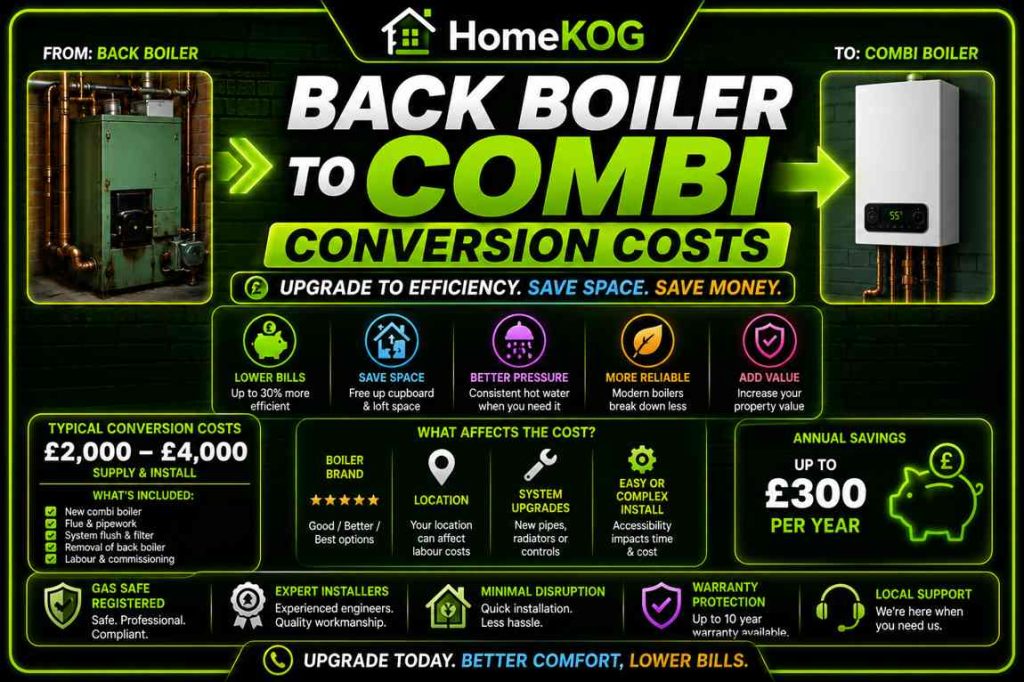
| New boiler installation | £1,500–£3,000 |
Most Commonly Repaired or Replaced Boiler Components
The components most likely to develop faults and require repair or replacement in an ageing boiler are the fan, gas valve, flue, heat exchanger, and PCB. Understanding which parts are most vulnerable helps prioritise what the engineer should check during an annual service, particularly on a boiler that has already had several years of regular use.
Frequently Asked Questions
How often should a boiler be serviced?
A boiler should be serviced once a year by a Gas Safe registered engineer. Annual servicing keeps the boiler operating safely and efficiently, identifies developing faults before they become breakdowns, and is a condition of most manufacturer warranties. Missing a service can invalidate the warranty and significantly increases the risk of a breakdown during the heating season.
What should boiler pressure be in winter?
Boiler pressure should sit at approximately 1 bar when the system is cold and around 2 bar when the heating is running. If the pressure gauge reads below 1 bar with the heating off, the system needs to be repressurised using the filling loop. If pressure drops repeatedly after repressurising, a leak is likely and a Gas Safe engineer should investigate.
Can a boiler lose pressure without a leak?
Yes. Pressure can drop without a visible leak due to a malfunctioning expansion vessel, a faulty pressure relief valve, an ageing filling loop, or after the radiators have been bled. If pressure loss is frequent and no leak can be found, a Gas Safe engineer should inspect these components to identify the cause.
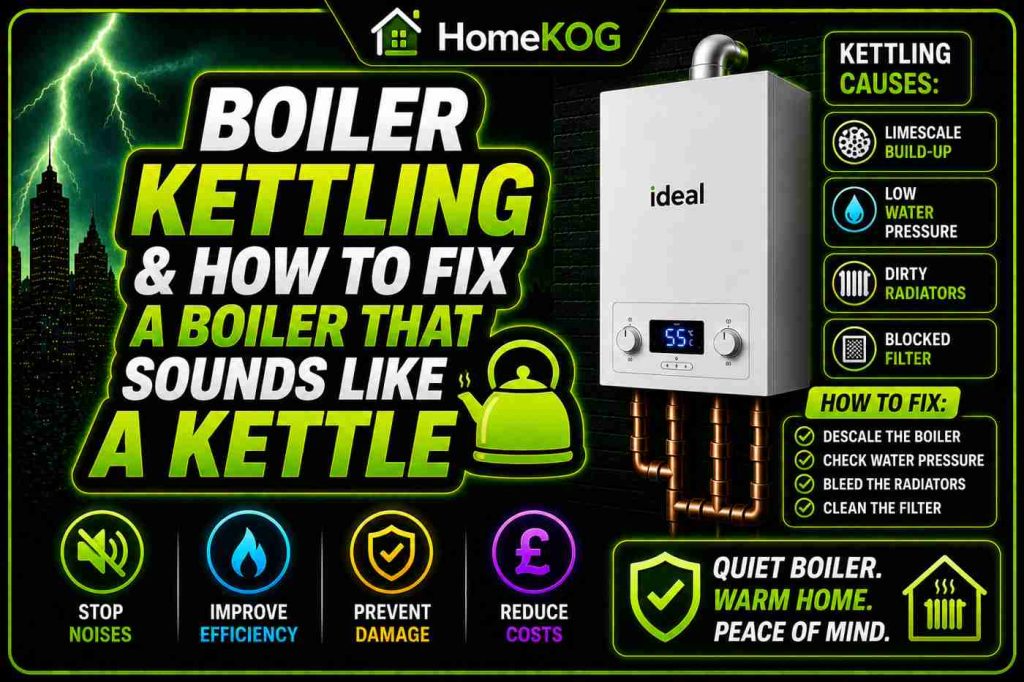
Why is my boiler making a kettling noise?
A kettling noise — resembling a boiling kettle — indicates a build-up of limescale or sludge on the heat exchanger. This restricts water flow, causes localised overheating, and forces the boiler to work harder to achieve the required temperature. Left unaddressed, kettling causes progressive heat exchanger damage and reduces efficiency. A power flush carried out by a Gas Safe engineer is the appropriate remedy.
How do I bleed a radiator?
Turn the heating on and allow the system to run for at least 15 minutes. Turn the heating off and wait for the system to cool. Starting with the ground-floor radiator furthest from the boiler, insert a bleed key into the valve on the side of the radiator and turn it anticlockwise. Air will hiss out as it is released. Once water begins to drip steadily from the valve, close it by turning the key clockwise. Work through all ground-floor radiators before moving to the upper floor. Once complete, check the boiler pressure and repressurise if needed.
Should I get a carbon monoxide detector?
Yes, without question. Carbon monoxide is produced by faulty combustion in gas boilers and is undetectable without a dedicated alarm. Around 30 people in the UK die from CO poisoning each year, and a significantly larger number are hospitalised. A carbon monoxide detector should be installed in the room containing the boiler and on each floor of the property. It is an inexpensive and potentially life-saving measure.
Is my landlord responsible for boiler maintenance?
Yes. Under the Landlord and Tenant Act 1985, landlords are legally responsible for maintaining gas boilers, central heating systems, and hot water supplies in rental properties in safe and working order. This includes arranging an annual gas safety inspection and boiler service by a Gas Safe registered engineer. Tenants are generally responsible for day-to-day tasks such as bleeding radiators and reporting faults promptly. The landlord’s responsibility does not extend to faults caused by deliberate misuse by the tenant.
When should I replace rather than repair my boiler?
If the boiler is more than ten years old, outside its manufacturer warranty, and has required multiple repairs in recent years, replacement may offer better long-term value than continued repair. A new A-rated condensing boiler provides improved efficiency, lower monthly running costs, and a full manufacturer warranty from the date of installation. If any individual repair is expected to cost more than £500, or if the engineer identifies multiple components showing wear, obtaining a quote for a new installation alongside the repair quote is a sensible approach before committing to the work.
Conclusion
A boiler breakdown in winter is avoidable in the majority of cases. The steps covered in this guide — annual servicing, condensate pipe insulation, radiator bleeding, pressure checks, and draught-proofing — address the most common causes of winter breakdowns and cost far less in time and money than dealing with an emergency call-out in January.
Booking a boiler service before the heating season begins is the single most impactful step any homeowner can take. It is the only way to confirm that all components are in good condition before the boiler is asked to work at its hardest, and it is the foundation on which all other preventative measures build.
If the boiler is approaching ten years of age, has developed repeated faults, or is running less efficiently than it once did, winter is the right time to consider whether a new installation — backed by a full manufacturer warranty and improved efficiency — represents better long-term value than continuing to maintain an ageing system.