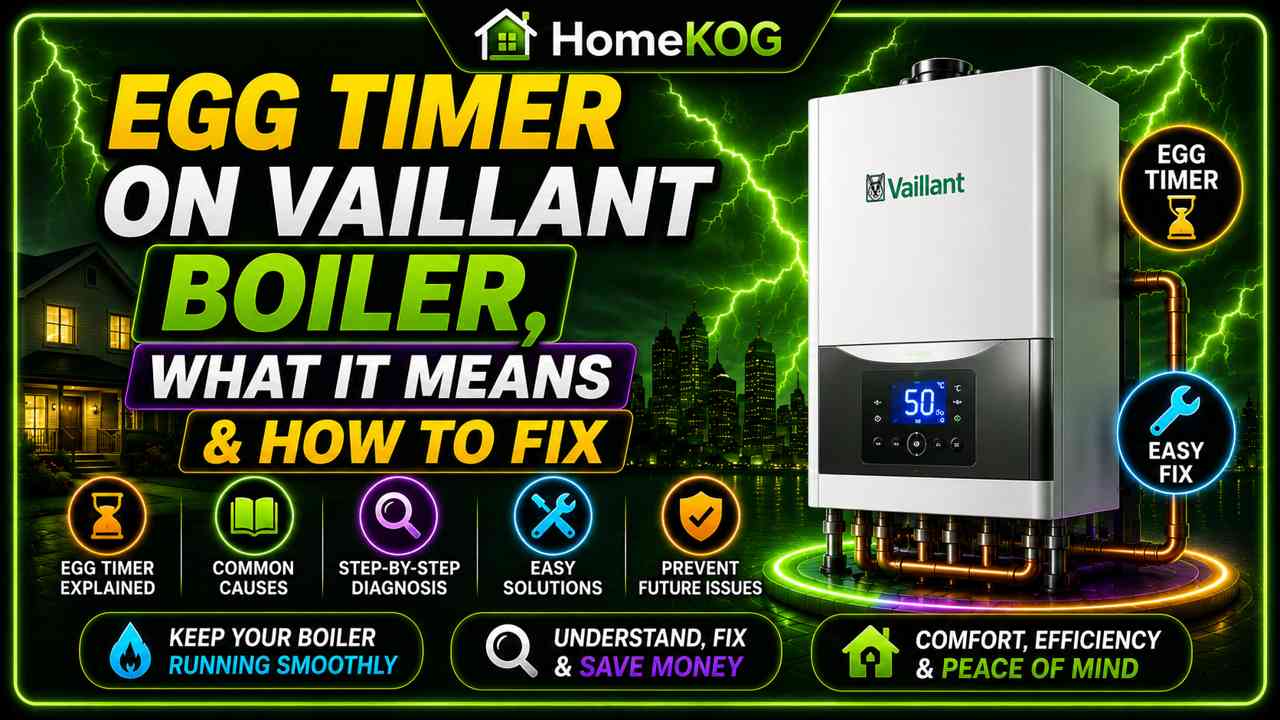

Seeing an unfamiliar symbol on your boiler display is enough to make most people nervous. The egg timer icon on a Vaillant boiler is one of the more misunderstood indicators — mostly because it can mean several different things depending on whether it’s steady or flashing, and which model you have.
The short version: in most cases it’s completely normal. Here’s exactly what it means, when to act, and when to leave it alone.
Steady Egg Timer vs Flashing Egg Timer on Vaillant Boiler
These are not the same thing, and the distinction matters.
Steady egg timer — the boiler is in an active protective pause. This is normal operation and not a cause for concern.
Flashing egg timer — the boiler is either in timer/schedule mode waiting for the next programmed heating period, or on certain ecoTEC models it can indicate a fault condition or lockout state. Context matters here — if the boiler was running normally beforehand and the flashing starts unexpectedly, it warrants attention.
What Does the Steady Egg Timer Mean?
A steady egg timer on a Vaillant boiler indicates the anti-cycling function is active. This is a built-in protective mechanism that introduces a deliberate pause — typically between 3 and 10 minutes — between firing cycles to prevent the boiler from short-cycling.
Short-cycling is when a boiler fires, reaches temperature quickly, shuts off, then fires again almost immediately in rapid succession. It increases wear on components, wastes energy, and shortens the boiler’s operational lifespan. The anti-cycling pause prevents this by holding the boiler in standby briefly before allowing it to fire again.
You may also see the steady egg timer during pump overrun — the short period after a heating demand ends where the pump continues running to dissipate residual heat from the heat exchanger. This is completely normal and will clear on its own within a few minutes.
In both cases, no action is required.
What Does the Flashing Egg Timer Mean?
A flashing egg timer has two possible meanings:
Timer or schedule mode — the boiler is programmed to a heating schedule and is currently in a scheduled off period, waiting for the next programmed on time. If your heating is set to come on at a specific time and the egg timer is flashing in the meantime, this is normal. Check your programmer or thermostat schedule to confirm.
Fault or lockout condition — on certain Vaillant ecoTEC models, a flashing egg timer alongside other display changes can indicate the boiler has locked out due to a fault. If the boiler isn’t producing heat or hot water and the egg timer is flashing persistently, work through the troubleshooting steps below before calling an engineer.
Troubleshooting a Flashing Egg Timer on a Vaillant ecoTEC
Use this table as a first reference:
Step-by-Step Troubleshooting
Check for a Fault Code
Before doing anything else, check the boiler display for a fault code alongside the egg timer symbol. Vaillant ecoTEC models display F-codes when a specific fault is detected. The fault code is more useful than the egg timer symbol alone — look up the specific code to identify the cause. Understanding the vaillant f75 fault code explanation can help you troubleshoot the issue more effectively. This code typically indicates a problem with the system’s water pressure or flow, which can lead to heating inconsistencies. By addressing the underlying issue linked to this fault code, you can ensure your boiler operates efficiently. Continuing to monitor your boiler for faults is essential, especially when you encounter the Vaillant F24 error code meanings. This particular error can signify issues related to the system’s ignition or flame detection, prompting immediate attention to ensure safe operation. Familiarizing yourself with various Vaillant error codes can greatly facilitate your troubleshooting efforts and maintain the efficiency of your heating system.
Check System Pressure
Low system pressure is one of the most common causes of boiler lockout. The pressure gauge on the boiler front should read between 1 and 1.5 bar when the system is cold. If it’s reading below 1 bar, the system needs repressurising.
To repressurise, locate the filling loop — usually a silver braided hose with two valves beneath the boiler — and slowly open both valves until the pressure gauge reaches 1.5 bar, then close both valves firmly. If pressure drops repeatedly, there may be a leak in the system that needs professional attention.
Check the Condensate Pipe
During cold weather, the condensate pipe — which carries waste water from the boiler to an external drain — can freeze and cause the boiler to lock out. The pipe is typically a white plastic pipe running to an outside wall. boiler condensate pipe functionality explained is essential for understanding how to prevent freezing issues during winter. Insulating the pipe or installing a heat tape can help mitigate the risk of lockout by ensuring the water flows freely. Regular maintenance checks can also identify any potential problems before they lead to more significant issues with the boiler system. understanding condensing boiler efficiency is crucial for ensuring optimal performance and energy savings. Higher efficiency ratings indicate that a boiler can extract more heat from the fuel it consumes, translating to lower fuel bills. This understanding can also guide homeowners in choosing the right model that suits their heating needs while being environmentally friendly.
To thaw a frozen condensate pipe, pour warm water (not boiling — boiling water can crack the plastic pipework) along the length of the external pipe until it clears. Once thawed, reset the boiler.
Check the Timer and Programmer Settings
If the egg timer is flashing but the boiler appears otherwise functional, check your programmer or smart thermostat schedule. If the boiler is in a programmed off period, the flashing egg timer simply means it’s waiting for the next on time. Adjusting the schedule will bring the boiler back on if heating is needed outside the set times.
Reset the Boiler
If the above checks don’t resolve the issue, attempt a boiler reset. On Vaillant ecoTEC models, press and hold the reset button — marked with a flame symbol — for approximately 3 seconds until the boiler attempts to restart. Allow the boiler a full restart cycle before assessing whether the issue is resolved. Understanding the F29 Vaillant fault code meaning can help diagnose specific issues that may arise with your boiler. Common causes for the F29 code include low water pressure or issues with the flue system, which can affect the performance of your heating system. If these problems persist after a reset, you may need to consult a professional technician for further assistance.
If the egg timer returns immediately or the boiler fails to fire after reset, do not continue resetting repeatedly. More than two or three resets without resolution suggests an underlying fault that needs a professional diagnosis.
Check the Gas Supply
If the boiler isn’t igniting and an F28 or F29 fault code is present, check that the gas supply valve — usually located on the gas pipe near the boiler — is fully open. Check that other gas appliances in the property are working to confirm supply isn’t interrupted. If gas supply appears normal but the boiler still won’t ignite, contact a Gas Safe registered engineer.
How Can I Determine if My Central Heating System Uses a Vaillant Boiler Based on the Egg Timer Indicator?
To determine if your central heating system uses a Vaillant boiler, check the egg timer indicator on the control panel. This feature is unique to certain models, making identifying your boiler type easily achievable. Look for specific symbols or lights that signal the presence of a Vaillant system. When considering a new installation or upgrade, exploring vaillant boiler price comparison insights can provide you with valuable information. By analyzing costs against features and efficiency ratings, you can make a more informed decision that suits your budget and heating needs. Additionally, checking customer reviews and expert opinions will offer further guidance on the best options available in the market.
Does the Egg Timer Mean I Need a New Boiler?
In most cases, no. The egg timer symbol by itself — whether steady or flashing — doesn’t indicate the boiler needs replacing. Anti-cycling pauses, pump overrun, and timer mode are all normal operational states.
Where replacement starts to make sense is when the boiler requires frequent engineer callouts, develops persistent faults despite professional repair, or is over 10 to 12 years old and becoming less efficient. At that point, the cumulative cost of repairs and rising energy bills from reduced efficiency often makes replacement the more economical long-term decision.
If the boiler is still under manufacturer warranty, contact Vaillant directly before arranging an independent repair — repairs carried out without notifying Vaillant can affect warranty validity in some cases.
When to Call a Gas Safe Engineer
Call a Gas Safe registered engineer if:
-
The egg timer returns persistently after resetting, with no fault code or an unresolvable fault code displayed
-
The boiler has lost pressure repeatedly, suggesting a system leak
-
F28 or F29 fault codes are present and gas supply has been confirmed as normal
-
The boiler is making unusual sounds — banging, gurgling, or whistling — alongside the egg timer symbol
-
Hot water or heating has been absent for more than 24 hours despite basic troubleshooting
Do not attempt to inspect internal boiler components, gas connections, or flue systems yourself. These require Gas Safe registration to work on legally and safely.
What Should I Know About the Egg Timer on My Vaillant Boiler During a Service?
The egg timer on your Vaillant boiler plays a crucial role in optimizing performance. During service, ensure the technician discusses radiator maintenance during boiler service. Properly timed maintenance not only enhances heating efficiency but also prolongs the lifespan of your system, keeping your home warm and comfortable all year round.
FAQs
What does the egg timer symbol mean on a Vaillant boiler?
It depends on whether it’s steady or flashing. A steady egg timer indicates the anti-cycling function or pump overrun is active — both are normal. A flashing egg timer means the boiler is in timer/schedule mode, or on some ecoTEC models may indicate a fault or lockout condition.
Is the egg timer on a Vaillant boiler a fault?
Not usually. A steady egg timer is a normal part of the boiler’s operation. A flashing egg timer is only a fault indicator if it appears alongside other symptoms like loss of heating, hot water, or a fault code on the display.
How long does the egg timer last on a Vaillant boiler?
The anti-cycling pause typically lasts between 3 and 10 minutes. Pump overrun after a heating cycle also clears within a few minutes. If the egg timer symbol has been present for significantly longer without clearing, check for a fault code or work through the troubleshooting steps above.
What is the anti-cycling function on a Vaillant boiler?
Anti-cycling is a protective feature that introduces a deliberate pause between firing cycles to prevent the boiler from repeatedly switching on and off in quick succession. Short-cycling increases component wear and wastes energy — the anti-cycling pause prevents this and is entirely normal.
Why does the egg timer flash on my Vaillant ecoTEC?
The most common reasons are that the boiler is in a scheduled off period waiting for the next programmed on time, or that the boiler has locked out due to a fault. Check your programmer schedule first, then look for a fault code on the display before attempting a reset.
How do I reset a Vaillant boiler showing an egg timer?
Press and hold the reset button — marked with a flame symbol — for approximately 3 seconds. Allow the boiler a full restart cycle. If the egg timer returns immediately or the boiler fails to produce heat after two reset attempts, book a Gas Safe engineer inspection rather than continuing to reset.
Should I call an engineer for the egg timer symbol?
Only if it returns persistently after resetting, is accompanied by a fault code you can’t resolve, or the boiler has stopped producing heat or hot water despite basic troubleshooting. A steady egg timer or one linked to a timer schedule does not require an engineer visit.