
Different Types of Radiators: Type 11 and Type 22 Explained
Quick Answer
Type 11 radiators have one panel and one convector, making them ideal for small rooms. Type 22 radiators have two panels and two convectors, producing more heat for larger spaces. Choosing the right radiator depends on room size, insulation, and heating demand.
Choosing the right radiator can make a big difference to how efficiently your home heats up.
With so many styles and configurations available, understanding the differences between radiator types helps you get better performance and lower energy bills.
Radiator Types Entity Relationships
- Radiator → emits → heat into rooms
- Central heating system → circulates → hot water
- Panel radiator → contains → metal panels
- Convector fins → increase → heat output
- Type 11 radiator → includes → single panel
- Type 22 radiator → includes → double panels
- Larger surface area → produces → more heat
- Thermostatic radiator valve → controls → temperature
- Boiler → supplies → heated water
- Room size → determines → radiator output
- Heat loss → affects → radiator choice
- Radiator efficiency → reduces → energy costs

What Are the Different Types of Radiators?
There are several radiator styles available in UK homes, each suited to different spaces and heating needs.
H3: Common radiator styles
Conventional radiators are the most widely used and are typically made from steel or cast iron.
Panel radiators are compact and modern, making them ideal for most homes.
Towel radiators are commonly used in bathrooms and double as towel warmers.
Column radiators offer a traditional look and are often chosen for period properties.
Low surface temperature radiators are designed for safety in public spaces.
Skirting radiators provide discreet heating along walls.
Underfloor heating delivers even heat distribution across the floor.
Understanding Radiator Panel Types
Radiators are also classified by their panel and convector configuration.
This determines how much heat they can produce.
H3: Radiator type codes explained
| Type | Panels | Convector Fins | Description |
|---|---|---|---|
| Type 10 | 1 | 0 | Basic single panel |
| Type 11 | 1 | 1 | Single panel with fins |
| Type 21 | 2 | 1 | Double panel, single fins |
| Type 22 | 2 | 2 | Double panel with fins |
| Type 33 | 3 | 3 | Maximum heat output |
The more panels and fins a radiator has, the more heat it can produce.
What Is a Type 11 Radiator?
A Type 11 radiator features one panel and one set of convector fins.
It is slim and space-saving, making it ideal for smaller rooms.
H3: Key features
| Feature | Details |
|---|---|
| Heat output | Low to moderate |
| Best for | Bedrooms, bathrooms |
| Design | Slim and compact |
Type 11 radiators are efficient for rooms with low heat demand.
They are often used where wall space is limited.
What Is a Type 22 Radiator?
A Type 22 radiator includes two panels and two sets of convector fins.
This increases both surface area and heat output.
H3: Key features
| Feature | Details |
|---|---|
| Heat output | High |
| Best for | Living rooms, larger spaces |
| Design | Thicker, more powerful |
Type 22 radiators are one of the most popular choices in UK homes.
They provide strong, consistent heat for larger areas.
Type 11 vs Type 22 Radiators
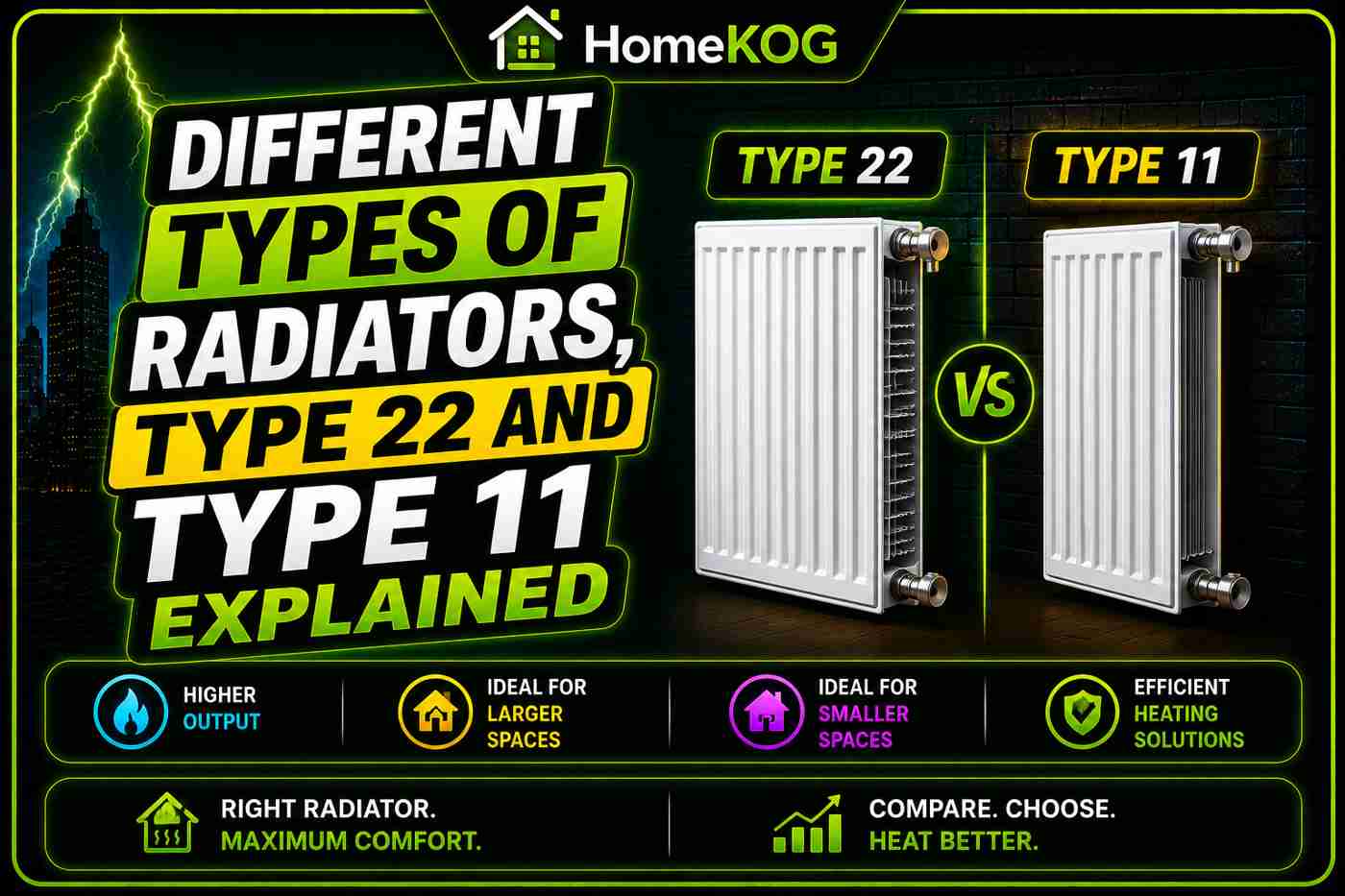
The main difference between Type 11 and Type 22 radiators is heat output and size.
H3: Comparison table
| Feature | Type 11 | Type 22 |
|---|---|---|
| Panels | 1 | 2 |
| Convector fins | 1 | 2 |
| Heat output | Lower | Higher |
| Size | Slim | Thicker |
| Best for | Small rooms | Large rooms |
Type 22 radiators produce more heat due to increased surface area.
Type 11 radiators are better suited to compact spaces.
Which Radiator Type Is Best for Your Home?
The best radiator depends on your room size and heating requirements.
Choosing the correct type ensures efficiency and comfort.
H3: Key considerations
Room size determines how much heat is needed.
Insulation affects how quickly heat is lost.
Boiler output must match your radiator demand.
Thermostatic radiator valves help regulate heat levels efficiently.
Do Radiator Types Affect Energy Efficiency?
Yes, the right radiator type can improve energy efficiency.
An undersized radiator will struggle to heat a room, increasing energy use.
H3: Why sizing matters
A properly sized radiator heats a room faster and maintains temperature more easily.
This reduces strain on your boiler and lowers running costs.
How Do the Signs of a Failing Radiator Relate to Different Types of Radiators?
Different types of radiators exhibit unique radiator replacement signs to watch. For instance, older models might show rust or leaks, while modern ones may overheat or produce strange noises. Understanding these indicators helps in identifying issues early, ensuring optimal performance and preventing costly repairs or replacements down the line.
FAQs
What is the difference between Type 11 and Type 22 radiators?
Type 11 radiators have one panel and one convector, producing less heat. Type 22 radiators have two panels and two convectors, offering higher heat output and better performance in larger rooms.
Are Type 22 radiators better than Type 11?
Type 22 radiators are better for larger spaces due to their higher heat output. Type 11 radiators are still effective for smaller rooms where less heat is required.
Which radiator is best for a living room?
A Type 22 radiator is typically best for a living room because it can generate enough heat to warm larger areas efficiently.
Can I replace a Type 11 radiator with a Type 22?
Yes, you can upgrade from a Type 11 to a Type 22 radiator. However, you must ensure there is enough wall space and your heating system can support the increased output.
Do bigger radiators use more energy?
Larger radiators do not necessarily use more energy. They can heat rooms faster and maintain temperature more efficiently, potentially reducing overall energy usage.
What does K1 and K2 mean on radiators?
K1 refers to a Type 11 radiator with one panel and one convector. K2 refers to a Type 22 radiator with two panels and two convectors.
Are double panel radiators more efficient?
Double panel radiators are more efficient at heating larger spaces because they provide greater heat output and improved heat distribution.
How do I choose the right radiator size?
You should use a heat loss calculation or radiator size calculator. This considers room size, insulation, and window area to determine the correct radiator output.
Conclusion
Understanding radiator types is essential for creating an efficient and comfortable heating system.
Type 11 radiators are ideal for smaller rooms, while Type 22 radiators provide the power needed for larger spaces.
By choosing the right radiator for each room, you can improve heat distribution, reduce energy usage, and keep your home warm throughout the year.