

Where Does the UK Get Its Gas From?
Quick Answer
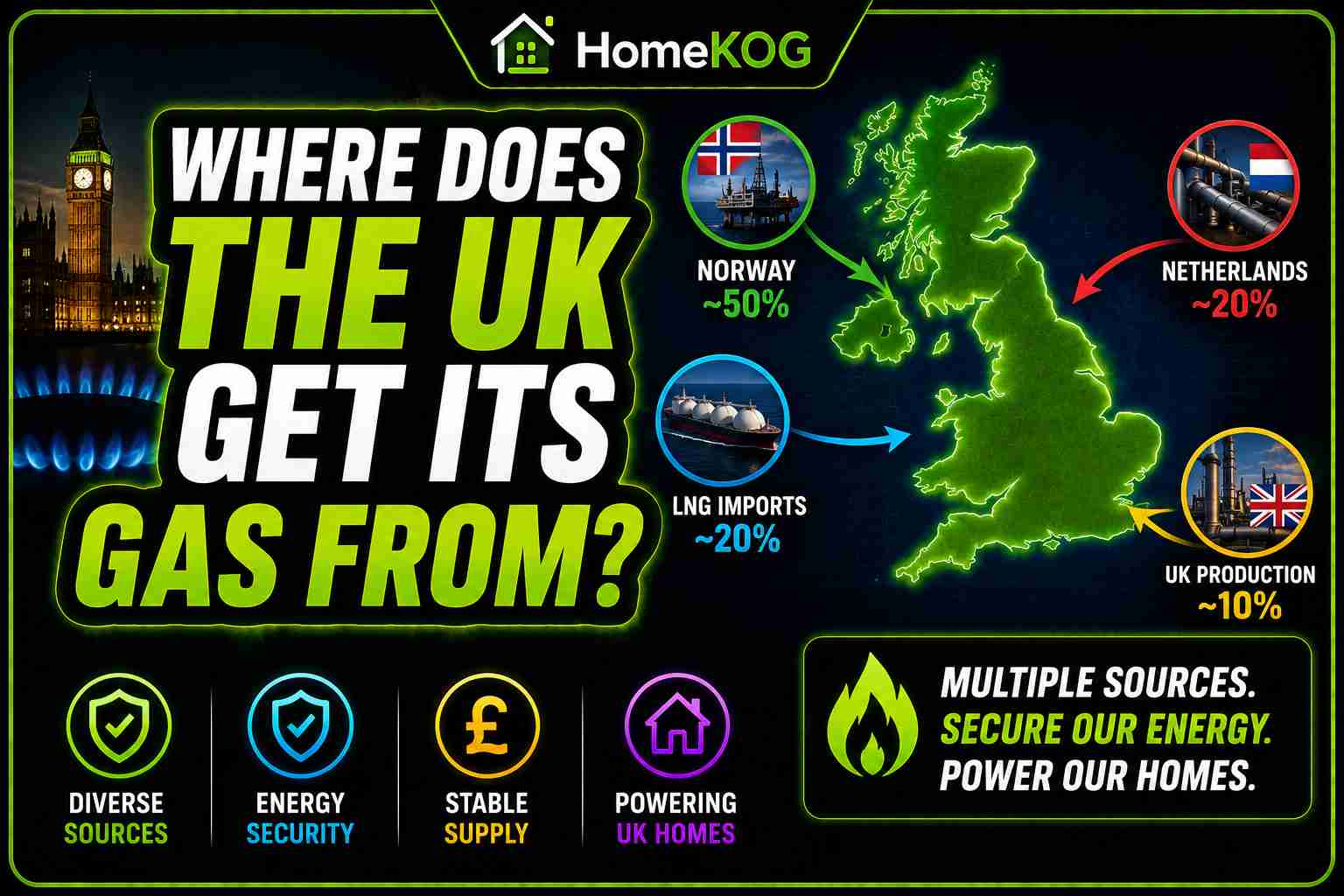
The UK gets its gas from a mix of domestic North Sea production and imports. Around half comes from UK reserves, while the rest is imported mainly from Norway via pipelines and as liquefied natural gas (LNG) from countries like Qatar and the USA. Global markets influence prices, even with low Russian reliance.
As energy costs remain a major concern in 2026, understanding where UK gas comes from helps explain price changes and future supply security.
Key UK Gas Supply Relationships (Semantic Triples)
-
UK gas supply → depends on → domestic production and imports
-
Norway → supplies → majority of UK imported gas
-
North Sea → provides → UK domestic gas production
-
LNG imports → arrive via → tanker shipments
-
Qatar → exports → LNG to the UK
-
USA → supplies → LNG cargoes to UK terminals
-
Gas market → operates through → global supply and demand
-
UK households → rely on → gas for heating
-
Gas → generates → large share of UK electricity
-
Energy prices → influenced by → global shortages
-
Sanctions on Russia → reduced → global gas supply
-
Renewable energy → reduces → long-term gas reliance

How the UK Gets Its Gas in 2026
The UK relies on two main sources of gas: domestic production and imports.
Roughly half of the UK’s gas is produced locally, mainly from the North Sea. The remaining supply is imported to meet demand, especially during colder months.
Gas remains essential because it heats most homes and supports electricity generation.
UK Gas Supply Breakdown
| Source | Approx Share | Description |
|---|---|---|
| North Sea (UK production) | ~50% | Domestic gas extraction |
| Norway (pipeline imports) | Largest import share | Main supplier via pipelines |
| LNG (Qatar, USA, others) | Growing share | Delivered by tankers |
| Europe interconnectors | Smaller share | Gas via Belgium & Netherlands |
Domestic Gas: The North Sea
The North Sea remains a critical part of the UK’s energy mix.
Gas fields located offshore supply a significant portion of national demand. Investment since the early 2020s has increased output slightly, helping stabilise supply.
However, reserves are finite, meaning long-term reliance is not sustainable.
Why North Sea Gas Still Matters
Domestic gas production reduces dependence on imports. It also provides greater energy security during global disruptions.
Even so, the UK still needs imports to meet full demand.
Imported Gas: Norway and LNG
Norway is the UK’s largest external supplier of gas.
Gas flows directly through pipelines connecting Norwegian fields to the UK. This makes it the most reliable and consistent import source.
Liquefied natural gas (LNG) is also vital. LNG is shipped by sea and stored at UK terminals before entering the grid.
Main LNG Suppliers
| Country | Supply Type | Role |
|---|---|---|
| Qatar | LNG | Major global exporter |
| USA | LNG | Increasing supply share |
| Belgium & Netherlands | Pipeline | European connections |
| Others | LNG | Smaller contributions |
Why UK Gas Prices Increased
Even though the UK imports very little gas from Russia, prices still rose sharply.
Gas is traded globally, meaning prices are set by international supply and demand.
When supply drops anywhere in the world, prices rise everywhere.
Key Price Drivers
-
Reduced global supply
-
Increased demand post-pandemic
-
Market speculation
-
Weather conditions
-
Infrastructure constraints
This explains why UK energy bills increased despite limited direct reliance on Russian gas.
How Much Gas the UK Uses
The UK uses a significant amount of gas each year.
Although usage has declined compared to previous decades, gas still plays a major role in heating and electricity.
Average UK Gas Usage
| Period | Annual Usage |
|---|---|
| 2001–2010 | ~96 billion cubic feet |
| 2011–2026 | ~78 billion cubic feet |
The drop reflects improved efficiency and the rise of renewable energy.
Why the UK Relies on Gas
Gas remains essential for everyday life in the UK.
It is widely used because it is efficient, relatively affordable, and already integrated into infrastructure.
Main Uses of Gas
-
Heating homes (majority of UK households)
-
Generating electricity
-
Cooking and hot water
-
Industrial energy use
This reliance explains why supply security is so important.
The Future of Gas in the UK
Gas will remain important in the short to medium term, but its role will gradually decline.
The UK is investing heavily in renewable energy, including wind, solar, and hydrogen.
At the same time, policies aim to reduce carbon emissions and move away from fossil fuels.
Expected Changes by 2035–2050
-
Reduced gas demand
-
Growth in heat pumps
-
Expansion of renewable electricity
-
Lower reliance on imports
Gas will still act as a backup energy source while the transition continues.
How Gas Is Imported into the UK
Gas enters the UK through two main methods.
Import Methods
-
Pipeline supply from Norway and Europe
-
LNG shipments via tankers
Pipelines provide continuous supply, while LNG offers flexibility during peak demand.
How Do External Boilers Impact the UK’s Gas Supply?
The shift towards external boiler installation can significantly impact the UK’s gas supply. With increased efficiency and reduced demand for traditional heating methods, the overall reliance on gas may decline. However, understanding external boiler installation advantages costs is essential for consumers to make informed financial decisions regarding their heating options. exploring boiler financing options for homeowners can further assist in transitioning to more sustainable heating solutions. By evaluating various financing plans, homeowners can find ways to manage installation costs comfortably. This financial flexibility encourages a shift towards modern heating technologies, ultimately supporting a greener energy future.
FAQs
Where does the UK get most of its gas from?
The UK gets most of its imported gas from Norway, while around half of its total supply comes from domestic North Sea production. Norway supplies gas through pipelines, making it the most reliable external source. LNG imports from countries like Qatar and the USA provide additional supply, especially during high demand periods.
Does the UK rely on Russian gas?
The UK has very low reliance on Russian gas, historically accounting for only a small percentage of imports. However, global gas prices are interconnected. When supply from Russia decreases globally, prices increase worldwide, including in the UK, due to international market dynamics.
Why are UK gas prices so high?
UK gas prices are influenced by global markets rather than just domestic supply. Reduced global supply, increased demand, and geopolitical events all affect pricing. Even if the UK sources gas elsewhere, global shortages push prices up across all countries.
How is gas transported to the UK?
Gas is transported to the UK through pipelines and LNG tankers. Pipelines connect directly to Norway and parts of Europe, while LNG is shipped by sea, stored at terminals, and then fed into the national grid.
Is the UK self-sufficient in gas?
The UK is not fully self-sufficient in gas. While it produces around half of its needs from the North Sea, it still relies on imports to meet demand. This is especially important during winter when energy usage increases.
Will the UK stop using gas in the future?
The UK plans to reduce gas usage significantly by 2050 as part of its net-zero targets. Renewable energy and alternatives like heat pumps will gradually replace gas heating, but gas will still play a role during the transition period.
How secure is the UK gas supply?
The UK gas supply is considered relatively secure due to diverse sources, including domestic production and multiple import routes. However, global market disruptions, extreme weather, and infrastructure issues can still affect supply and pricing.
Why does the UK still need gas?
The UK still needs gas because it powers heating for most homes and supports electricity generation. Until renewable energy fully replaces fossil fuels, gas remains essential for maintaining reliable energy supply. when considering sustainable choices, homeowners must navigate regulations around installing multiple gas boilers legally. It is crucial to ensure compliance with national standards to promote safety and efficiency in energy use. As the energy landscape evolves, staying informed on legal requirements will help in making responsible decisions that align with both individual needs and environmental goals. Additionally, homeowners can explore spacesaving boiler solutions for homes that maximize efficiency and minimize footprint. These innovative systems can seamlessly fit into smaller areas while providing the necessary heating and hot water. By investing in modern technology, residents not only enhance their comfort but also contribute to a more sustainable future.
Conclusion
The UK gets its gas from a balanced mix of domestic production and international imports.
North Sea reserves provide around half of supply, while Norway and LNG imports make up the rest. Despite low reliance on Russia, global markets still influence prices.
Looking ahead, gas will remain important for now, but its role will gradually decline as the UK shifts towards cleaner, renewable energy sources.