
Limescale Reducers & Inhibitors: How They Work & Are They Worth It?
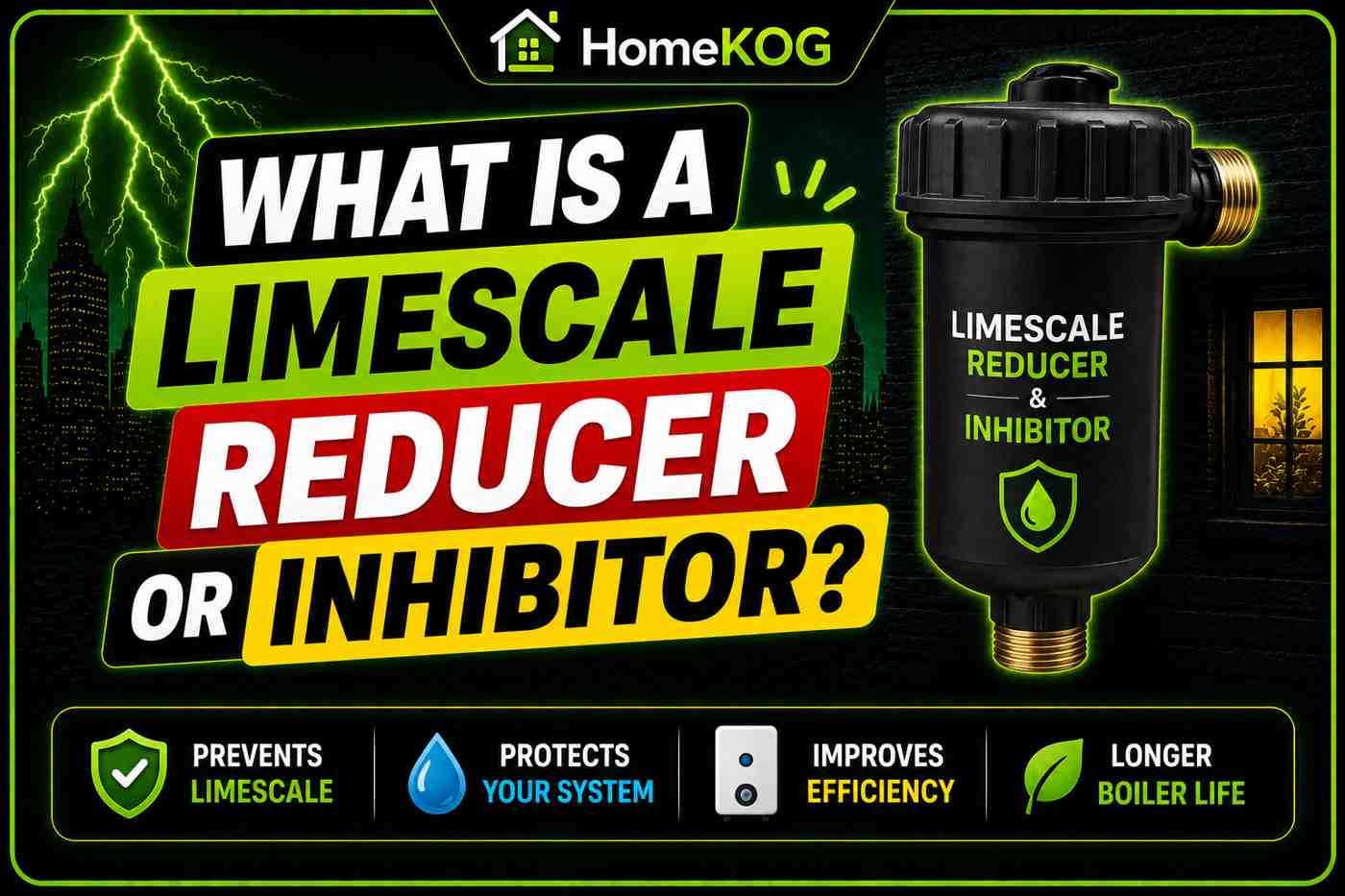
Quick Answer: A limescale reducer or inhibitor is a chemical treatment or physical device fitted to a central heating system to prevent calcium carbonate deposits from building up inside the boiler, pipework, and heat exchanger. The most common type for domestic central heating is a 15mm magnetic scale reducer fitted to the copper supply pipe. They are particularly important in hard water areas and are strongly recommended when fitting a new boiler.
Most homeowners in hard water areas will have noticed the white chalky deposits that form inside kettles and around taps over time. The same mineral-rich water flows through your central heating system, and the calcium carbonate it carries deposits itself on internal boiler components with the same consistency — but with far more costly consequences. A limescale reducer is one of the most straightforward and cost-effective ways to protect a boiler investment, and understanding how each type works helps you choose the right solution for your property.
Get a new boiler quote online here >
Limescale Reducers: Key Entity Relationships
- A limescale reducer is a physical device or chemical treatment installed on a central heating system that alters the properties of the water supply to prevent calcium carbonate from forming solid deposits on boiler components and heating pipework.
- Limescale is a solid deposit formed when calcium carbonate — a mineral carried in mains water — precipitates out of solution and accumulates on heating elements, heat exchangers, flow thermistors, and internal pipe surfaces within a central heating system.
- A magnetic scale reducer is a device installed on the copper water supply pipe entering the central heating system that uses a magnetic field to alter the mineral structure of the water, making it significantly less likely to form solid limescale deposits on internal surfaces.
- An electronic scale reducer is a device that generates electrical impulses within the water supply pipe to disrupt the formation of limescale crystals before they reach the boiler and central heating components.
- A chemical scale reducer is a liquid treatment added to the central heating system water that binds chemically with dissolved minerals to reduce their tendency to precipitate as solid limescale deposits on heating surfaces.
- Reverse osmosis is a water treatment method using a semi-permeable membrane to filter dissolved minerals from the water supply before it enters the central heating system, producing purer water that is substantially less likely to form scale.
- The heat exchanger is the primary boiler component most vulnerable to limescale damage, where calcium carbonate deposits progressively reduce heat transfer efficiency and can eventually cause cracking under increased internal pressure, necessitating costly replacement.
- A flow thermistor is a temperature-sensing component within the boiler that is particularly susceptible to limescale accumulation, with deposits around the sensor creating localised hot spots that produce inaccurate temperature readings and trigger fault codes.
- A magnetic filter is a complementary device to a limescale reducer that captures iron oxide, rust particles, and metallic debris circulating in the central heating water, addressing a different category of contamination that limescale reducers alone do not tackle.
- Central heating inhibitor is a liquid compound added annually to the heating system that addresses corrosion and sludge formation, working alongside a limescale reducer to provide comprehensive protection for the full range of water-related threats to boiler and system longevity.
- Hard water is a water supply characteristic in which the concentration of dissolved calcium and magnesium minerals is elevated, with properties in hard water areas of the UK experiencing significantly faster limescale accumulation and requiring more active limescale protection measures.
- A Gas Safe registered heating engineer is the appropriate professional to install a limescale reducer on a gas central heating system, typically fitting the device at the time of a new boiler installation after carrying out a chemical flush of the existing system.

What Is Limescale and Why Does It Matter for Boilers?
Limescale is calcium carbonate — the same mineral compound that forms the white residue around taps and inside kettles. It is found in the mains water supply across the UK, with concentration levels varying significantly by region. In hard water areas, which cover most of southern and eastern England, the mineral content of the water is high enough that deposits form rapidly on any surface exposed to repeatedly heated water.
Inside a central heating system, that water is heated, cooled, and circulated through the same components hundreds of times every heating season. Each cycle offers calcium carbonate another opportunity to precipitate out of solution and adhere to the surfaces it contacts. The heat exchanger is the most vulnerable component — its internal surfaces operate at the highest temperatures and represent the largest heated surface area in the system. As scale builds up on these surfaces, the exchanger’s ability to transfer heat into the circulating water reduces, efficiency falls, energy consumption rises, and the boiler works progressively harder to maintain the same output.
Left unchecked, limescale accumulation causes more than inefficiency. Sufficient build-up can crack the heat exchanger entirely as pressure builds behind scale-restricted passages — an outcome familiar to any heating engineer who has diagnosed the U9 overheating fault on a Worcester Bosch boiler or similar overheating codes on other brands. Replacing a cracked heat exchanger costs hundreds of pounds. Fitting a limescale reducer costs a fraction of that.
How Limescale Reducers Work
Limescale reducers do not remove minerals from the water entirely — they alter the chemical or physical properties of those minerals to make them less likely to adhere to surfaces and form solid deposits. The result is that calcium carbonate remains in suspension in the water rather than precipitating onto internal components, and is eventually flushed from the system through normal operation.
Magnetic Scale Reducers
Magnetic descaling is the most widely used method for domestic central heating systems in the UK. A magnet device is fitted directly onto the copper water supply pipe entering the boiler, typically at 15mm diameter for standard residential pipework. As water passes through the magnetic field, the crystalline structure of the calcium carbonate minerals changes in a way that makes them less inclined to adhere to heating surfaces.
Magnetic scale reducers are the type fitted as standard with new boiler installations by most heating companies, and they are the method recommended for the majority of UK properties. Installation is straightforward, there are no consumables to replace, and the device operates passively without requiring electricity or any ongoing attention.
Electronic Scale Reducers
Electronic descalers generate low-voltage electrical impulses that are transmitted through the water supply pipe via a coil wound around it. These impulses disrupt the formation of limescale crystals within the water before they reach the boiler. Electronic devices are effective in properties where the pipe material or configuration makes a magnetic clamp impractical, and they operate continuously without intervention once installed. Understanding boiler condensate pipe functions explained is crucial for maintaining efficiency in heating systems. Proper management of condensate can prevent issues like corrosion and water hammer, which can lead to costly repairs. By regularly inspecting and ensuring the correct operation of these pipes, property owners can enhance the longevity and performance of their boilers.
Chemical Scale Reducers
Chemical scale reducers are liquid treatments added directly to the central heating system water. The active chemicals bind with dissolved calcium and magnesium minerals, forming compounds that remain soluble rather than precipitating as solid scale. Chemical treatments are available as standalone products or as combined scale and corrosion inhibitors that address multiple water quality threats simultaneously.
The ongoing cost of chemical treatment is worth factoring into any comparison with physical devices. While the upfront cost of a chemical descaler is lower than a magnetic or electronic unit, regular reapplication — typically on an annual basis aligned with the boiler service — means a recurring maintenance cost that continues throughout the system’s working life.
Reverse Osmosis
Reverse osmosis systems use a semi-permeable membrane to filter dissolved minerals out of the water supply before it enters the heating system, producing water that is significantly lower in mineral content and therefore substantially less likely to form scale. These systems are more common in commercial applications and properties with severe hard water problems, and they represent the most comprehensive but also most expensive approach to limescale prevention.
Which Type Is Right for Your Central Heating System?
For the vast majority of UK domestic properties with copper central heating pipework, a 15mm magnetic scale reducer is the most practical and cost-effective choice. It is the standard recommendation for new boiler installations, requires no ongoing consumable costs or maintenance, and provides reliable protection against scale formation throughout the system.
In properties where the pipe configuration makes a magnetic clamp difficult to fit, an electronic descaler on the supply pipe achieves the same protective outcome. Chemical scale reducers are useful as a complementary measure or as a standalone treatment where physical devices are not practical, but the ongoing replacement cost should be considered alongside the upfront comparison.
Regardless of which scale reduction method is chosen, a magnetic filter should always be fitted alongside it. A limescale reducer protects against calcium carbonate deposits, but a magnetic filter addresses an entirely different and equally damaging category of contaminant — iron oxide particles, rust, and metallic debris that circulate in the heating water and accumulate in the pump and heat exchanger. The combination of a limescale reducer and a magnetic filter provides the most comprehensive ongoing protection available for a central heating system.
How Much Does a Limescale Reducer Cost?
| Type | Approximate Cost |
|---|---|
| Magnetic or electronic descaling device | £50 – £300 |
| Chemical scale reducer | £10 – £50 per treatment |
| Reverse osmosis system | Varies by size and specification |
| Professional installation | £50 – £200 |
The device cost is a one-time investment for magnetic and electronic types. Chemical treatments carry an ongoing annual cost that should be factored into any long-term comparison. Professional installation by a Gas Safe registered engineer is required for gas central heating systems, and is typically carried out at the time of a new boiler installation alongside the chemical flush that prepares the system for the new appliance.
Is a Limescale Reducer Worth the Cost?
For properties in hard water areas, the answer is straightforwardly yes. The cost of a magnetic scale reducer plus installation is modest compared to the potential cost of a heat exchanger replacement caused by limescale damage — and considerably less than the cost of a full boiler replacement on an older appliance where unchecked scale accumulation has caused irreversible damage.
For properties in soft water areas where mineral content is low, the risk of significant limescale accumulation is lower, but the protective benefit of a scale reducer remains present and the cost is the same. Given that a new boiler represents a significant household investment — typically £1,500 to £3,500 installed — protecting it with a device that costs a fraction of that figure and extends its working life is a straightforwardly sensible decision for most homeowners.
The question of whether to fit a scale reducer is most pressing at the point of installing a new boiler. Fitting one at installation — when the system is already being worked on and the engineer is present — costs only the device price as the installation labour is absorbed into the boiler fitting job. Retrofitting one later requires a separate call-out.
FAQ: Limescale Reducers and Inhibitors
What is a limescale reducer and what does it do?
A limescale reducer is a device or chemical treatment installed on a central heating system that prevents calcium carbonate from forming solid deposits on internal boiler components, pipework, and the heat exchanger. It works by altering the chemical or physical properties of the minerals in the water supply, keeping them in suspension rather than allowing them to adhere to heating surfaces. This protects the boiler’s efficiency, extends the life of key components, and reduces the risk of costly heat exchanger damage and associated fault codes caused by overheating. understanding condensing boiler technology is essential for optimizing energy efficiency and reducing operational costs. By leveraging advancements in heating technology, homeowners can benefit from systems that provide superior performance while minimizing their environmental impact. Keeping up with the latest innovations also aids in making informed decisions regarding maintenance and upgrades for sustained efficiency.
Do I need a limescale reducer if I have a combi boiler?
Yes. A combi boiler is particularly vulnerable to limescale accumulation because its heat exchanger, diverter valve, and flow thermistors are all in direct and continuous contact with water from the mains supply. These components operate at high temperatures where calcium carbonate precipitation is most active, and scale build-up on any of them reduces boiler efficiency and risks component damage. Fitting a limescale reducer when installing a new combi boiler is strongly recommended, and is especially important in hard water areas where mineral concentrations in the water supply are high.
What is the difference between a limescale reducer and a magnetic filter?
A limescale reducer prevents calcium carbonate deposits from forming on internal surfaces by altering the mineral properties of the water. A magnetic filter captures iron oxide particles, rust, and metallic debris that circulate in the heating water and accumulate in the pump and heat exchanger as heating sludge. They address different categories of water contamination and should be used together rather than as alternatives. A limescale reducer without a magnetic filter leaves the system vulnerable to sludge damage, and a magnetic filter without a limescale reducer leaves it vulnerable to scale accumulation.
Who should fit a limescale reducer?
A limescale reducer on a gas central heating system should be fitted by a suitably qualified heating engineer. If you are having a new boiler installed, the engineer can fit the device at the same time as the boiler, typically after carrying out a chemical flush of the existing system to remove any existing scale or sludge before the new appliance is commissioned. Attempting to fit a limescale reducer without the appropriate knowledge risks incorrect installation that may not provide effective protection.
How much does a limescale reducer cost?
A magnetic or electronic scale reducer typically costs between £50 and £300 for the device, plus £50 to £200 for professional installation. Chemical scale reducers are available from around £10 to £50 per treatment but require ongoing annual reapplication. For most domestic central heating systems, a 15mm magnetic scale reducer fitted at the time of a new boiler installation represents the most cost-effective one-time investment, with no ongoing consumable costs and no further maintenance required.
Can a limescale reducer improve my energy bills?
Yes, indirectly. Limescale accumulation on the heat exchanger acts as an insulating layer that reduces heat transfer efficiency, forcing the boiler to burn more gas to achieve the same water temperature. By preventing that accumulation, a limescale reducer maintains the heat exchanger’s transfer efficiency at close to its designed level throughout the boiler’s working life. The energy saving compared to an unprotected system in a hard water area is meaningful over the course of a full heating season, and grows more significant as the years of protection accumulate.
Should I fit a limescale reducer if I live in a soft water area?
The risk of significant limescale accumulation is lower in soft water areas where mineral concentrations are naturally lower, but it is not zero. Even soft water contains some dissolved minerals, and in a sealed central heating system that repeatedly heats and cools the same water, gradual accumulation remains possible over many years of operation. Given the relatively low cost of a magnetic scale reducer and the protection it provides, fitting one remains worthwhile even in soft water areas — the cost of not fitting one if scale problems do develop is substantially higher than the preventive investment.
Is a limescale reducer the same as a central heating inhibitor?
No. A central heating inhibitor is a liquid compound added to the system water annually to prevent corrosion and reduce the formation of heating sludge from iron oxide and general debris. A limescale reducer is a physical device or chemical treatment specifically targeting calcium carbonate scale deposits. The two products address different problems and are most effective when used together as part of a comprehensive system protection approach — annual inhibitor treatment for corrosion and sludge prevention, and a permanently installed scale reducer for ongoing limescale protection.
Conclusion
A limescale reducer is one of the most cost-effective protective investments available for a central heating system, particularly in hard water areas where the risk of scale accumulation causing expensive component damage is highest. The heat exchanger — the single most costly component in any boiler — is the primary beneficiary of consistent scale protection, and avoiding even one heat exchanger replacement over the life of an installation easily justifies the modest upfront cost of fitting a device.
The right time to fit a limescale reducer is at the point of a new boiler installation, when a Gas Safe engineer is already on site and the system is being flushed and recommissioned. Paired with a magnetic filter to capture metallic debris, annual central heating inhibitor treatment, and consistent professional servicing, a limescale reducer gives a central heating system the most comprehensive protection available against the full range of water quality threats that reduce efficiency and shorten component life.