
What Is Boiler Modulation & Why Is It Important for Your Heating in 2026?
Quick Answer: Boiler modulation is the ability of a condensing boiler to vary its heat output up and down between a minimum and maximum level, rather than simply switching on at full power or off completely. A boiler that modulates uses only the energy needed to meet the current heating demand, reducing fuel consumption, lowering bills, and extending the working life of the boiler. A modulation ratio of 5:1 or better is the recommended minimum for most UK homes.
Most homeowners know their boiler heats the home, but far fewer understand that how efficiently it does so depends heavily on whether it can modulate its output. A boiler without modulation blasts at full power until it reaches temperature, then cuts out entirely — a cycle that wastes energy and accelerates component wear. A modulating boiler does something more intelligent and this guide explains exactly what that is.
Get boiler cover online here >
Key Facts: Boiler Modulation Relationships
- Boiler modulation is the ability of a condensing boiler to vary its heat output between a minimum and maximum level in response to the actual heating demand at any given moment.
- A modulation ratio is the relationship between a boiler’s maximum and minimum output, expressed as a ratio such as 5:1 or 10:1, and describes how far the boiler can reduce its output below its maximum.
- A condensing boiler is a gas boiler that recovers latent heat from flue gases to improve efficiency, and modulation is a feature of all modern condensing boilers sold in the UK.
- OpenTherm is a communication protocol that enables a compatible thermostat to send detailed demand signals to a modulating boiler, allowing it to precisely adjust its output rather than simply switching on or off.
- The Viessmann Vitodens 100-W is one of the highest-modulating combi boilers available in the UK, achieving a 10:1 modulation ratio and a minimum output of around 3kW.
- The Viessmann Vitodens 050-W is a compact modulating combi boiler suitable for smaller homes and apartments, available in both combi and system boiler configurations.
- The Worcester Bosch Greenstar 4000 is a mid-range modulating combi boiler with a wide power range suitable for small to medium-sized homes with one or two bathrooms.
- A heat exchanger is the component inside the boiler that transfers heat from the burner flame to the water in the central heating circuit, and lower operating temperatures achieved through modulation reduce thermal stress on this component.
- Corrosion is accelerated by higher operating temperatures, and modulating boilers that run at lower sustained temperatures reduce the chemical reaction rate that causes internal erosion of boiler components.
- A system boiler is a boiler type that heats water and stores it in a separate cylinder, and is better suited than a combi boiler to larger homes with multiple bathrooms where simultaneous hot water demand is high.
- A combi boiler is a combination boiler that provides both heating and hot water on demand from a single compact unit, and is the most widely installed boiler type in UK homes.
- Thermal stress is the physical strain placed on boiler components by repeated heating and cooling cycles, and modulation reduces this by maintaining a steadier operating temperature rather than cycling between extremes.

How a Boiler Works: The Basics
Before understanding modulation, it helps to understand the core process. When heating is demanded, a valve opens to allow gas into the burner. The gas ignites and the resulting heat passes through the heat exchanger — a metal component that transfers thermal energy to the cold water flowing through it. An electric pump then circulates this hot water through the pipes and radiators in the home.
Once the water has given off its heat to the rooms, it returns to the boiler cooler than it left, ready to be reheated and sent around again. This cycle continues as long as heat is demanded.
One safety point worth noting: the burner flame should always appear blue during normal operation. An orange or dull yellow flame can indicate incomplete combustion and a potential carbon monoxide risk, and the boiler should be switched off and a Gas Safe engineer called immediately if this is observed.
What Does Boiler Modulation Actually Do?
Without modulation, a boiler operates like a light switch — fully on at maximum output or completely off. It heats rapidly to its target temperature, cuts out, cools down, and then fires up again at full power. This constant cycling wastes energy and puts repeated thermal strain on components.
Modulation changes this by allowing the boiler to dial its output up or down continuously in response to what is actually needed. If the home only requires 5kW of heat at a given moment and the boiler has a maximum output of 15kW, a modulating boiler reduces its flame and operates at around 5kW rather than firing at full power and then cutting out. The home stays at a more consistent temperature, less fuel is burned, and the boiler runs more smoothly throughout.
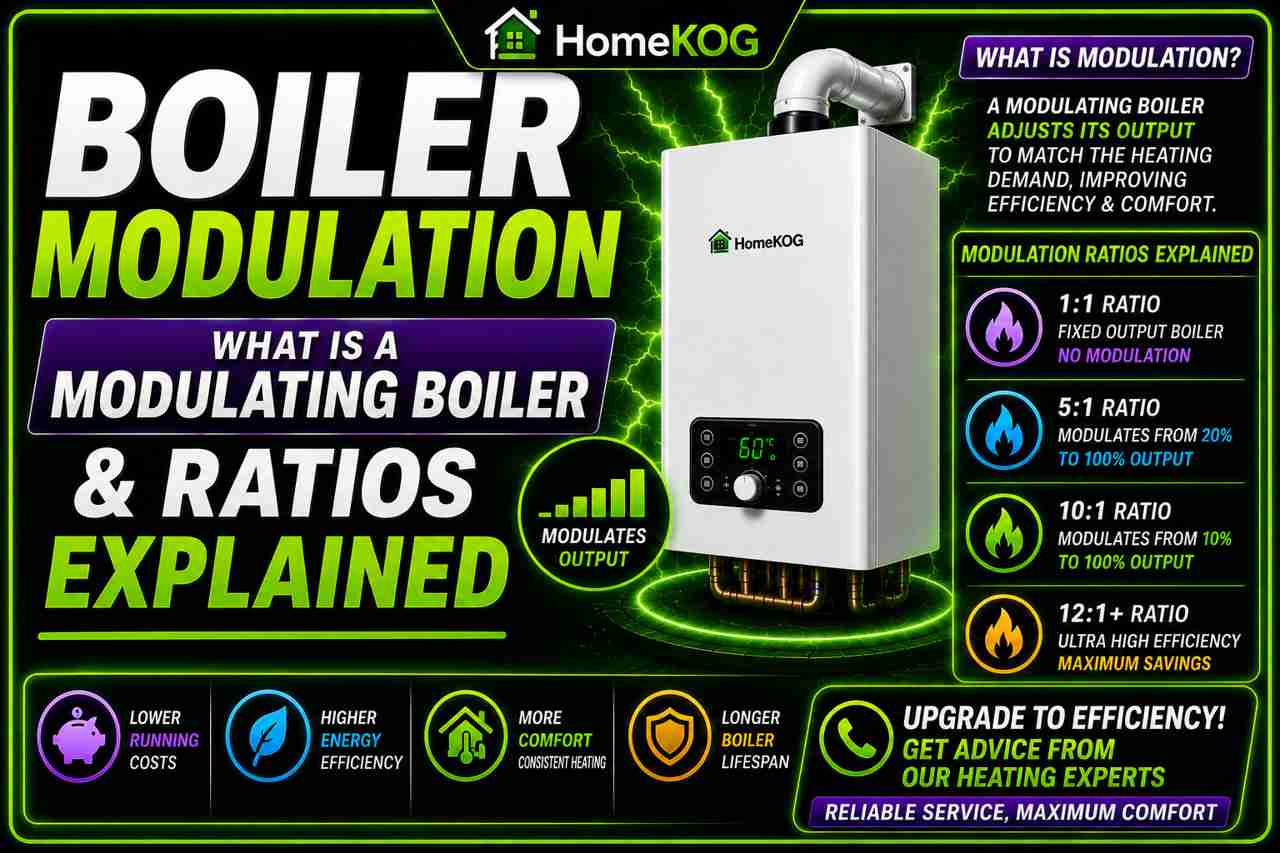
This is the modulation ratio in action. A boiler with a maximum output of 30kW and a minimum output of 7.5kW has a modulation ratio of 4:1. A boiler with the same maximum but a minimum of 3kW has a ratio of 10:1. The higher the ratio, the further the boiler can reduce its output below its maximum.
How OpenTherm Enhances Modulation
Standard on/off thermostats tell the boiler to fire or stop. OpenTherm-compatible controls go further, sending continuous demand signals to the boiler that allow it to modulate precisely in response to how warm the rooms are and how much additional heat is actually needed. Rather than calling for full heat and then cutting off, an OpenTherm system guides the boiler to the exact output level required at any moment.
For homeowners who want to maximise the efficiency gains available from a modulating boiler, pairing it with an OpenTherm-compatible smart thermostat is the most effective way to ensure the modulation capability is being used to its fullest extent.
What Is a Good Modulation Ratio?
A modulation ratio of 5:1 is a practical and effective target for most UK homes. This means the boiler can reduce its output to 20% of its maximum, which covers the majority of real-world heating demands through a typical UK winter.
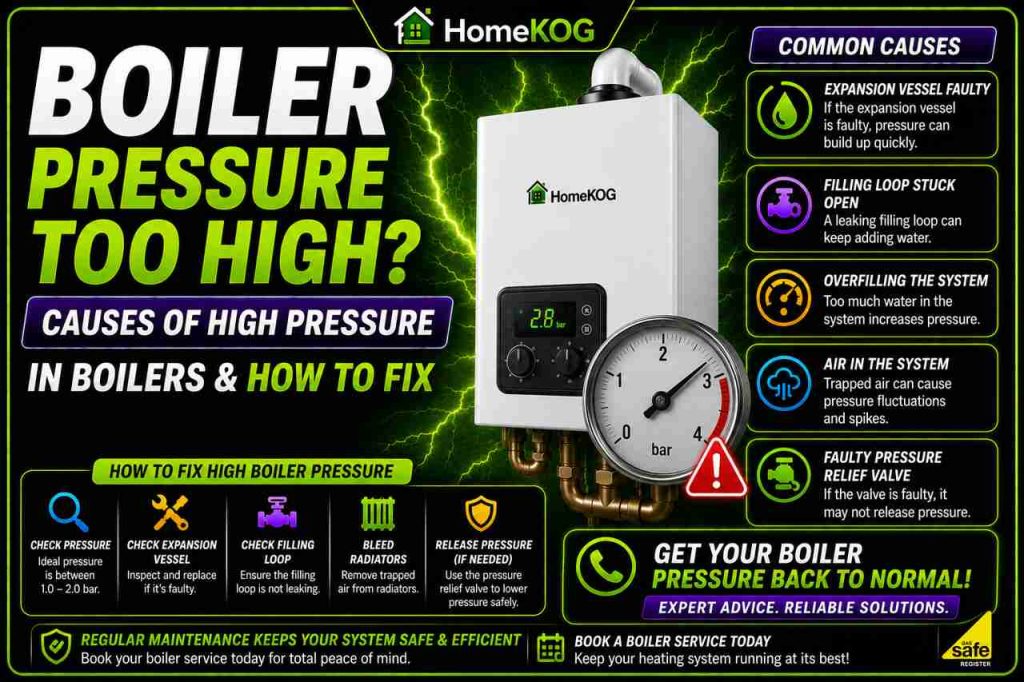
Ratios of 10:1 — such as those achieved by the Viessmann Vitodens 100-W — are available and represent the current top of the market in terms of modulation depth. However, it is worth understanding an important practical point: in a typical UK home, the lowest possible output of a high-ratio boiler may rarely if ever be called upon. Most UK properties, particularly older ones with standard insulation, require between 8 and 10kW to maintain comfortable temperatures in winter. A 28kW boiler with a 10:1 modulation ratio has a minimum output of 2.8kW — a level that would only be relevant in an exceptionally well-insulated property. To ensure efficiency and longevity in heating systems, it’s crucial to pay attention to boiler pressure settings for optimal performance. Maintaining the right pressure not only enhances the responsiveness of the heating system but also prevents unnecessary wear and tear on components. Additionally, regular monitoring and adjustments can lead to significant savings on energy bills, making it a worthwhile consideration for homeowners.
This means the efficiency advantage of a 10:1 ratio over a 5:1 ratio in a standard UK home is often smaller than it might appear on paper. The return water temperature — kept low by good insulation, correct radiator sizing, and a reduced flow temperature setting — has a greater practical impact on condensing boiler efficiency than the modulation ratio alone.
Components used in very high modulation ratio boilers also tend to be more delicate, which can affect long-term reliability. A 5:1 ratio from a boiler with robust components will often outperform a 10:1 ratio boiler with more fragile internals over a long ownership period.
Combi Boiler vs System Boiler: Which Modulates Better?
Both combi and system boilers can be condensing and modulating. The choice between them is driven by the property’s size and hot water demand rather than modulation performance.
A combi boiler is the more compact option and suits smaller homes well. It heats water on demand without a separate cylinder, and its modulation capability allows it to adjust output in response to the heat required at any moment. One limitation is that only a single hot water outlet should be in use at a time, as the boiler cannot simultaneously supply the demand of multiple taps or showers at full flow. understanding combi boiler advantages can reveal why many homeowners prefer them for efficient, space-saving solutions. Their seamless operation makes them ideal for users seeking convenience without sacrificing performance. Additionally, the lower energy consumption associated with these systems can result in significant savings on utility bills over time.
A system boiler connected to a hot water cylinder is better suited to medium and larger homes where simultaneous demand from multiple bathrooms is common. The cylinder stores a volume of pre-heated water that can supply several outlets at once, and the boiler’s modulation capability helps it reheat the cylinder efficiently as hot water is drawn off.
For smaller homes and most one or two-bathroom properties, the combi boiler’s modulation performance is entirely adequate and the absence of a cylinder is a practical advantage.
The Best Modulating Combi Boilers in 2026
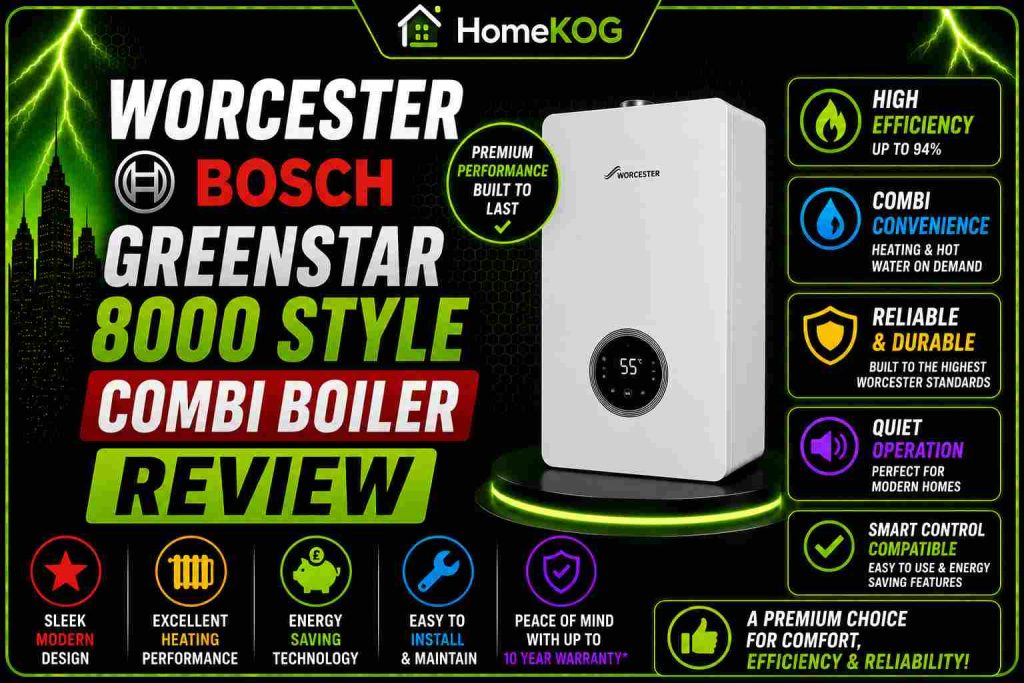
Worcester Bosch Greenstar 4000
The Greenstar 4000 is a capable and reliable modulating combi boiler for small to medium-sized homes. It features a full-colour text display, quiet operation with Quiet Mark certification, hydrogen-ready credentials, and compatibility with Hive, Nest, and other smart controls. Its wide power range covers the heating and hot water needs of most single-bathroom properties efficiently.
Viessmann Vitodens 050-W
The Vitodens 050-W is a compact modulating combi and system boiler with a strong efficiency rating and a quiet operation. Its stainless steel heat exchanger offers greater corrosion resistance than aluminium alternatives, and its small footprint makes it particularly practical for flats, apartments, and smaller homes with limited installation space.
Viessmann Vitodens 100-W
The Vitodens 100-W is the higher-specification modulating combi boiler in the Viessmann range, achieving a 10:1 modulation ratio and integrating WiFi connectivity for smart control and remote monitoring. Its matte contemporary design suits modern interiors, and it is one of the most efficient boilers currently available in the UK market for homeowners in well-insulated properties where the deeper modulation range can be genuinely utilised.
The Benefits of Boiler Modulation
The energy efficiency case for modulation is straightforward. A boiler that adjusts its output to match actual demand burns less gas than one that fires at full power every time it is called. Over a full heating season, this translates into a meaningful reduction in gas bills without any reduction in the comfort level of the home.
Modulation also improves boiler longevity. A boiler that runs at a sustained, lower output rather than repeatedly cycling between full power and off experiences less thermal stress on its heat exchanger and internal components. Less thermal stress means slower wear and a longer working life for the boiler as a whole.
Running at lower sustained temperatures reduces the rate of internal corrosion. When dirt and debris from the heating system enter the boiler and are heated, they cause a chemical reaction that gradually erodes internal metal surfaces. Higher temperatures accelerate this reaction, so a boiler that modulates down and runs cooler corrodes more slowly — particularly relevant in systems where the water quality or inhibitor concentration is not always optimal.
Lower operating temperatures also reduce the temperature of radiator surfaces, which is a practical safety benefit in households with young children, and result in cleaner air circulation with fewer allergens being driven into the room by very hot radiator surfaces.
Frequently Asked Questions
What is boiler modulation?
Boiler modulation is the ability of a condensing boiler to vary its heat output between a minimum and maximum level in response to the actual heating demand at any given moment. Rather than switching between full power and off, a modulating boiler adjusts its flame to deliver only the energy needed to meet the current demand. This reduces fuel consumption, lowers energy bills, reduces thermal stress on components, and provides a more consistent room temperature throughout the heating cycle.
What is a good modulation ratio for a boiler?
A modulation ratio of 5:1 is a practical and effective level for most UK homes, allowing the boiler to reduce its output to 20% of its maximum. Ratios of 10:1 are available on premium models such as the Viessmann Vitodens 100-W, but the additional efficiency gain in a standard UK property with average insulation is often modest, as the very low minimum outputs these ratios produce are rarely called upon in real-world conditions.
Does boiler modulation save money on energy bills?
Yes. A modulating boiler uses only the gas needed to meet the current heating demand rather than always firing at full output. Over a full heating season, this results in meaningfully lower gas consumption compared to a non-modulating boiler of equivalent output. The savings are maximised when the boiler is paired with an OpenTherm-compatible thermostat, which enables continuous demand signalling rather than simple on/off control.
What is OpenTherm and how does it help modulation?
OpenTherm is a communication protocol that allows a compatible thermostat to send continuous demand signals to a modulating boiler, enabling it to adjust its output precisely rather than simply switching on or off. A standard thermostat tells the boiler to fire or stop. An OpenTherm thermostat tells the boiler exactly how much heat is needed at any given moment, allowing the modulation capability to be used to its fullest extent and maximising the efficiency and bill savings available.
Is a combi boiler or system boiler better for modulation?
Both combi and system boilers can be condensing and modulating. The choice between them should be driven by the size of the property and its hot water demand rather than modulation performance. A combi boiler suits smaller homes with one or two bathrooms well. A system boiler with a hot water cylinder is better for larger homes where simultaneous demand from multiple bathrooms is common. Both types benefit from modulation in the same way — using less gas to meet the same demand.
Do all modern boilers modulate?
All condensing boilers — which have been the legal standard for new gas boiler installations in the UK since 2005 — are modulating to some degree. The extent of modulation varies between models and manufacturers, expressed through the modulation ratio. Higher-specification models offer deeper modulation ratios, but as discussed, the practical efficiency difference in a standard UK home between a 5:1 and a 10:1 ratio is often smaller than the headline figures suggest. When considering boiler pressure best practices, it’s essential to monitor the pressure consistently to avoid potential issues that could lead to efficiency losses. Regular maintenance checks and adjustments can ensure that the system operates within optimal pressure ranges, ultimately extending the lifespan of the boiler. Additionally, keeping the boiler clean and free of obstructions plays a crucial role in maintaining proper pressure levels and overall efficiency.
How does modulation extend boiler life?
Modulation extends boiler life by reducing the thermal stress placed on internal components. A boiler that cycles repeatedly between maximum output and off experiences repeated rapid heating and cooling of its heat exchanger and other parts, which accelerates wear over time. A modulating boiler maintains a steadier operating temperature by adjusting its output rather than cycling, which reduces the rate of wear and allows components to last longer before requiring repair or replacement.
Conclusion
Boiler modulation is one of the most important and least discussed aspects of modern central heating efficiency. Understanding how it works — and what modulation ratio is appropriate for your specific property — puts you in a much stronger position when choosing a new boiler or assessing whether your current one is performing as well as it should.
For most UK homeowners, a modulating condensing combi boiler with a 5:1 ratio paired with an OpenTherm-compatible thermostat delivers the best combination of efficiency, reliability, and value. Premium 10:1 ratio models like the Viessmann Vitodens 100-W offer the deepest modulation available and are the right choice for well-insulated modern homes where the low minimum output can be genuinely utilised.
Annual servicing maintains the boiler’s modulation performance over time and is the single most important step any homeowner can take to ensure the efficiency benefits of a modulating boiler are preserved throughout its working life.